


Cyanotype
Cyanotypie
As a graphic designer and photographer, I spent a long time searching for a visual language that couldn't be completely controlled. In the digital world, every detail can be planned, every result reproducible – but that's precisely what I eventually missed. The moment when an image allows for chance became more important to me than perfect technical control.
I came to cyanotype rather by chance, through old photochemical processes and experimental printing techniques. What began as curiosity quickly became a kind of counter-movement to my digital work: slower, more immediate, more honest.
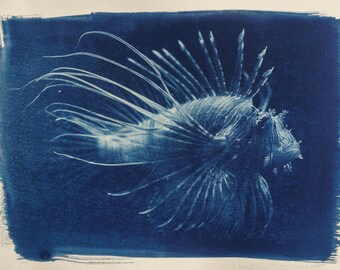
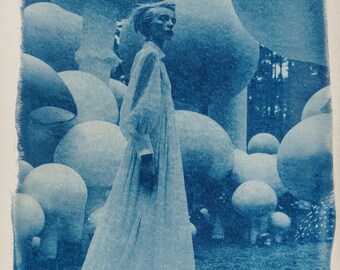
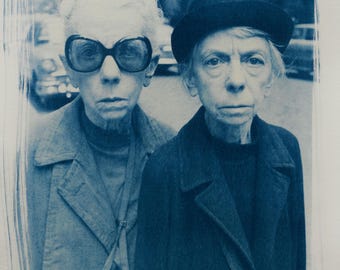
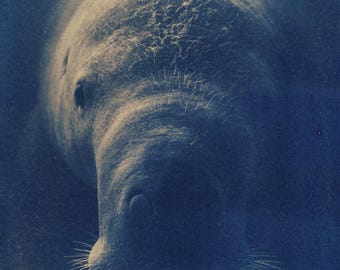
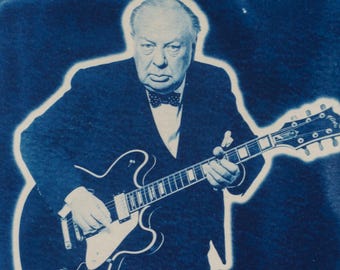
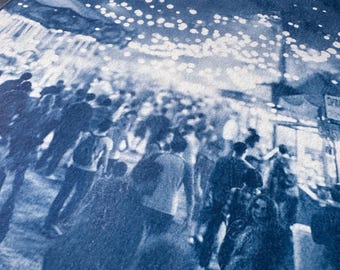
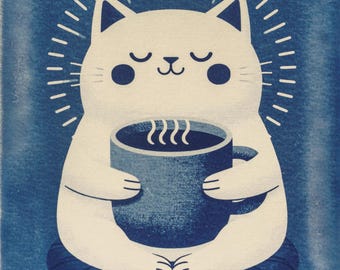
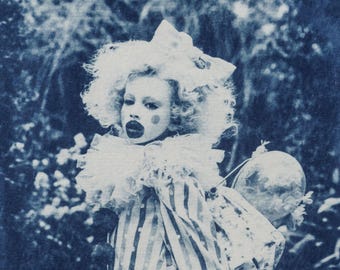
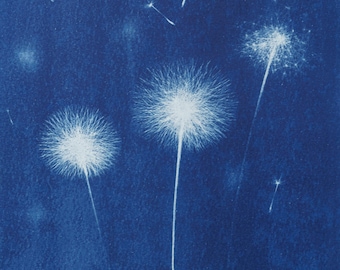
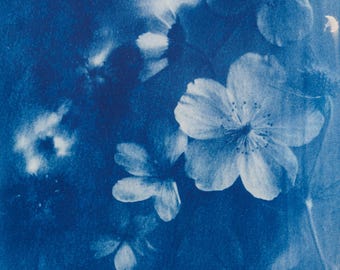
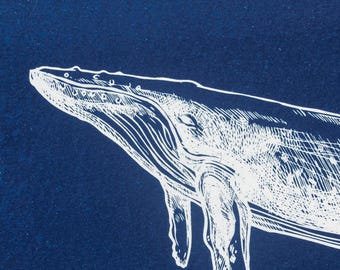
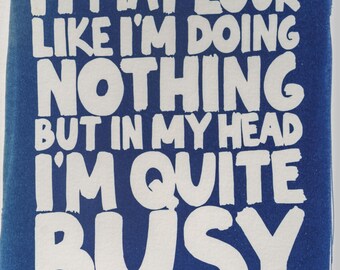
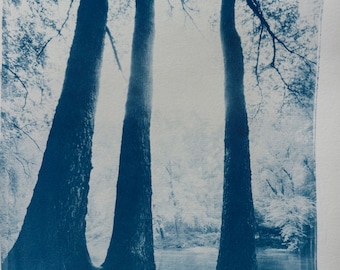
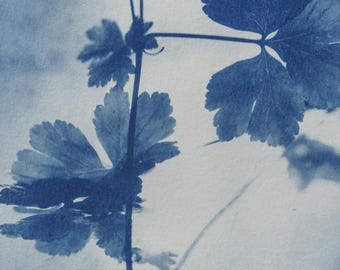
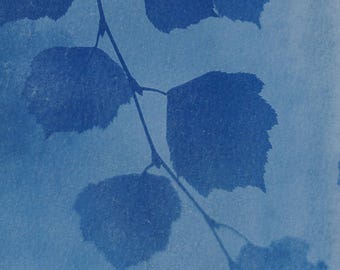
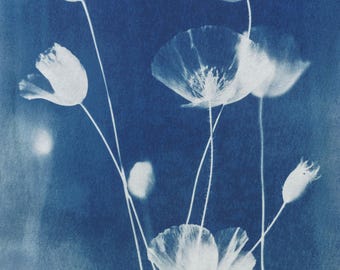
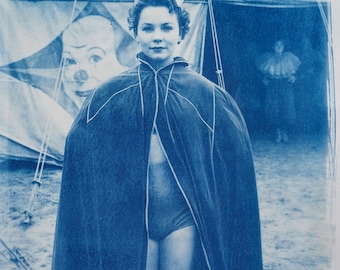
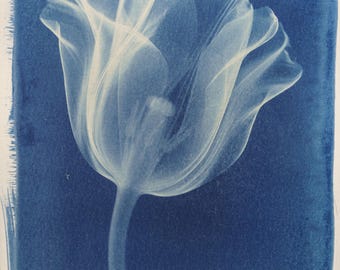
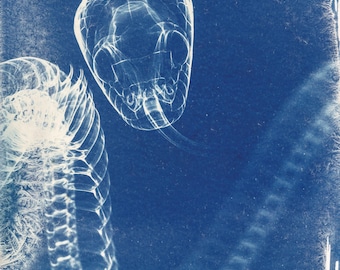
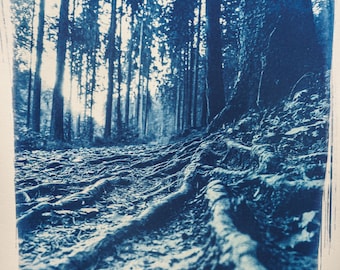
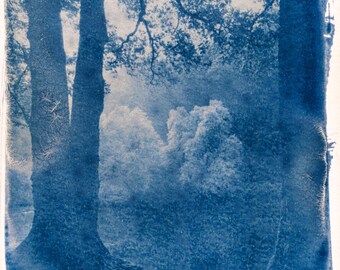
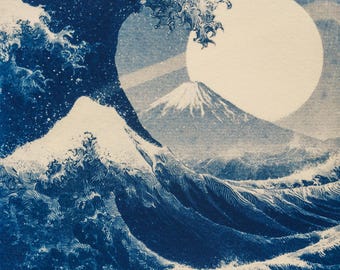
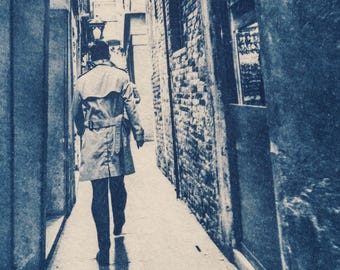
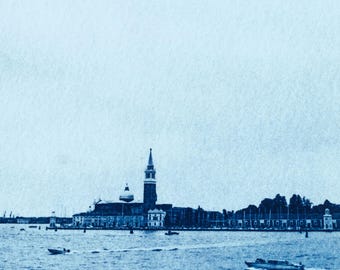
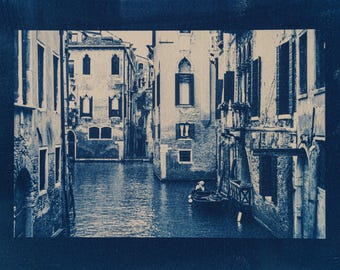
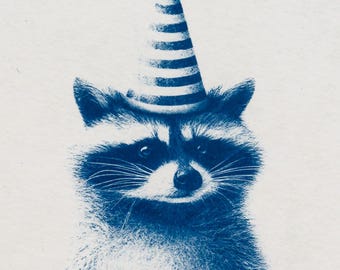
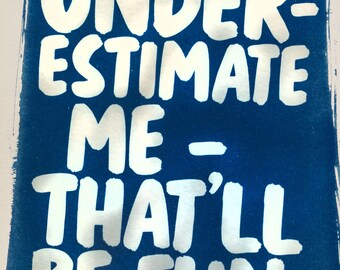
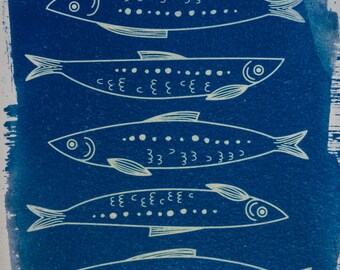
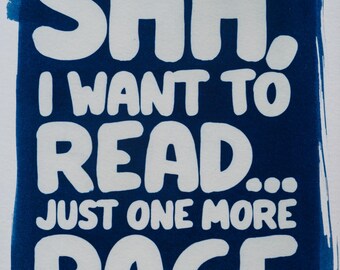
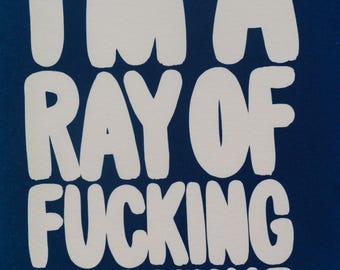
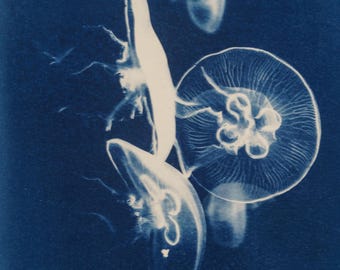
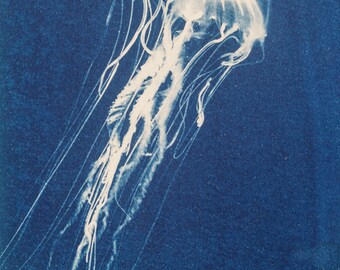
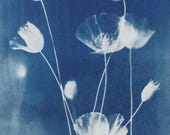
Cyanotype is one of the oldest photographic printing processes. Paper or another substrate is coated with a light-sensitive solution of iron compounds. After drying, the subject – usually a negative or an object such as a plant – is placed on the paper and exposed to UV light (usually sunlight). The exposed areas react chemically and change their structure. The image is then washed with water, resulting in the characteristic deep blue image known as "Prussian blue."
What fascinates me about it is the mixture of control and chance: the sun, the weather, the nature of the materials – all of this influences the result. Each cyanotype is therefore unique, an imprint of a moment that can never be exactly repeated.
Als Grafiker und Fotograf war ich lange auf der Suche nach einer Bildsprache, die sich nicht vollständig kontrollieren lässt. In der digitalen Welt ist jedes Detail planbar, jedes Ergebnis reproduzierbar – doch genau das hat mir irgendwann gefehlt. Der Moment, in dem ein Bild auch Zufall zulässt, wurde für mich wichtiger als perfekte technische Kontrolle.
Zur Cyanotypie bin ich eher zufällig gekommen, über alte fotochemische Verfahren und experimentelle Drucktechniken. Was als Neugier begann, wurde schnell zu einer Art Gegenbewegung zu meiner digitalen Arbeit: langsamer, unmittelbarer, ehrlicher.
Die Cyanotypie ist eines der ältesten fotografischen Edeldruckverfahren. Dabei wird Papier oder ein anderes Trägermaterial mit einer lichtempfindlichen Lösung aus Eisenverbindungen beschichtet. Nach dem Trocknen wird das Motiv – meist ein Negativ oder ein Objekt wie Pflanzen – auf das Papier gelegt und mit UV-Licht (meist Sonnenlicht) belichtet. Die belichteten Stellen reagieren chemisch und verändern ihre Struktur. Anschließend wird das Bild nur noch mit Wasser ausgewaschen – und dabei entsteht das charakteristische tiefblaue Bild, das sogenannte „Preußisch Blau“.
Was mich daran fasziniert, ist die Mischung aus Kontrolle und Zufall: Die Sonne, das Wetter, die Beschaffenheit der Materialien – all das beeinflusst das Ergebnis. Jede Cyanotypie ist dadurch ein Unikat, ein Abdruck eines Moments, der nie exakt wiederholbar ist.