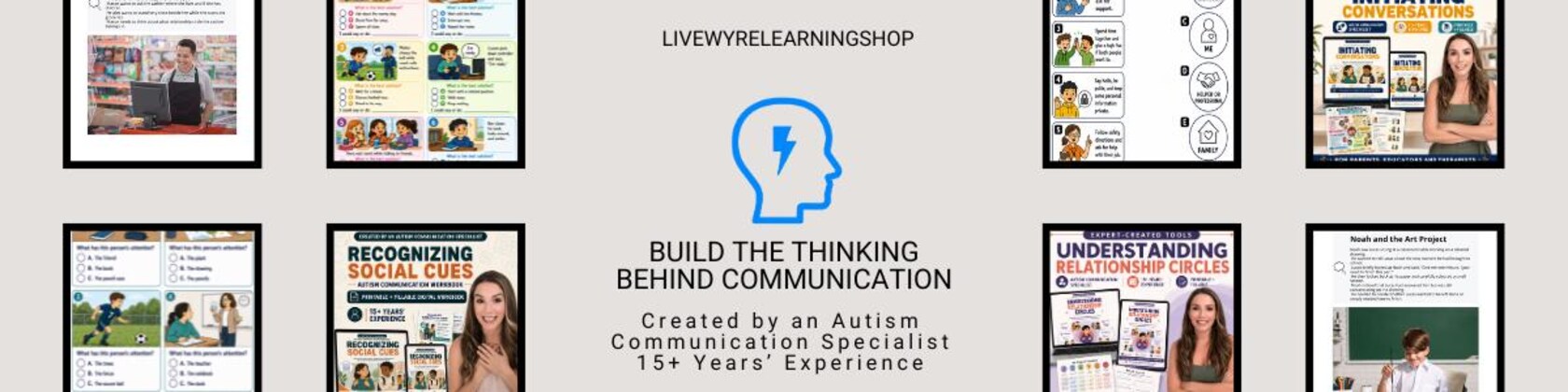




Practical Autism Resources That Build the Thinking Behind Communication
Your Autistic Child Doesn’t Just Need More Words—They Need Help Building the Thinking Behind Communication
If you have ever watched your child struggle to express what they know, tell you about their day, understand social cues or connect with another person—and wondered why the usual communication strategies are not working—you are not alone.
You may have tried modelling language, practising conversation scripts, asking more questions or repeating the same social skills activities, only to find that your child still struggles to use those skills independently in everyday life.
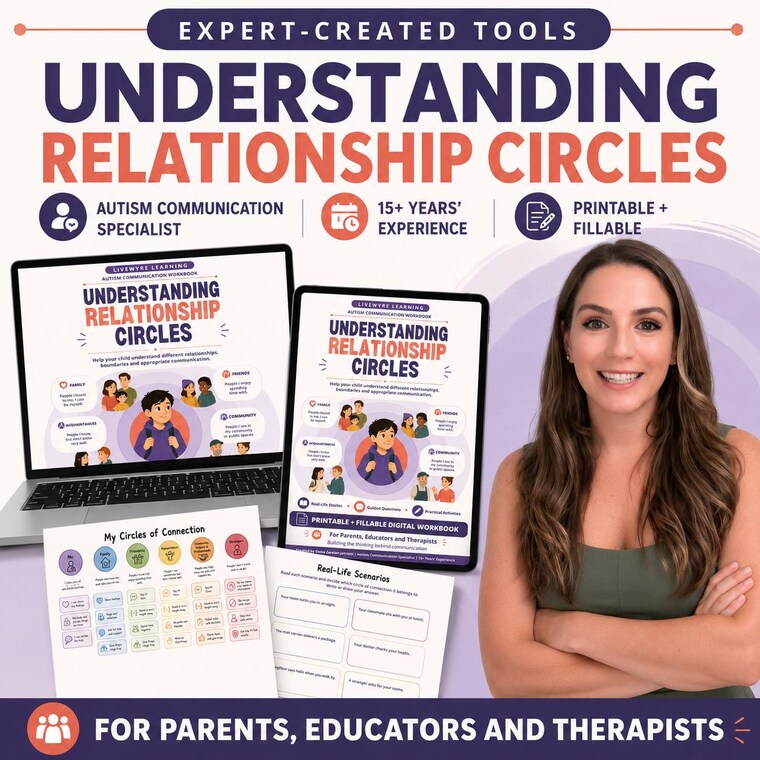
I’m Eloise, an autism communication specialist and the founder of LiveWyre Learning. I have more than 15 years of experience supporting autistic children, teenagers and their families. Before starting my own practice, I worked as a Director of Instruction, helping learners strengthen the cognitive foundations connected to language, comprehension and communication.
But this work is personal for me, too.
I am also the parent of a child who has experienced significant communication challenges. Despite my professional experience, I still needed guidance, mentorship and support to create the right environment for my own child. I understand the uncertainty, the constant problem-solving and the deep desire to know that you are giving your child the support they genuinely need.
That experience strengthened something I have always believed: autism communication is about far more than teaching a child what to say.
An autistic child may know the words but still find it difficult to organize their thoughts, recognize important social information, picture another person’s perspective or use language flexibly during a real conversation. When we focus only on memorized social scripts, we can miss the thinking skills that make communication meaningful and increasingly independent.
That is why I created these printable autism communication resources.
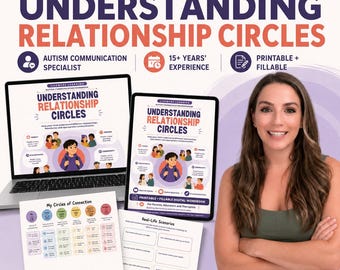
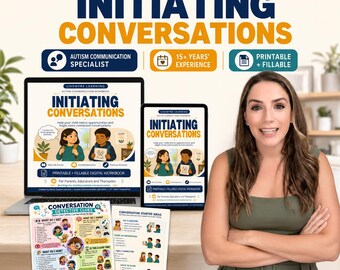
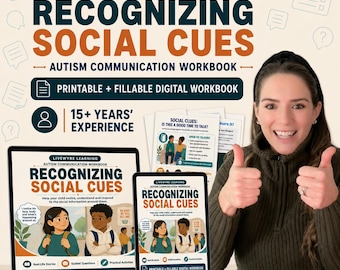
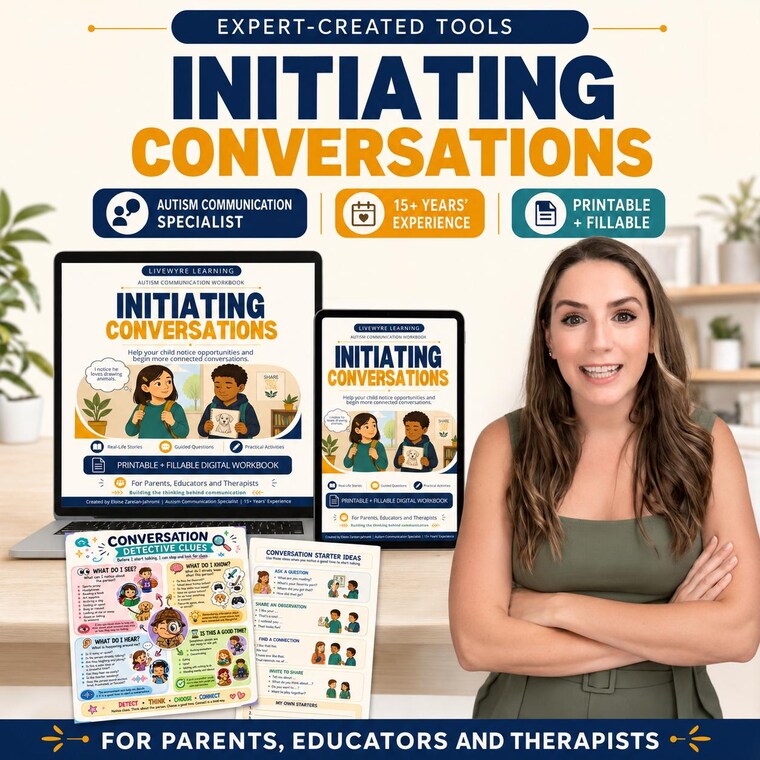
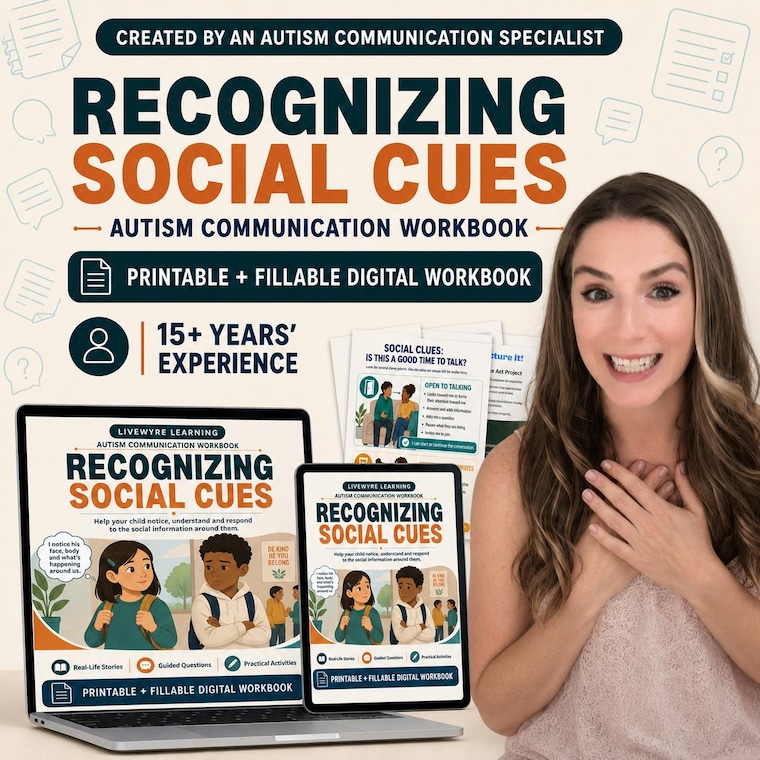
LiveWyre Learning workbooks are designed to support the thinking behind communication. Through structured scenarios, guided questions and practical activities, learners can develop a clearer understanding of:
Recognizing and interpreting social cues
Initiating and continuing conversations
Understanding different types of relationships
Building flexible conversation skills
Organizing thoughts and expressing ideas
Applying communication skills in everyday situations
Inside the shop, you will find neurodiversity-affirming autism workbooks, printable social communication worksheets and digitally fillable learning resources. They are designed for autistic children and teenagers and can be used by parents, teachers, special education professionals, speech-language professionals, therapists and homeschool educators.
Every autistic learner is different. These resources provide clear structure while leaving space for individualized teaching, meaningful discussion and the processing time each learner needs.
Most importantly, they are designed to help you move beyond simply telling a child what to say—and begin strengthening the thinking that allows authentic communication to grow.
