





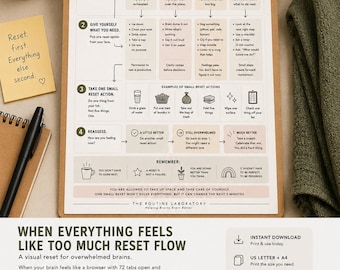





Sistemi di supporto operativo per cervelli sovraccarichi. Strumenti visivi pratici che riducono gli ostacoli, aumentano la chiarezza e semplificano la vita quotidiana.
Operational support systems for overwhelmed brains. Practical visuals that reduce friction, increase clarity, and make daily life easier.
C'è stato un tempo in cui credevo sinceramente che tutti gli altri avessero ricevuto un manuale.
Non si tratta di un manuale da leggere letteralmente.
Solo... istruzioni.
Istruzioni per ricordare gli appuntamenti senza impostare sei sveglie.
Istruzioni per iniziare le attività prima che si trasformassero in emergenze.
Istruzioni per sapere cosa preparare per cena ogni sera senza dover fissare il frigorifero come se contenesse il senso della vita.
Istruzioni per gestire una casa, una famiglia, un programma, un corpo, un cervello e circa 47 schede mentali aperte contemporaneamente.
Nel frattempo, il mio sistema si presentava più o meno così:
dimenticare cose importanti;
Ricorda una cosa importante alle 2:14 del mattino;
creare un nuovo sistema elaborato;
non utilizzare mai più il sistema;
ripetere all'infinito.
A un certo punto, ho capito che non stavo fallendo perché ero pigro.
Stavo fallendo perché cercavo di gestire una vita umana complessa usando la memoria, la motivazione e il panico come principali strumenti organizzativi.
Che, a quanto pare, non è un sistema operativo particolarmente affidabile.
Così ho iniziato a costruire supporti esterni.
Piccolissimi.
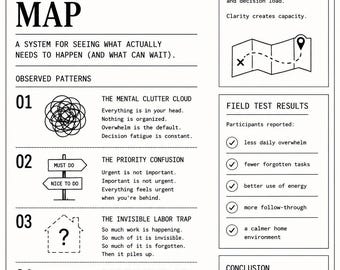
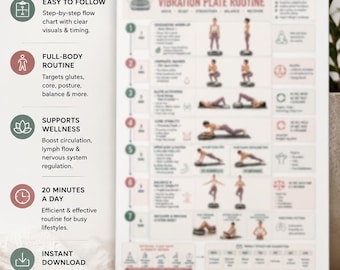
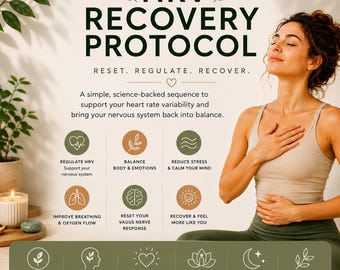
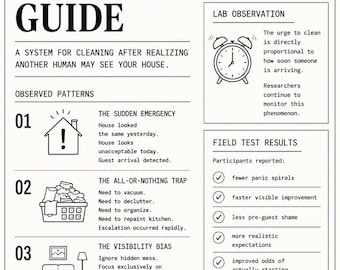
Liste di controllo.
Guide visive.
Alberi decisionali.
Diagrammi di flusso.
Piani di emergenza per i giorni in cui il mio cervello si rifiuta di collaborare.
Non perché volessi essere più produttivo.
Perché volevo smettere di avere la sensazione che ogni compito ordinario richiedesse uno sforzo straordinario.
E accadde qualcosa di sorprendente.
Più smettevo di cercare di diventare una persona diversa, più la vita diventava facile.
L'obiettivo non è mai stato quello di raggiungere una perfetta organizzazione.
L'obiettivo era smettere di aver bisogno di un'organizzazione perfetta per sopravvivere.
Col tempo, quei piccoli sistemi hanno iniziato a riempire quaderni.
Poi le cartelle.
Poi i muri.
Poi conversazioni con amici che guardavano un foglio di lavoro e dicevano:
“Aspetta… posso averne una copia?”
Perché si è scoperto che non ero l'unica persona in giro a pensare:
Perché non riesco a iniziare?
Perché tutto sembra più difficile del dovuto?
Perché mi sento sopraffatto da cose che so fare?
Perché sono sempre esausto?
La risposta non era la mancanza di forza di volontà.
Non si trattava di mancanza di carattere.
E di certo non si è trattato di mancanza di impegno.
A volte il problema è semplicemente che ci si aspetta che gli esseri umani gestiscano vite sempre più complesse senza un supporto adeguato.
È da lì che è nato The Routine Laboratory.
Non derivante dalla cultura della produttività.
Non derivante dalla cultura dell'ottimizzazione.
Non si tratta di una perfezione codificata a colori.
Il Routine Laboratory esiste perché le persone reali meritano sistemi reali.
Sistemi che funzionano anche quando sei stanco.
Sistemi che funzionano anche quando sei sopraffatto.
Sistemi che funzionano anche quando sei distratto.
Sistemi che funzionano quando la vita è un caos, i bambini urlano, la cena non è programmata, il bucato ha acquisito coscienza e il tuo cervello ha deciso che rispondere a una sola email equivale a scalare una montagna.
Tutto ciò che creiamo inizia con una semplice domanda:
"Cosa renderebbe tutto questo più semplice per una persona reale in un vero martedì?"
Non è un essere umano ideale.
Uno vero.
Quel tipo di programma con troppe schede aperte.
Quel tipo di persona che porta con sé fardelli mentali invisibili.
Quelli che fanno del loro meglio con l'energia che hanno.
Il tipo che non ha bisogno di un'altra predica.
Hanno bisogno di un sistema.
Benvenuti quindi al Laboratorio di Routine.
Non siamo qui per aiutarti a diventare una macchina da produttività.
Siamo qui per aiutare le menti sovraccariche a pensare meglio.
Un sistema incredibilmente pratico alla volta.
IL LABORATORIO DI ROUTINE
Aiutare il cervello a funzionare meglio
There was a time when I genuinely believed everyone else had received a handbook.
Not a literal handbook.
Just…instructions.
Instructions for remembering appointments without setting six alarms.
Instructions for starting tasks before they became emergencies.
Instructions for knowing what to make for dinner every single night without staring into the refrigerator like it contained the meaning of life.
Instructions for managing a house, a family, a schedule, a body, a brain, and approximately 47 open mental tabs at the same time.
Meanwhile, my system looked something like:
forget important thing;
remember important thing at 2:14 AM;
create elaborate new system;
never use system again;
repeat forever.
At some point, I realized I wasn’t failing because I was lazy.
I was failing because I was trying to operate a complicated human life using memory, motivation, and panic as my primary organizational tools.
Which, as it turns out, is not a particularly reliable operating system.
So I started building external supports.
Tiny ones.
Checklists.
Visual guides.
Decision trees.
Flowcharts.
Emergency plans for days when my brain refused to participate.
Not because I wanted to be more productive.
Because I wanted to stop feeling like every ordinary task required an extraordinary amount of effort.
And something surprising happened.
The more I stopped trying to become a different person, the easier life became.
The goal was never to become perfectly organized.
The goal was to stop needing perfect organization to survive.
Over time, those little systems started filling notebooks.
Then folders.
Then walls.
Then conversations with friends who would look at a worksheet and say:
“Wait… can I have a copy of that?”
Because it turned out I wasn’t the only person wandering around thinking:
Why can’t I start?
Why does everything feel harder than it should?
Why am I overwhelmed by things I know how to do?
Why am I exhausted all the time?
The answer wasn’t a lack of willpower.
It wasn’t a lack of character.
And it definitely wasn’t a lack of trying.
Sometimes the problem is simply that humans are expected to run increasingly complicated lives without enough support.
That’s where The Routine Laboratory came from.
Not from productivity culture.
Not from optimization culture.
Not from color-coded perfection.
The Routine Laboratory exists because real people deserve real systems.
Systems that work when you’re tired.
Systems that work when you’re overwhelmed.
Systems that work when you’re distracted.
Systems that work when life is messy, kids are yelling, dinner isn’t planned, laundry has become sentient, and your brain has decided that answering one email is equivalent to climbing a mountain.
Everything we create starts with a simple question:
“What would make this easier for a real human on a real Tuesday?”
Not an ideal human.
A real one.
The kind with too many tabs open.
The kind carrying invisible mental loads.
The kind who are doing their best with the energy they have.
The kind who doesn’t need another lecture.
They need a system.
So welcome to The Routine Laboratory.
We’re not here to help you become a productivity machine.
We’re here to help overwhelmed brains brain better.
One ridiculously practical system at a time.
THE ROUTINE LABORATORY
Helping Brains Brain Better