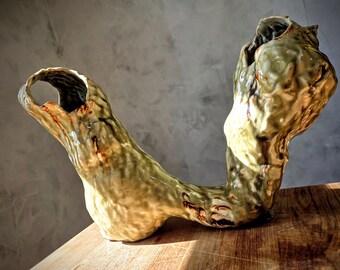
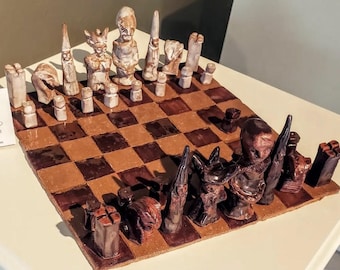
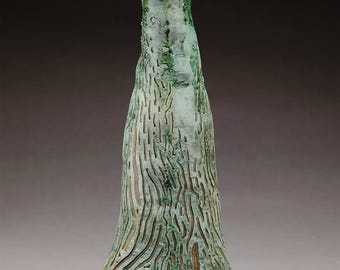
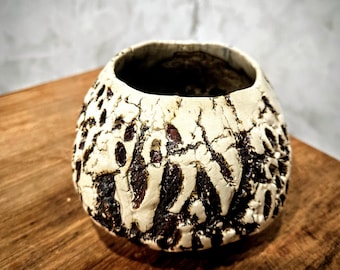
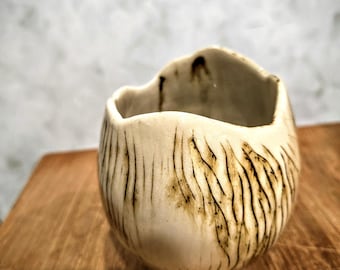
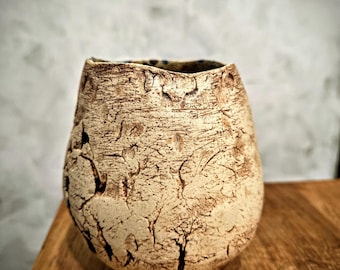
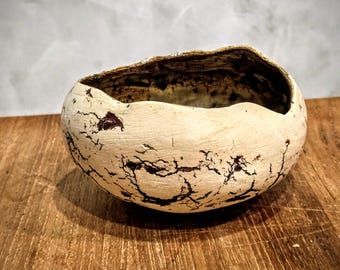
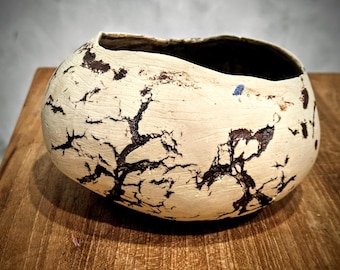
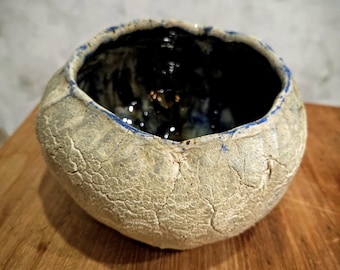


Tierra desgastada y desgarrada y óxido. Patrones de vida.
Worn and torn earth and rust. Patterns of life.
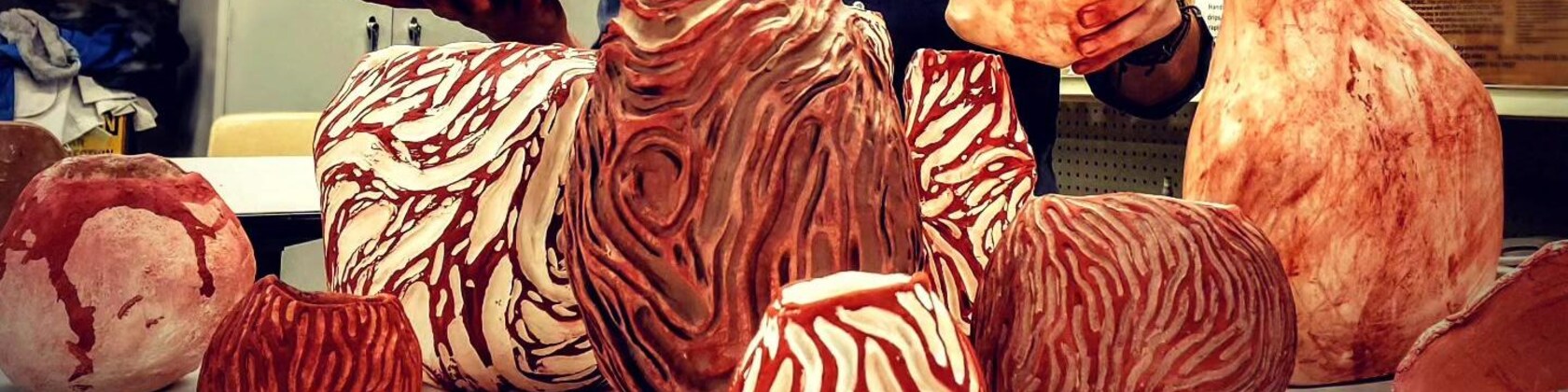
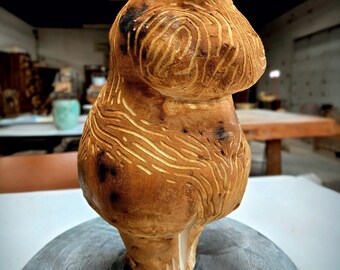
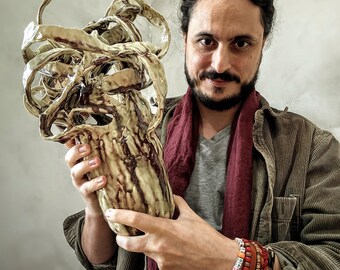
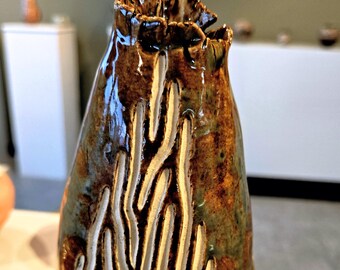
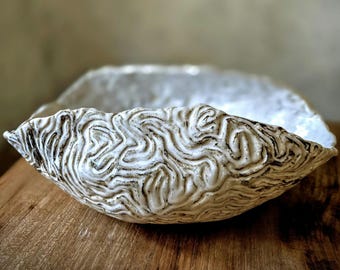
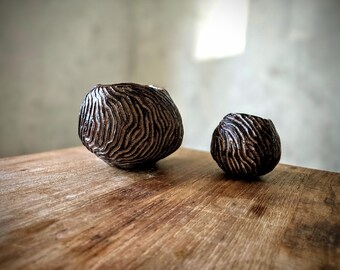
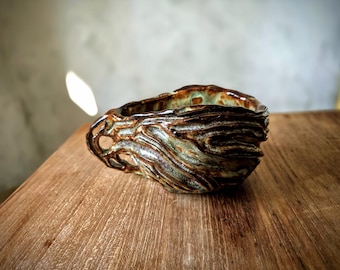
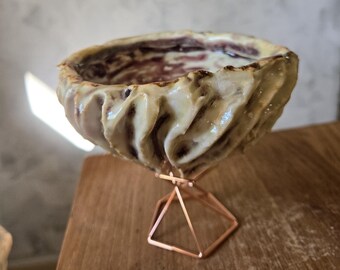
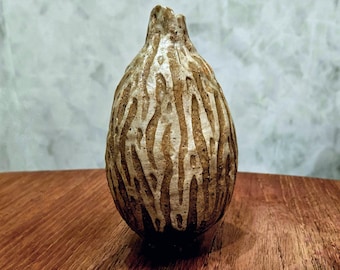
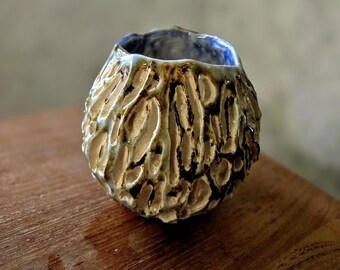
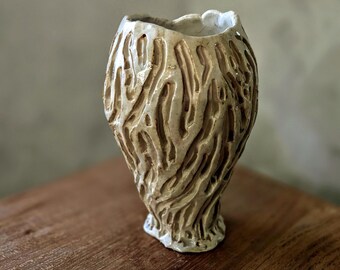
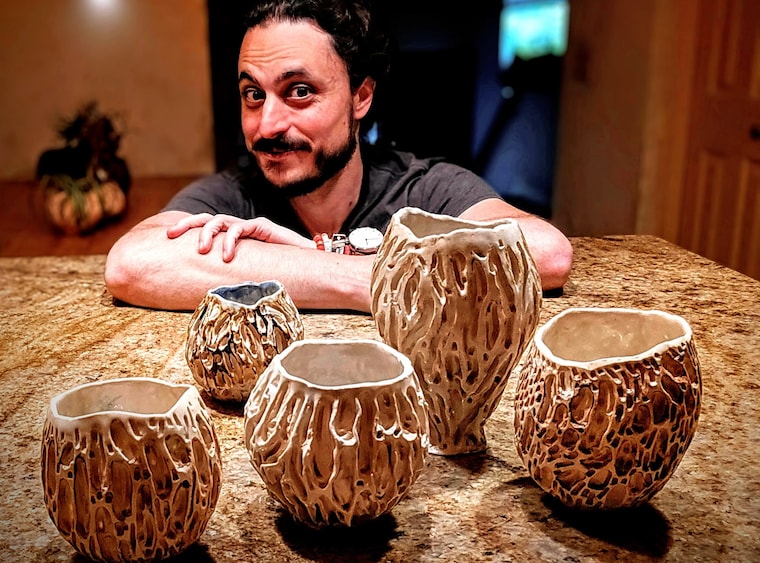
Mis formas, construidas a mano, son modelos de morfogénesis. Me atrae el mundo vivo porque es un catálogo inagotable de estructuras: pliegues que se engrosan y se doblan, límites que se ramifican, superficies que se arrugan, se agrietan, se curan y recuerdan. En biología, la forma nunca se diseña; se negocia entre el crecimiento y la restricción. La superficie de la arcilla es un registro de estas tendencias en pugna: fluidez versus fractura, alisado versus rugosidad, coherencia versus desorden. Las líneas que esculpo funcionan como contornos y líneas de corriente, describiendo dónde el material "quiere" moverse, dónde se concentran las tensiones, dónde un límite avanza o se detiene. Son la dinámica interna del objeto hecha visible.
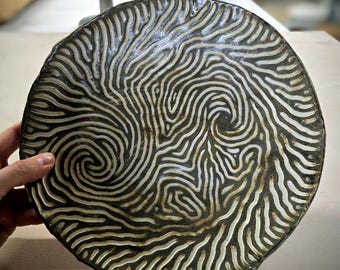
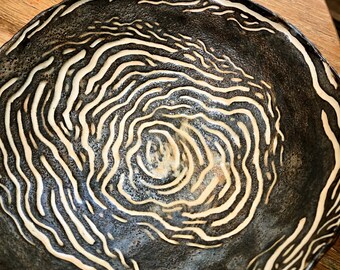
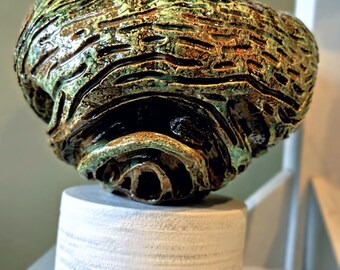
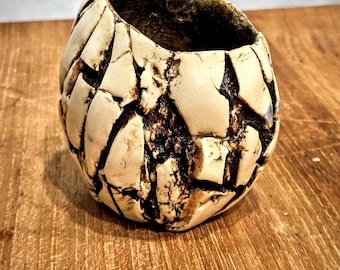
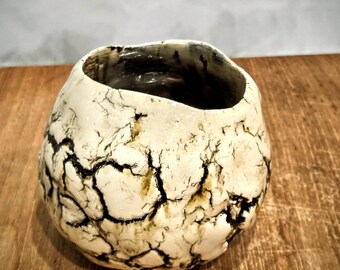
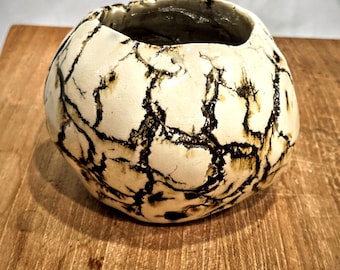
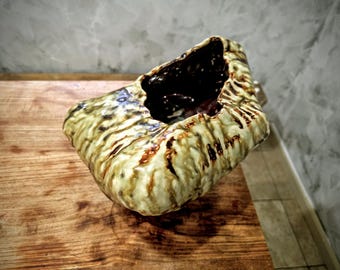
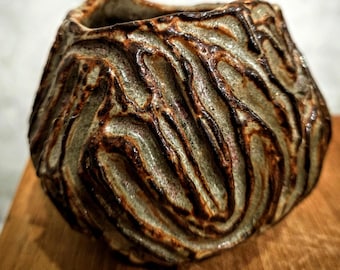
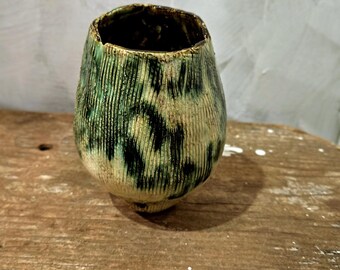
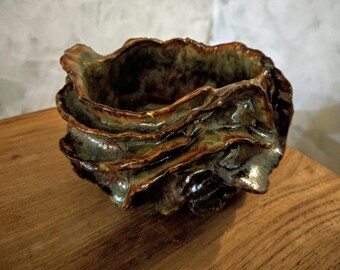
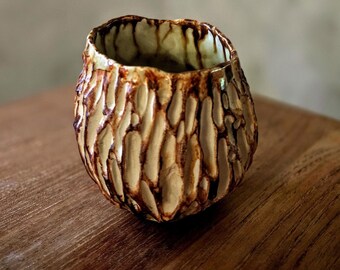
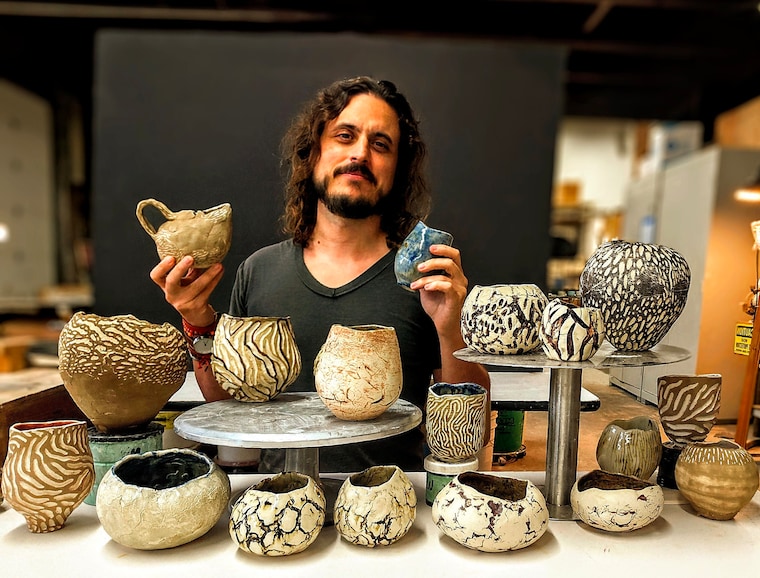
Algunas de mis superficies están decoradas con la lógica química de los sistemas de reacción-difusión, presentando bandas repetidas, laberintos y particiones celulares. Vemos estos patrones en las rayas de las cebras, las manchas en los hongos y las circunvoluciones de nuestras huellas dactilares. Otras evocan las inestabilidades impulsadas por el crecimiento que ocurren cuando una capa superficial se ve obligada a acomodar un desajuste subyacente: las arrugas, pandeos y pliegues, similares a lo que vemos en los pliegues de nuestro cerebro, las sábanas arrugadas, el papel arrugado y los paisajes tectónicos. Y otras se inspiran en las matemáticas de la rugosidad: texturas autosimilares y fractales, que vemos en el suelo desecado, los materiales fracturados, las fases de mezcla y las redes que llenan el espacio, como ramas, venas, ríos y rayos.
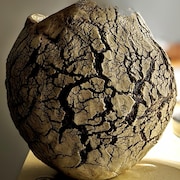
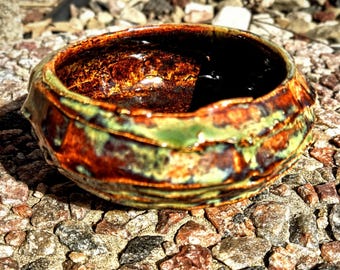
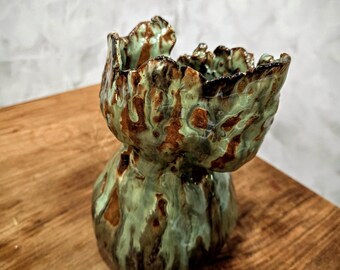
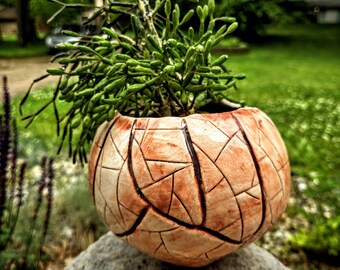
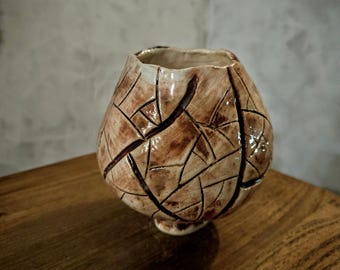
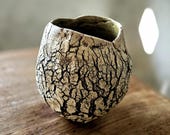
Trabajo con la fractura y la ruptura como fuerza constructiva. Grietas, heridas, cicatrices y fisuras no son accidentes que deban borrarse; son la gramática que permite a la superficie expresar su historia de carga, secado y cocción. Las formas parecen a la vez heridas y curadas, tensas y resueltas, frágiles y estables: una silenciosa declaración de que la resiliencia no es suavidad, sino supervivencia organizada.
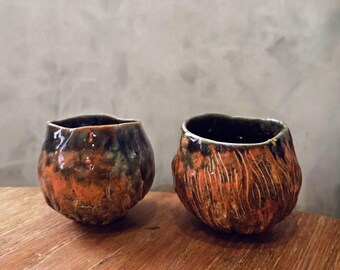
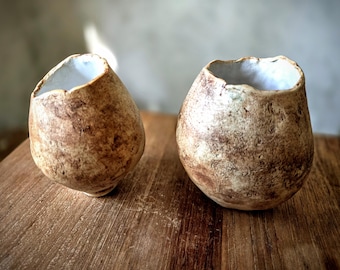
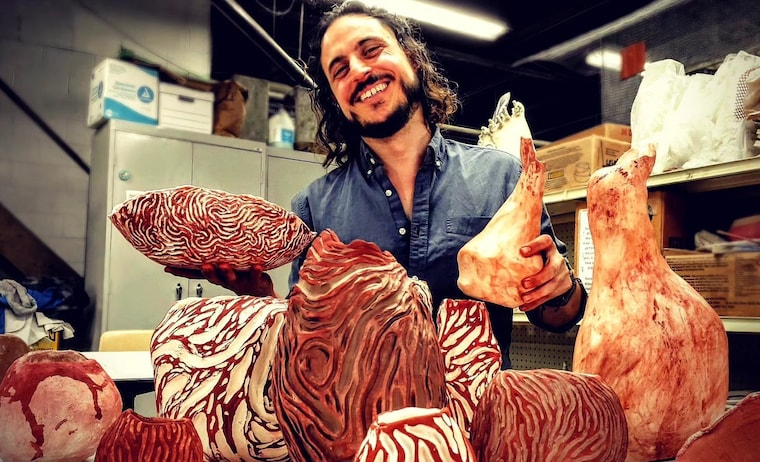
Mi vocabulario cromático se mantiene cercano a la tierra: arcilla blanca, arcilla marrón y roja, engobes ricos en hierro, óxidos elementales, con ocasionales cambios minerales debidos a la cocción. Al limitar la croma, permito que la geometría y la textura transmitan el significado: condiciones de los bordes, capas límite, gradientes, discontinuidades y la topografía deteriorada que los dedos pueden leer con mayor facilidad que los ojos.
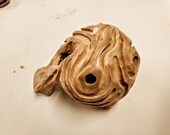
No utilizo torno, moldes, sellos ni transferencias. En cambio, construyo a mano, dejando que la pieza crezca y se desarrolle, envejezca, se formen heridas y sane. El desarrollo y la erosión son graduales y locales, con pequeñas decisiones que se propagan a la estructura global.
En última instancia, la obra vive en la intersección de la complejidad y la intimidad, y exige un tipo de atención táctil: sostener el objeto, rotarlo, trazar sus crestas y sentir en los dedos el crecimiento restringido, las fuerzas opuestas y el trauma y la curación que han llevado a su formación.
My hand-built forms are models of morphogenesis. I’m drawn to the living world because it is an inexhaustible catalog of structure: folds that thicken and buckle, boundaries that branch, surfaces that wrinkle, crack, heal, and remember. In biology, form is never designed; it is negotiated between growth and constraint. The surface of the clay is a record of such competing tendencies: flow versus fracture, smoothing versus roughening, coherence versus disorder. The lines I carve function like contours and streamlines, describing where material “wants” to move, where stresses concentrate, where a boundary advances or stalls. They are the object’s internal dynamics made visible.
Some of my surfaces are decorated with the chemical logic of reaction–diffusion systems, featuring repeated bands, labyrinths, and cellular partitions. We see these patterns in the stripes of zebras, spots on mushrooms, and the convolutions of our fingerprints. Others echo growth-driven instabilities that occur when a surface layer is forced to accommodate a mismatch underneath: the wrinkling, buckling, and folding, similar to what we see in the folds in our brain, wrinkled sheets, crumpled paper, and tectonic landscapes. And some others are inspired by the mathematics of roughness: self-similar textures and fractals, which we see in desiccated soil, fractured materials, mixing phases, and space filling networks such as branches, veins, rivers and lightning.
I work with fracture and rupture as a constructive force. Cracks, wounds, scars, fissures are not accidents to be erased; they are the grammar allowing the surface to express its history of loading, drying, and firing. The forms look simultaneously wounded and healed, tense and resolved, fragile and stable: a quiet statement that resilience is not smoothness but organized survival.
My color vocabulary stays close to the earth: white clay, brown and red clay, iron-rich slips, elemental oxides, with occasional mineral shifts from firing. By limiting chroma, I let the geometry and texture carry the meaning: edge conditions, boundary layers, gradients, discontinuities, and the distressed topography that fingers can read easier than the eyes.
I don’t use wheel-throwing, molds, stamps, or transfers. Instead, I hand build, letting the piece grow and develop, age, accrue wounds, and heal. The development and weathering is incremental and local, with small decisions propagating into global structure.
Ultimately, the work lives at the intersection of complexity and intimacy, demanding a tactile kind of attention: to hold the object, rotate it, trace its ridges, and feel in one's fingers, the constrained growth, the opposing forces, and the trauma and healing that has led to its formation.
