

Transformar datos en acciones
Turn Data into Action
La mayoría de las plantillas tienen buen aspecto. Muy pocas están diseñadas para resistir un uso real.
Data Action Studio existe para cerrar esa brecha.
Soy el Dr. Aaron R. Stewart, profesor de gestión tecnológica. Durante los últimos 30 años, mi trabajo se ha centrado en cómo los sistemas, los datos y la toma de decisiones interactúan en entornos reales. He trabajado en más de 50 países; he publicado tres libros, incluyendo un éxito de ventas número uno en Amazon; y he dedicado mi carrera a estudiar cómo funcionan realmente las personas y las organizaciones, no como nos gustaría que funcionaran.
Esa distinción importa.
Porque las plantillas que encontrarás aquí no se basan únicamente en la teoría. Se han construido a partir de sistemas que utilizo personalmente en mi trabajo como profesor, investigador, emprendedor y analista.
Cada plantilla parte de un problema que he tenido que resolver.
La tienda está organizada en torno a tres áreas principales, cada una de ellas directamente relacionada con mi experiencia y mi trabajo actual.
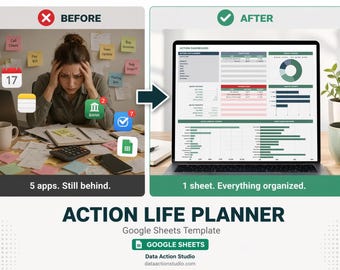
La primera categoría es el emprendimiento y la gestión de empresas. Como investigador y profesional, he dedicado décadas a estudiar cómo se crean, se expanden y se mantienen las empresas. Las plantillas de esta categoría están diseñadas para personas que gestionan múltiples proyectos, emprendimientos, fuentes de ingresos e incluso su vida personal. Aportan estructura a la complejidad, ayudándote a hacer un seguimiento del progreso, priorizar eficazmente y mantener la claridad ante las diversas demandas.
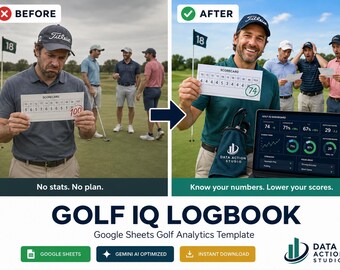
La segunda categoría es el análisis del rendimiento en el golf. A través de mi podcast, Data Axis Golf, me centro en ayudar a los golfistas a mejorar utilizando datos en lugar de conjeturas. Las plantillas de esta categoría están diseñadas para jugadores que se toman en serio su mejora. Registran métricas relevantes, destacan tendencias y ayudan a identificar dónde se ganan o se pierden golpes. No se trata de simples rastreadores de puntuación, sino de herramientas para la toma de decisiones.
La tercera categoría es la productividad académica y docente. Aquí es donde se desarrolla mi trabajo diario. La docencia, el diseño de cursos, la investigación, la evaluación y las responsabilidades administrativas compiten por mi tiempo y atención. Las plantillas de esta categoría están diseñadas para apoyar a los docentes y profesionales académicos que necesitan sistemas rigurosos y prácticos. Su objetivo es simplificar el proceso, no complicarlo.
En las tres áreas, la filosofía de diseño se mantiene constante.
Claridad antes que desorden.
La funcionalidad prima sobre la decoración.
Sistemas en lugar de atajos.
Cada plantilla se diseña prestando especial atención a la estructura, la usabilidad y el valor a largo plazo. Pruebo cada sistema con datos y flujos de trabajo reales antes de su lanzamiento. Si algo no funciona correctamente en la práctica, no se publica.
También notará que estas plantillas están diseñadas para ser específicas. No pretenden abarcar demasiado. Están creadas para realizar tareas concretas de manera eficiente, lo cual, en definitiva, las hace útiles.
Este enfoque refleja los mismos principios que enseño en mis cursos: los sistemas bien diseñados deben facilitar la toma de decisiones, no complicarlas.
Si eres de las personas que valoran la organización, la claridad y el diseño bien pensado, estás en el lugar correcto.
Explora la tienda y encuentra el sistema que mejor se adapte a tu forma de trabajar.
Most templates look good on the surface. Very few are built to hold up under real use.
Data Action Studio exists to close that gap.
I am Dr. Aaron R. Stewart, a technology management professor. Over the past 30 years, my work has focused on how systems, data, and decision-making intersect in real-world environments. I have worked across more than 50 countries; published three books, including an Amazon #1 bestseller; and spent my career studying how people and organizations actually operate—not how we wish they would.
That distinction matters.
Because the templates you will find here are not designed from theory alone. They are built from systems I personally use in my own work—as a professor, researcher, entrepreneur, and analyst.
Every template starts with a problem I have had to solve.
The shop is organized around three core areas, each tied directly to my expertise and ongoing work.
The first is entrepreneurship and venture management. As both a researcher and practitioner, I have spent decades studying how businesses are built, scaled, and sustained. The templates in this category are designed for individuals managing multiple projects, ventures, revenue streams, and even just life. They bring structure to complexity—helping you track progress, prioritize effectively, and maintain clarity across competing demands.
The second is golf performance analytics. Through my podcast, Data Axis Golf, I focus on helping golfers improve using data rather than guesswork. The templates in this category are designed for players who are serious about improvement. They track meaningful metrics, highlight trends, and help you identify where strokes are truly gained or lost. These are not simple score trackers—they are decision tools.
The third is academic and faculty productivity. This is where my daily work lives. Teaching, course design, research, grading, and administrative responsibilities all compete for time and attention. The templates in this category are designed to support faculty and academic professionals who need systems that are both rigorous and practical. They are built to reduce friction, not add to it.
Across all three areas, the design philosophy remains consistent.
Clarity over clutter.
Function over decoration.
Systems over shortcuts.
Every template is built with careful attention to structure, usability, and long-term value. I test each system using real data and real workflows before it is ever made available. If something does not hold up in practice, it does not get released.
You will also notice that these templates are intentionally focused. They are not trying to be everything at once. They are built to do specific things well, which is ultimately what makes them useful.
This approach reflects the same principles I teach in my courses—well-designed systems should make decisions easier, not more complicated.
If you are someone who values organization, clarity, and thoughtful design, you are in the right place.
Browse the shop and find the system that fits the way you work.