

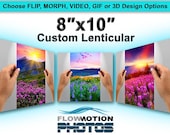



Benvenuti nel mio studio di progettazione lenticolare online. Sono Eric, qui per aiutarti a guidare i tuoi concetti alla realtà. Mi piace lavorare con i miei clienti per creare le loro incredibili immagini lenticolari personali. Ogni progetto offre opportunità uniche per un risultato bellissimo.
Nello sviluppo del tuo design, considera prima lo scopo. Questo può essere per onorare qualsiasi evento dalla nascita alla morte, inclusi compleanni, lauree, matrimoni, anniversari, celebrazioni di amicizia o semplicemente perché.
Successivamente, dai un'occhiata alla nostra linea di prodotti, pensando a come potresti mostrare il tuo design. Puoi realizzare biglietti da visita, portachiavi, spille da bavero, pendenti, specchietti retrovisori, magneti frigoriferi, stampe dal portafoglio a 8"x10" e poster da 11"x14" a 19"x27". Le dimensioni personalizzate non sono un problema.
Quindi considera l'effetto che desideri produrre. Questo definirà quante immagini di origine ti serviranno. Una singola immagine è tutto ciò che è necessario per un progetto 3D. Due foto sono ottime per le sequenze di tipo "prima e dopo". Inoltre, puoi scegliere di TRASFORMARE un'immagine in un'altra. Trasformare la stessa persona in diversi periodi della sua vita produce l'effetto di invecchiare o diventare più giovane, a seconda del modo in cui ci si sposta oltre l'immagine finale. Il morphing di due foto dello stesso servizio fotografico rianima il movimento tra le pose. Con due o tre foto puoi creare una transizione FLIP o dissolvenza naturale. Questa è la nostra opzione di design più popolare. Ogni immagine rimane distinta mentre attraversa la sequenza.
Oltre a tre immagini, ogni fotogramma deve essere di natura simile, come i fotogrammi di un clip filmato. Possiamo codificare fino a 40 singoli fotogrammi, che è necessario per animazioni 3D più complesse. Gli effetti uniformi possono essere generati utilizzando solo 20 fotogrammi. Se stai pensando di progettare un'animazione, tieni presente che più distanza equivale a una maggiore sfocatura. A volte è meglio lasciare che alcuni elementi dell'animazione semplicemente capovolgano / dissolvano in una nuova posizione piuttosto che spostarla fotogramma per fotogramma in posizione. Ad esempio, le ruote che girano su una bicicletta sono efficaci, ma avere la bicicletta stessa che si muove attraverso il telaio avrebbe meno successo.
Quando scegli le foto reali, tieni presente che grandi aree di colori solidi (in particolare bianco e nero) consentiranno al fotogramma successivo di apparire prima in quelle zone e il fotogramma precedente ritarderà più a lungo. Questo è chiamato l'effetto "ghosting", che a volte è bello, a volte no. Generalmente vogliamo texture su texture ed entrambi hanno la stessa gamma tonale. Se il tuo progetto richiede l'orientamento verticale, cosa che la maggior parte fa, prendi nota dell'orientamento delle immagini che fornisci. A volte le persone inviano due colpi di testa (ritratto) e poi un'immagine di gruppo orientata ampiamente (orizzontale), e dobbiamo perdere persone ai bordi o aggiungere dati in alto e in basso. Ogni immagine deve adattarsi alla dimensione del progetto come un singolo fotogramma. Tienilo a mente quando selezioni tra i tuoi preferiti. Si prega di inviare le immagini originali inalterate e permettermi di ritagliarle in posizione a tal fine. Parte del mio servizio è quello di rendere ogni fotogramma di transizione piacevolmente in quello successivo, e quindi l'allungamento extra e lo spazio di manovra consentono questo passaggio. Cerco di allineare bordi ed elementi all'interno delle composizioni in modo che "suonino bene" l'uno con l'altro nella transizione.
Non esitate a contattarmi per qualsiasi domanda. Non vedo l'ora di aiutarti a creare uno straordinario design lenticolare.
Welcome to my online lenticular design studio. I'm Eric, here to help guide your concepts to reality. I enjoy working with my clients to create their own personal amazing lenticular images. Each project provides unique opportunities for a beautiful outcome.
In developing your design, first consider the purpose. This can be to honor any event from birth to death, including birthdays, graduations, weddings, anniversaries, celebrating friendship, or just because.
Next, check out our product line, thinking how you might showcase your design. You can make business cards, keychains, lapel pins, pendants, rearview mirror danglers, refrigerator magnets, prints from wallet to 8"x10", and posters from 11"x14" to 19"x27". Custom sizes are not a problem.
Next consider the effect you wish to produce. This will define how many source images you will need. A single image is all that's required for a 3D project. Two photos is great for 'before and after' type sequences. Also, you could choose to MORPH one image to another. Morphing the same person at different periods of their life produces the effect of aging or getting younger, depending on which way you move past the final image. Morphing two photos from the same photo shoot reanimates the movement between the poses. With two or three photos you can create a FLIP or natural dissolve transition. This is our most popular design option. Each image remains distinct as they cycle through the sequence.
Beyond three images, each frame has to be similar in nature, like frames from a movie clip. We can encode up to 40 individual frames, which is necessary for more complex 3D animations. Smooth effects can be generated using only 20 frames. If you are thinking about designing an animation, keep in mind that more distance equals greater blurring. Sometimes it's better to let some elements of the animation simply flip/dissolve into new position than to have it move frame by frame into place. For instance, wheels spinning on a bicycle is effective, but to have the bicycle itself move across the frame would be less successful.
When choosing the actual photos, keep in mind that large areas of solid colors (especially black and white) will allow the next frame to appear sooner in those zones, and the previous frame will delay longer. This is called the 'ghosting' effect, which is sometimes nice, sometimes not. Generally we want texture over texture and both to have the same tonal range. If your project requires portrait orientation, which most do, then note the orientation of the images you provide. Sometimes people will send two head shots (portrait) and then a group image that is oriented wide (landscape), and we have to either lose people on the edges or add data to the top and bottom. Each image has to fit the dimension of the project as a single frame. Just keep this in mind when selecting from your favorites. Please send the original unaltered images and allow me to crop them into place on this end. Part of my service is to make each frame transition nicely into the next, and so the extra stretch and wiggle room allows this step. I try and align edges and elements within the compositions so that they will 'play nice' with each other in the transition.
Feel free to contact me with any questions. I look forward to helping you create a stunning lenticular design.