
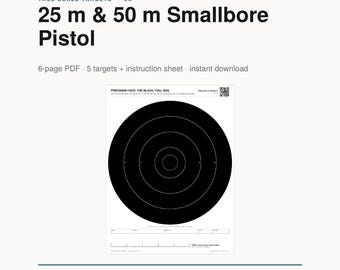
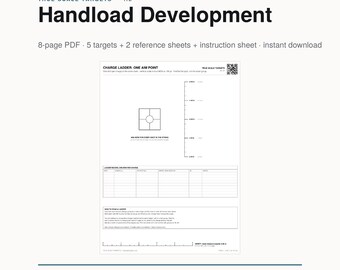
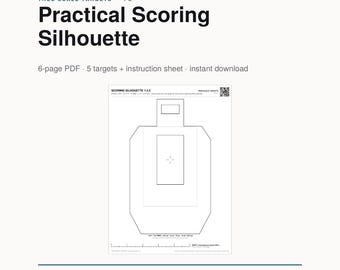
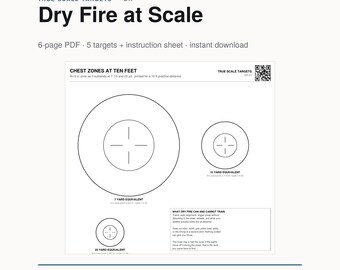
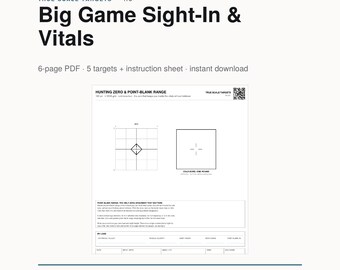
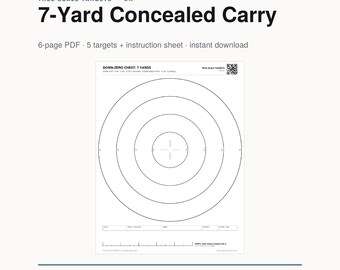
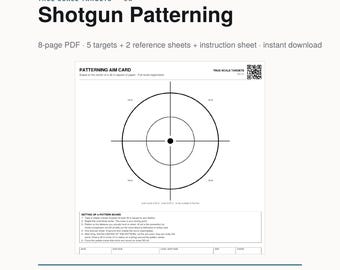
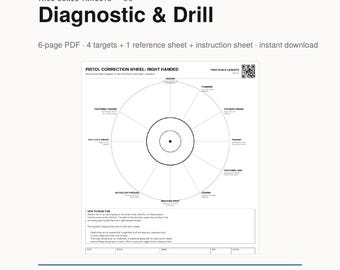
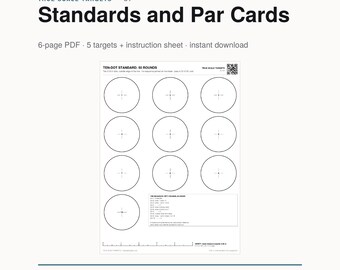
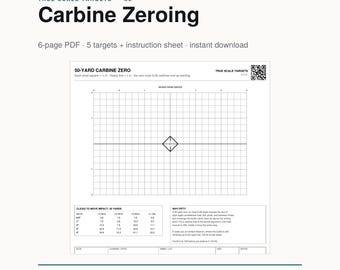
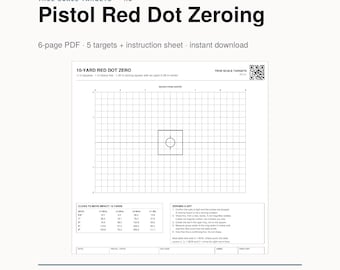
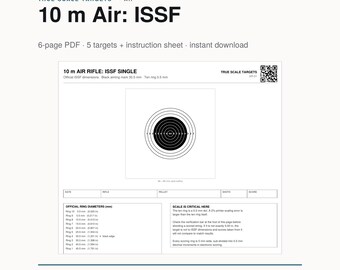
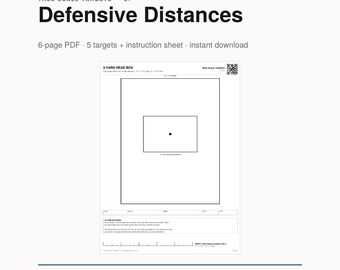
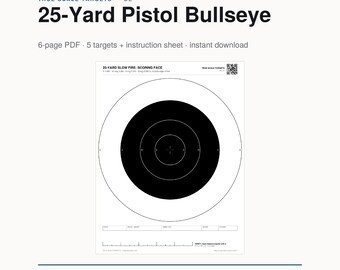
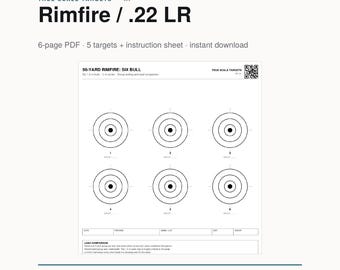
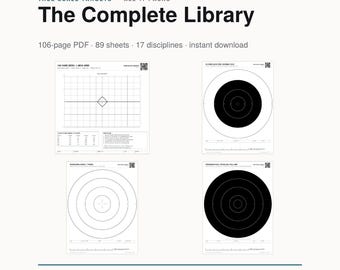

Descarga la imagen, imprímela en papel de buena calidad, comprueba la barra de 5 pulgadas con una regla y ¡a disparar! Cada hoja está dibujada a escala MOA real, y la barra te indicará la precisión.
Download, print on decent paper, check the 5 in bar with a ruler, go shooting. Every sheet is drawn to true MOA, and the bar is how you know.
La mayoría de las dianas imprimibles son imágenes de dianas. Los anillos tienen el tamaño que les asignó el programa de dibujo del diseñador, y cuando la impresora reduce silenciosamente el tamaño de la página para que quepa, nadie se entera hasta que aparece un cero que no se puede imprimir.
Estos se construyen a partir de mediciones. Cada anillo, cuadrícula y zona de puntuación se calcula a partir de unidades angulares reales, MOA verdaderos a 1,047 pulgadas por cada cien yardas, no la pulgada redondeada que se usa en la mayoría de las hojas. Los blancos aéreos de 10 metros se dibujan según las dimensiones publicadas en el reglamento de la ISSF, medidos hasta el borde exterior de la línea del anillo tal como lo especifica el reglamento.
En la práctica, esto significa lo siguiente: descarga el paquete, imprímelo al 100% en el papel que prefieras (papel normal para cuadrículas, cartulina para cualquier cosa que vayas a grapar) y dispara dos veces. Luego, coloca una regla en la barra de 5 pulgadas una vez, en la primera hoja que salga de la bandeja. Si marca 5,00 pulgadas, la configuración es correcta y puedes imprimir el resto sin preocuparte. ¡Y a disparar!
Los diseños también utilizan contornos abiertos donde las reglas de la competición no exigen una marca de puntería negra sólida. Esto no es una cuestión de estilo, sino que significa que cada hoja cuesta una fracción del tóner, por lo que puedes imprimir una diana por cada serie en lugar de racionarlas.
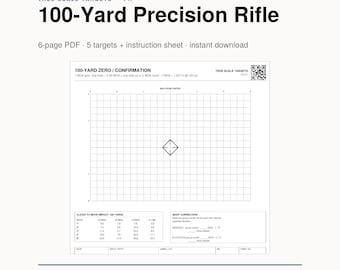
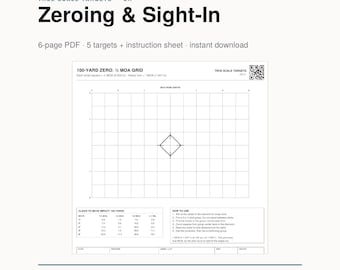
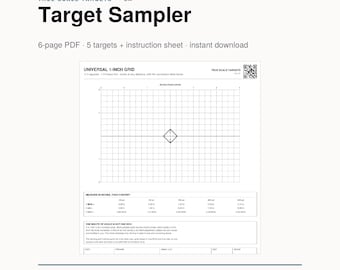
Cada paquete incluye una hoja de instrucciones: cómo imprimirla para que las dimensiones se conserven, para qué sirve cada uno de los cinco blancos y a qué distancia, y cómo interpretar los resultados. Nadie más incluye esto en la descarga, y es esta página la que determina si el resto del paquete vale la pena.
Construido por un tirador que se cansó de adivinar si el objetivo mentía.
Most printable targets are pictures of targets. The rings are whatever size the designer's drawing program made them, and when your printer quietly shrinks the page to fit, nobody finds out until a zero refuses to settle.
These are built from measurements instead. Every ring, grid and scoring zone is computed from real angular units, true MOA at 1.047 inches per hundred yards, not the rounded inch most sheets use. The 10-metre air targets are drawn to the published ISSF rule-book dimensions, measured to the outside edge of the ring line the way the rules actually specify.
In practice that means this: download the pack, print it at 100% on whatever paper you like, plain copy paper is fine for grids, card stock earns its money on anything you will staple up and shoot twice — then put a ruler on the 5-inch bar once, on the first sheet out of the tray. If it reads 5.00 inches your settings are right and you can print the rest of the stack without thinking about it. Then go shooting.
The designs also use open outlines wherever competition rules don't demand a solid black aiming mark. That is not a style choice, it means a sheet costs you a fraction of the toner, so you can print a target per string instead of rationing them.
Every pack opens with an instruction sheet: how to print it so the dimensions survive, what each of the five targets is for and at what distance, and how to read what you shot. Nobody else puts that in the download, and it is the page that decides whether the rest of the pack is worth anything.
Built by a shooter who got tired of guessing whether the target was lying.