

Zeldzame vondst
Prijs:EUR 230.90
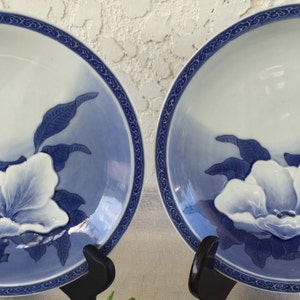
1800's Antique Hirado Moriage Plate Nakazara Peony? Magnolia? Camellia? Porcelain Charger Floral Relief Dish Meiji Taisho Japan *Free SH
Je kunt alleen een bod doen als je een enkel item koopt
Hoogtepunten
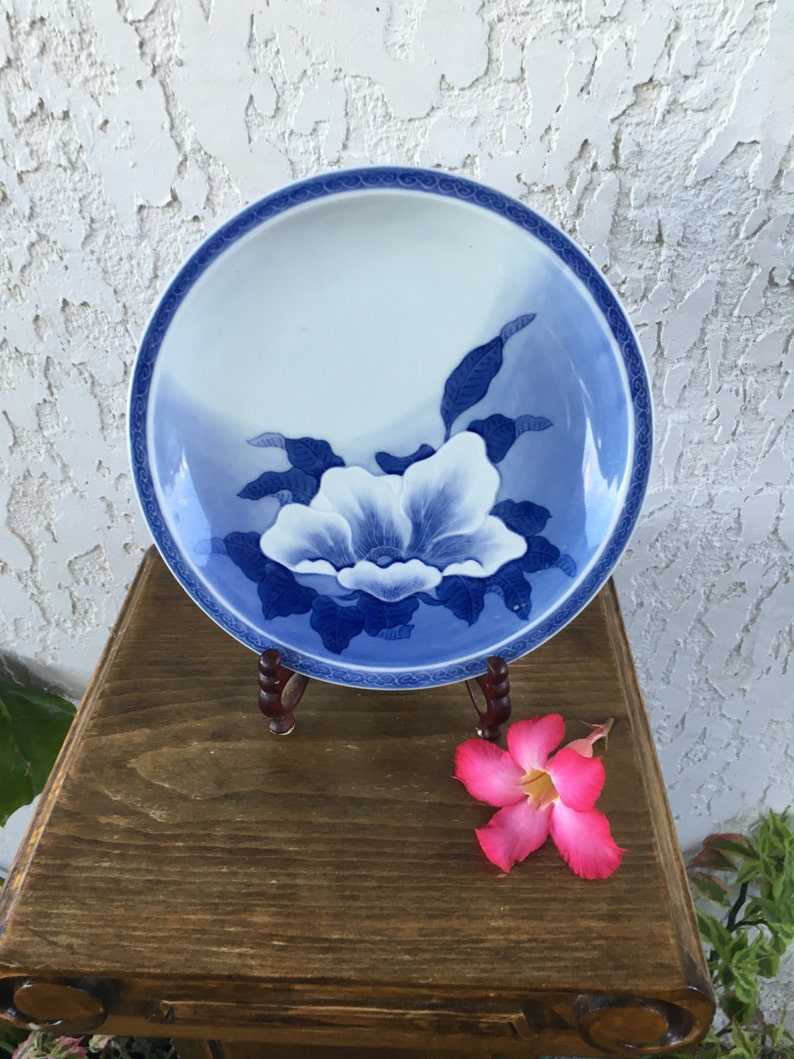
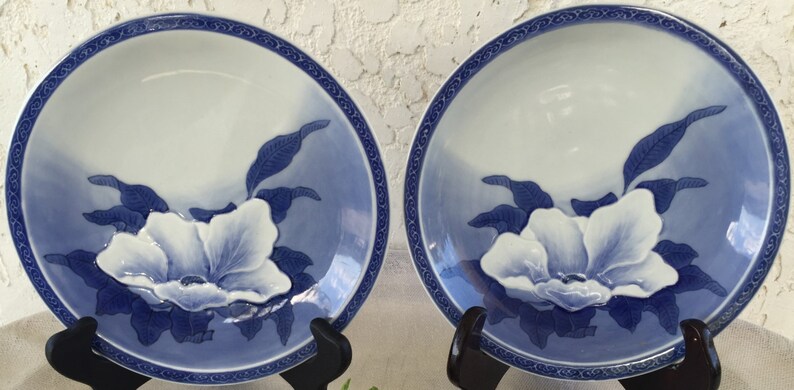
Old Japanese porcelain with Large Blossom Moriage Relief Design - HIRADO/NABESHIMA STYLE BOWL/PLATE!
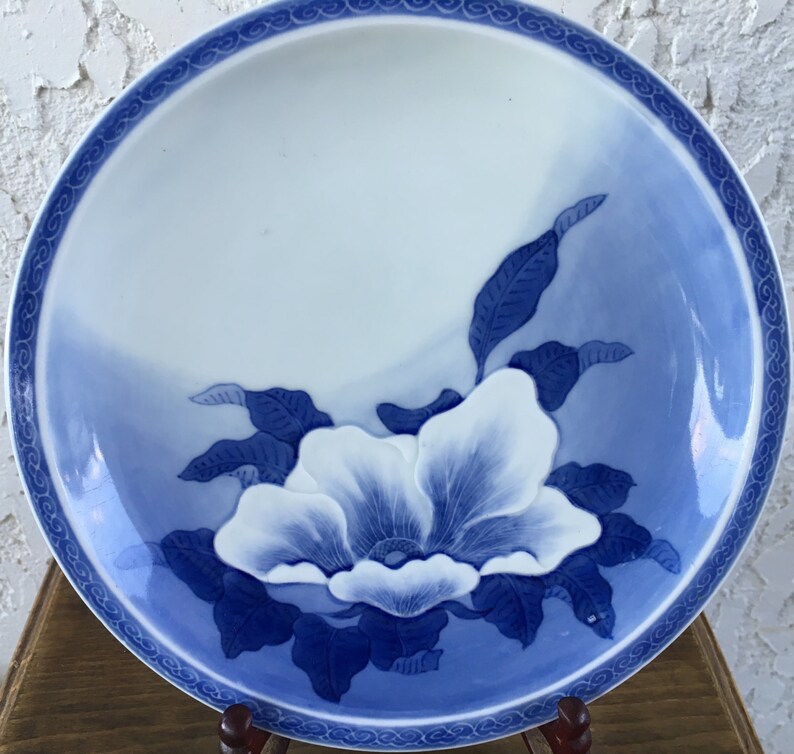
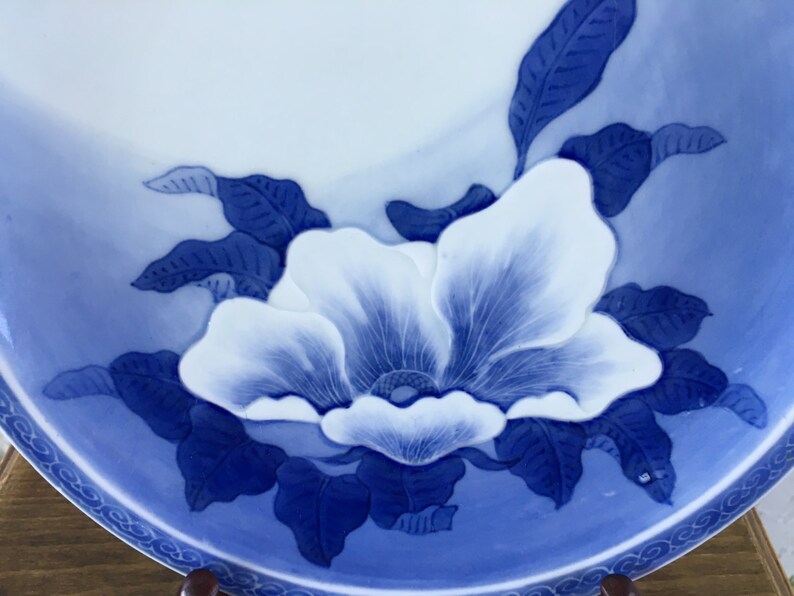
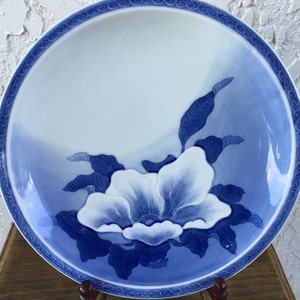
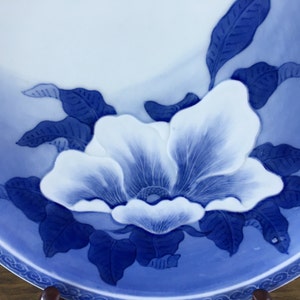
Sometsuke with dark and blue contrasts! It features a large beautiful simple single 5 petal white blossom with blue vein contrasts! The blossom could be a Peony, Magnolia, maybe even a Camellia...but the leaves don't match up to me. The leaves remind me more of apple, peach or cherry tree type leaves. It's "nabeshima" style to me...simple, taking up just part of the dish, off centered, with the design going onto the plate lip. The photos don't do this dish justice! The blossom is in light RELIEF! :-)
The rim border is painted in Japanese "karakusa" arabesque curlicues.
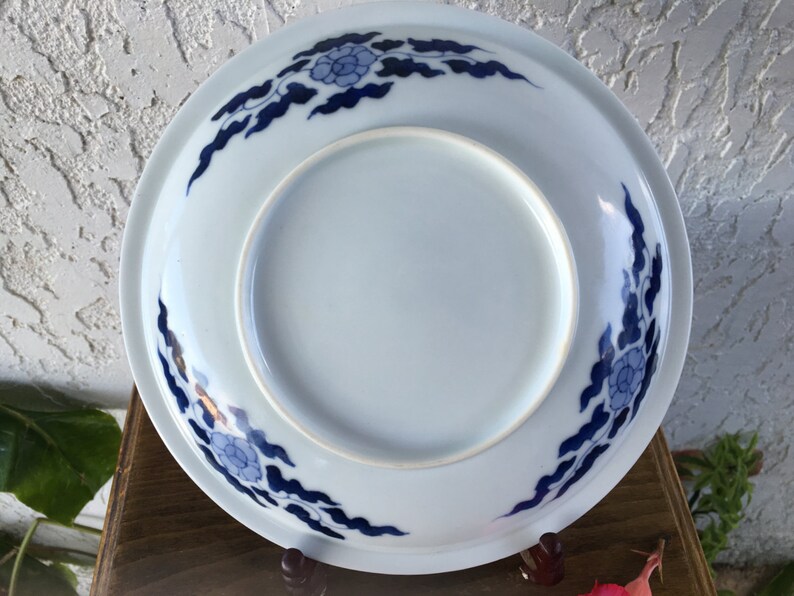
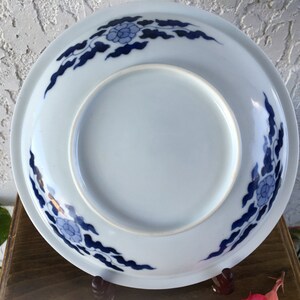
The reverse has 3 swags of a blossom with leaves extending out. One collector describes them as traditional "batwing" and flower borders...okaaaay. Ha!
SPECS/CONDITION REPORT > please scroll further down >
VIEW SHOP POLICIES > below every description is the link "View Shop Policies" for the fine print of shipping, returns, taxes, etc.
OTHER PHOTOS > related items that might be of interest >
PIC 5 is MATCHING PAIR offered separately >
https://www.etsy.com/be/listing/252886824/1800s-two-antique-hirado-moriage-relief
Several NABESHIMA DISHES available >
https://www.etsy.com/shop/GuamAntiquesNstuff/search?search_query=Nabeshima+&order=date_desc&view_type=gallery&ref=shop_search
Searching for that PERFECT CHARGER/WALL PLAQUE? Please stroll my shop with over 200 Plates from Old Delft, Faience, Chinois to Antique Japanese Fine Porcelain from the 1700's >
https://www.etsy.com/shop/GuamAntiquesNstuff?section_id=17085618
Here's an opportunity to own or gift a piece of Antique Porcelain History!
A beautiful housewarming gift or a fine addition to your collection!
* FREE SHIPPING CNMI, FSM, PALAU, RMI & USA
* DISCOUNTED Shipping Most Countries
* Guahan local PU
- Please click on the tab above below the pics for SHIPPING & POLICIES
- Combine Shipping & SAVE!
PHOTOS - integral part of this description, please use zoom feature for detailed views.
SPECS- about 8.5"D x 1.1875"H
CONDITION - EXCELLENT!
- no hairlines, cracks, chips or flakes
- holding at an angle under bright lights, scratches to the glaze, minor. I believe not usage scratches but storage & age related
- PIC 2&3 > the bottom petal, in the center of the white part, there's a faint black "Y" shaped what I would describe as a craze?
- the left petal as the bottom petal curls toward the left tip of the curl, perhaps a tight 1/4" hairline or craze line? Neither this craze or the other can I feel a hairline with my fingernail
- several glaze pops
- a couple grits of sand that rose to the surface (pls zoom in on all pics so there's no misunderstanding, this is an old piece not made by machine)
- upon request, I would happily supply close ups
MY SUBJECTIVE GRADING GUIDE >
Outstanding - pristine, like new
Excellent - excellent considering it's an antique (minor issues)
Good - moderate issues
Fair - more than moderate issues, okay for display, but not a prized piece
Poor - major issues = a bargain deserving of continued existence
🌴 🌴 🌴 🌴 🌴 🌴 🌴 WHERE AMERICA'S DAY BEGINS! 🌴 🌴 🌴 🌴 🌴 🌴 🌴
🌺 HÅFA ADAI from the tropical island paradise of GUAHAN (Guam/USA) 🌺
Encyclopaedia Britannica on HIRADO PORCELAIN >
"Mikawachi porcelain, also called Hirado ware, Japanese porcelain of the Tokugawa period (1603–1867) from the kilns at Mikawachi on the island of Hirado, Hizen province, now in Nagasaki prefecture. Although the kilns were established by Korean potters in the 17th century, it was not until 1751, when they came under the patronage of the prince of Hirado, that they began to make the all-white and the blue-and-white wares for which they are famous. The body of Mikawachi ware is of fine-grained, extremely white porcelain that is usually decorated with miniature-style paintings of landscapes, trees and flowers, or figures in a delicate underglaze blue. The figure paintings are the most characteristic, especially those of Chinese boys at play (karako). Relief decoration and colour glazes, particularly dark brown, were also used. Water droppers, small incense burners, brush sets, ink palettes, and modeled animal figures were among the many objects produced. The period of patronage lasted until 1843, at which time the quality of Mikawachi porcelain declined."
(There are now several "Hirado" pottery makers in Arita using the ancient techniques for modern production)
The British Museum describes NABESHIMA PORCELAIN best >
"Nabeshima ware was made at Okawachi near Arita in Kyūshū under the authority of the Nabeshima clan. The feudal lords of Nabeshima were so proud of their technological skill, that throughout the Edo period (1600-1868) they gave porcelain (and swords) as presents to the lords of other provinces. Very few pieces of this type were exported abroad.
The designs combine pattern and empty space in pure Japanese style and often resemble the bold and sophisticated textile designs of the late seventeenth and eighteenth centuries. The Nabeshima kilns produced underglaze blue and white wares, celadons, enamels and combination pieces. The commonest shapes were food dishes usually produced in sets of five, which took over from the earlier wooden lacquered food bowls with the high foot. The Nabeshima foot is usually decorated with a repeating 'comb tooth' pattern, and the underside of the rim too has scrolling or intertwining motifs. The designs themselves are arrestingly beautiful."
福 💮 🏮 🎍 🎐 🎎 🎋 🍣 🍜 🌾 🐟 福 💮 🏮 🎍 🎐 🎎 🎋 🍣 🍜 🌾 🐟 💮 福
"Porcelain production began in Japan in the early seventeenth century, several hundred years after it had first been made in China during the Tang dynasty (618–906). This refined white ceramic requires more advanced technology than other ceramic types. The vessels are fired at very high temperatures so that they are strong and vitrified, as opposed to low-fired earthenware, which is porous and easily breakable. Unlike stoneware, which is high-fired but can be made from many different types of clay, porcelain is made from a specific clay mixture that includes a soft, white variety called kaolin. The smooth, semi-translucent surface of porcelain is ideal for painting delicate designs, and has been prized in both the East and West.
The Japanese porcelain industry was actually pioneered by Korean potters living in Japan. Many of them came to Japan during two invasions of Korea led by Toyotomi Hideyoshi in the 1590s. An appreciation of Korean ceramics had recently developed in Japan, and many of the feudal lords who accompanied Hideyoshi brought back Korean potters to build up the ceramic industry in their territories. The Nabeshima lord took Korean potters back to his province of Hizen on Kyushu, the southernmost of Japan's main islands. These potters would eventually become the first producers of porcelain in Japan, but they started out by reviving the production of a type of stoneware called Karatsu ware. This type of ceramic is usually simple, inexpensive, and made rapidly but skillfully on the potter's wheel. The potters also introduced a new type of kiln to Japan, the noborigama, or climbing kiln, which allows for greater precision during firing. Therefore, when in the early seventeenth century the Korean potters living in the Arita district of Hizen found suitable clay for the manufacture of porcelain, the infrastructure for its production was already in place. The Hizen region thus became the major center of porcelain production in Japan.
The first porcelain made in Japan by these Korean potters is known as early Imari. "Imari" refers to a port near the Arita kilns, from which these wares were shipped to the rest of the country. Since these porcelains were primarily for domestic consumption, the term "early" is added to distinguish them from later wares also classified as "Imari" which were typically for export. Most early Imari pieces feature designs painted in cobalt blue on a white ground, then coated in a transparent glaze, in the style known as underglaze blue. The porcelain has a coarse, grainy texture and the designs are generally carried out by a free, fluid hand. The technique of painting pictorial designs under a clear glaze was sometimes employed on Karatsu ware, so early Imari may have in part stemmed from this earlier tradition."
🌸 🎏 家族 🎏 家族 🎏 家族 🎏 家族 🎏 家族 🎏 家族 🎏 家族 🎏 家族 🎏 🌸
I'm not an expert on Porcelain. The information above is based on my research as a collector. It's time to downsize and find an appreciative home for this exquisite piece!
Feel free to contact me if you have questions or need additional photos.
-
Bestel vandaag om het te krijgen op 11 mei
Als je vandaag koopt, zou je bestelling uiterlijk deze datum moeten aankomen. Om een betrouwbare verwachte leverdatum te berekenen, kijken we bijvoorbeeld naar recente doorlooptijden van de vervoerder, de verwerkingstijd en verzendgeschiedenis van de verkoper en waar de bestelling naartoe en vandaan wordt verzonden.
-
Retouren en ruilingen worden niet geaccepteerd
Maar neem contact met me op als er problemen met je bestelling zijn.
-
Gratis verzending
-
Verzonden vanuit: Guam
Er ging iets mis bij het berekenen van je verzendkosten. Probeer het nog eens.
Etsy's Aankoopbescherming
Shop met vertrouwen op Etsy wetende dat als er iets misgaat met een bestelling, dan helpen we je.
Lees hier de voorwaarden.

Geef dit item als eerste een recensie


Meer uit deze shop
Shop bezoeken-
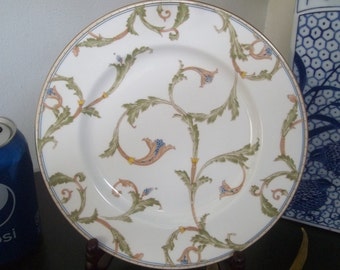
Talara Saladebord(en) 8,5'' Dessertschotel Noritake 'New Lineage II' Patroon Bone China Porselein Stopgezet Thailand
EUR 18.22
-
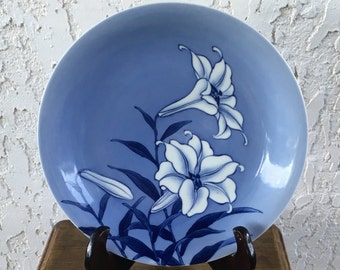
1800's Antique Hirado Porcelain Plate 白百合 Shirayuri White Lily Blossom Charger Floral Osara Dish Bowl Meiji Taisho Japan *Free S&H
EUR 230.90
-
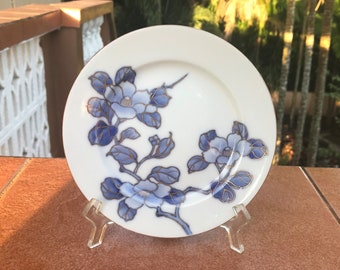
Fukagawa Plate 椿 Tsubaki Camellia Blossoms Dish Schotel Blue & White Gilded Flower Porcelain Gold Floral Schaal Arita Japan
EUR 95.91
-
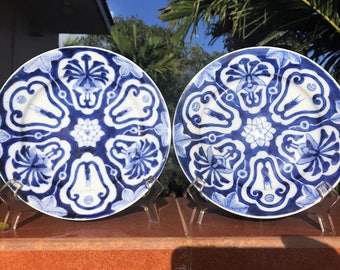
1800's TWO Plates #A Signed Dainippon Hizen Arita Aoki-sei 染付 Sometsuke 阿蘭陀海芋 Calla Lily Blossoms Dish Pair Floral Porcelain Wall Art Japan
EUR 257.66
-
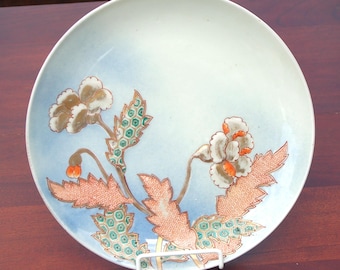
Antieke JAPANSE IMARI-oplader NABESHIMA pioenroos poederblauw Hichozan Artia Meiji
EUR 161.89
-
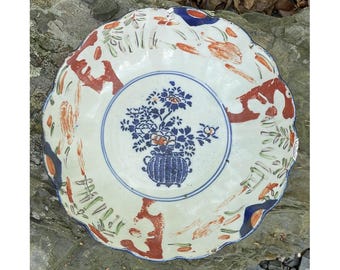
9,75" antiek Japans Arita Imari Meiji-porselein 19e eeuw handgeschilderde kom
EUR 113.32
-
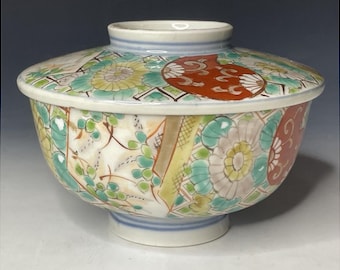
Antieke Japanse Imari Arita porseleinen kom met deksel uit Meiji-tijdperk Nippon 19e eeuw
EUR 80.94
-
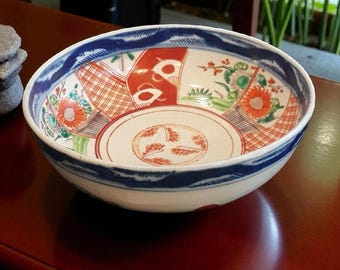
Antieke Meiji-Imari-kom
Aanbiedingsprijs EUR 122.22
Oorspronkelijke prijs EUR 162.96
-
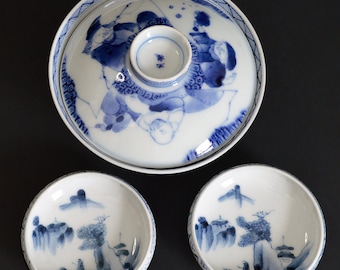
Antieke Japanse Imari porseleinen kom met deksel + 2 kleine Meiji blauw-witte zijborden
EUR 175.26
-
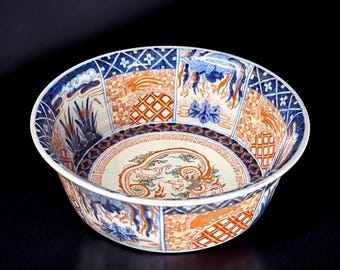
Antieke Japanse Imari-porseleinen kom – handgeschilderd keizerlijk drakenmotief – diameter: 8,5 inch, verzamelobject Aziatische decoratieve kunst Edo-Meiji-tijdperk
EUR 245.28
-

Japans Igezara-bord uit Meiji-tijdperk, antiek blauw en wit keramiek, 12 inch, inbanware, taartbodem
Aanbiedingsprijs EUR 267.57
Oorspronkelijke prijs EUR 356.77
-
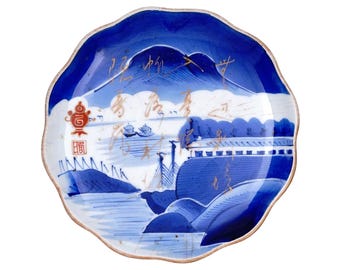
Antieke 19e-eeuwse Meiji-Japanse kom, een Imari Arita-bord met kalligrafie en nautisch thema, porselein, blauw en wit
Aanbiedingsprijs EUR 91.34
Oorspronkelijke prijs EUR 99.29
-
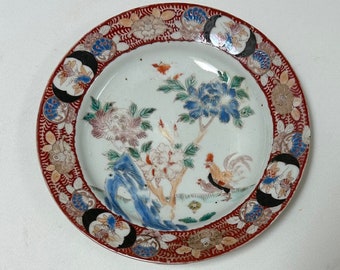
Antiek Japans Imari bord porselein 19e-eeuwse Meiji-periode
EUR 160.80
-
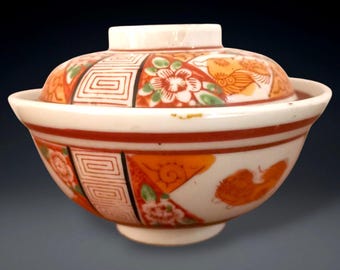
Antieke Meiji-Imari-porseleinen kom met deksel, Japans, polychroom handgeschilderd
Aanbiedingsprijs EUR 106.03
Oorspronkelijke prijs EUR 141.38
-
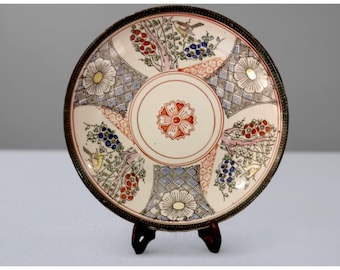
Antiek Meiji-Imari-keramisch bord, handgeschilderd Japans polychroom,
Aanbiedingsprijs EUR 89.03
Oorspronkelijke prijs EUR 118.71
-
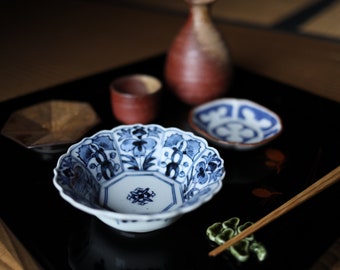
Kutani- antieke Imari-porseleinen schalen (set van 3), handgeschilderde indigobloemen, zilverreparatie
EUR 187.30


