

Artículo excepcional
Precio:MX$40,245.52
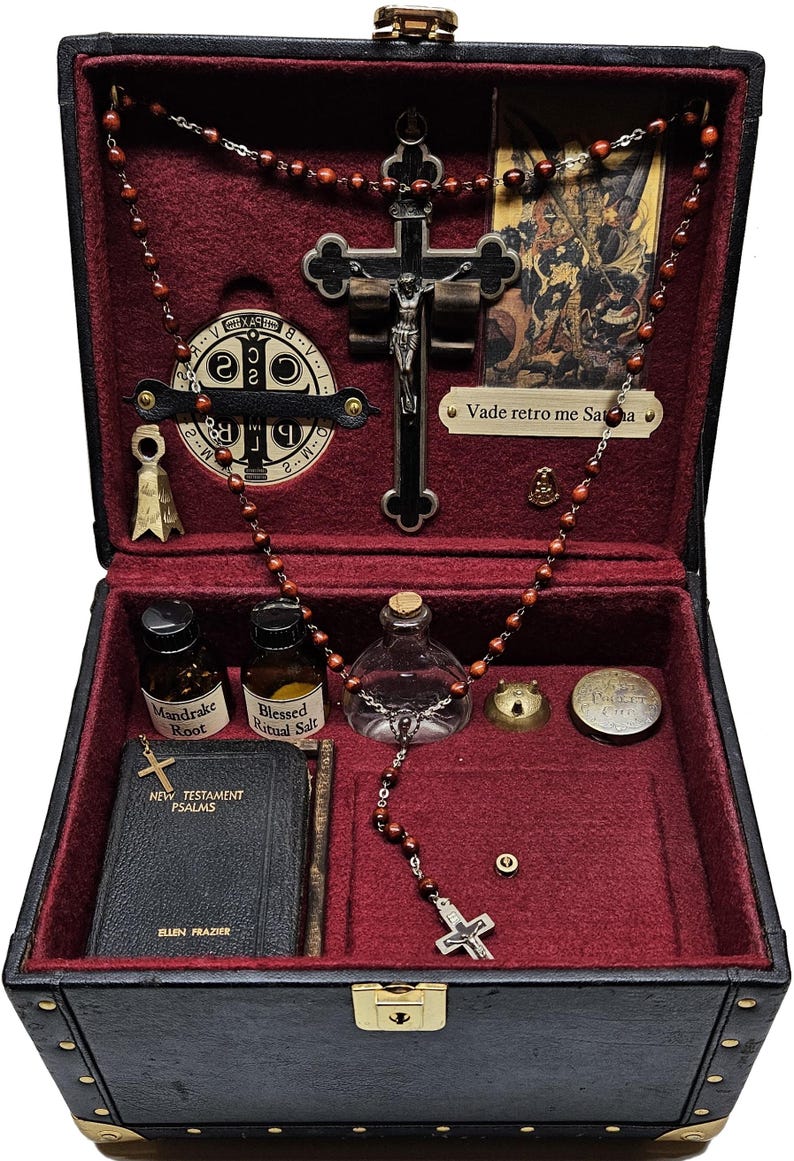
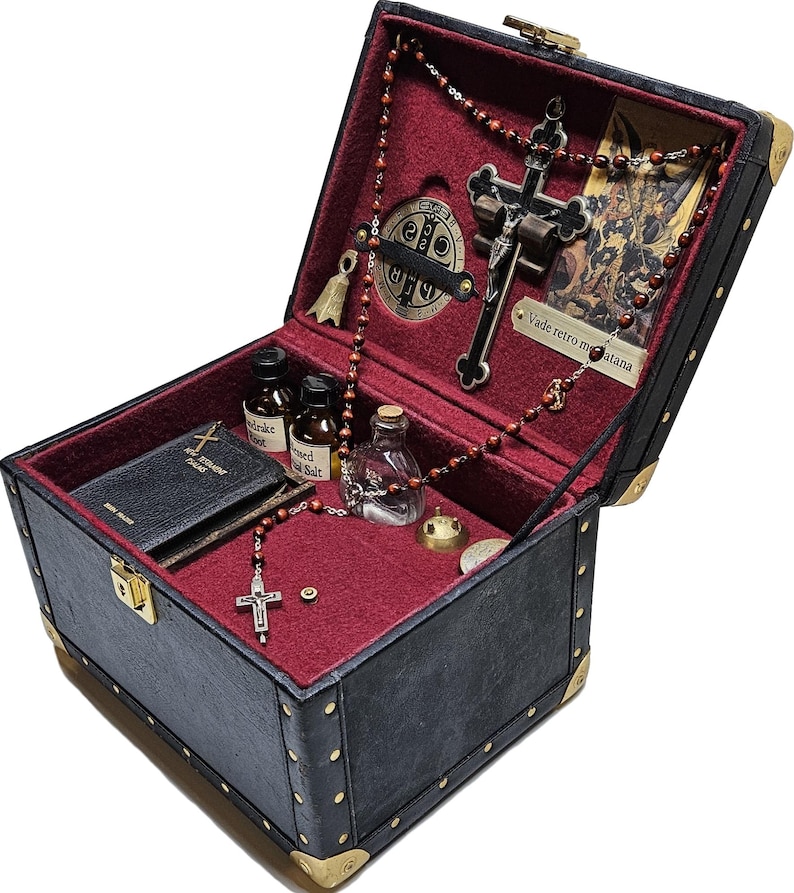
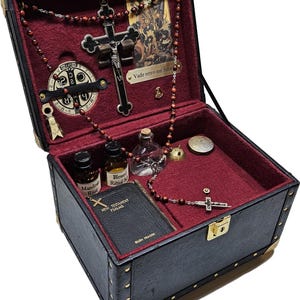
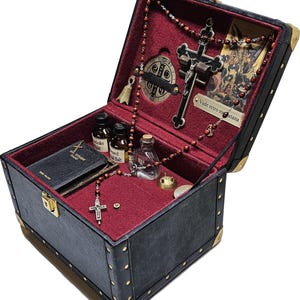
Antique 14th Century Monastic Exorcist's Exorcism (Demon Slayer) Traveler's Kit
Solo puedes hacer una oferta por compras de un único artículo
Find out more about my books @ www.KingdomOfShadow.com
Antique 14th Century Monastic Exorcist's Exorcism (Demon Slayer) Traveler's Kit Authentic Representation
A beautifully handcrafted representation of medieval and historical macabre dark art.
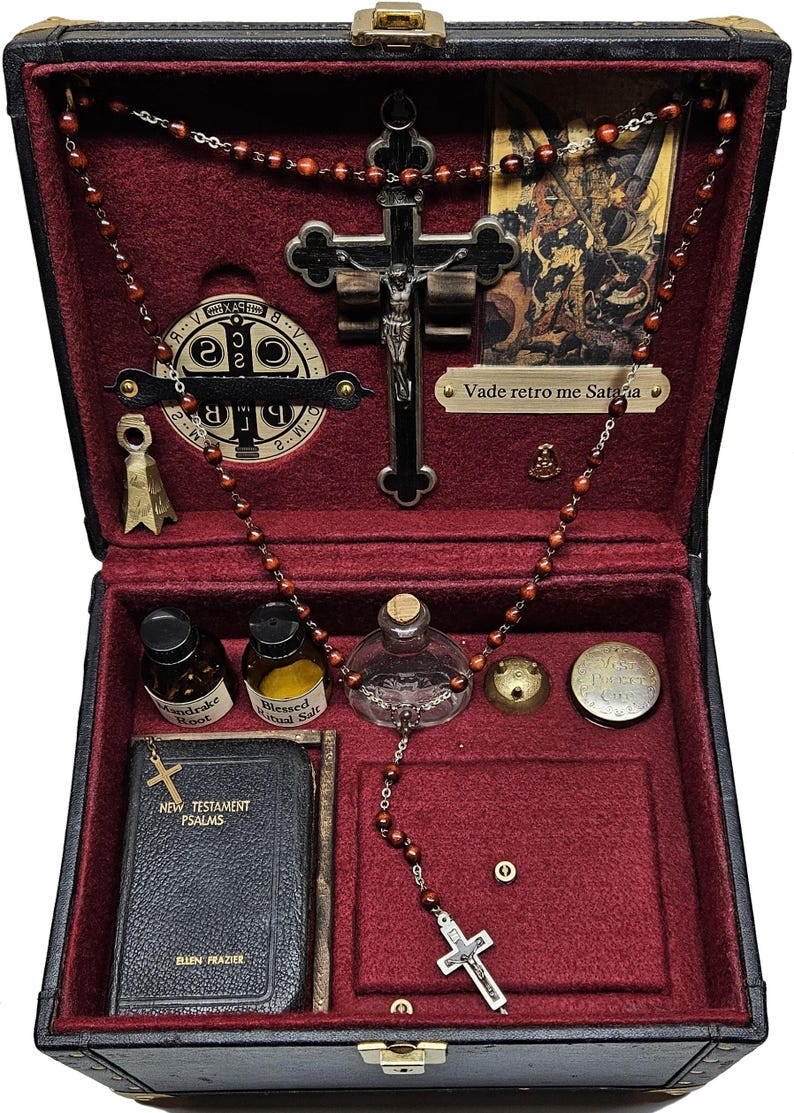
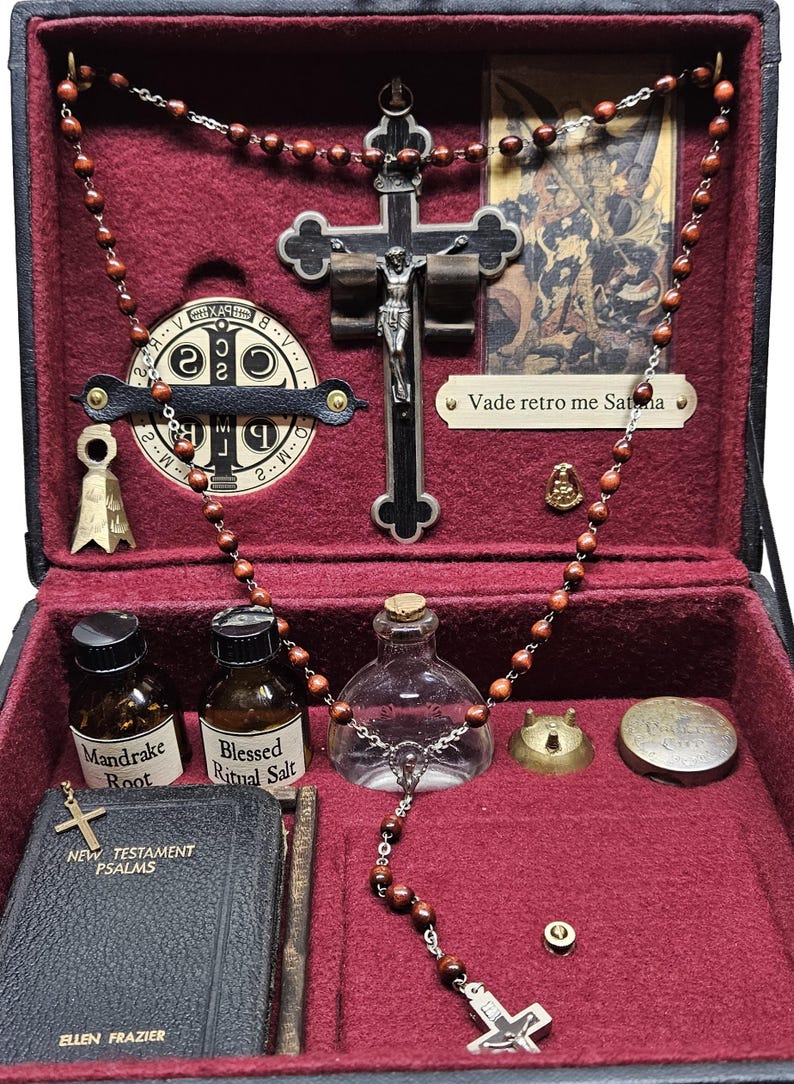
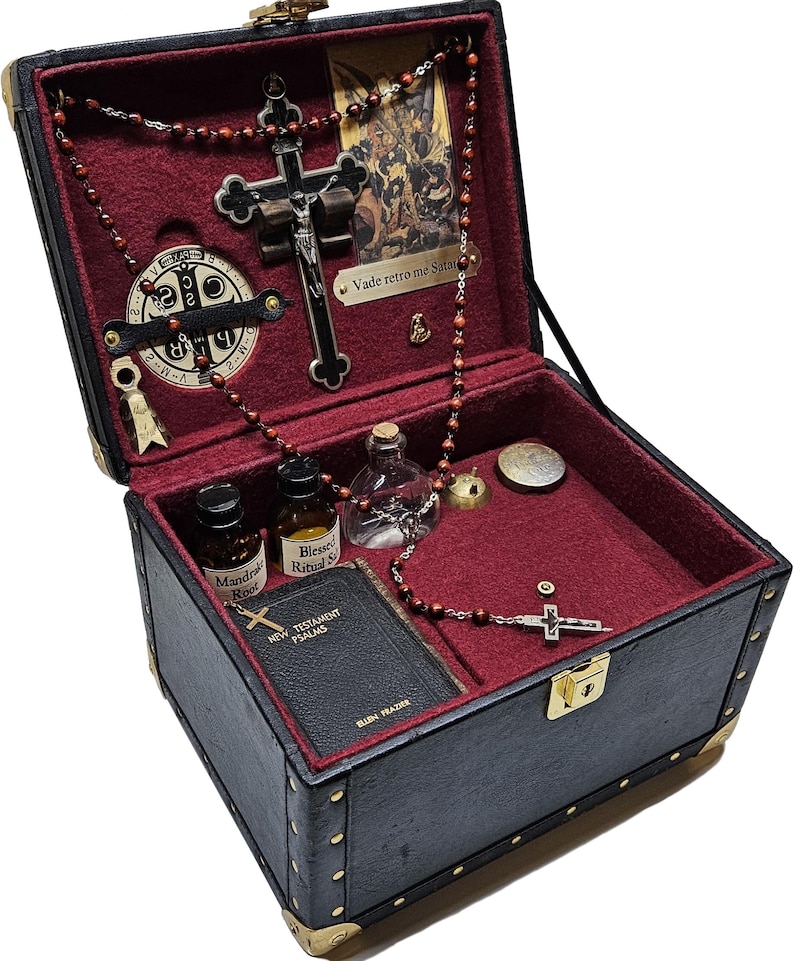
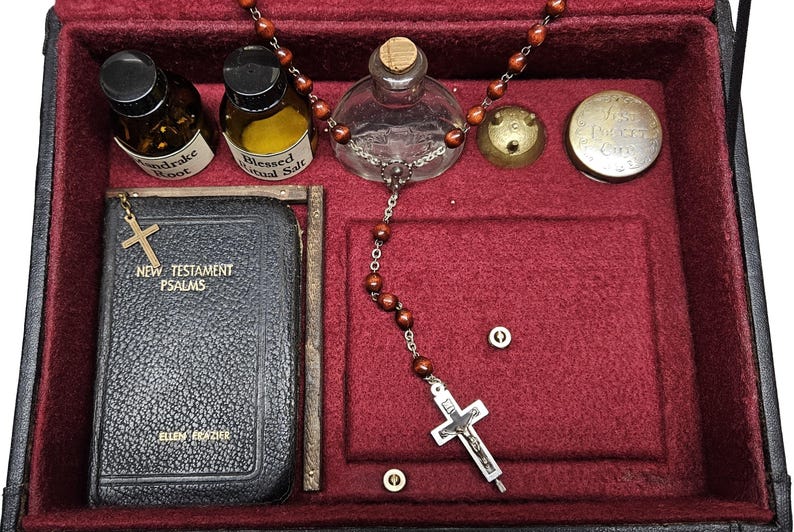
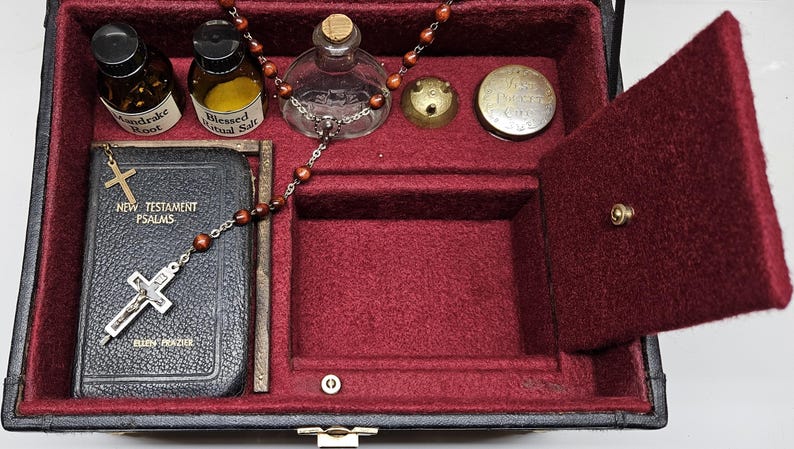
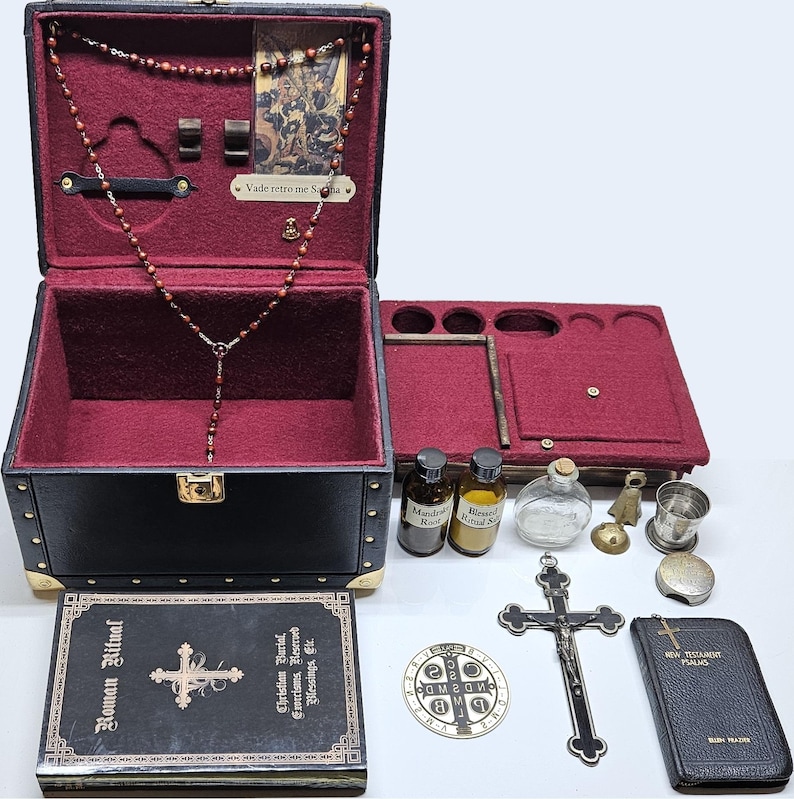
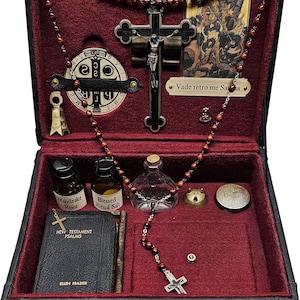
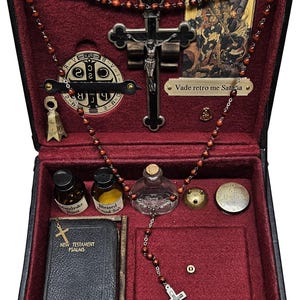
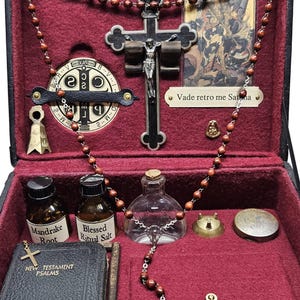
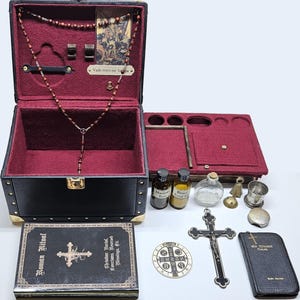
This one-of-a-kind monastic traveler's exorcism kit includes the following (and more):
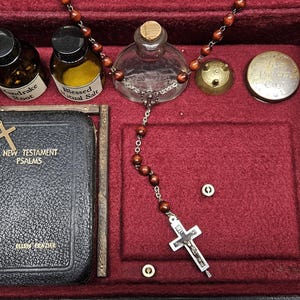
Bible: 1946 Edition - Leather-Bound with Zipper Case
Rituale Romanum Paperback Edition: 2017 Paperback Edition with Latin and English (504 pages)
Rituale Romanum Leather-Bound Edition (Optional): Traditional, 15th Century Venetian-Style Binding with Custom Cover and Brass St. Benedict Medallion (Non-Reversed), Bound in 1.2mm Black Top Grain Leather by Kingdom Of Shadow ($590 Additional)
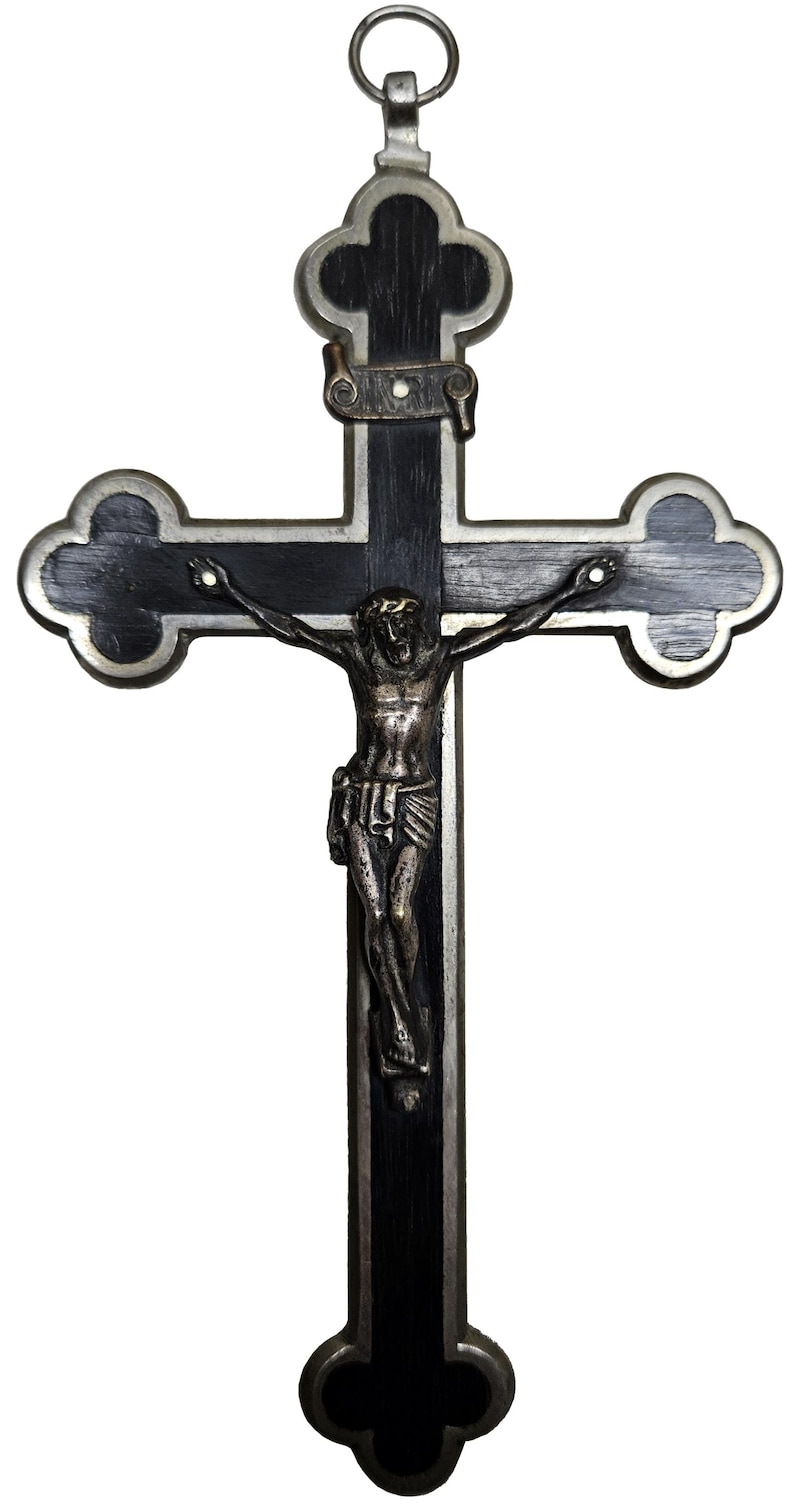
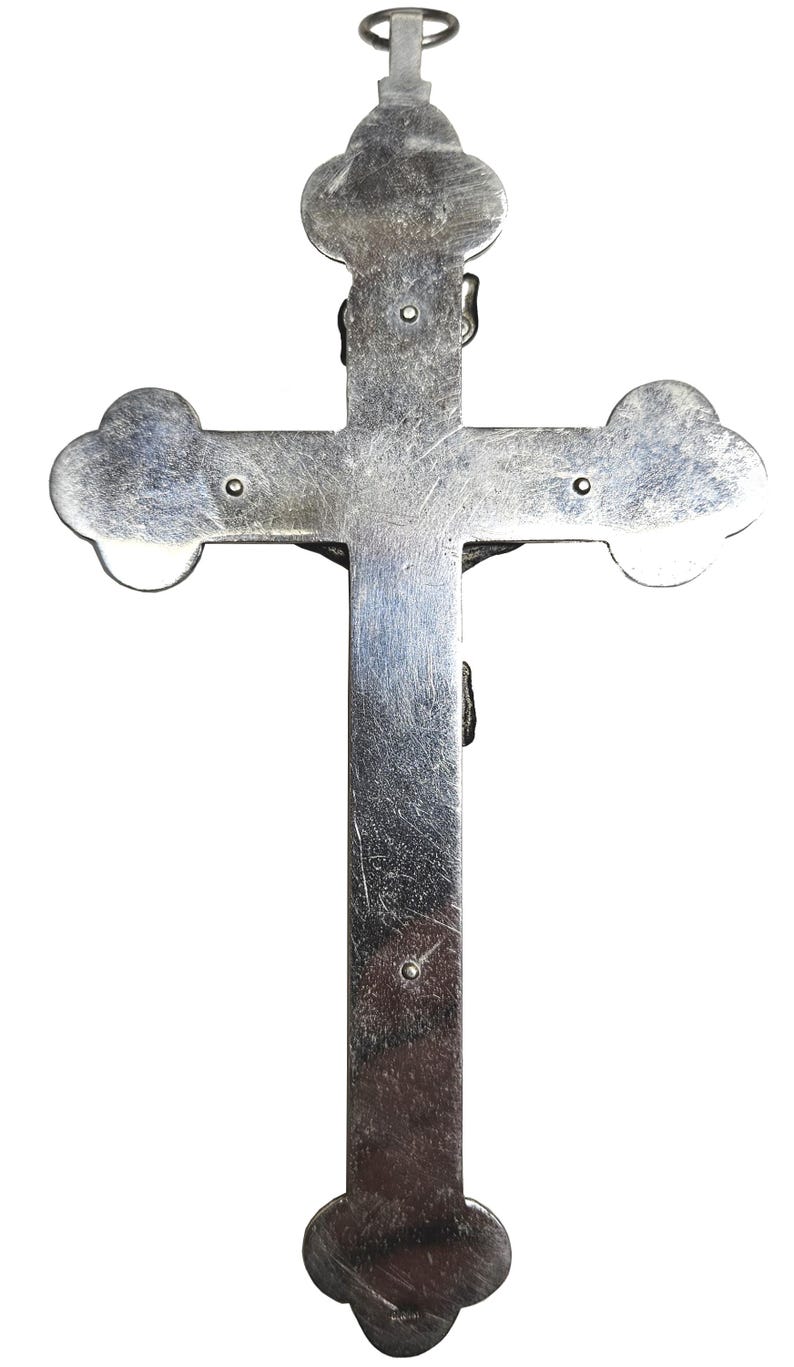
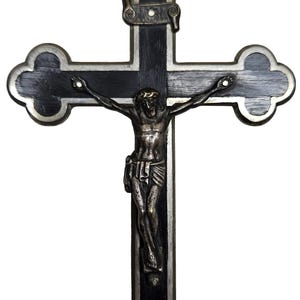
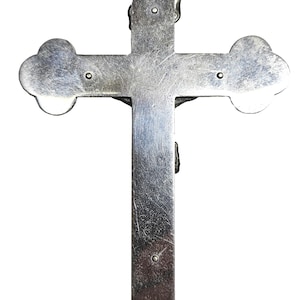
Crucifix: Pre-1939 Germany - Authentic Antique Nun's Habit Crucifix Cross with Ebony Wood Inlay and Metal Body - Large 7-1/4" Tall
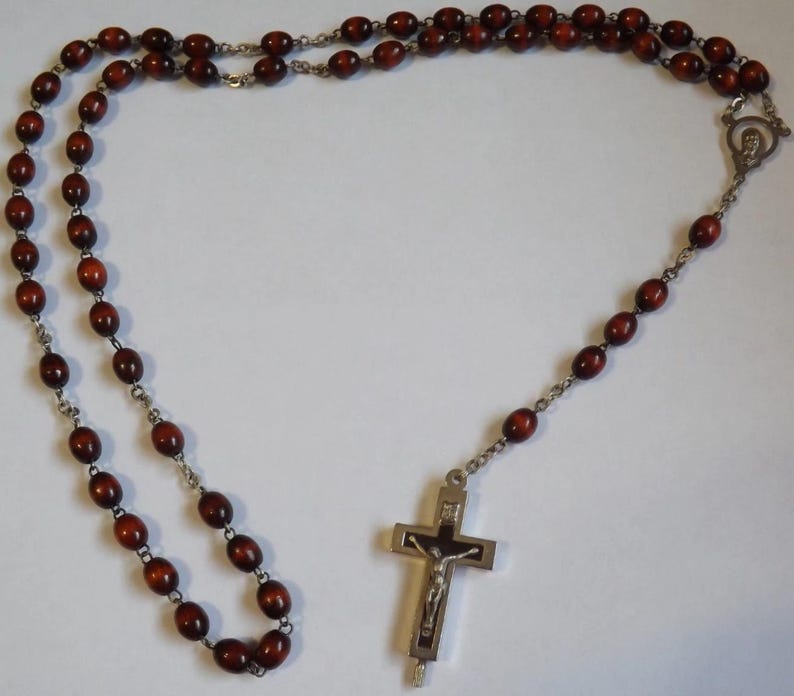
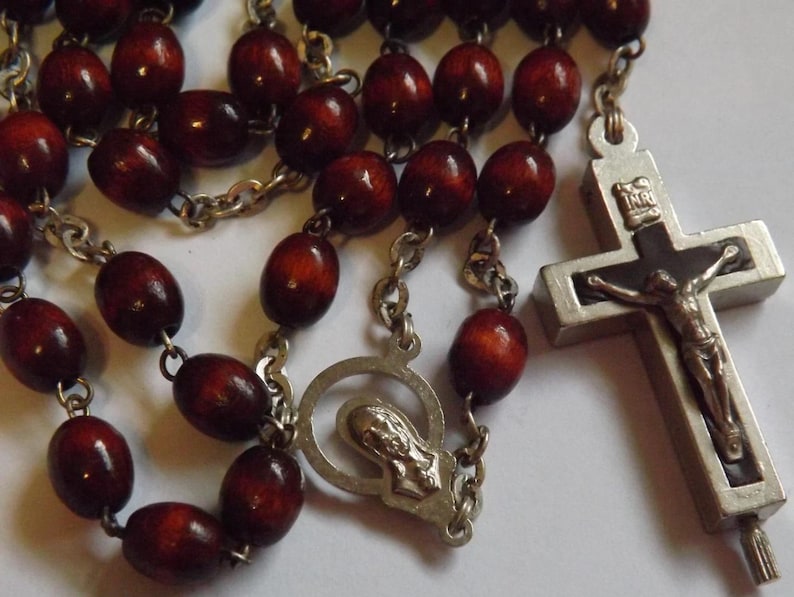
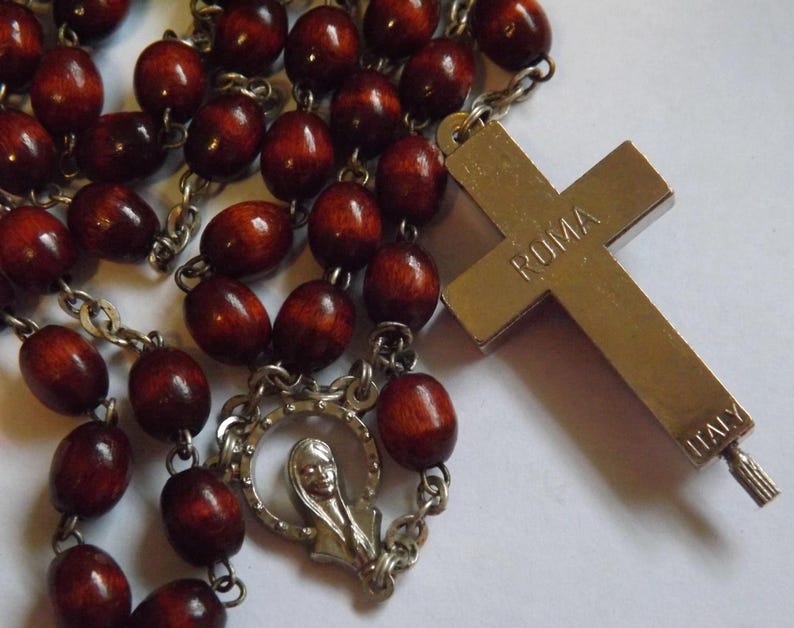
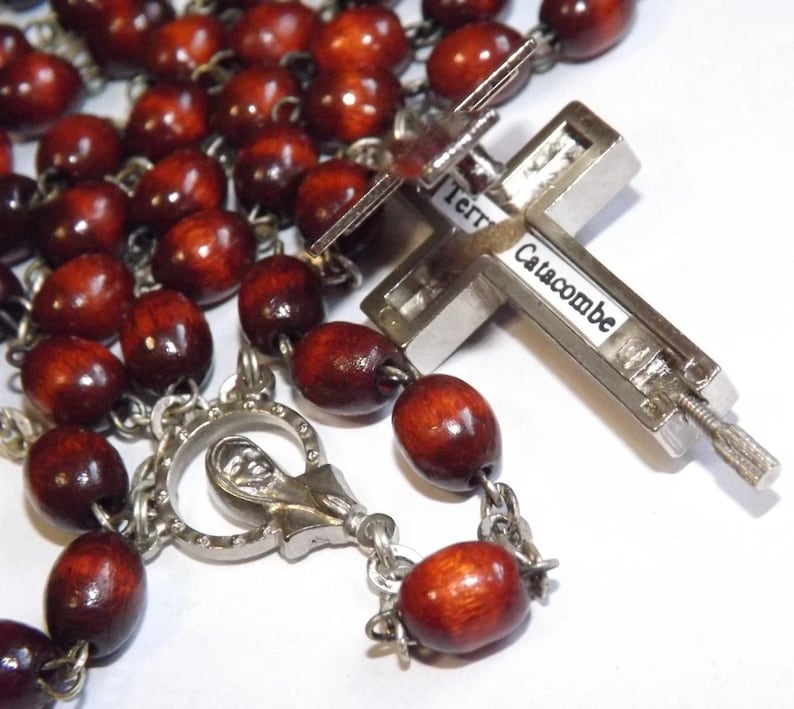
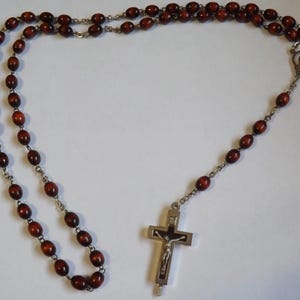
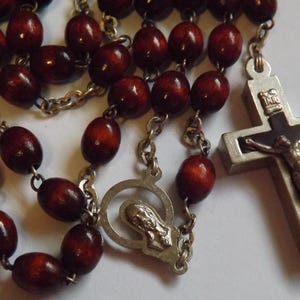
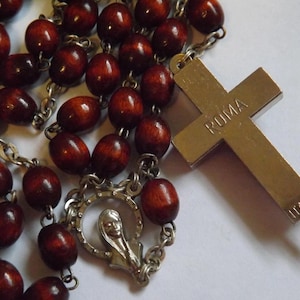
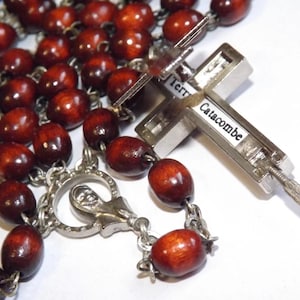
Rosary: Authentic Antique Relic Rosary with Reliquary Crucifix from Nun's Convent in Rome - Crucifix opens to reveal a secret compartment containing the relic soil from the Roman catacombs, labeled "Terra Catacombe".
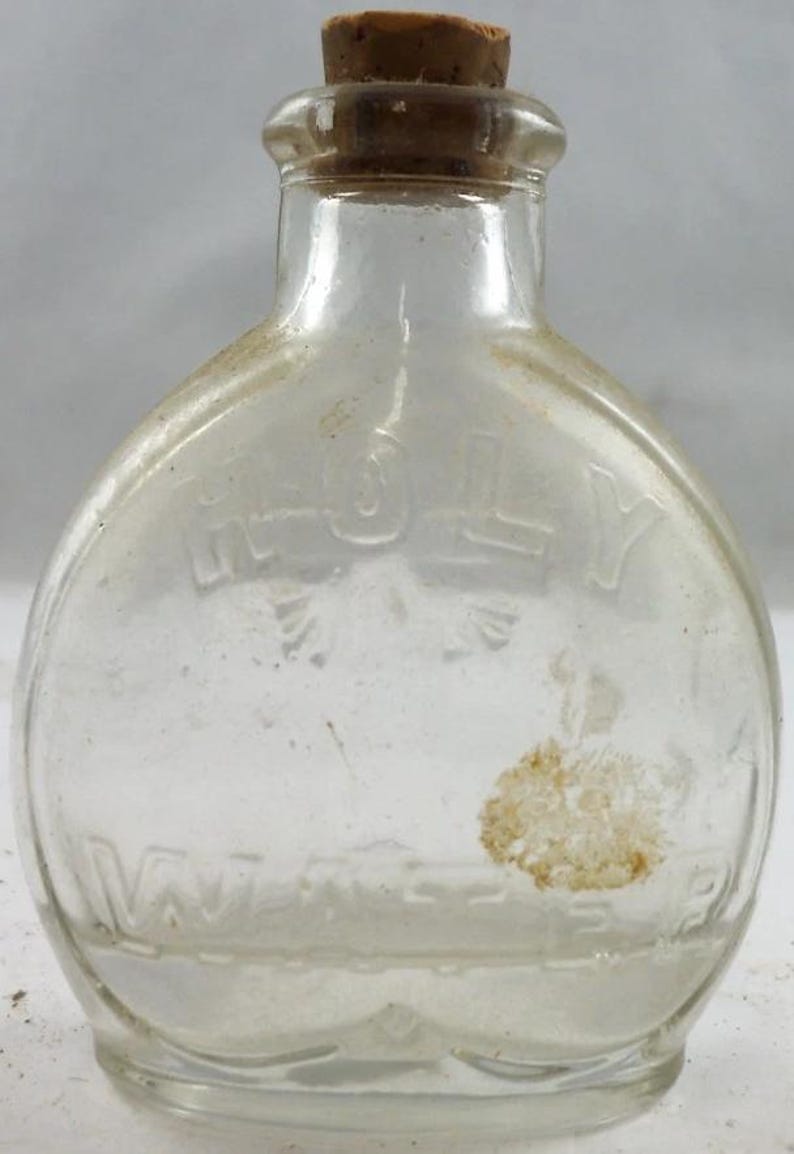
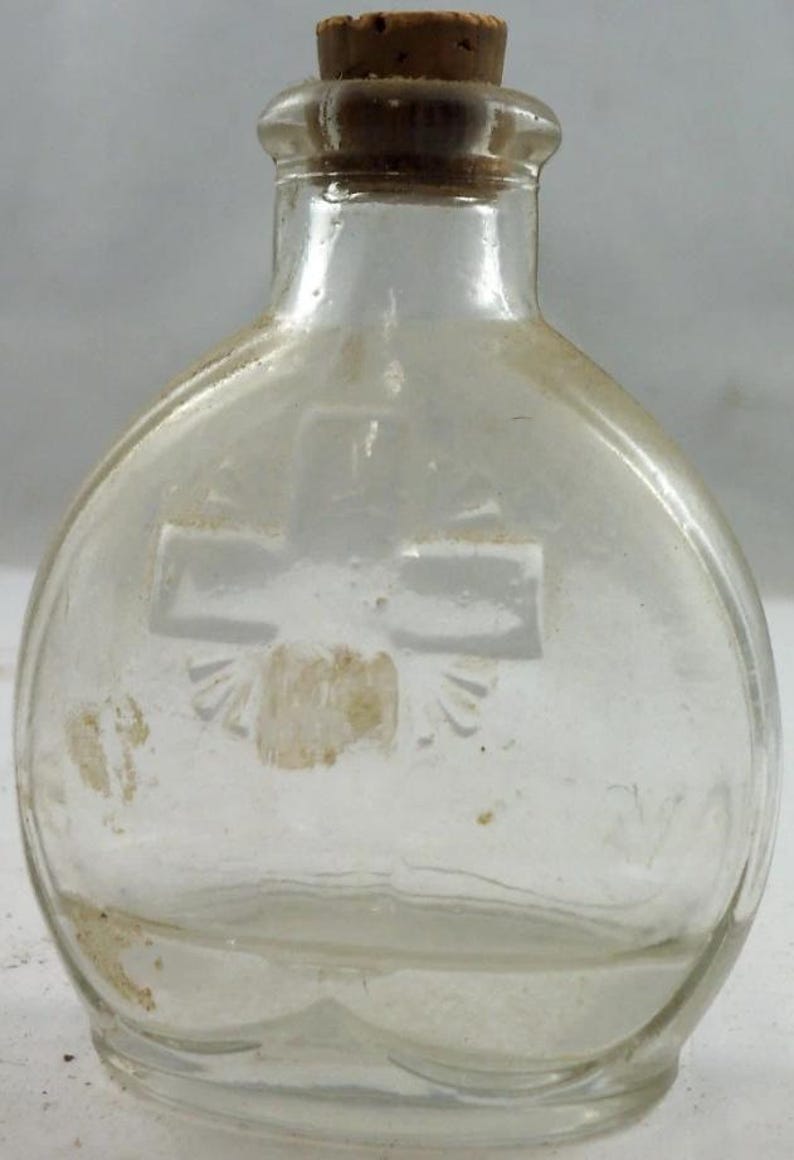
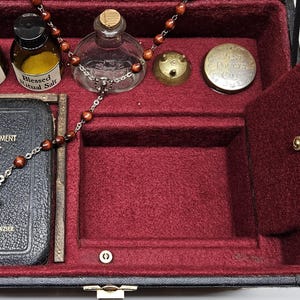
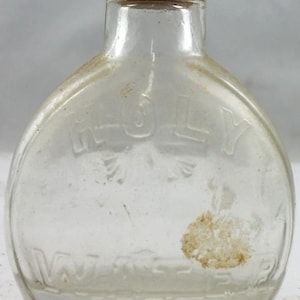
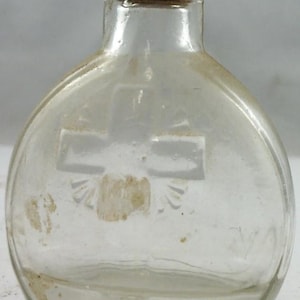
Holy Water: Authentic Antique Holy Water Bottle with Blessed Holy Water Within
Blessed Salt: Glass Vial of Blessed Salt (will come with cork top as well) - In the 14th century, monks and priests involved in exorcism or purification rites would have used ordinary, locally available salt that had been formally blessed using the appropriate prayers and rituals from the Catholic Church's liturgical books, such as the Rituale Romanum (Roman Ritual). The specific type of salt (e.g. sea salt, rock salt, table salt) was not the essential element; its spiritual power was believed to come from the prayers of exorcism and blessing by a priest, invoking God's power. The salt was considered a sacramental, an object that helps to focus faith and devotion, not a magical item in itself. Once blessed, it was believed to have properties that could help purify places and things from diabolical influence as well as provide spiritual protection against evil spirits. It also served as a primary ingredient in the making of holy water, where both the water and salt were exorcised before being combined.
Reversed St. Benedict Medallion: Custom Designed Reversed St. Benedict Medallion Engraved in 3" Diameter Solid Heavy Brass (over 1/16" thick) - Portrayed backwards to signify the inverted and corrupted nature of the evil which the exorcist will face. The medal is meant to ward off evil, and showing it reversed symbolizes that evil is twisting and corrupting the good which it represents.
Antique Solid Brass Bell: The sound of blessed bells was widely believed in the medieval church to drive away demons and evil forces. The general belief was that the sound of consecrated (sometimes "baptized") bells had the power to repel evil spirits, witches, and even physical dangers like storms, which were often attributed to demonic activity. In Scotland and Ireland Celtic tradition, ancient hand-bells associated with early saints were treated as sacred relics and highly venerated. These were rung at significant life events, particularly funerals, to protect the departing soul from interference by evil spirits. A specific practice in the 14th century, noted by the writer Durandus, was the tolling of a "passing bell" when someone was dying or in extremis. This was done to seek prayers for the soul and to drive away the devils believed to gather at the deathbed. This ritual served as a protective, apotropaic function against demonic forces during a critical moment.
Communion Cup: Antique Victorian 1897 Collapsible Vest Cup for the Partaking of Communion
Antique Solid Brass Incense Burner: To Purify Space, Represent Prayers Rising to The Divine, and Repel Negative Entities
Herbs: Glass Vial of Mandrake Root (will come with cork top as well) - 14th-Century monks used herbs like rue, hyssop, henbane and mandrake during exorcisms for their symbolic and medicinal properties. Rue was used for its purgative qualities and as a holy water sprinkler, while hyssop had liturgical uses that were adapted for rituals involving speaking to the dead. Henbane, known for its narcotic and hallucinogenic properties, was also used in combination with other plants to induce sleep or hallucinations. Mandrake, especially its human-like root, was believed to have strong powers against "devil sickness" or "demoniacal possession" and was often administered to the possessed person in warm water. It was also believed to keep demons from entering a house when placed on the mantlepiece.
Torn Pages: Relics Containing Protective Sigils and Texts from Authentic Ancient Grimoires
Photos: Photos of Authentic Demonic Possessions and Exorcisms Performed in the Past and the Story Behind Them
Inscribed Plate: Custom Designed and Engraved in Solid Heavy Brass (over 1/16" thick) "Vade retro me Satana" ("Get thee behind me, Satan") - Mark 8:33 (KJV) - "Vade retro me Satana" is a medieval Western Christian formula for exorcism, recorded in a 1415 manuscript found in the Benedictine Metten Abbey in Bavaria.
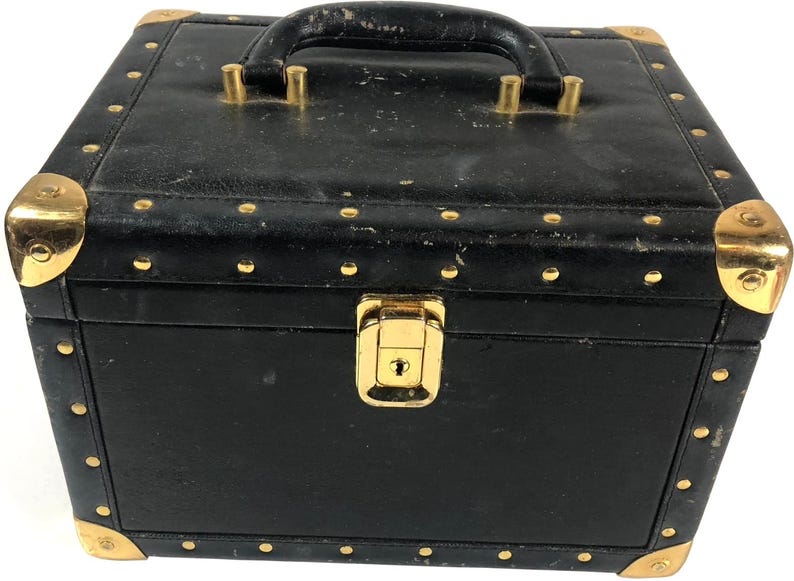
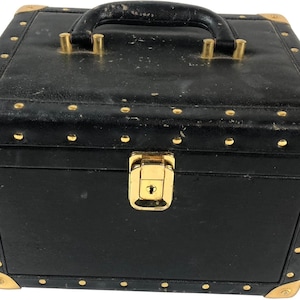
Case: Antique 1940s Train Traveler's Vanity Trunk Constructed of Wood with Black Cowhide Leather and Solid Brass Corners and Trim Studs with a Customized Interior - Measurements: 10-3/4" Long X 8-1/4" Wide X 7-3/4" Deep - I have treated the leather to preserve it and greatly lengthen its lifespan. I did not replace the leather; I have instead left its "journey-marks" upon it as they no doubt tell a tale all of their own.
Craftsman: Kingdom Of Shadow
Country/Region of Manufacture: United States
Monks and other clergy in 14th and 15th-century Scotland followed Roman Catholicism, but with a strong, surviving tradition of Celtic Christianity.
- They resided under Catholic rule and would have performed exorcisms based on existing Catholic traditions and rituals. Although the practice faced challenges and variations, it was a recognized part of medieval Christian belief, and historical accounts include cases of clergy performing exorcisms in Scotland.
- They used a combination of religious objects like crosses and holy water, symbolic items such as salt and herbs, and symbolic actions like prayer and the laying on of hands to perform exorcisms.
- Religious artifacts: A cross was a primary tool, used as a physical sign against the demon. Holy water, consecrated through prayer, was also used for purification.
- Symbolic substances: Salt and wine were frequently used for their symbolic and purifying properties. Herbs and other substances were used for fumigation and protection.
- Physical and ritualistic actions: The laying on of hands on the afflicted was a common method, often accompanied by prayers. In some instances, monks might have physically struck the possessed person, believing they were beating the demon itself, not the person.
- Verbal and written elements: Exorcism involved specific prayers and incantations, such as the "Vade retro me Satana" (Get thee behind me, Satan) prayer, often inscribed on objects like the Saint Benedict Medal.
- Potential, but less certain objects: Amulets and other charms. While less documented for official exorcisms, some forms of protection or counter-magic most likely involved particular medallions and charms.
I designed a hidden, secret compartment within the case. (Not shown in images.)
This item will be heavily packaged for shipment and will ship priority mail with full insurance.
I thank you for your time and consideration.
Best regards, Michael
Some useful information to consider...
Regarding the paper I use:
I use 70 pound text as well as 67 and 80 pound cover Mohawk Cream Superfine paper (unless stated otherwise in the book's specific ad). Mohawk Superfine is the finest printing paper made today and is manufactured by a fourth-generation, family-owned and operated business right here in Cohoes, NY. No other paper has the same reputation for quality, consistency and uniformity. Superfine inspires great design with its superb formation, lush tactility, archival quality and timeless appeal.
Regarding the woods I use:
I construct my cover boards and spine board from 3/16" Mahogany LuAnn (floor underlayment). This provides extreme durability and the highest resistance to warping. Any trim work is done in solid Maple or Mahogany. I do not use cardboard in the construction of my books, nor will I ever.
Regarding Leather Quality:
All of the leather I use during the construction of my books is manufactured here in the U.S.A.
1) Full Grain Leather (Which is the leather I typically use for my one-of-a-kind "Hell-Fire" editions)
for only the most high-end products. Full grain leather only uses the very highest (closest to the air) layer of skin, which is the toughest, most durable, and most beloved. It is left unfinished, meaning it has completely unique characteristics, creases, and coloring. Because of the smaller amount of leather on the surface of each animal and the difficulty of working with full grain toughness, the price is understandably high.
2) Top Grain Leather (Which is the leather I use for my works)
to get high-quality goods at a much more reasonable price. The most common "luxury" leather is top grain, which takes the layer of skin just below full grain and works it lightly to remove imperfections. It is smoother and more consistent than full grain, but easier to work as well, keeping the price down. While not as durable as full grain, it is still a strong, well-crafted leather.
3) Genuine Leather
usually has a suede side or feeling to it. Genuine leather is made by stripping off the harder, more expensive grains from the top, then using the softer, easier to work leather underneath. It is not as durable as full or top grain, but it is much cheaper since it can be manufactured into a variety of goods with ease. Remember - genuine leather is a specific grade, not the phrase for real leather. If you request genuine leather in a leather shop, they will have a specific type of product in mind.
4) Bonded Leather (Which is the Leather used for traditional book binding)
is made from ground up and glued leather shavings. While bonded leather is still leather, it isn't an unbroken or regular piece of animal skin. Instead, the shavings from all the other leather grades are collected, ground up, and mixed with an adhesive liquid to make a piece of leather. Though cheap, the quality is severely lacking. Because the quality is less impressive, bonded leather is often used for book covers and other smaller, less worn items.
Regarding the glues I use:
I use 6 different glues throughout the process, all of which are produced here in the U.S.A.
Regarding the brass I use:
This is where a great challenge for me really comes into play.
The brass clasps which I salvage from antique 19th century books are of solid brass, not plated tin which is so commonly found today. I spend a great deal of time restoring the finish on the brass, as well as re-work the hinges and pins. When I am finished, the clasp is in as near the condition as possible that it was when new in the 1800s.
Any nails or screws I use are of solid brass and made in the U.S.A.
The brass tacks I use for my spines are made in the U.S.A. and come from a local supplier. Some are solid brass, while some are plated zinc.
The pentagram/seals which I adorn the covers of my books with are of solid brass. Unfortunately, I went through many an engraver within the U.S. (seven to be exact) and was not satisfied with the end results of which I was receiving. Many engravers within the United States for some reason absolutely love their laser engravers. While they may work for some individuals, I was looking to obtain the best outcome possible for my finished works. I discovered Andy of Engraving Studios, based in the UK. (engravingstudios.co.uk) After communicating and working with him, I discovered the machinery he uses, his impeccable skills, his longevity in perfecting this craft, the extent he is willing to go to get the job done right, and maybe most importantly, his passion for what he does. May his work and his ethics set the example for others. Thank you Andy for your patience and your craft.
meta tags:
Delomelanicon,witch,warlock,witchcraft,occult,pagan,paganism,wicca,wiccan,devil,satan,lucifer,goetia,demon,demons,demonology,magic,magick,spells,tarot,art,craft,handcrafted,handmade,hand,made,handbound,antique,journal,book of shadows,grimoire,pentacle,pentagram,book,books,tome,Ninth,9th,Gate,Dante,Inferno,Infernal,Solomon,Necronomicon,leather,rare,brass,
-
Se envía en el plazo de 1 a 2 días laborables
-
No se aceptan cambios ni devoluciones
Ponte en contacto conmigo si tienes problemas con tu pedido.
-
Se envía desde: Estados Unidos
Este artículo no se envía a México. Ponte en contacto con la tienda para informarte sobre las opciones de envío.
Ha habido un problema al calcular los gastos de envío. Vuelve a intentarlo.
Protección de compras de Etsy
Compra con confianza en Etsy sabiendo que estamos a tu lado si surge un problema con un pedido que reúne los requisitos.
Consulta las condiciones del programa

Revisa este artículo antes de nadie

Más artículos de esta tienda
Visitar tienda-
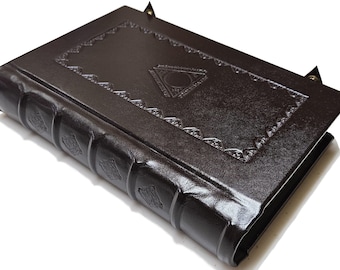
Greater and Lesser Keys Of Solomon GOETIA Demon Leather Bound Grimoire Rare Book
MX$32,124.22
-
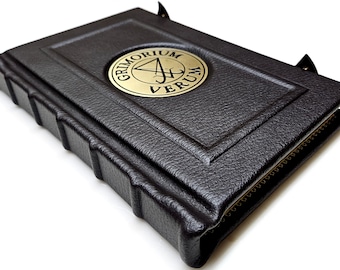
Grimorium Verum: Leather Bound 1st Edition Grimoire, Devil Demon Occult Book 6
MX$27,612.39
-
Grimorium Verum: Leather Bound 1st Edition Grimoire, Devil Demon Occult Book 4
MX$27,612.39
-
Greater and Lesser Keys Of Solomon GOETIA Demon Leather Bound Grimoire Rare Book
MX$32,124.22
-
Descarga digital
Un libro del siglo XV sobre la invocación de los 72 demonios de Salomón.
Precio en oferta MX$116.99
Precio original MX$233.98
-

153 Rare Old Demonology Books On DVD - Demons Fallen Angels Demon Evil Spirits Devils Devil Satan Bible Witchcraft Exorcism Black Magic
MX$145.70
-
153 Rare Old Demonology Books On USB - Demons Fallen Angels Demon Evil Spirits Devils Devil Satan Bible Witchcraft Exorcism Black Magic
MX$214.27
-
Demonología de King James Ocultismo Demonología Esotérica Brujería Libro Edición Coleccionista
MX$1,702.98
-
Descarga digital
Grimorio de Demonología / Libro Oculto Digital para el Trabajo con la Sombra y el Estudio Esotérico / Guía de Demonología Imprimible en PDF
Precio en oferta MX$74.08
Precio original MX$246.93
-
Descarga digital
Libro electrónico del curso avanzado de demonología / Rituales luciferinos, goetia y demonolatría, Libros de ocultismo / Grimorio en PDF de OccultEsotericShop
Precio en oferta MX$135.48
Precio original MX$180.63


