

Sällsynt fynd
Pris:501,96 kr
ON SALE! Vintage Hull H-9-8 1/2, Large Hull Magnolia Vase Glossy, Pink Flowers, 1947-1948, USA Art Pottery
Stjärnsäljare
Stjärnsäljare har uppvisat enastående resultat när det gäller att leverera en utmärkt kundupplevelse. De har genomgående fått 5-stjärniga recensioner, skickat beställningar i tid och snabbt svarat på alla inkomna meddelanden.
Du kan bara ge ett bud när du köper en artikel
Stjärnsäljare. Den här säljaren har genomgående fått 5-stjärniga recensioner, skickat ordrar i tid och svarat snabbt på alla meddelanden.
I korthet
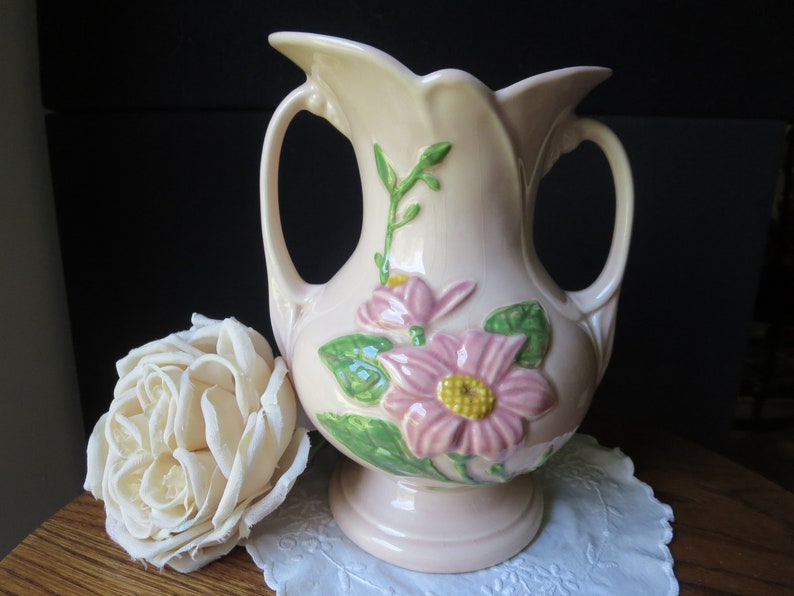
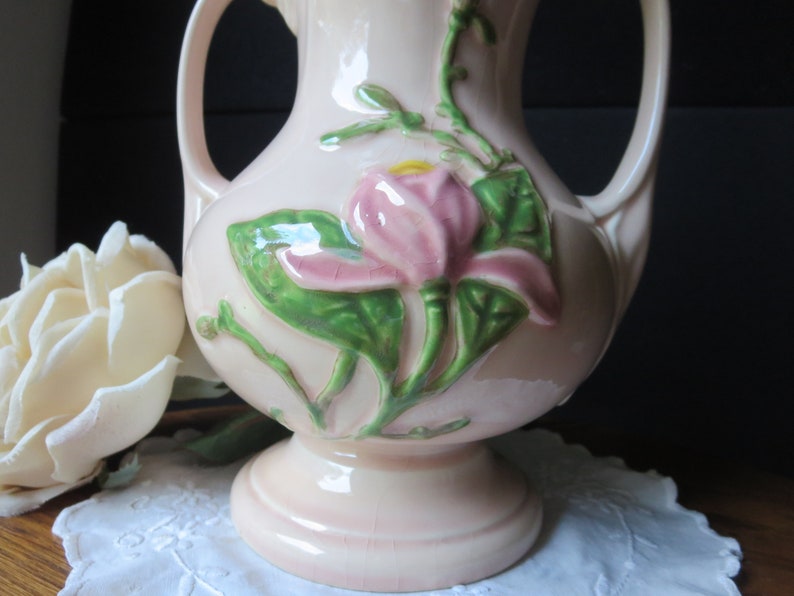
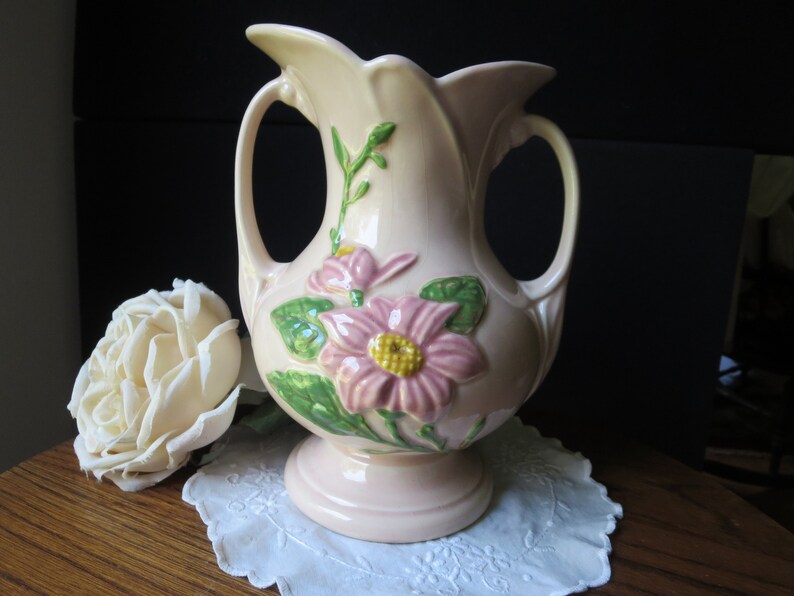
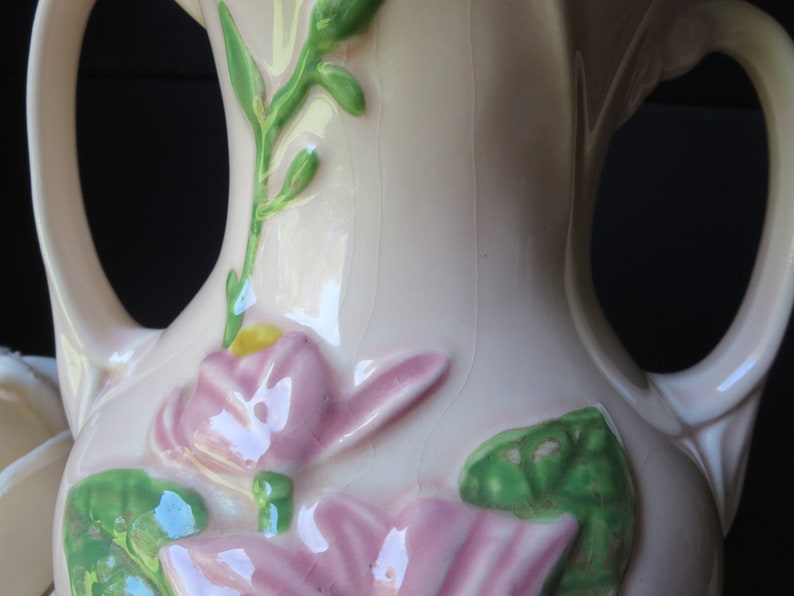
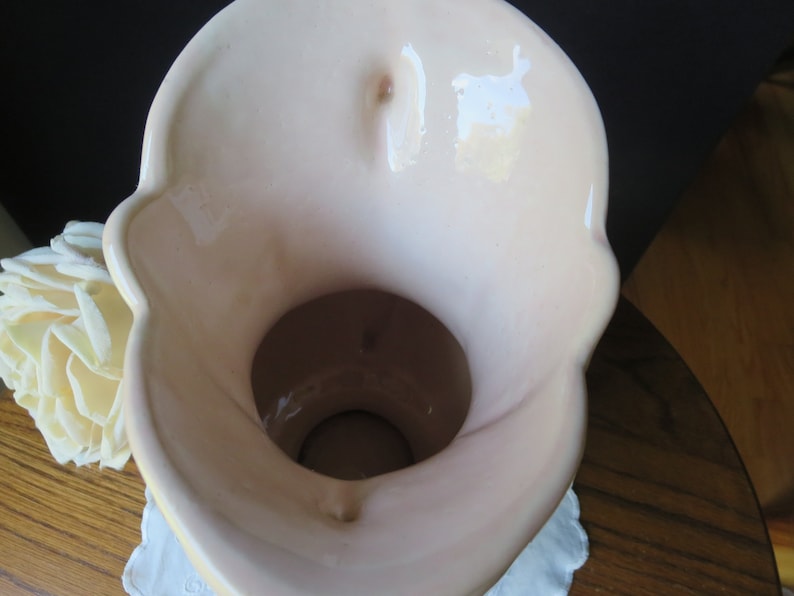
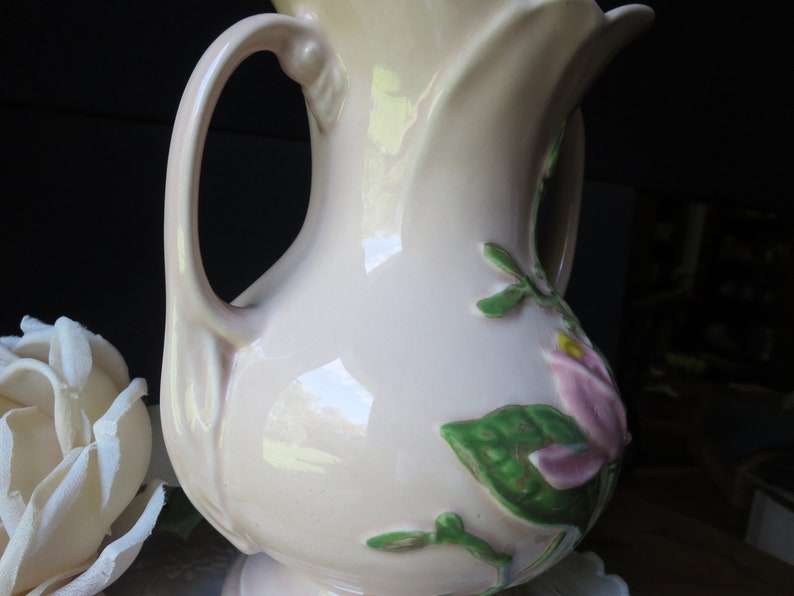
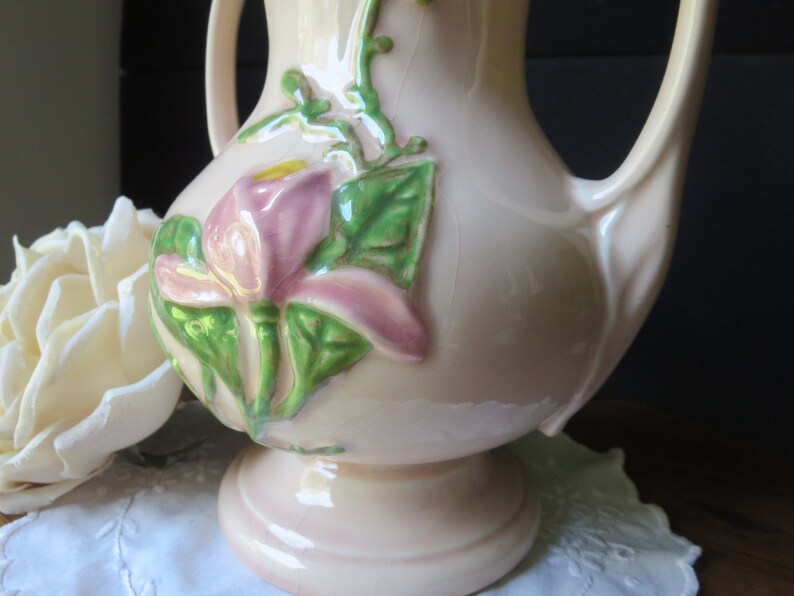
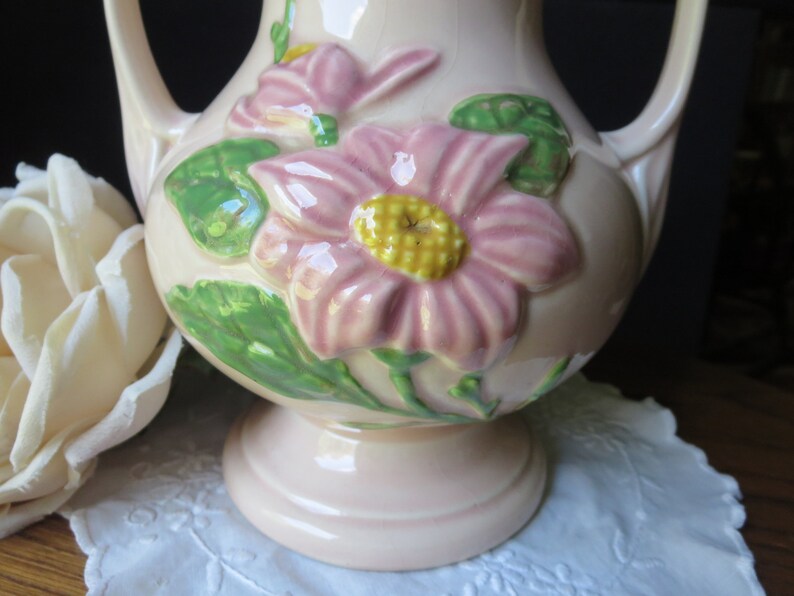
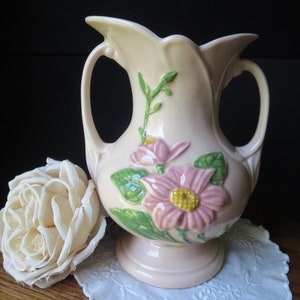
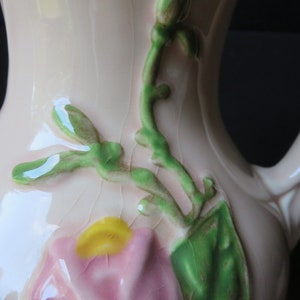
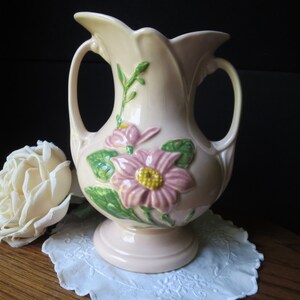
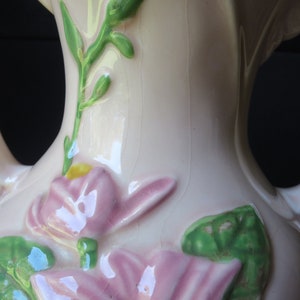
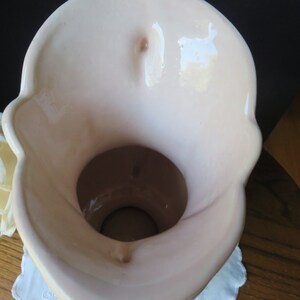
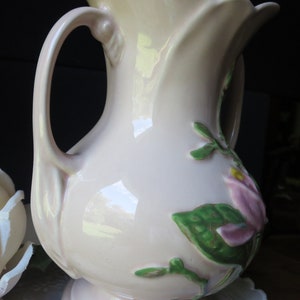
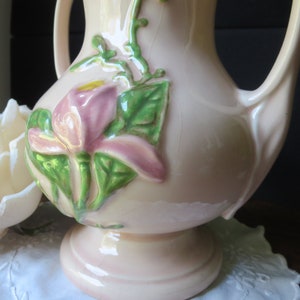
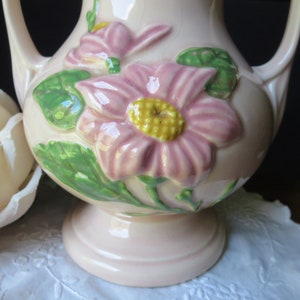
This 1940's vintage Hull Art Pottery Magnolia Vase has a beautiful glossy glaze. The pink flowers with green leaves are "relief" are so attractive on the blush or very light pink background. The vase is double handled. One side of the vase reaches 1/2 inch higher than the other, adding to its interest. This vase was made only in 1947 and 1948. It is marked on the bottom with U.S.A. Hull Art H-9-8 1/2" and signed #19.
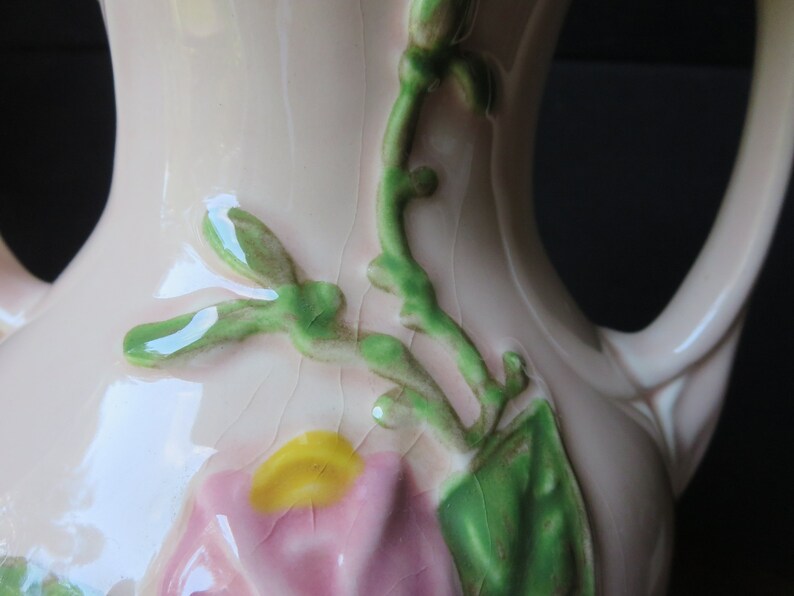
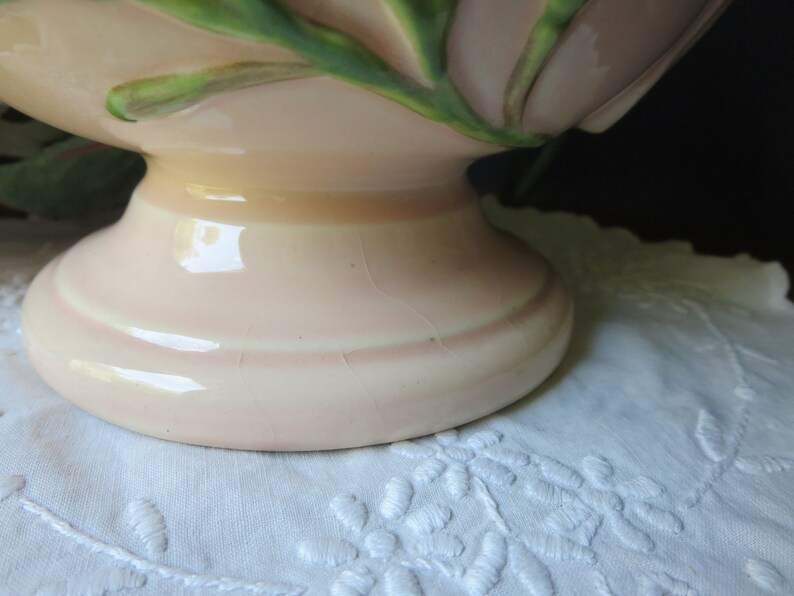
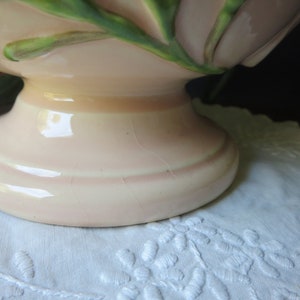
This piece of early Hull Pottery is in very good vintage condition. The only condition detail to list is a few age related crazing lines at the base and running vertically next to the flowers on both sides. Please see pic #3, #5 and #6, no chips or cracks.
The vase is 9 inches tall, about 7 inches at the widest and weighs 2 1/2 lbs.
This old piece looks great on wood furniture, or really any decor!
About Hull Pottery:
In 1905, Addis Emmet Hull founded the A. E. Hull Pottery Company in Crooksville, Ohio. Hull soon expanded to include two potteries in 1907, when the company bought the Acme Pottery Company, also in Crooksville. This acquisition brought Hull’s workforce numbers up to an impressive 400 total. Hull Pottery was growing quickly.
The company introduced its first line of art pottery in 1917, and it sold these pieces to florists and gift shops. By the early 1920s, Hull’s business was booming thanks to its diverse product line—in addition to art pottery, the company manufactured florists’ pots, garden ware, stoneware, and semi-porcelain, as well as reasonably priced toilet ware.
With the company expanding, Hull built a 310-foot kiln in 1923 for the then-princely sum of $75,000. This investment increased its production capability by more than 3 million pieces per year. Combined with the plant Hull purchased from Acme, the company’s overall production was almost 8 million pieces of pottery annually.
When the Depression struck in 1929, Hull stopped importing and renewed its emphasis on domestically produced pottery. It continued to produce large quantities of affordable stoneware in order to maintain revenue streams in tough times. The American Clay Products Company, for example, marketed semi-porcelain and stoneware items that Hull produced.
After World War II, many companies, Hull among them, ran “Buy American” ad campaigns; these efforts helped insulate Hull and others from international competition.
In June 1950, Hull’s plant burned down after a disastrous flood. Yet the company was so popular and trusted that orders came in even while the plant was closed and even though customers knew their orders would have to wait until the new factory opened in 1952.
After 1952, under the leadership of J. B. Hull, pieces were no longer marked with “Hull Art U.S.” or “Hull U.S.A.,” but with the simple “hull.” With this new era, the A. E. Hull Pottery Company changed its name to the Hull Pottery Company, as it resumed production at about 100,000 items per week.
With the new factory came florist ware, kitchenware, and novelty items. From 1957 to 1958, for example, Hull produced about 5,000 piggy banks per day, most of which were bought and distributed by Jim Burns of Chicago.
Hull’s House ’n’ Garden line debuted in 1960. These durable, multicolored serving pieces came in mirror brown, tangerine, green agate, and butterscotch. Naturally, Hull advertised the ware as an attractive “rainbow table” that the consumer could assemble with its products. Hull followed House ’n’ Garden with Crestone in 1965.
In the mid-1970s, Hull’s production was about 75 percent casual serving ware and 25 percent florist ware. By the 1980s, this balance shifted to about 90 percent casual serving ware and 10 percent florist ware.
Faced with mounting international competition and multiple labor strikes, however, Hull closed for good in March 1986, but the company’s legacy was a wide array of patterns and lines. (CollectorsWeekly.com)
-
Skickas inom 1–3 arbetsdagar
-
Returer och byten accepteras inte
Men kontakta mig om du har problem med din beställning
-
Skickas från: USA
Den här artikeln kan tyvärr inte skickas till Sverige. Kontakta butiken för mer information om tillgängliga fraktalternativ.
Det uppstod ett problem när fraktkostnaden skulle beräknas. Försök igen.
Etsys köpskydd
Handla tryggt på Etsy med vetskapen om att vi ger dig stöd vid alla berättigade köp om något går fel –
se programvillkor

Bli först med att recensera denna artikel

Smidig leverans Har tidigare levererat i tid och med spårning.
Snabba svar Har tidigare svarat snabbt på meddelanden.
Fantastiska recensioner Genomsnittligt betyg är 4,8 eller högre.
Mer från denna butik
Besök butik-
Black Stoneware Crock Bean Pot with Lid and with Wrought Iron Stand, Round Baker, Great Condition, Glossy Black Glaze, Farmhouse
564,81 kr
-
ON SALE! Vintage Roseville Donatello Double Bud Vase, Harry Rhead Design, 1915-1925
627,47 kr
-
ON SALE! Carbone Country Fare Yellow Band Plates, Two Stoneware Yellow Plates, 8 1/2 ", Zanesville Pottery, John B Taylor, Louisville, RARE
351,44 kr
-
Westmoreland Old Quilt Milk Glass Salt and Pepper Shaker and Covered Round Puff Bowl with Lid
376,44 kr
-
Vintage Hull Art Pottery - Magnolia Mönster #15 - Rosa och Blå Matt Finish 6 1/4" Vas - 1946-1947
859,82 kr
-
Hull Pottery Magnoliavas - ca 1940-talet
1 333,56 kr
-
Vintage Hull Pottery Magnolia Vas med dubbla handtag, 1940-tal, H-12-10 1/2, krämrosa, blommotiv, konst, keramik, MCM, samlarobjekt, konst och hantverk, gåva
1 004,11 kr
-
Vintage Hull Art Pottery - ORIGINALETIKETT - Matt Magnolia Mönster #4 - Gul och Dusty Rose Pastell Matt Finish 6 1/4" Vas - 1946-1947
1 004,11 kr
-
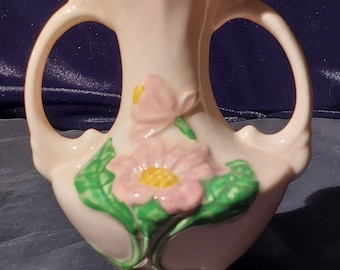
Vintage Hull Art Pottery - Glansig finish Nytt Magnoliamönster #H-2 - Rosa blommig på rosa bakgrund 5 1/2" vas - 1947-1948
476,95 kr
-
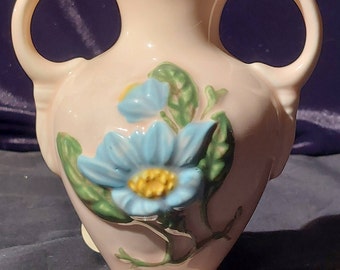
Vintage Hull Art Pottery - Glansig finish Nytt Magnoliamönster #H-1 - Blå blommig på rosa bakgrund 5 1/2" vas - 1947-1948
483,28 kr
-
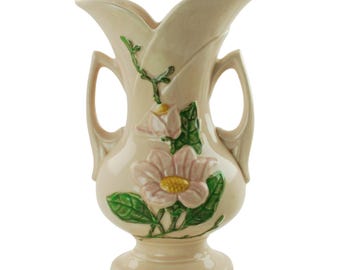
Vintage Hull Art Pottery "Magnolia" Vas med dubbelt handtag och fot H - 12 - 10 1/2
1 192,39 kr
-
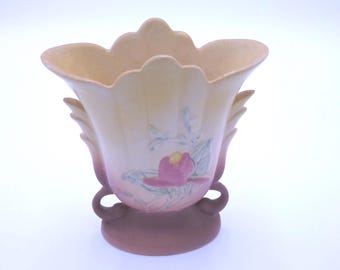
1940-talets Hull Art Pottery Magnolia Matt 20 cm Blommig Art Deco-vas
564,81 kr
-
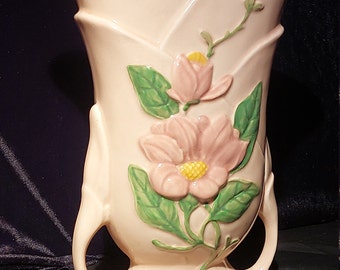
Vintage Hull Art Pottery - Glansig finish Nytt Magnoliamönster #H-13 - Rosa blommor på rosa bakgrund 25 cm vas - 1947-1948
1 568,92 kr
-
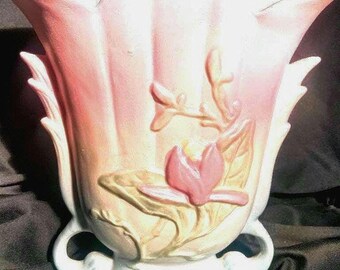
Vintage Hull Art Pottery - Andra världskriget - Rosa och blått mattfinish Magnoliamönster #1 - 8 1/2" Vas - 1946 till 1947
1 606,58 kr
-
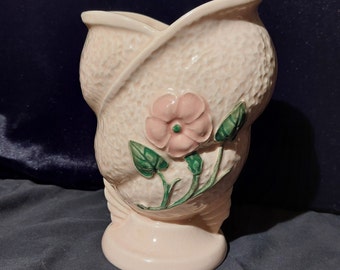
Vintage Hull Art Pottery - Klassisk - Mönster #5 - Högblank rosa med grusig textur och handdekorerad rosa pensé - 15 cm vas - 1942-1945
439,30 kr
-
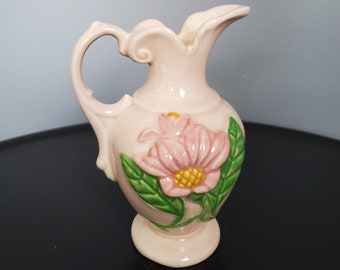
Vintage Hull Art Pottery Glansfinish Nytt Magnoliamönster H-3-5 1/2
433,07 kr
Köpare med liknande smak älskade dessa
-
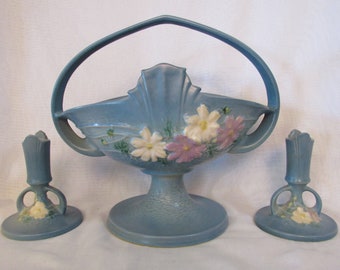
Roseville Art Pottery Blue Cosmos Basket & Candle Holder Set
2 761,30 kr
-
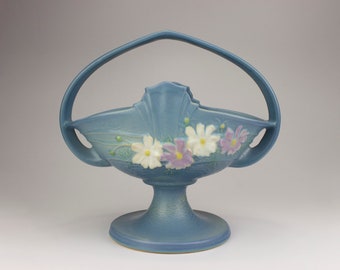
Roseville Pottery Cosmos Basket, Shape 358-12, Ice Blue
3 916,03 kr
-
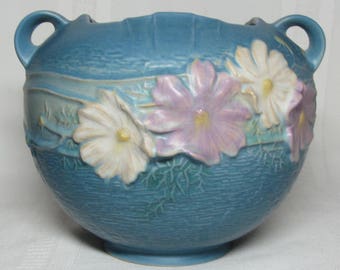
Roseville Keramik, Kosmos, Stor Blå Rosen Skål, Mycket Fin~~
1 958,02 kr
-
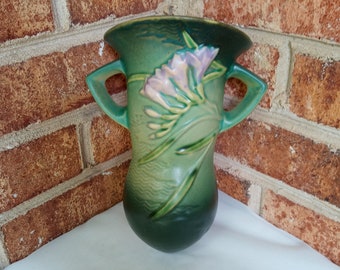
Roseville Pottery Freesia Wall Pocket Vase #1296-8 Green
2 309,45 kr
-
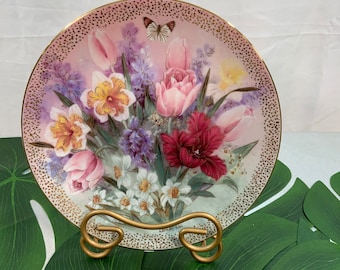
Lena Liu Tulip Decorative Plate, Symphony of Shimmering Beauty, 8 inch (O5-14)
Reapris 376,44 kr
Ordinarie pris 501,96 kr
-
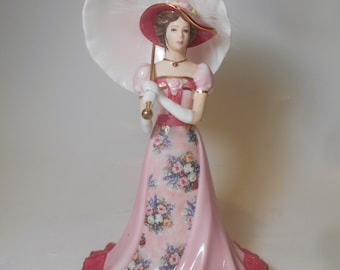
2004 Bradford Exchange Lena Liu "Stroll In The Park" Decor Figurine
627,57 kr
-
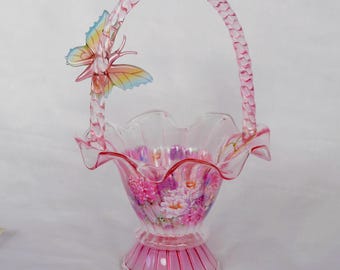
Korg i blåst glas i rosa ros, fjärilshandtag, Lena Liu Art, bordsdekoration i begränsad upplaga
1 662,79 kr
-
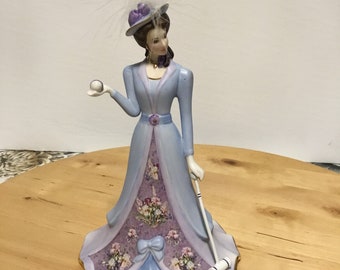
Lena Liu Elegant Era Painted Porcelain Bell entitled “Croquet Anyone?”
753,91 kr
-
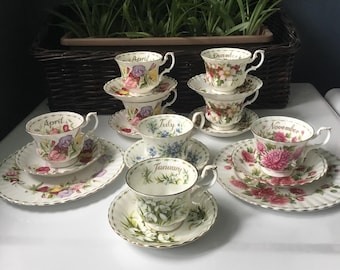
Royal Albert Månadens Blomma Säljs Styckvis
425,74 kr
-
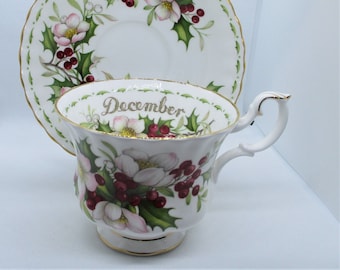
Vintage tekopp och fat Royal Albert Månadens blomma decemberserie 1970. Benporslin. England
195,13 kr
-
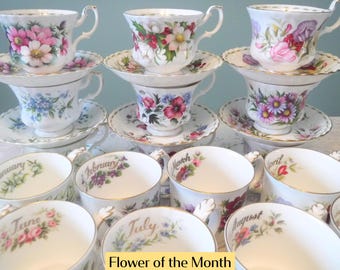
Royal Albert Flower of the Month Teacups and Coffee Tea Mugs: January to December
Reapris 177,39 kr
Ordinarie pris 221,74 kr
-
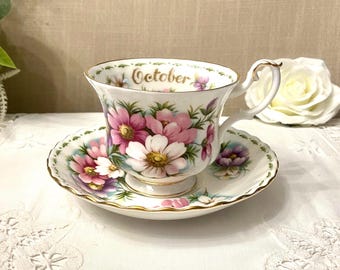
Royal Albert, Flowers of the Month Series, OCTOBER- COSMOS, Montrose cup
354,78 kr


