

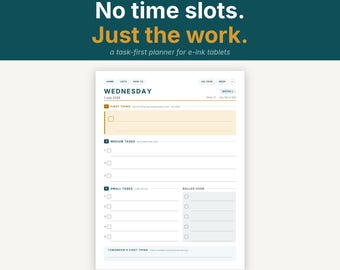

I got tired of planners that only knew how to schedule meetings.
I bought a Kindle Scribe expecting it to replace the notebook on my desk. Then I went looking for a planner to put on it.
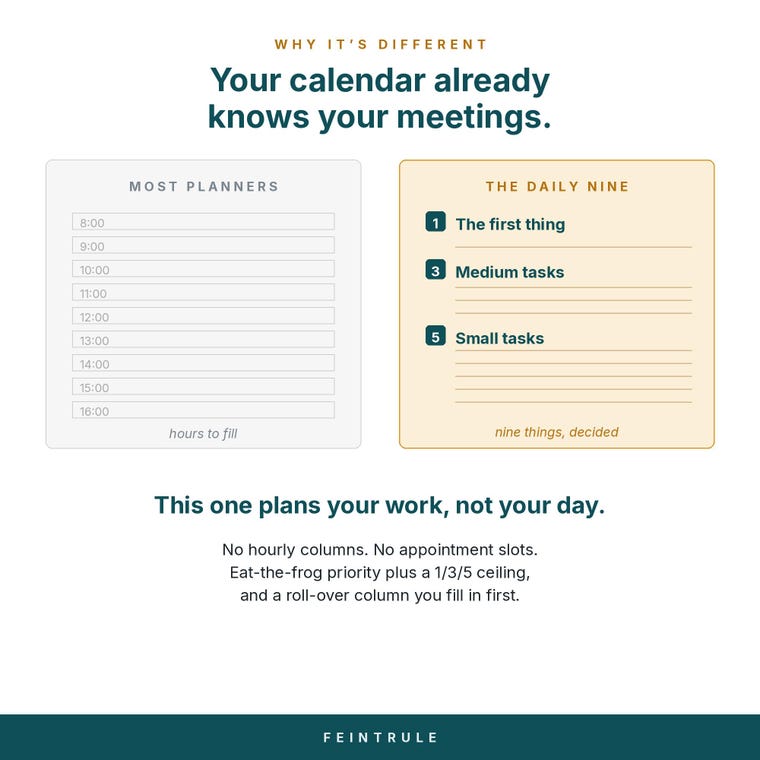
Everything I found was the same thing: a calendar. Hourly columns from 8am to 6pm, little boxes for appointments, and somewhere down the side, if you were lucky, four lines for a to-do list. Which was backwards. My calendar already knew about my meetings — it had been reminding me about them all morning. What it couldn't tell me was which of the forty things on my list actually mattered today.
So I built the planner I wanted instead.
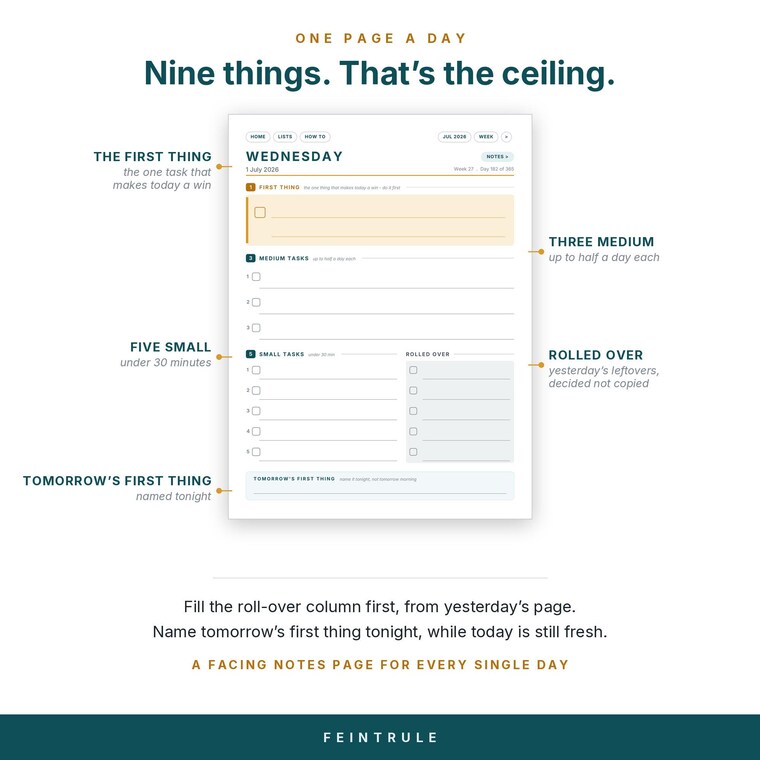
It rests on two ideas older than I am. Do the hardest, most avoidable thing first, before the day fills up with other people's priorities. And cap how much you take on: one big task, three medium, five small. Nine things. That's the ceiling, and the ceiling is the point — a list you can't finish isn't a plan, it's a wish.
The part I'm most stubborn about is the roll-over column. It's the first thing you fill in each morning, copied from yesterday. Every item you carry gets a decision: do it today, move it to the master list, or admit you're never doing it and cross it out. Anything that rolls over three days running is either bigger than you're pretending or something you don't actually intend to do. Both are worth finding out.
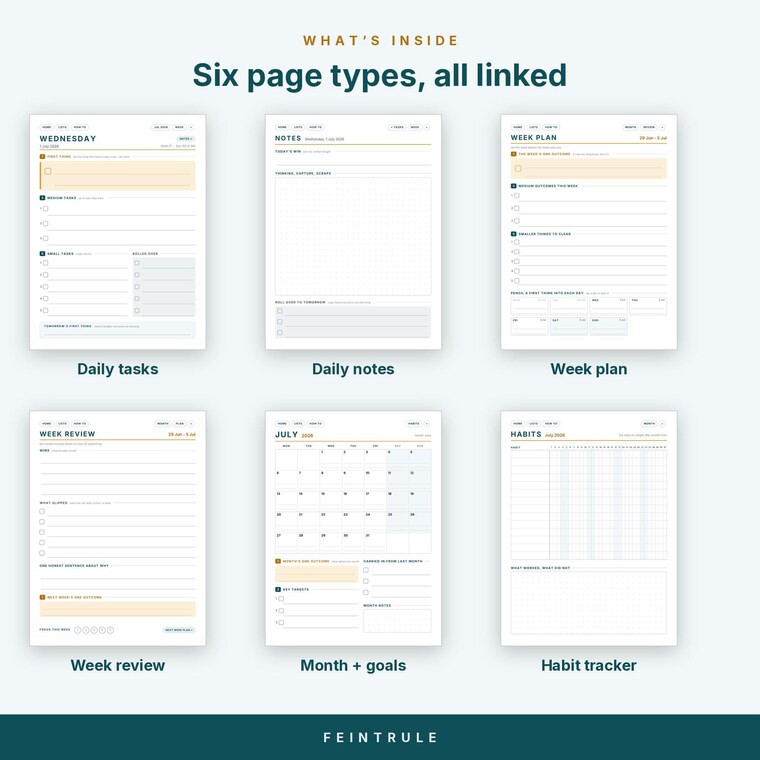
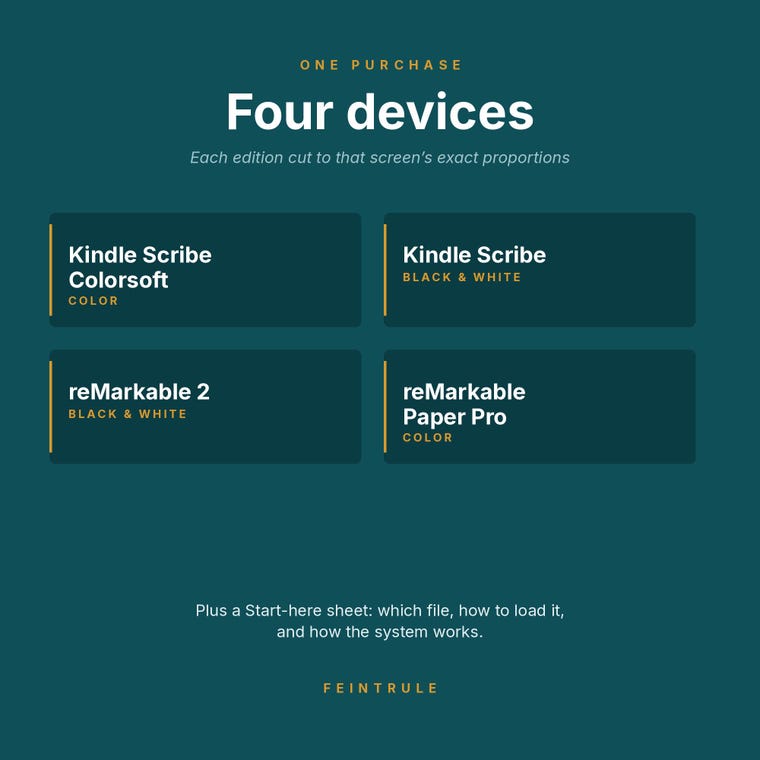
Everything is hyperlinked, because a 1,300-page PDF you have to scroll through is useless. Tap a date, land on that day. And every planner ships in four editions — Kindle Scribe, Scribe Colorsoft, reMarkable 2 and Paper Pro — each built to that specific screen's proportions rather than scaled to fit, so it fills the display properly and the pen lands where you expect.
If something doesn't work on your device, message me. I'd much rather fix it than leave you sitting there with a file that won't open.