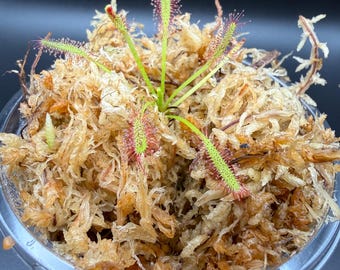

General Care Information:
Water: Carnivorous plants require water that is low in minerals. Tap water, well water, and bottled water will kill most carnivorous plants. Only use distilled, reverse osmosis, or rain water. Carnivorous plants are often watered with the tray method, which means setting the pot in a tray of water to be absorbed through the bottom.
Pots: Plastic is your best bet. No terracotta! It leaches minerals into the soil and will slowly kill your plant over time.
Light: All carnivorous plants require bright light. They will not produce carnivorous traps unless they are in a bright windowsill, under artificial light, or outdoors in direct sun.
Soil: Never use commercial potting soils for carnivorous plants. No fertilizers! Use either a mix based on long-fiber Sphagnum moss or one based on fertilizer-free Sphagnum peat.
Temperature: Carnivorous plants enjoy a wide range of temperatures. Temperate plants (like flytraps) go dormant in winter, and can safely experience freezing temperatures. Tropical and subtropical plants usually prefer temperatures of 55-80 degrees F.
Food: Bugs are fertilizer for carnivorous plants, and they don't need much. Plants grown outdoors will catch plenty of prey by themselves. Indoor plants will also catch some. They are excellent fungus gnat catchers! If you'd like to feed your plants, it's best to feed them bugs (like freeze-dried meal worms).
Announcement
Last updated on 05 Feb, 2026
Shop policies
Last updated on
Accepted payment methods
Accepts Etsy Gift Cards and Etsy Credits
Returns & exchanges
See item details for return and exchange eligibility.