










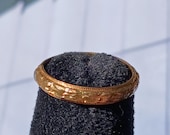







Sichern Sie sich hier bei @SST unsere tollen SOMMERANGEBOTE und strahlen Sie wie die Sonne!
Shop our great SUMMER deals here at @SST and you will shimmer and shine like the SUN!
Wir von SST wünschen euch allen einen traumhaften und erholsamen Sommer! Nehmt ein paar tolle Vintage-Schmuckstücke mit in den Urlaub oder an den Strand! Damit seid ihr einzigartig und werdet von euren Mitreisenden beneidet. Und ihr seht selbst in der prallen Sonne einfach umwerfend aus!
Die Sommersonnenwende markiert den längsten Tag und die kürzeste Nacht des Jahres. Sie tritt ein, wenn die Neigung der Erdachse zur Sonne am größten ist. Auf der Nordhalbkugel fällt sie auf den 20. oder 21. Juni und läutet damit offiziell den astronomischen Sommer ein. Die Sommersonnenwende findet während des Sommers der jeweiligen Hemisphäre statt. Auf der Nordhalbkugel ist dies die Juni-Sonnenwende (20. oder 21. Juni), auf der Südhalbkugel die Dezember-Sonnenwende (21. oder 22. Dezember). Seit prähistorischen Zeiten ist die Sommersonnenwende in vielen Kulturen ein bedeutender Zeitpunkt im Jahr und wurde mit Festen und Ritualen begangen. Traditionell gilt die Sommersonnenwende in gemäßigten Regionen (insbesondere in Europa) als Hochsommer und wird als „Mittsommer“ bezeichnet, obwohl sie heute in einigen Ländern und Kalendern als Sommerbeginn gilt. Es gibt Hinweise darauf, dass die Sommersonnenwende seit der Jungsteinzeit kulturell bedeutsam war. Viele antike Monumente, insbesondere in Europa, aber auch in Teilen des Nahen Ostens, Asiens und Amerikas, sind auf den Sonnenaufgang oder Sonnenuntergang zur Sommersonnenwende ausgerichtet (siehe Archäoastronomie). Die Bedeutung der Sommersonnenwende variierte in den verschiedenen Kulturen, doch die meisten begingen dieses Ereignis mit Feiertagen, Festen und Ritualen, die mit Fruchtbarkeitsthemen verbunden sind. Im Julianischen Kalender des Römischen Reiches fiel die Sommersonnenwende auf den 24. Juni, und Marcus Terentius Varro schrieb im 1. Jahrhundert v. Chr., dass die Römer dies als Hochsommer ansahen. Der Julianische Kalender hatte den Nachteil, dass die Sonnenwenden und Tagundnachtgleichen allmählich auf frühere Daten fielen. Auf dem Ersten Konzil von Nicäa (325) legte die christliche Kirche den 21. März als Datum der Frühlingstagundnachtgleiche fest, um Ostern zu berechnen. Dadurch verschob sich auch das Datum der Sommersonnenwende auf den 20. Juni.
Wir sind Ihnen unendlich dankbar für Ihre Treue in den letzten 13 Jahren bei Etsy! Ihre Unterstützung und Freundlichkeit sind für uns der größte Schatz. Sollten Sie aus irgendeinem Grund mit einem Artikel unzufrieden sein, lassen Sie es uns bitte wissen. Wir kümmern uns darum. Denn Ihre Treue ist uns ein Geschenk – DANKE!
We here at SST wish you ALL the most fabulous, restful summer you could possibly have. Take some great vintage jewels with you on vacation or to the beach! You will be one-of-a-kind, and the envy of your fellow travelers. Looking COOL even in the HOT sun!
The summer solstice marks the longest day and shortest night of the year. It occurs when Earth's tilt toward the Sun is at its maximum. In the Northern Hemisphere, it falls on June 20 or 21, officially kicking off astronomical summer. The summer solstice occurs during the hemisphere's summer. In the Northern Hemisphere, this is the June solstice (20 or 21 June) and in the Southern Hemisphere, this is the December solstice (21 or 22 December). Since prehistory, the summer solstice has been a significant time of year in many cultures, and has been marked by festivals and rituals. Traditionally, in temperate regions (especially Europe), the summer solstice is seen as the middle of summer and referred to as "midsummer", although today in some countries and calendars it is seen as summer's beginning. There is evidence that the summer solstice has been culturally important since the Neolithic era. Many ancient monuments in Europe especially, as well as parts of the Middle East, Asia and the Americas, are aligned with the sunrise or sunset on the summer solstice (see archaeoastronomy). The significance of the summer solstice has varied among cultures, but most recognize the event in some way with holidays, festivals, and rituals around that time with themes of fertility. In the Julian calendar of the Roman Empire, the date of the summer solstice was 24 June, and Marcus Terentius Varro wrote in the 1st century BC that the Romans saw this as the middle of summer. The Julian calendar had a flaw in that the solstices and equinoxes gradually fell on earlier dates. At the First Council of Nicaea (325), the Christian Church set the date of the spring equinox to 21 March, for the purpose of calculating Easter. This also brought the date of the summer solstice forward to 20 June.
We are SO very grateful for your patronage over these 13 years at Etsy! Your support and kindness are the greatest treasures we could ever collect. If you are ever unhappy with any item for any reason, please just let us know. We WILL make it right for you. Because our presence with us is a present, THANK YOU!

