






El Proyecto Tempestry: convertir el clima en arte de fibra, un año y un lugar a la vez
The Tempestry Project: turning climate into fiber art, one year & one place at a time
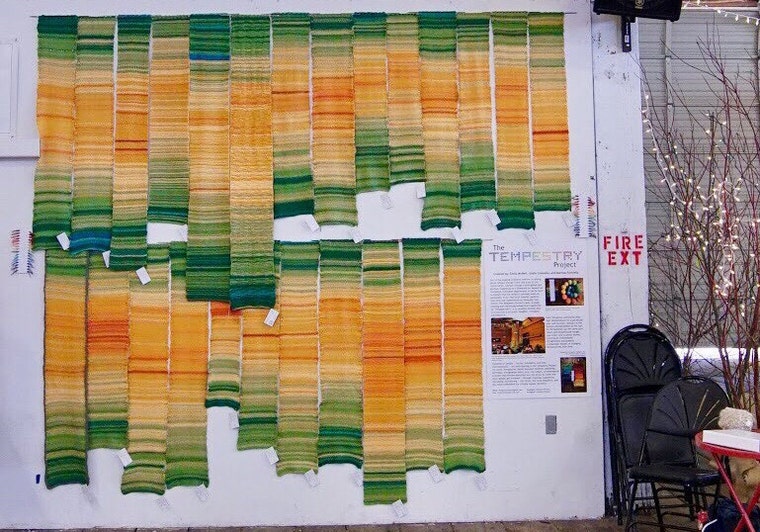
La Colección Olga Station Tempestry, creada por el Gremio Textil del Condado de San Juan, se exhibe actualmente en el Pacific Northwest Quilt & Fiber Arts Museum en La Conner, WA. Echa un vistazo a algunas fotos hermosas de esta colección: www.sjctextileguild.org/galleries.html
Cobertura de noticias recientes:
Colección Filadelfia: www.philly.com/news/tempestry-climate-change-temperature-tapestries-philadelphia-schuylkill-center-20190507.html
Colección Parques Nacionales: www.nationalparkstraveler.org/2019/04/crafters-work-create-national-park-tempestry-project
Consejo de Defensa de los Recursos Naturales: www.nrdc.org/onearth/trump-tratando-tirando-de-lana-sobre-nuestros-ojos-sobre-el-cambio-climático-estos-tejedores-no-lo tienen
* * * * * * * *
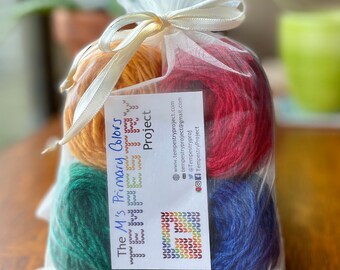
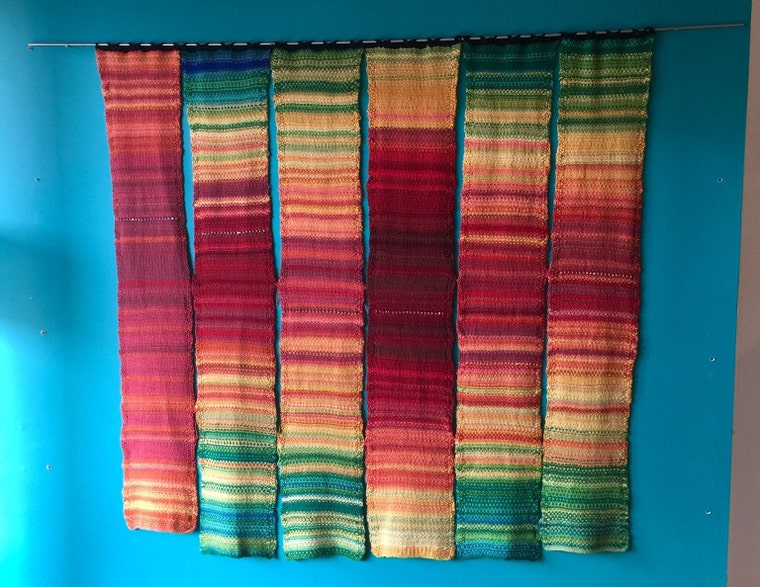
Uno de los problemas actuales inherentes a las discusiones sobre el cambio climático es la gran escala de la conversación. El cambio climático es global y gradual, y ocurre en una escala de tiempo mucho más allá de nuestras experiencias individuales inmediatas. Nuestro objetivo, a través del tejido y el ganchillo de tapices de temperatura (o "Tempestries"), es visualizar los datos climáticos de una manera precisa, accesible, tangible y hermosa.
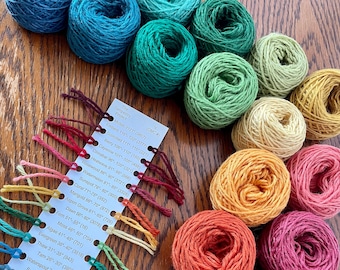
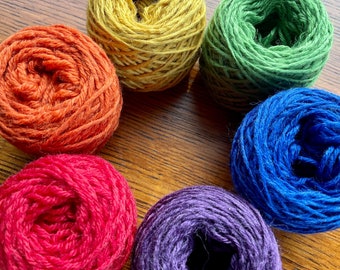
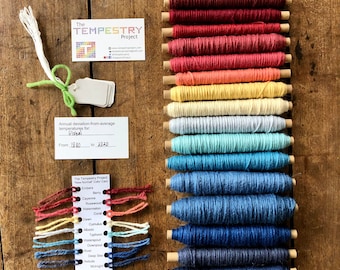
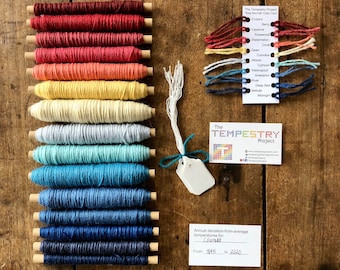
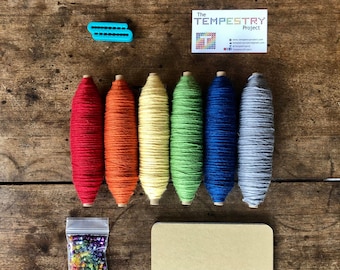
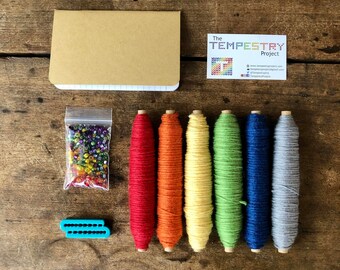
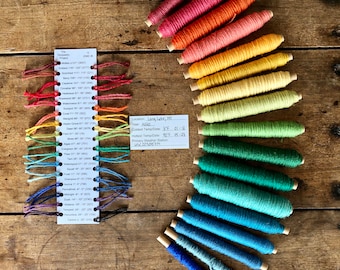
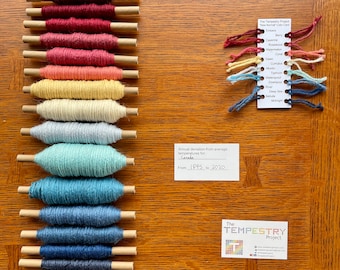
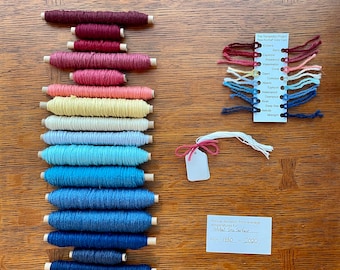
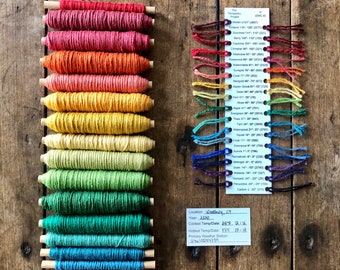
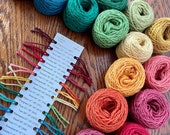
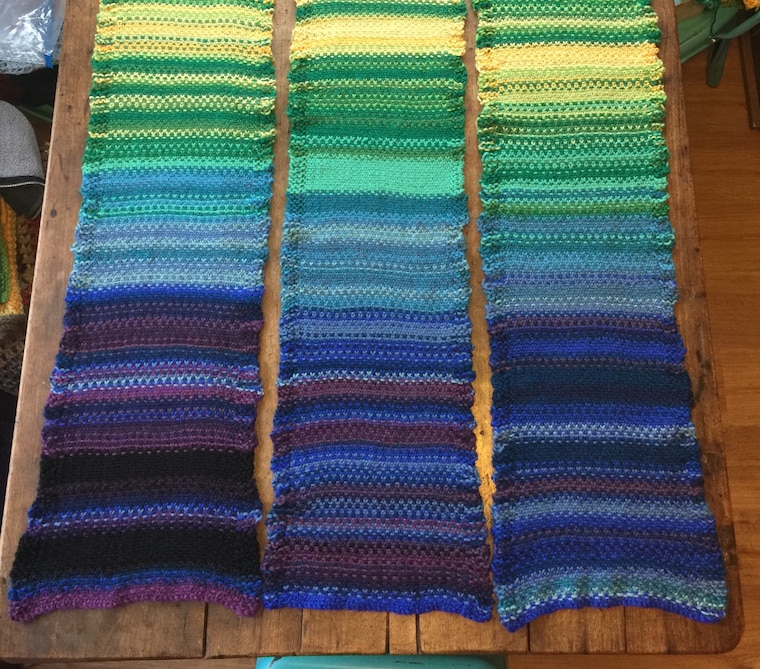
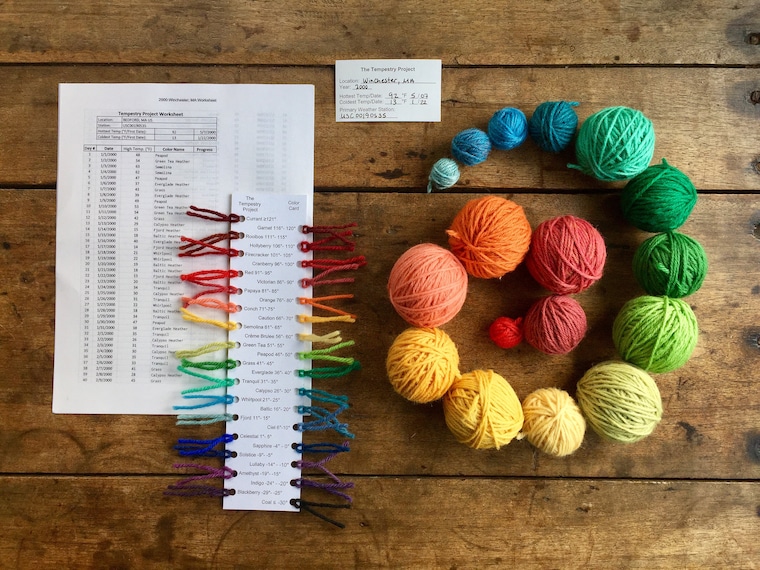
Cada "Tempestry" individual encarna un año de altas temperaturas diarias para un lugar en particular. Hemos asignado colores específicos de Wool of the Andes Worsted de KnitPicks para representar rangos de temperatura específicos en incrementos de 5 grados desde menos de -30 ° F hasta más de 121 ° F. El uso de los mismos hilos y colores universales crea una comparación visual entre años y lugares, y KnitPicks es asequible y accesible. La lista completa de colores y los rangos de temperatura correspondientes se incluye en las pautas del proyecto en cada Kit de Tempestry. Esta información también está disponible de forma gratuita en Ravelry y en nuestros archivos de grupo de Facebook.
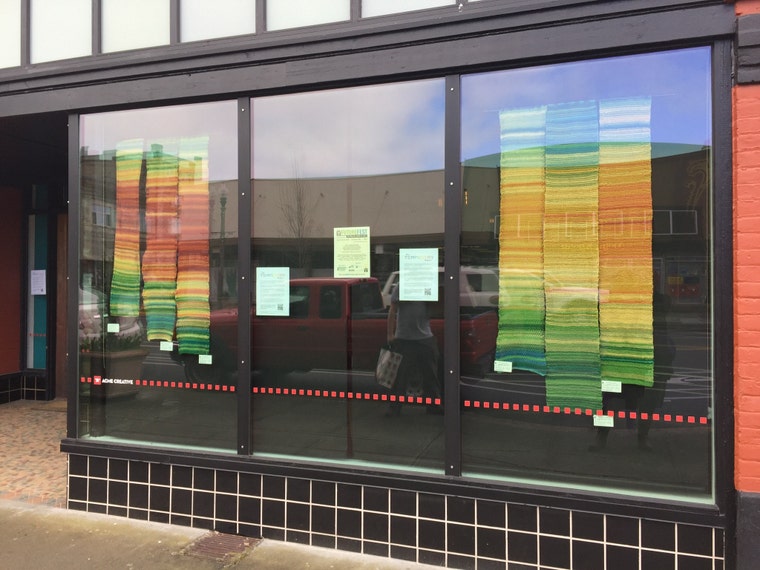
A medida que más y más personas crean tempestrias, tanto individualmente como en colecciones geográficas, comienza a surgir un mosaico de nuestra historia climática. Cuantas más personas se involucren, a través de tejer, hacer ganchillo, discutir, compartir, más rico, más hermoso y más innegable se vuelve este mosaico.
Los datos de temperatura provienen de la Administración Nacional Oceánica y Atmosférica (NOAA), y están disponibles para el público en www.ncdc.noaa.gov/cdo-web/search. Tenga en cuenta que los datos no siempre están completos y, a veces, deben complementarse con datos de www.wunderground.com o de estaciones meteorológicas cercanas.
The Olga Station Tempestry Collection, created by the San Juan County Textile Guild, is currently being exhibited at the Pacific Northwest Quilt & Fiber Arts Museum in La Conner, WA. Check out some beautiful photos of this collection: http://www.sjctextileguild.org/galleries.html
Recent news coverage:
Philadelphia Collection: https://www.philly.com/news/tempestry-climate-change-temperature-tapestries-philadelphia-schuylkill-center-20190507.html
National Parks Collection: https://www.nationalparkstraveler.org/2019/04/crafters-work-create-national-park-tempestry-project
Natural Resources Defense Council: https://www.nrdc.org/onearth/trump-trying-pull-wool-over-our-eyes-about-climate-change-these-knitters-arent-having-it
* * * * * * * *
One of the ongoing problems inherent in discussions about climate change is the vast scale of the conversation. Climate change is both global and gradual, happening on a timescale far beyond our immediate individual experiences. Our goal, through knitting and crocheting temperature tapestries (or “Tempestries”), is to visualize climate data in a way that is accurate, accessible, tangible, and beautiful.
Each individual “Tempestry” embodies one year of daily high temperatures for a particular location. We’ve assigned specific colors from KnitPicks’ Wool of the Andes Worsted to represent specific temperature ranges in 5-degree increments from less than -30°F to more than 121°F. Using the same universal yarns and colors creates a visual comparison between years and places, and KnitPicks is affordable and accessible. The full list of colors and corresponding temperature ranges is included in the project guidelines in each Tempestry Kit. This information is also available for free on Ravelry and in our Facebook Group Files.
As more and more people create Tempestries, both individually and in geographic collections, a mosaic of our climate history is beginning to emerge. The more people get involved — through knitting, crocheting, discussing, sharing — the richer, the more beautiful, and the more undeniable this mosaic becomes.
Temperature data comes from the National Oceanic & Atmospheric Administration (NOAA), and is available to the public at www.ncdc.noaa.gov/cdo-web/search. Please note, the data is not always complete and sometimes has to be supplemented with data from www.wunderground.com, or from nearby weather stations.
