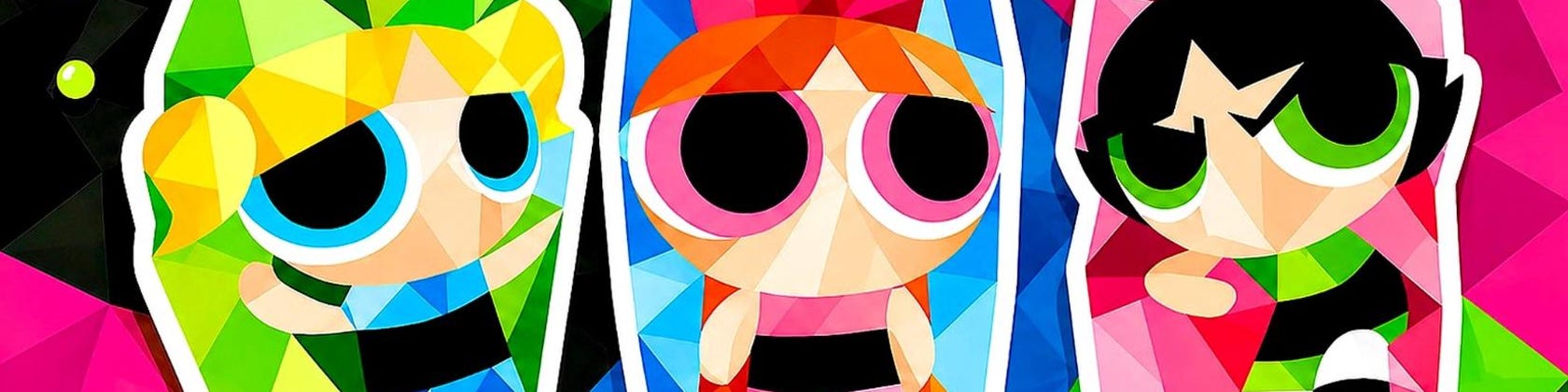
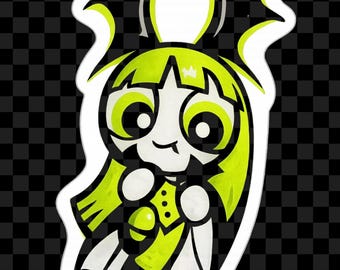
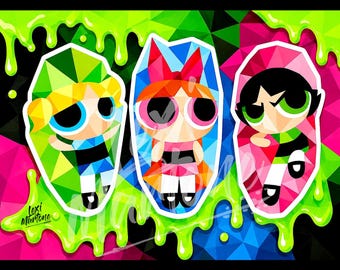



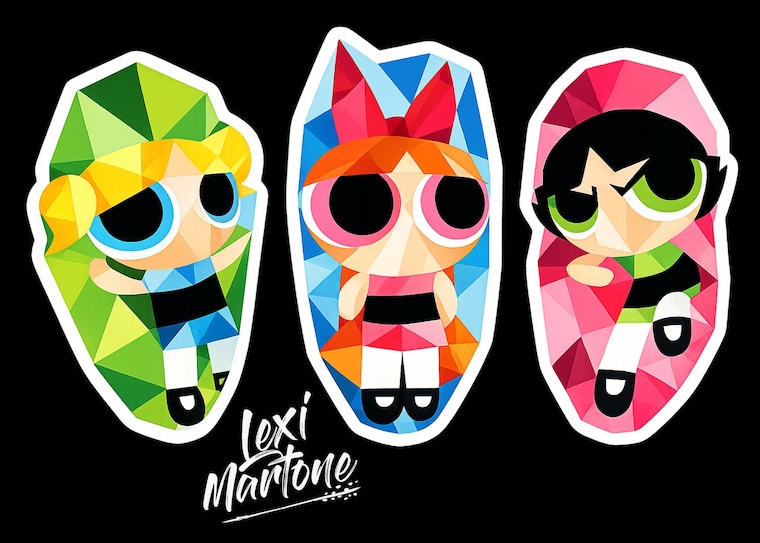

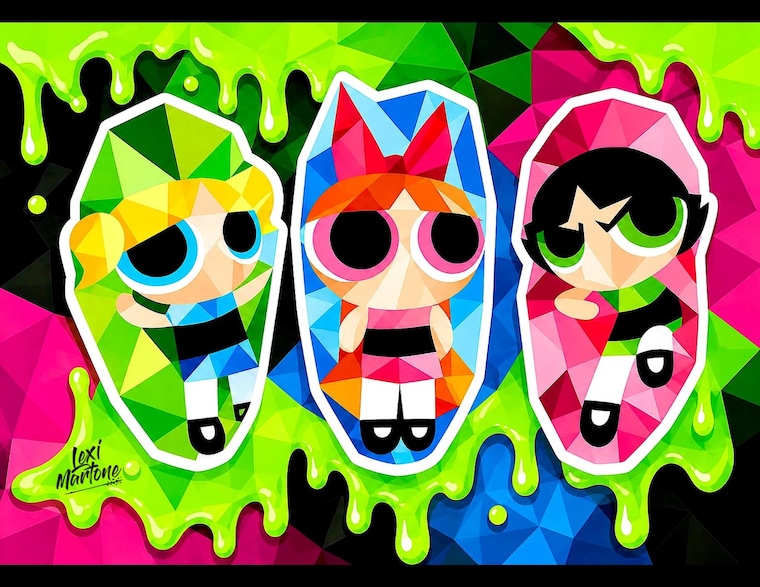
Porque crecer no significa dejar de jugar. Simplemente significa que los monstruos se hicieron más grandes y el arte mejoró.
Because growing up doesn’t mean you have to stop playing. It just means the monsters got bigger, and the art got better.
La gente dice: "Es lo que es".
Nunca me he sentido identificado con esa frase.
Durante toda mi infancia, mi madre me decía que el mundo era mi lienzo y que podía usar mi pincel para crearlo como quisiera. Así que cuando la gente me dice: «Es lo que es», lo único que entiendo es que me permiten aceptar las cosas tal como son.
No lo creo.
La realidad es negociable. Si no te gustan tus circunstancias, cámbialas.
Puedes repintarlas. Puedes reconstruirlas. Puedes crear algo completamente nuevo.
Por eso llevo tatuada la frase "Es lo que no es". Es un recordatorio de que el mundo solo se arregla cuando decidimos dejar de imaginar algo diferente y, en cambio, lo hacemos realidad.
••••••••
Lexi Martone es artista, narradora, personalidad televisiva y coleccionista profesional de bellos desastres.
Antes de los programas de televisión, antes de tener seguidores en las redes sociales, antes de tener clientes famosos, antes de todo eso, Lexi era una artista.
Desde el principio, su camino estuvo marcado por la curiosidad y la experimentación. Ha dedicado su vida a explorar todas las disciplinas creativas a su alcance: dibujo, pintura, escultura, diseño de moda, gastronomía, fotografía, vídeos, manicura, narración de historias y, ahora, experiencias artísticas inmersivas. El arte nunca fue una duda.
El medio era.
La bruja que llevaba dentro también estaba forjando su futuro en silencio. De niña, cámara en mano, filmando a su hermana en competiciones de baile, Lexi les decía a todos que algún día tendría un programa de televisión sobre su familia. Mucho antes de que se hiciera realidad, ella lo vislumbró primero.
Con el paso del tiempo, esa visión comenzó a materializarse en el mundo de la moda, pero la industria le dejó claro que el talento no siempre era suficiente. Como mujer de talla grande, constantemente le decían que no por su aspecto. Ante esas limitaciones, decidió cambiar de rumbo. Encontró un nuevo espacio en el arte de las uñas, donde podía pintar pequeñas obras maestras y construir una carrera basada en la creatividad, en lugar de intentar encajar en los moldes de otros.
Pronto aprendió que los prejuicios existen en todas partes. La industria de la belleza no era muy diferente. Su talento seguía sin ser suficiente.
Así que, en lugar de cambiar su arte, cambió su vida.
Tras la cirugía de manga gástrica, en la que perdió 68 kilos y le extirparon la vesícula biliar, comenzó una nueva etapa en su vida.
Lexi se convirtió en una de las artistas de uñas más reconocidas del mundo. Su trabajo fue lucido por celebridades como JLo, Katie Holmes, Sophia Bush, Jada Pinkett Smith y las ángeles de Victoria's Secret. Trabajó con algunas de las marcas más importantes de la industria de la belleza, como Valentino Beauty Pure, Young Nails, OPI y Color Club, además de colaborar con marcas como Nickelodeon y Marvel.
En la cúspide de su carrera, no solo participaba en la industria de las uñas, sino que contribuía a darle forma. Fue la figura principal en ferias comerciales, capacitó a artistas de todo el mundo, creó diseños innovadores y forjó una reputación que trascendió su salón en Long Island. Clientes de todo el país viajaban para recibir sus servicios.
Posteriormente, apareció en Food Network y MasterChef, demostrando una vez más que la creatividad no se limita a un solo medio. Luego llegó el programa de televisión que había estado visualizando desde la infancia.
El programa Unpolished de TLC dio a conocer al mundo a la familia Martone y transformó a Lexi de una figura destacada en la industria a un nombre conocido en todos los hogares. La serie se emitió internacionalmente, llegando a audiencias en Estados Unidos, Canadá, Latinoamérica, Reino Unido y otros países. Lo que comenzó con una niña filmando concursos de baile se convirtió en un programa de telerrealidad visto por millones de personas.
Por un momento, sintió que lo había comprendido todo.
Pero esa sensación de resolución no duró.
Siempre había otra razón por la que le decían que no. No tenía suficiente experiencia. No tenía suficientes contactos. No tenía suficiente dinero. No tenía suficiente historia.
Entonces la vida le deparó una historia que jamás habría elegido para sí misma... o eso creía.
El mundo se paralizó, su salón cerró, perdió a su padre y sufrió una ruptura amorosa que casi la destruye. Años de enfermedad crónica se combinaron con la enfermedad de Lyme, que le provocó insuficiencia hepática, un trasplante de hígado y cuatro días en coma. Todo bajo la mirada pública. El mundo entero opinaba sobre su proceso de recuperación, al igual que opinaban sobre cómo había superado el duelo por la muerte de su padre.
Estas experiencias, aunque dolorosas, se convirtieron en puntos de inflexión. Aquello que pasó años tratando de evitar se convirtió precisamente en lo que dio forma a su obra.
El duelo se convirtió en el siguiente medio.
Ahora, esos capítulos dan forma a todo lo que crea. Hoy, Lexi crea pinturas, esculturas, miniaturas, experiencias inmersivas y extraños mundos que habitan en algún punto entre la fascinación infantil y las puertas de un cementerio. Su obra combina humor negro, nostalgia, duelo, resiliencia y la convicción de que incluso las historias más oscuras merecen color.
Su arte ya no se trata solo de expresión. Se trata de transformación.
Porque la sanación no siempre se manifiesta como tal. A veces se manifiesta como una risa ante una tumba. A veces se manifiesta como una pintura. A veces se manifiesta como una pequeña escultura, una historia, un chiste o una chispa de color donde nadie esperaba encontrarla.
Hoy, la misión de Lexi es sencilla:
Ayudar a las personas a sanar a través de la creatividad.
Para demostrar que la tristeza y la alegría pueden coexistir en la misma habitación.
Para demostrar a la gente que el dolor puede convertirse en un propósito.
Y para recordar a cualquiera a quien alguna vez le hayan dicho "las cosas son como son" que la realidad es mucho más flexible de lo que les han hecho creer.
La vida le dijo que no muchas veces.
De todas formas, ella lo cambió.
Creó un mundo que nadie podrá destruir jamás porque lo construyó y lo protege con sus propias manos.
La magia nunca residió en las circunstancias.
La magia siempre estuvo dentro de ella.
La magia está dentro de cada persona. Solo tienes que mirar.
People say, “It is what it is.”
I’ve never connected with that phrase.
My mother spent my entire childhood telling me that the world was my canvas and that I could use my paintbrush to create it however I wished. So when people tell me, “It is what it is,” all I hear is permission to accept things exactly as they are.
I don’t believe that.
Reality is negotiable. If you don’t like your circumstances, change them.
You can repaint them. You can rebuild them. You can create something entirely new.
That’s why “It Is What It ISN’T” is tattooed on me. It’s a reminder that the world only becomes fixed when we decide to stop imagining something different and actually do it.
••••••••
Lexi Martone is an artist, storyteller, television personality, and professional collector of beautiful disasters.
Before the television shows, before the social media following, before the celebrity clients, before any of it, Lexi was an artist.
From the very beginning, her path was defined by curiosity and experimentation. She has spent her entire life exploring every creative medium she could get her hands on. Drawing, painting, sculpture, fashion design, food, photo, videos, nails, storytelling, and now immersive art experiences. Art was never the question.
The medium was.
The witch inside was also quietly manifesting her future. As a little girl, camera in hand, filming her sister at dance competitions, Lexi would tell people that one day she was going to have a television show about her family. Long before it became reality, she saw it first.
As she grew older, that vision began to take form through fashion, but the industry made it clear that talent wasn’t always enough. As a plus size woman, she was constantly told no because of the way she looked. Faced with those limitations, she pivoted. She found a new canvas in nail art, where she could paint tiny masterpieces and build a career around creativity instead of fitting into someone else’s mold.
She quickly learned that judgment exists everywhere. The beauty industry wasn’t much different. Her talent still wasn’t enough.
So instead of changing her art, she changed her life.
After the gastric sleeve surgery, losing 150lbs and a gallbladder, she stepped into a new chapter.
Lexi went on to become one of the most recognized nail artists in the world. Her work appeared on celebrities including JLo, Katie Holmes, Sophia Bush, Jada Pinkett Smith, and Victoria’s Secret Angels. She worked with some of the biggest brands in the beauty industry including Valentino Beauty Pure, Young Nails, OPI, and Color Club, while collaborating with brands such as Nickelodeon and Marvel.
At the height of her career, she wasn’t just participating in the nail industry she was helping shape it. She headlined trade shows, educated artists around the world, created trend setting designs, and built a reputation that reached far beyond her Long Island salon. Clients traveled from across the country to sit in her chair.
She would go on to appear on Food Network and MasterChef, proving once again that creativity isn’t confined to a single medium. Then came the television show she had been manifesting since childhood.
TLC’s Unpolished introduced the world to the Martone family and transformed Lexi from an industry leader into a household name. The series aired internationally, reaching audiences across the United States, Canada, Latin America, UK and beyond. What started with a little girl holding a camera at dance competitions became a reality watched by millions.
For a moment, it felt like she had figured it all out.
But that sense of resolution didn’t last.
There was STILL was always another reason she was told no. Not enough experience. Not enough connections. Not enough money. Not enough story.
Then life handed her a story she never would have chosen for herself… or so she thought..
The world shut down, her salon closed, she lost her father, she went through a breakup that almost destroyed her. Years of chronic illness met Lyme Disease which led to liver failure, a liver transplant, and 4 days in a coma. All under the public eye. The whole world had an opinion of her healing journey, just as they had about how she grieved her fathers death and heartbreak.
These experiences, though painful, became turning points. The things she spent years trying to avoid became the very things that shaped her work.
Grief became the next medium.
Now, those chapters form everything she creates. Today, Lexi creates paintings, sculptures, miniatures, immersive experiences, and strange little worlds that live somewhere between childhood wonder and cemetery gates. Her work blends dark humor, nostalgia, grief, resilience, and the belief that even the darkest stories deserve color.
Her art is no longer just about expression. It’s about transformation.
Because healing doesn’t always look like healing. Sometimes it looks like laughter at a gravesite. Sometimes it looks like a painting. Sometimes it looks like a tiny sculpture, a story, a joke or a spark of color where nobody expected to find one.
Today, Lexi’s mission is simple:
Help people heal through creativity.
To prove that grief and joy can exist in the same room.
To show people that pain can become purpose.
And to remind anyone who has ever been told “it is what it is” that reality is far more flexible than they’ve been taught to believe.
Life told her no a lot.
She changed it anyway.
Created a world that no one can ever destroy because she built and protects it with her own two hands.
The magic was never in the circumstances.
The magic was always inside her.
The magic is inside of everyone. Just look.