

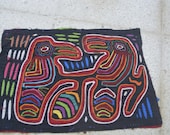
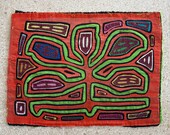
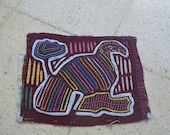
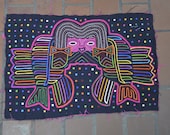
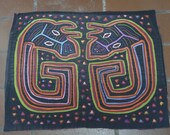
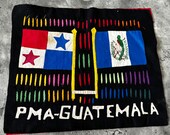

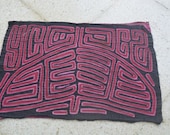
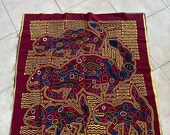
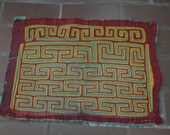

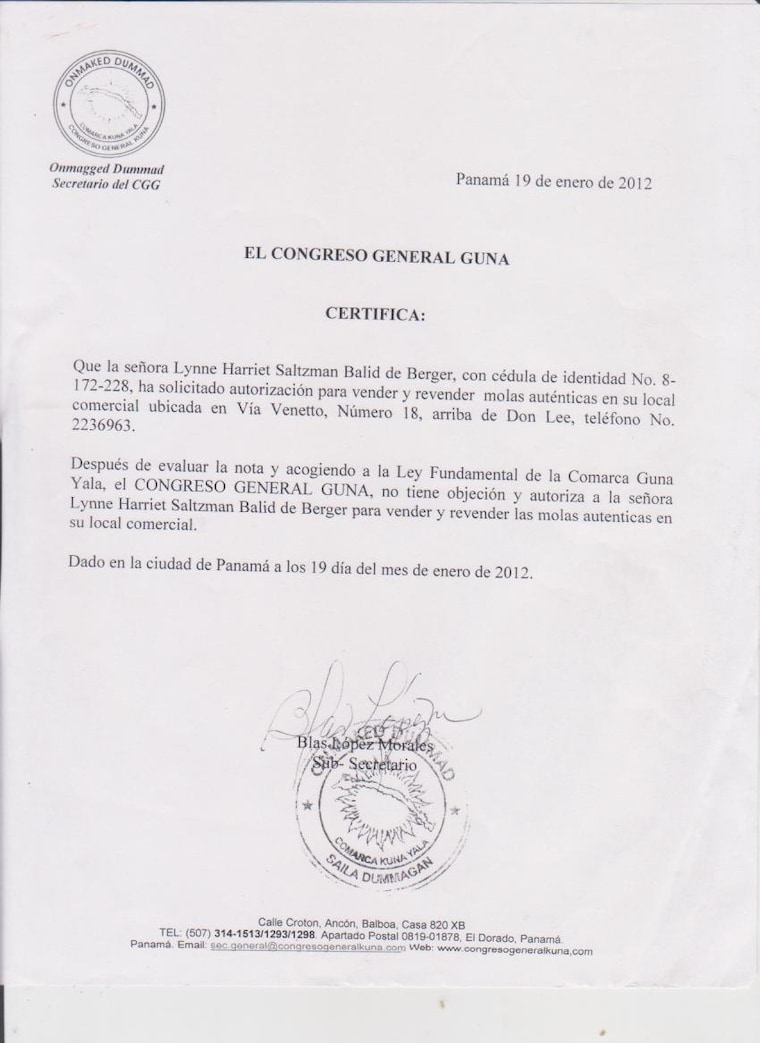
TRADITIONAL AND AUTHENTIC MOLAS ARE MY COLLECTION
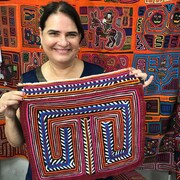
MOLA COLLECTION BY LYNNE SALTZMAN ON ETSY
https://www.etsy.com/shop/LynneSaltzman
I was born in Panamá in 1956
raised in Canal Zone From 1956-1976
Father: Jack Saltzman, 1920-2011
Head Supervisor for the Miraflores Hydroelectrical Plant at the Miraflores Locks on the Panama Canal. The only person without an engineering degree who was able to reach this level of expertise. He was a self-taught engineer.
Dad came to Panama in 1952, Married Flory in 1953, retired in Panama from 1980 till he passed away
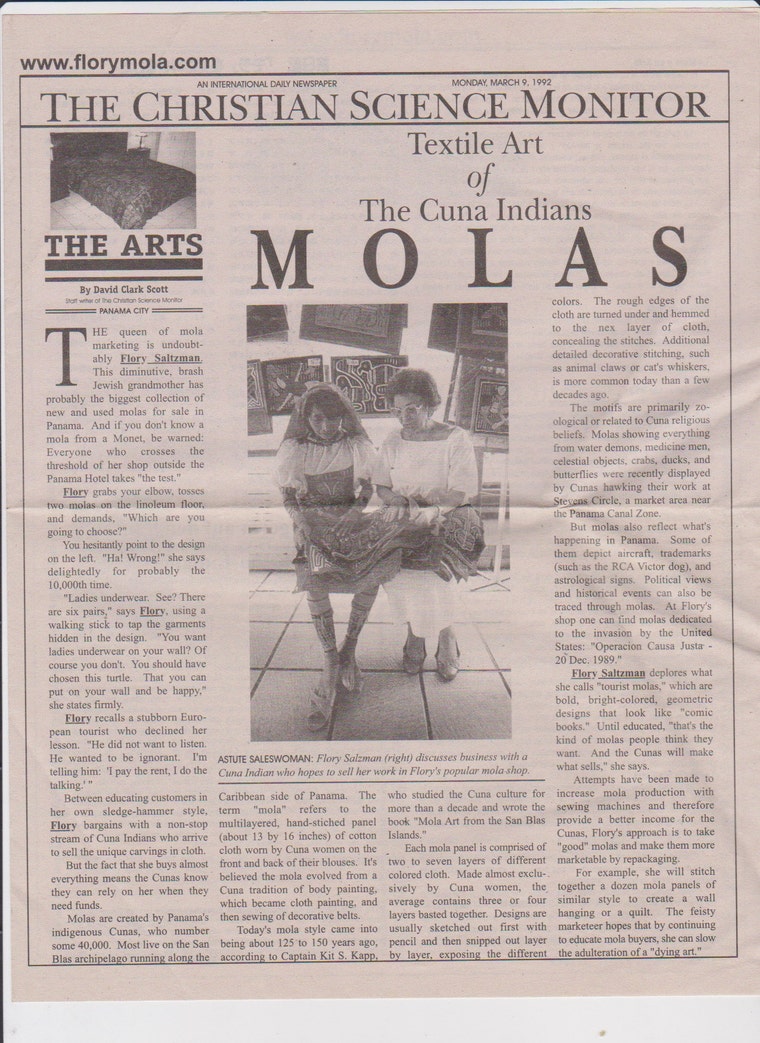
Mom: Flory Saltzman 1927-2022
Born in Colon, Panama, raised in Jerusalem, Israel, and fought in the Israeli Independence 1948 War,
Returned to Panama In 1948.
Worked as a jeweler for a very prestigious jewelry store.
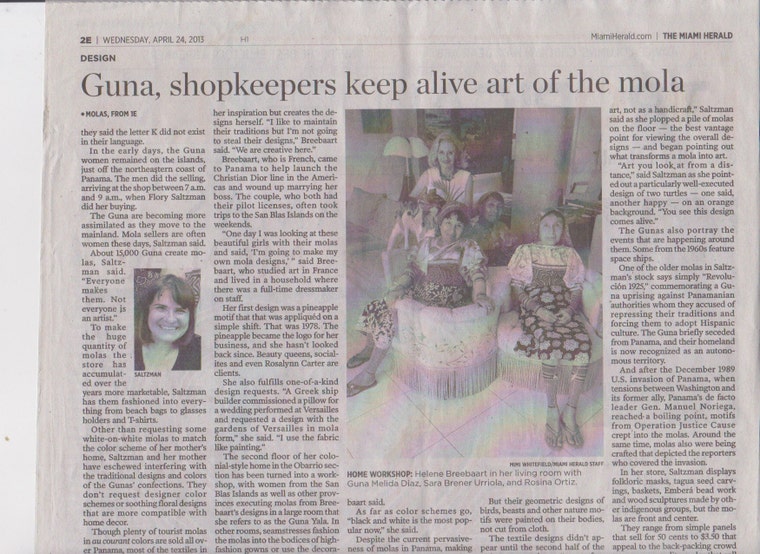
Several years later, she decided to open up her own store in 1961 after meeting a Peace Corps volunteer, who introduced her to the Kuna (Guna) Indian beautiful blouse and world.
Here, she discovered the art form of the molas.
“SCULPTURING” THRU CLOTH.
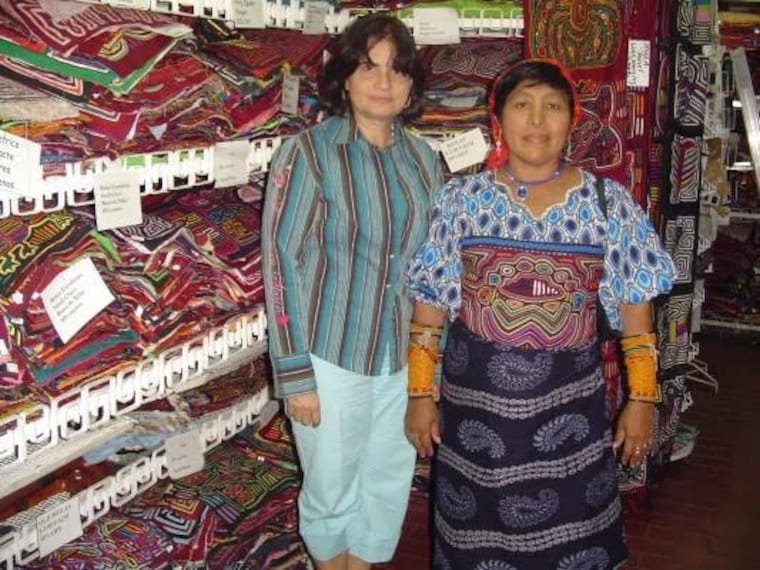
I have worked in the store since I was 10 years old. I am a Nutritional and Dietitian who graduated from the University of Minnesota.
I married Tino in 1976 and have 3 children and 9 grandchildren. I married again in 2008 to Leslie.
I took over the store when Tino died of cancer in 2000, and my mom had a major stroke in 2001.
I specifically remember being in the store, and after all this, a customer challenged me, saying that I did not love and appreciate the molas as much as my mom and I would never bring this art form to the level it deserves.
As harsh as these words were, they were what I needed to put my whole heart in learning as much as I could about the ‘vintage, traditional’ molas and dedicate my store to these molas before they were completely lost.
During this time, many companies and designers were requesting that the molas be what they wanted: blue on blue, lots of toucans and birds, for the t-shirts and men’s shirts. Also, Company logos or designs can be whatever the modern client wants.
FOR ME, PRESERVING THE VINTAGE MOLA IS THE MOST VALUABLE MESSAGE I CAN EXPRESS TO YOU.
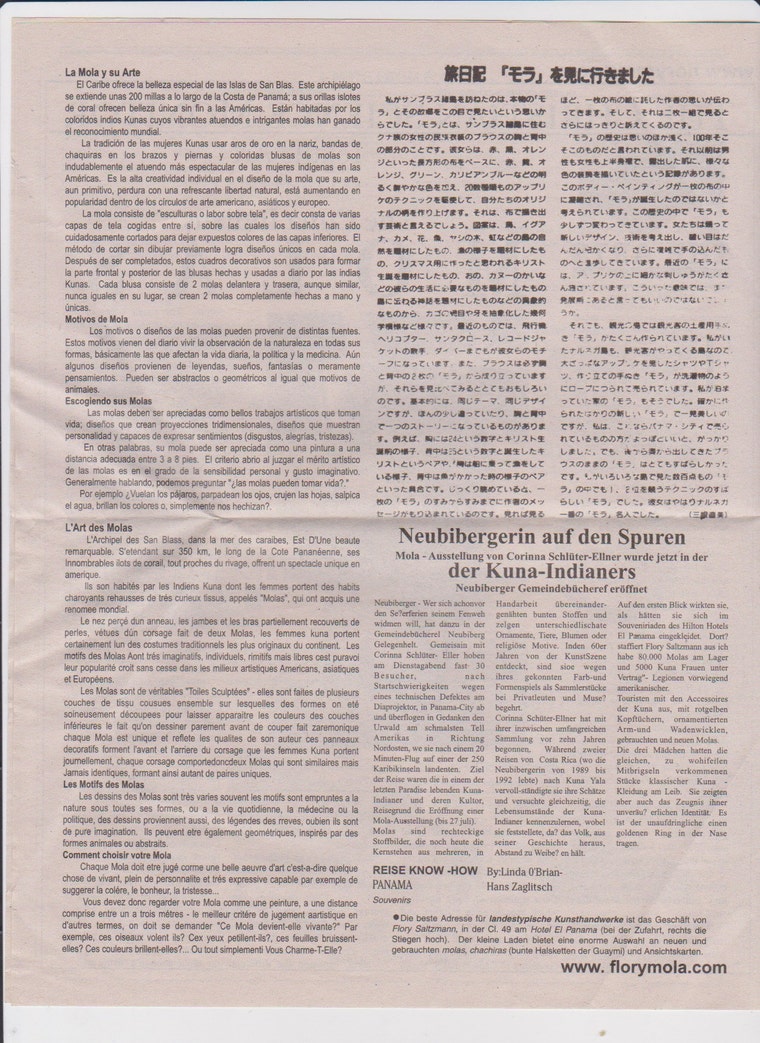
SAN BLAS ISLANDS AND THE GUNA INDIANS:
There are around 365 islands located in the Atlantic Ocean between Panama and Colombia, near the Darien jungle. Some of the islands are sinking due to climate change, and relocation of the Guna Indian is happening right now.
MOLA HISTORY:
Molas were first thought to be drawings on the body of the woman. When cloth was introduced, the woman would make her molas for herself for her blouse. Molas means blouse. As the woman was larger and heavier, the molas were naturally larger. I have many drawings of the original design of molas painted on top of feathers. It is said to be that there are 144 original designs. Mostly geometric, but the molas are done to explain legends, environment of their surroundings. There are never 2 alike, always done for the Guna Indian woman’s blouse, there are 2 similar but never alike.
HOW MOLA IS MADE:
• Take several pieces of cloth, usually, the measurement is 11 inches x 14 inches
• Cut through the top layer to bring out the next layer of cloth, fold, and sew.
• Each design comes through as the cutting, folding, and sewing occur.
• In the vintage Molas, the majority of the designs were not drawn. But nowadays I see this more and more.
• It can take from 3-6 months to finish a mola, but this is done together when constructing other molas.
HOW TO CHOOSE AND APPRECIATE YOUR MOLA.
1. Put the mola at a distance, usually 3-5 feet
2. Observe what is going on in the mola. What story is being told?
3. See the colors that the Guna Indian woman uses. See how the birds fly or how the mom takes care of her young, etc. Observe the symmetry.
4. Remember that Panama is hot, so many of the molas are 2 colors. This is also amazing when looking at molas because the design is hard to find and the stitching is so fine. Many local people, not artists, will tell you to turn the mola upside down to make sure there are 3-4 layers of cloth. Also, to check the stitching to make sure it is not done by machine. (FYI, the sewing-machine was introduced by the Peace Corp in 1980’s so these molas are also vintage).
5. I DO NOT AGREE WITH THIS. I BELIEVE EACH MOLA HAS ITS BEAUTY, IT IS UP TO YOU TO FIND ITS BEAUTY.
Thank you for listening, and I hope each of you finds this beauty in your special mola.
Take Care.
LYNNE
