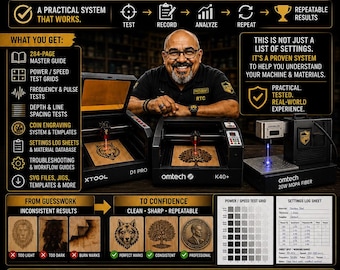



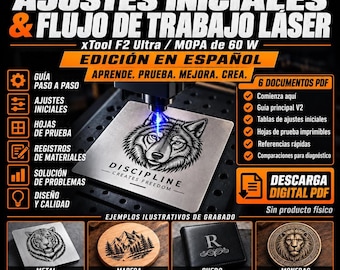









Mijn naam is Charles, en ik heb de RTC Precision Systems toolkit ontwikkeld om praktische graveermethoden te documenteren die zijn ontwikkeld door middel van praktijktests.
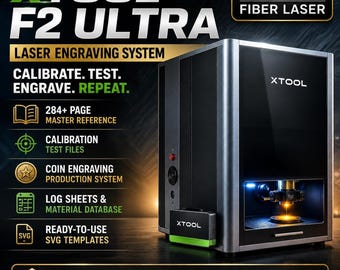
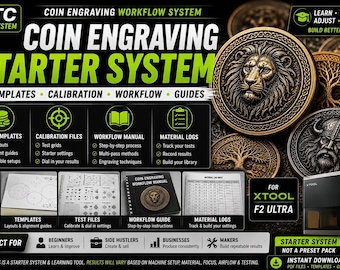
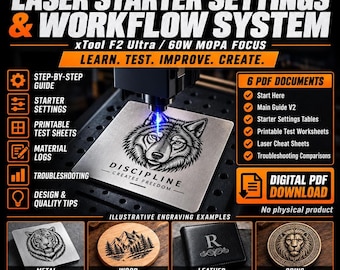
Ik werk praktisch met de xTool F2 Ultra en onderzoek hoe thermische controle, parameterdiscipline en gestructureerde tests de graveerkwaliteit beïnvloeden.
Ik heb geen enkele band met xTool of enig ander bedrijf.
De reden waarom ik deze toolkit heb ontwikkeld is simpel: toen ik met de machine begon te werken, was het moeilijk om online duidelijke, praktische en direct toepasbare informatie te vinden.
Veel handleidingen op internet richten zich op willekeurige instellingen of korte tutorials.
Mijn doel is anders.
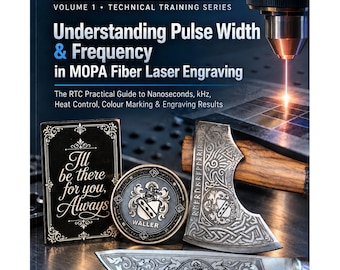
Ik richt me op het begrijpen van het proces achter graveerresultaten: hoe vermogen, snelheid, frequentie en koeling samenwerken om voorspelbare resultaten te produceren.
De hulpmiddelen in deze toolkit zijn ontwikkeld door:
herhaalde kalibratietests
echte graveerprojecten
systematische parameterregistratie
Alles wat inbegrepen is, is ontworpen om andere makers te helpen de overstap te maken van graveren door middel van vallen en opstaan naar gecontroleerde, herhaalbare resultaten.
Ik ben ervan overtuigd dat de beste manier om lasergraveren te leren is door middel van gestructureerd testen en observeren, en deze toolkit is ontwikkeld om die aanpak te ondersteunen.
Als de toolkit je helpt om je graveerresultaten te verbeteren, ben ik blij dat hij van nut kan zijn.
My name is Charles, and I created the RTC Precision Systems toolkit to document practical engraving methods developed through real-world testing.
I work hands-on with the xTool F2 Ultra, exploring how thermal control, parameter discipline, and structured testing influence engraving quality.
I have no affiliation with xTool or any other company.
The reason I developed this toolkit is simple: when I started working with the machine, it was difficult to find clear, practical, hands-on information online.
Many guides on the internet focus on random settings or quick tutorials.
My goal is different.
I focus on understanding the process behind engraving results — how power, speed, frequency, and cooling interact to produce predictable outcomes.
The resources in this toolkit were developed through:
repeated calibration testing
real engraving projects
systematic parameter logging
Everything included is designed to help other makers move from trial-and-error engraving to controlled, repeatable results.
I believe the best way to learn laser engraving is through structured testing and observation, and this toolkit was built to support that approach.
If the toolkit helps you improve your engraving results, I’m glad it could be useful.
