


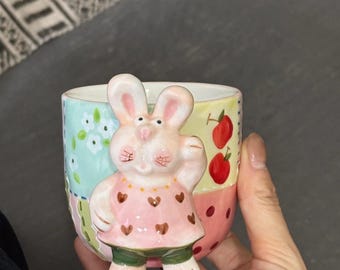

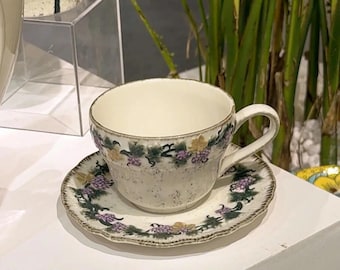
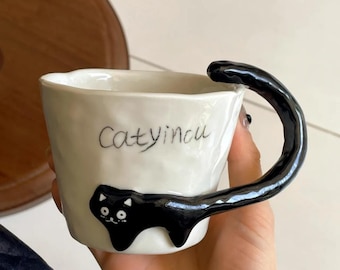
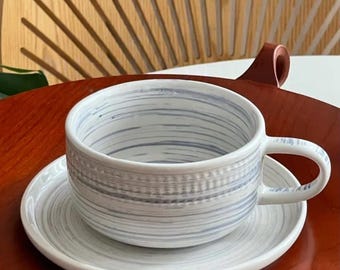
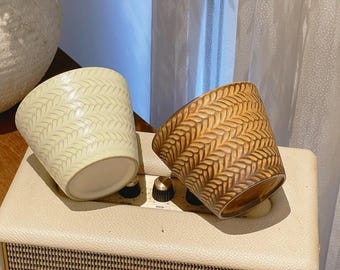
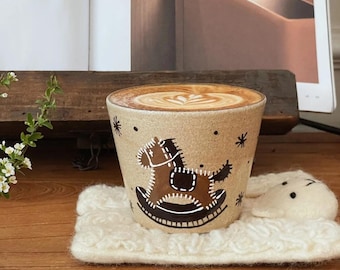


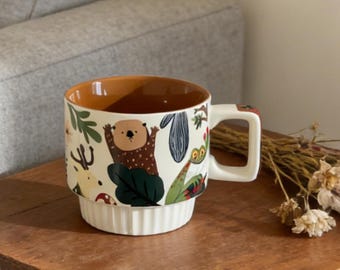


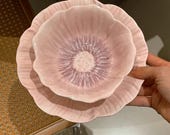

La squisita bellezza della ceramica fatta a mano
The exquisite beauty of handmade pottery
In uno studio luminoso, lontano dal trambusto della città, ogni tazza e piattino in ceramica nasce da un semplice pezzo di argilla e dalla promessa di trasformare momenti ordinari in qualcosa di straordinario. Per noi, realizzare stoviglie in ceramica non è solo un'attività artigianale; è un dialogo tra mani, argilla e le storie che i nostri pezzi custodiranno nelle vostre case.
Il viaggio inizia con la selezione della migliore argilla per gres. La acquistiamo da piccole cave a conduzione familiare, dove i minerali della terra conferiscono un delicato calore al pezzo finito: non esistono due lotti esattamente uguali, ed è questa la magia dell'artigianato. Impastiamo l'argilla lentamente, eliminando le bolle d'aria che potrebbero rompersi in forno. Questo passaggio è meditativo, un'opportunità per entrare in contatto con la materia; ogni piega e ogni pressione sono un impegno silenzioso per la qualità, che garantisce che l'argilla sia liscia, malleabile e pronta a prendere forma.
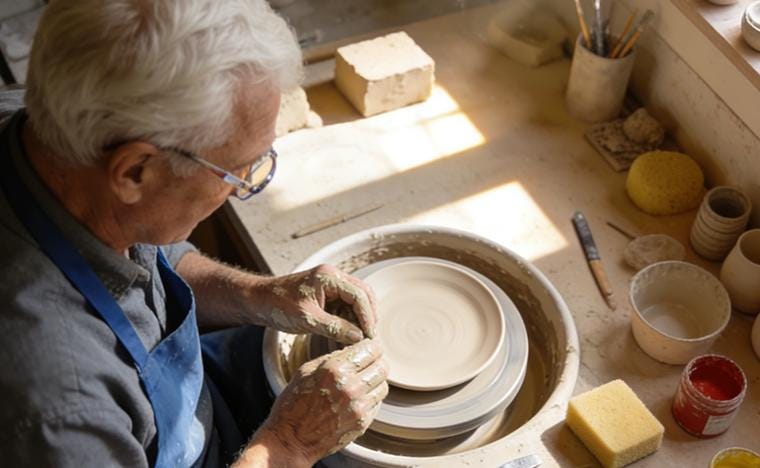
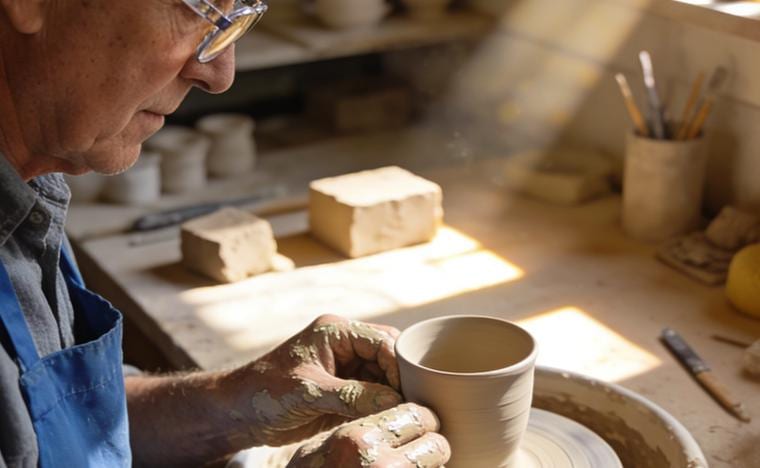
Poi arriva il momento del tornio. Con le mani inumidite per farle scivolare sull'argilla, la centriamo: questo è il cuore del processo. Un centro traballante significa una tazza sbilenca, quindi ci prendiamo il nostro tempo, lasciandoci guidare dal ritmo del tornio. Tiriamo l'argilla verso l'alto, pizzicandola delicatamente e modellandola nelle curve di una tazza: un bordo largo per sorseggiare, un manico comodo che si adagia naturalmente nella mano e una base che si appoggia saldamente sul piattino. Per il piattino, appiattiamo un pezzo di argilla, ruotandolo fino a ottenere la dimensione giusta per accogliere la tazza, aggiungendo una piccola cresta lungo il bordo per raccogliere eventuali fuoriuscite: praticità intrecciata alla bellezza.
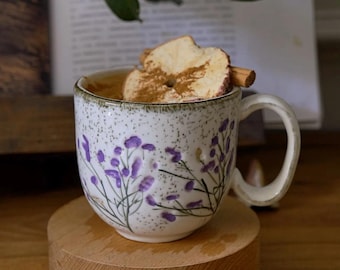
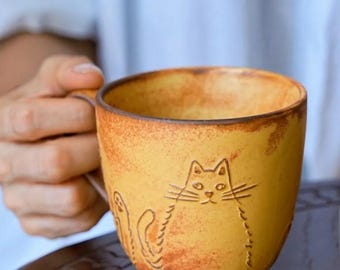
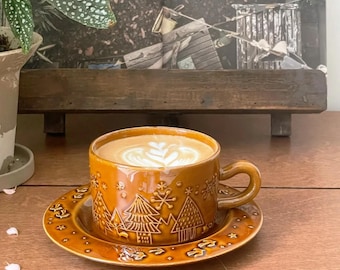
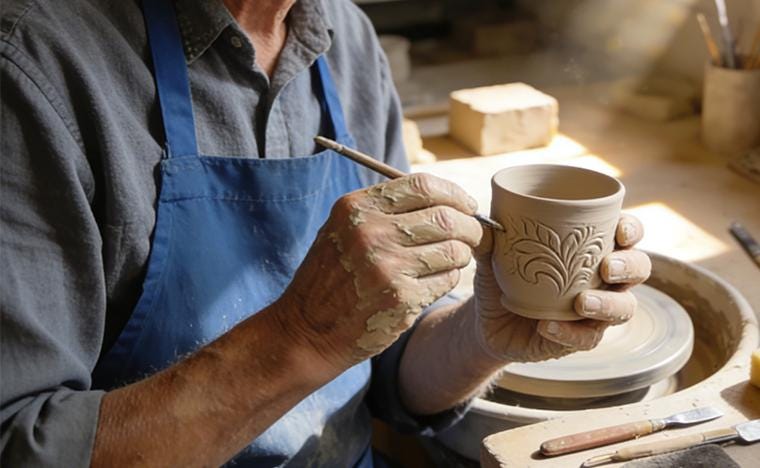
Una volta modellati, i pezzi si asciugano per giorni, perdendo lentamente umidità fino a diventare sodi al tatto (lo chiamiamo "durezza della pelle"). È qui che aggiungiamo i dettagli di finitura: levigando la giunzione del manico in modo che sia senza giunture, eliminando l'argilla in eccesso dalla base per una finitura pulita e, a volte, incidendo piccoli e delicati motivi – una spirale, un rametto di erbe aromatiche o una semplice linea – ognuno disegnato a mano libera, rendendo ogni pezzo unico nel suo genere. Non usiamo mai stampi; anche se due tazze sembrano simili, la leggera variazione nella curva del manico o nella posizione del motivo racconta la storia di essere state realizzate a mano.
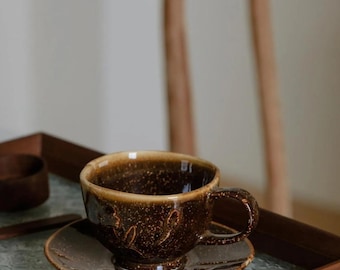
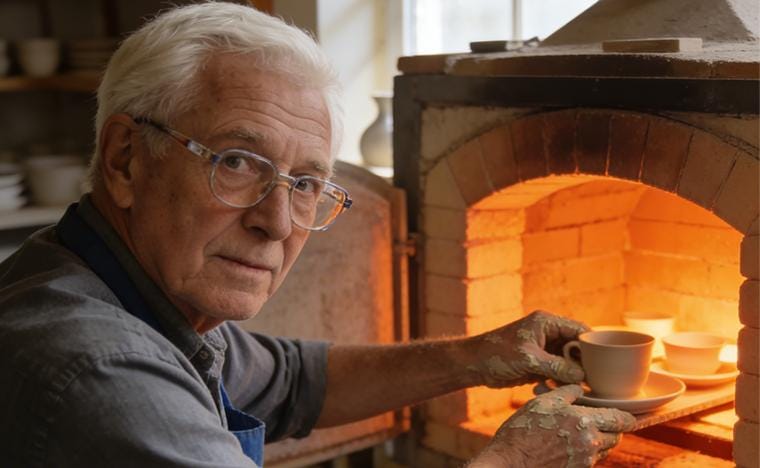
Poi arriva la prima cottura, detta biscotto. I pezzi vengono messi nel forno, dove la temperatura sale a 1832 °F (1000 °C). Questo trasforma l'argilla morbida in un materiale poroso e resistente, pronto per la smaltatura. La smaltatura è il momento in cui la creatività dà il meglio di sé: mescoliamo le nostre smalti utilizzando pigmenti naturali, testando ripetutamente i lotti per ottenere la tonalità e la consistenza perfette. Alcuni smalti fondono in un blu intenso e lucido come un cielo estivo; altri hanno una finitura opaca con pagliuzze dorate che catturano la luce; altri ancora sviluppano sottili variazioni di colore durante la cottura, creando un effetto marmorizzato impossibile da replicare.
Immergiamo con cura ogni tazza e piattino, assicurandoci che siano ricoperti in modo uniforme, quindi li lasciamo asciugare di nuovo prima della cottura finale. La seconda sessione di cottura in forno raggiunge i 1200 °C: è qui che avviene la magia. Lo smalto si scioglie, scorre e si fonde con l'argilla, trasformando il biscotto grezzo nei pezzi lisci e adatti agli alimenti che porterete a casa. Aspettiamo con ansia che il forno si raffreddi durante la notte; aprirlo al mattino è come scartare un regalo: a volte uno smalto si comporta in modo nuovo, creando un felice incidente che diventa il nostro nuovo design preferito.
Ogni tazza e piattino in ceramica che esce dal nostro studio porta con sé un pezzetto del nostro viaggio: l'impastamento, la filatura, l'attesa e la gioia di vedere l'argilla trasformarsi in qualcosa che conterrà il tuo caffè mattutino, il tuo tè pomeridiano o un tranquillo momento di relax. Non realizziamo solo stoviglie: creiamo contenitori per le tue storie. Quando tieni in mano una delle nostre tazze, tieni in mano il calore delle nostre mani, la pazienza del processo e un promemoria che l'artigianato lento e intenzionale merita di essere celebrato.
Grazie per aver reso i nostri prodotti parte integrante dei vostri rituali quotidiani. Brindiamo a tanti sorsi, storie e momenti resi dolci da qualcosa di fatto a mano con amore.
In a sunlit studio tucked away from the hustle of the city, every ceramic cup and saucer begins with a simple lump of clay—and a promise to turn ordinary moments into something extraordinary. For us, making ceramic tableware isn’t just a craft; it’s a conversation between hands, clay, and the stories our pieces will hold in your home.
The journey starts with selecting the finest stoneware clay. We source it from small, family-run quarries where the earth’s minerals lend a subtle warmth to the finished piece—no two batches are exactly alike, and that’s the magic of handcraft. We knead the clay slowly, pressing out air bubbles that could crack in the kiln. This step is meditative, a chance to connect with the material; each fold and press is a quiet commitment to quality, ensuring the clay is smooth, pliable, and ready to take shape.
Next comes throwing on the pottery wheel. With hands dampened to glide over the clay, we center it—this is the heart of the process. A wobbly center means a lopsided cup, so we take our time, letting the wheel’s rhythm guide us. We pull the clay upward, gently pinching and shaping it into the curves of a cup: a wide rim for sipping, a comfortable handle that rests naturally in the hand, and a base that sits steady on its saucer. For the saucer, we flatten a piece of clay, spinning it until it’s just the right size to cradle the cup, adding a small ridge around the edge to catch spills—practicality woven into beauty.
Once shaped, the pieces dry for days, slowly losing moisture until they’re firm to the touch (we call this “leather hard”). This is when we add the finishing details: smoothing the handle’s join so it’s seamless, trimming excess clay from the base for a clean finish, and sometimes carving tiny, delicate patterns—a spiral, a sprig of herbs, or a simple line—each one drawn freehand, making every piece one of a kind. We never use molds; even if two cups look similar, the slight variation in the handle’s curve or the pattern’s placement tells the story of being made by human hands.
Then comes the first firing, called bisque firing. The pieces go into the kiln, where the temperature climbs to 1832°F (1000°C). This transforms the soft clay into a porous, durable material ready for glazing. Glazing is where creativity truly shines—we mix our own glazes using natural pigments, testing batches repeatedly to get the perfect hue and texture. Some glazes melt into a glossy, deep blue like a summer sky; others have a matte finish with flecks of gold that catch the light; still, others develop subtle variations in color when fired, creating a marbled effect that’s impossible to replicate.
We dip each cup and saucer carefully, ensuring even coverage, then let them dry again before the final firing. The second kiln session reaches 2204°F (1200°C)—this is where the magic happens. The glaze melts, flows, and fuses with the clay, turning the raw bisque into the smooth, food-safe pieces you’ll bring home. We wait anxiously as the kiln cools overnight; opening it in the morning is like unwrapping a gift—sometimes a glaze behaves in a new way, creating a happy accident that becomes our new favorite design.
Every ceramic cup and saucer that leaves our studio carries a little piece of our journey: the kneading, the spinning, the waiting, and the joy of seeing clay become something that will hold your morning coffee, your afternoon tea, or a quiet moment of relaxation. We don’t just make tableware—we make vessels for your stories. When you hold one of our cups, you’re holding the warmth of our hands, the patience of the process, and a reminder that slow, intentional craft is worth celebrating.
Thank you for letting our pieces be part of your daily rituals. Here’s to many sips, stories, and moments made sweet by something handcrafted with love.
