



Uno a uno con Moose: sobre cómo obtenemos, controlamos la calidad y valoramos nuestro material / #AskMoose
One-on-one with Moose: On how we source, quality control, and price our material | #AskMoose
Team Moose se esfuerza no solo por proporcionar a la comunidad de artistas de joyería cabujones auténticos y únicos, sino que también estamos comprometidos a ser transparentes con nuestros clientes en todo lo que podamos.
Con esto, hemos respondido a las preguntas más importantes que tienes en mente, especialmente cuando se trata de nuestros cabujones.
ABASTECIMIENTO DE PRODUCTOS
Usted preguntó: ¿Cómo puede asegurar a sus clientes que sus materiales son de origen ético?
Lo hemos intentado, pero desafortunadamente, nunca hemos podido validar que todo el material que tenemos es de origen ético. La razón es que obtenemos material de antiguos mineros a nivel internacional y creemos que todos los comerciantes de cabujones en el planeta, no pueden decir o validar completamente que cada pieza de piedra de un millón de piezas ha sido 100% ética.
Sin embargo, todo lo que podemos garantizar con total honestidad son los siguientes:
Hacemos nuestra parte para ser éticos en nuestras relaciones con las minas y nuestro propio proceso;
Desafortunadamente, no podemos rastrear algunos de nuestros materiales antiguos para decir que todos son de origen ético, y;
Con todo el abastecimiento directamente de los propietarios de la mina, estamos seguros de que el material probablemente sea de origen ético.
Nadie debería decir en la industria de la joyería que son de origen ético sin rastrear los orígenes de la pieza única en el momento de la minería, el manejo y el corte. Moose puede garantizar que somos éticos en el proceso de manipulación y corte. Elegimos contribuir con nuestra parte al tener envases 100% compostables en todos los cabujones enviados. Esto incluye la caja y el paquete en sí.
Usted preguntó: ¿De dónde saca sus productos?
Actualmente hay tres formas en que obtenemos nuestras piedras:
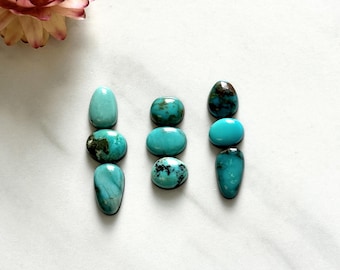
De los mineros directamente. La mano del team Moose los corta en cabujones;
Obtenemos cabinas en bruto y terminadas de viejos mineros y coleccionistas que compraron mucho material hace décadas;
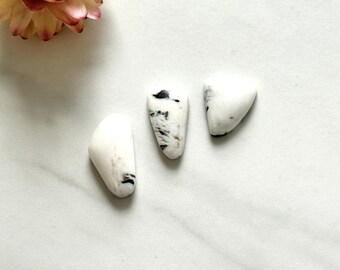
Por último, de los propietarios de minas familiares o cortadores que trabajan directamente en las minas. (Por ejemplo, White Buffalo y Royston). Solo nos abastecemos de la red interna de los mineros, lo que garantiza que el material que obtenemos sea de primera mano y auténtico.
Usted preguntó: ¿Cómo pone precio a sus cabujones?
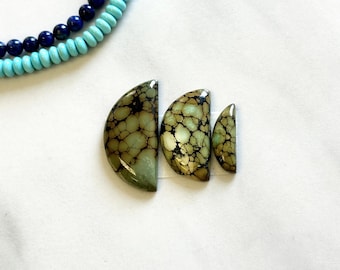
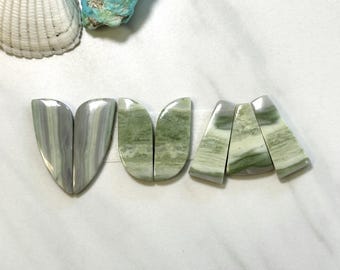
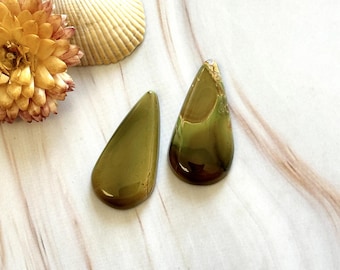
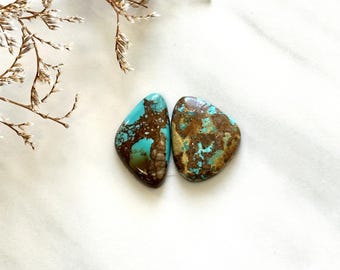
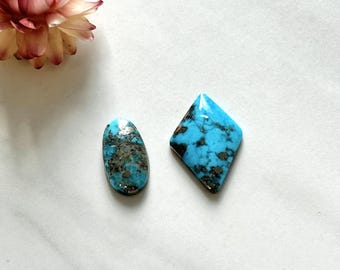
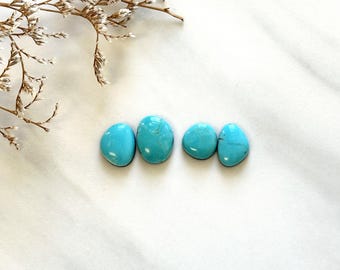
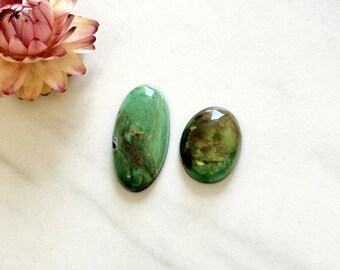
Nuestros precios se basan en tres cosas principales: patrón, peso y corte o forma. Primero valoramos por imágenes de la piedra, ya sea que lleve o no una imagen o si inspira una historia de arte. Luego, miramos la mina y el peso de la piedra. Por último, consideramos la forma o el corte. Los triángulos y las rondas consumen mucho más turquesa áspera que las otras formas, como las barras.
Nuestras piedras tienen un precio de $ 1 - $ 20 por quilate dependiendo de los elementos que usamos para fijar el precio, como se mencionó anteriormente.
CONTROL DE CALIDAD DE TURQUOISE MOOSE
Usted preguntó: ¿Cómo selecciona Moose qué pieza califica para ser incluida en la colección turquesa?
Para que moose pruebe una cabina, hay un par de pasos que deben seguirse.
Team Moose pasa por un estricto proceso de investigación antes de cortar una pieza. En primer lugar, unimos un trozo de piedra en bruto para asegurarnos de que el centro de la misma tenga carácter. Para maximizar el carácter y minimizar el desperdicio, nos aseguramos de abortar el áspero de la fase de slabbing si no produce piezas características más adelante.
Aunque, durante el tiempo en que se corta una pieza, existe una alta probabilidad de que la piedra natural se agriete al aplicar presión contra la rueda. Tendremos que terminar cortando las piezas agrietadas en trozos más pequeños.
Una vez que se hace un pedazo de cabujón, hacemos nuestra segunda capa de investigación examinando si el color, la matriz y el corte son adecuados para ser enumerados. Además, también hacemos dos rondas más de control de calidad durante nuestra sesión de fotografía de productos y cumplimiento final.
Las posibilidades de que una pieza se rompa en el momento de la llegada son cercanas a cero. Además, también pulimos un trozo de piedra de áspero para terminar en alrededor de 20 rondas de rejillas finas (que van desde 60 hasta 2000) para garantizar que el aspecto final de la cabina sea perfecto y esté listo para brillar.
Con respecto al respaldo de turquesa natural, nos aseguramos de respaldar toda la turquesa natural para mayor estabilidad. El material de respaldo está ahí para soportar o evitar que la piedra natural se agriete durante el ajuste del bisel, ya que la turquesa es una piedra relativamente suave y porosa.
Nos aseguramos de que el material de respaldo sea inferior al 25% del grosor de la cabina, manteniendo una cantidad sólida de soporte para que los artistas lo configuren.
Siéntase libre de comentar si tiene alguna pregunta y aclaración. También puede enviarnos una línea a info@tqmoose.com o puede enviarnos un mensaje en nuestra página de Instagram (@turquoise_moose).
Team Moose strives not only to provide the community of jewelry artists with authentic and unique cabochons, but we also are committed to being transparent with our customers in every way we can.
With this, we have responded to the most important questions you have in mind, especially when it comes to our cabochons.
SOURCING OF PRODUCTS
You asked: How can you assure your customers that your materials are ethically sourced?
We have tried but unfortunately, never able to validate all of the material we have is ethically sourced. The reason being is we source material from late old miners internationally and we believe that all cabochon dealers on the planet, can’t fully say or validate that every piece of stone from a million pieces has been 100% ethical.
However, all we can guarantee with full honesty are the following:
We do our part to be ethical in our relationships with mines and our own process;
Unfortunately, we aren’t unable to trace some of our old materials to say they are all ethically sourced, and;
With all sourcing directly from the mine owners, we are positive that the material is most likely ethically sourced.
Nobody should ever in the jewelry industry say they are ethically sourced without tracing the single piece’s origins at the time of mining, handling, and cutting. Moose can guarantee we are ethical in the handling and cutting process. We choose to contribute our part by having 100% compostable packaging on all of the cabochons shipped out. This includes the box and the package itself.
You asked: Where do you get your products?
There are currently three ways we source our stones:
From miners directly. Team Moose hand cuts them into cabochons;
We source rough and finished cabs from old miners and collectors who bought in a lot of material decades ago;
Lastly, from family mine owners or cutters who work directly at the mines. (For example, White Buffalo and Royston). We only source from miners' inner network ensuring the material we get is first-hand and authentic.
You asked: How do you price your cabochons?
Our pricing is based on three major things: pattern, weight, and cut or shape. We first price by visuals of the stone, whether or not it carries a picture or if it inspires a story of art. Then, we look at the mine and the weight of the stone. Lastly, we consider the shape or cut. Triangles and rounds consume a lot more rough turquoise than the other shapes, such as bars.
Our stones are priced at $1 - $20 per carat depending on the elements we use to price, as mentioned above.
TURQUOISE MOOSE QUALITY CONTROL
You asked: How does Moose select which piece qualifies to be included in the turquoise collection?
In order for a cab to be proved by Moose, there are a couple of steps that need to be followed.
Team Moose goes through a stringent vetting process before cutting a piece. First and foremost, we slab a piece of rough stone to make sure the center of it has character. In order to maximize the character and minimize waste, we make sure to abort the rough from the slabbing phase if it won't yield characteristic pieces later on.
Even though, during the time when a piece is being cut, there is a high chance the natural stone will be cracked from applying pressure against the wheel. We will need to end up cutting the cracked pieces into smaller pieces.
Once a piece of cabochon is made, we do our second layer of vetting by examining if the color, matrix, and cut are suitable to be listed. In addition, we also do two more rounds of quality control during our product photography session and final fulfillment.
The chances of a piece being broken at the time of arrival are close to zero. Moreover, we also polish a piece of stone from rough to finish at around 20 rounds of fine grids (going from 60 all the way up to 2000) to ensure the final look of the cab is perfect and ready to shine.
With regard to the backing of natural turquoise, we make sure that we back all the natural turquoise for stability. The backing material is there to support or prevent the natural stone from cracking during the bezel setting as turquoise is a relatively soft and porous stone.
We make sure the backing material is less than 25% of the thickness of the cab while maintaining a solid amount of support for artists to set.
Feel free to comment if you have any questions and clarifications. You can also drop us a line at info [!at] tqmoose.com or you can send us a message on our Instagram page (@turquoise_moose).


