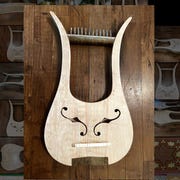


Harmony of the Ages: The Legacy of Apollo's Cithara and Persian Khatam
In ancient Greece, the sound of the cithara—a majestic harp with a deep, resonant voice—was said to echo the voice of the gods. The harp was cherished by none other than Apollo, the god of music, poetry, and the sun, who became known as Apollo Citharede, or "Apollo with the Cithara." He used this divine instrument to bring harmony to the world, soothing minds and lifting spirits.
The cithara harp differed from the smaller lyres of the time, as it was larger and more sophisticated, designed for powerful performances. It often featured intricate designs symbolising the heavens and the arts. Musicians of ancient Greece were drawn to this harp, believing that playing it allowed them to channel Apollo’s divine essence and transcend into a realm of musical purity.
Centuries later, as artisans and musicians across the ancient world shared their crafts, the art of Khatam emerged in Persia. This intricate inlay technique, perfected over generations, involved creating mesmerising geometric patterns using tiny pieces of wood, metal, and ivory. Persian artisans believed that the beauty of Khatam represented unity and balance, core values of their culture and philosophy.
Imagine, then, the merging of these two great traditions: the form of Apollo's cithara decorated with Khatam inlay. This combination represents not only the union of different cultures but also the timeless dedication to artistry that spans generations.
Today, cithara-inspired harps adorned with Khatam patterns serve as a living testament to history. They invite musicians to embrace the resonance of Apollo’s mythical harp while celebrating the meticulous beauty of Persian craft. These instruments are more than just musical tools; they are heirlooms of art and culture, carrying the ancient traditions of both Greece and Persia into the modern world, ready to inspire new generations.
