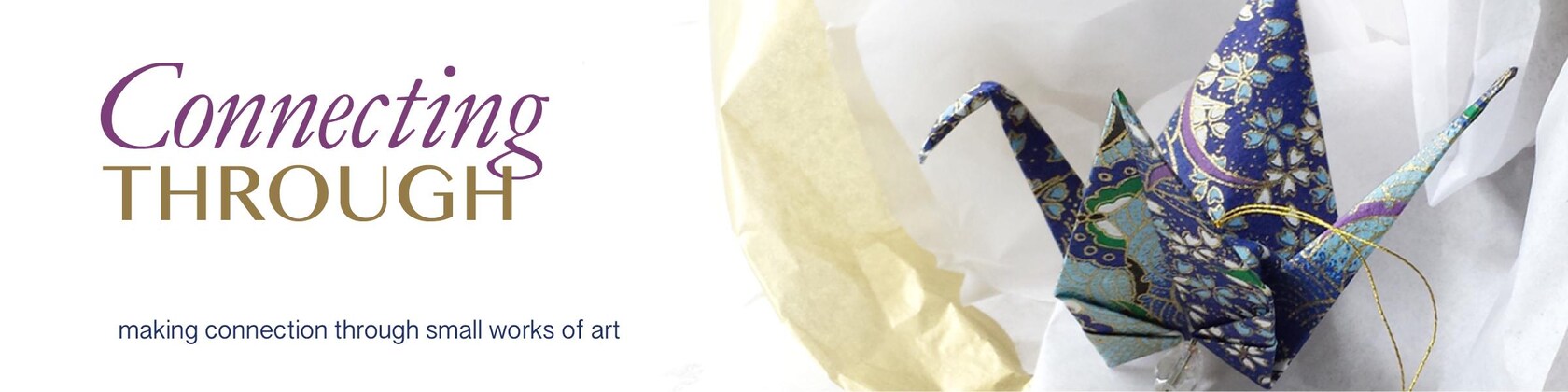


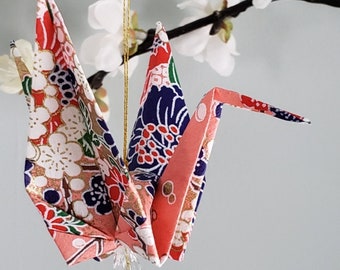
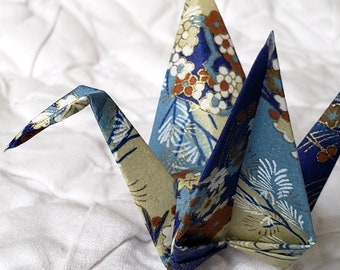

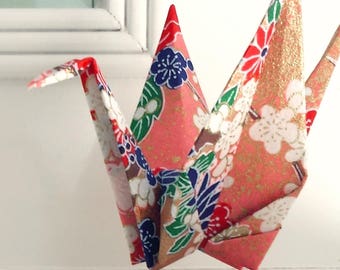
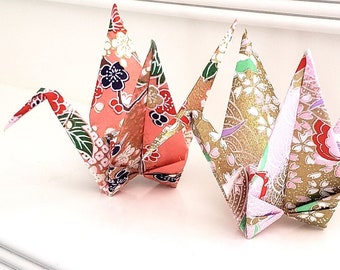
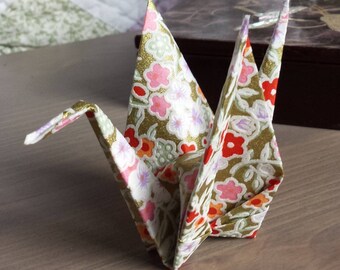
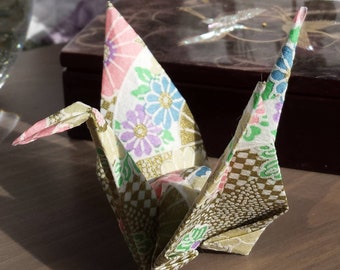
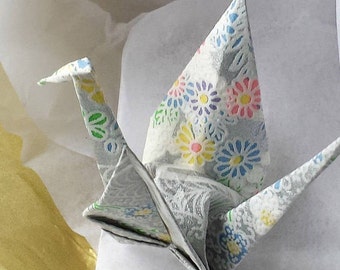
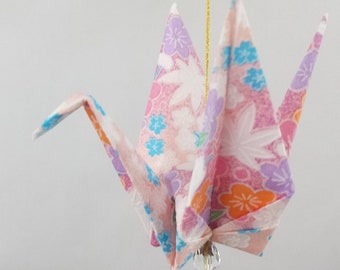
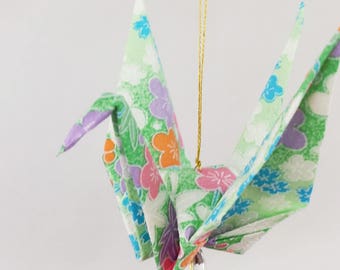
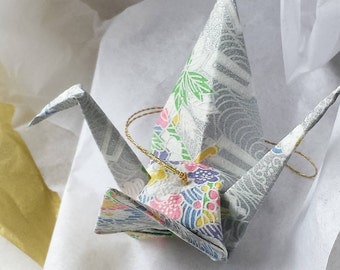
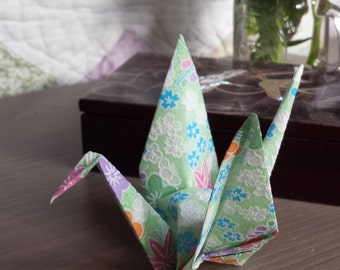
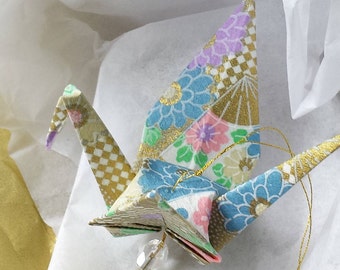
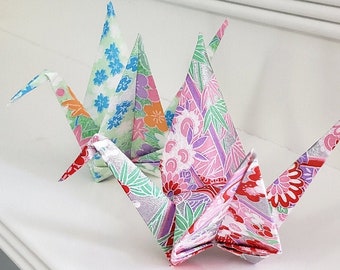
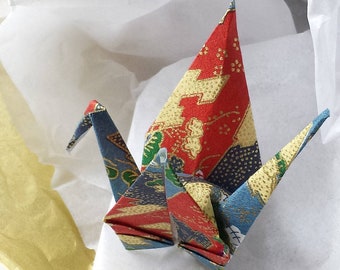

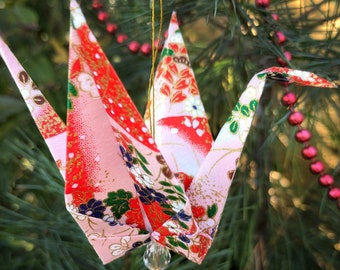
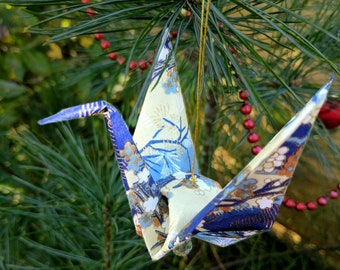



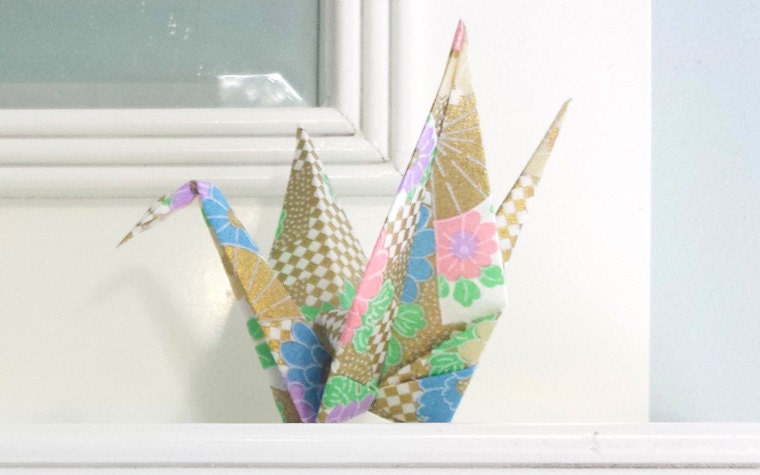
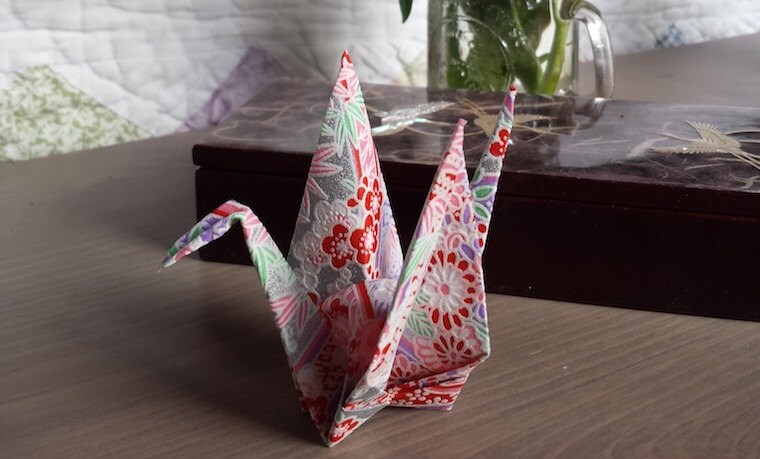
The aim of Connecting Through is to be a resource for wonderful and affordable small pieces of art that resonate with you and the people you want to share them with.
Connecting Through came about in part because the making and giving of origami cranes has been a tangible way for me to keep connected with friends and family.
My hope is that here you can find something that can be your way to stay connected with the people who are meaningful to you!
❖ Why a Connecting Through™ Crane? ❖
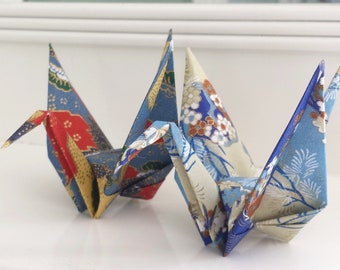
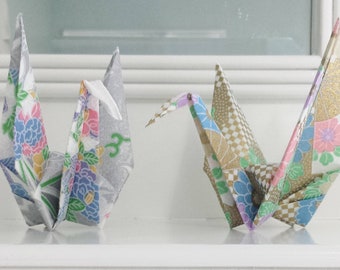
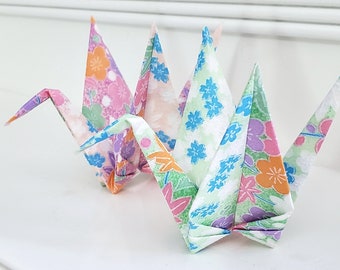
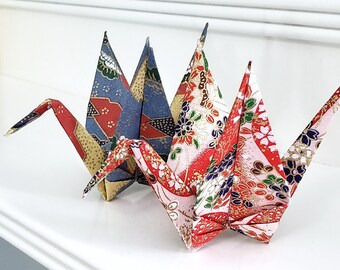
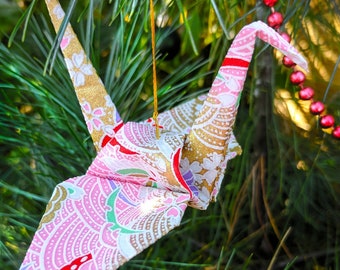
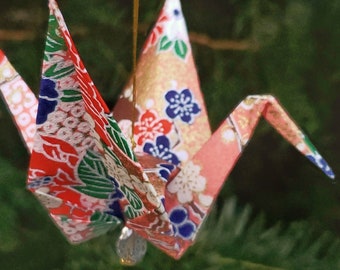
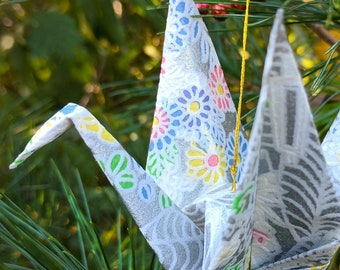
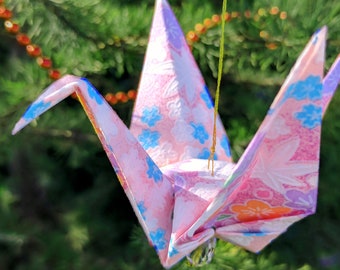
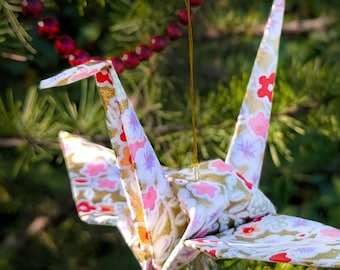
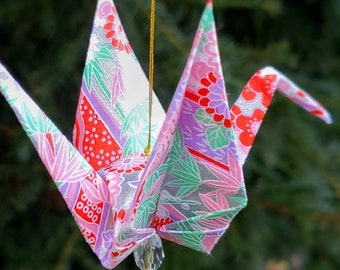
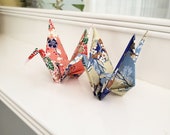
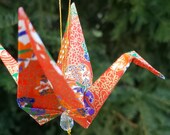
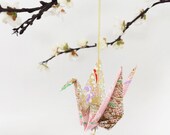
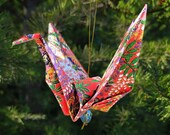
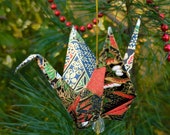
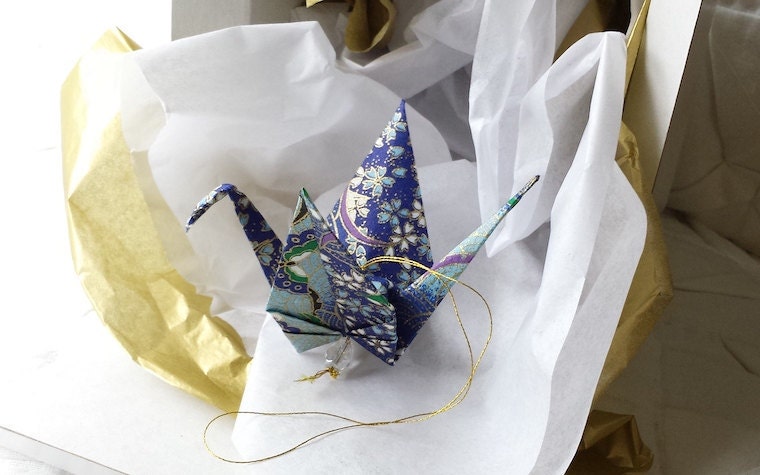
Whether for you, for someone you know well, or someone you are only just getting to know, the Resting Cranes and Cranes in Flight bring gentle elegance to any space.
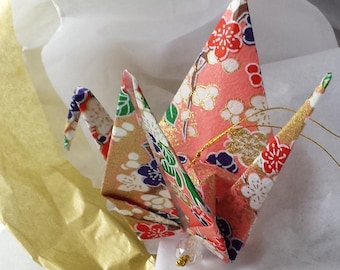
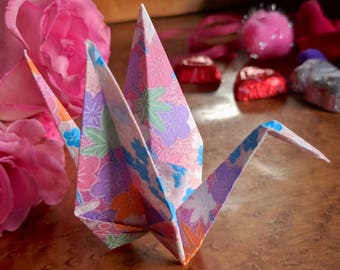
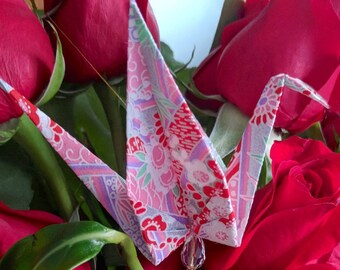
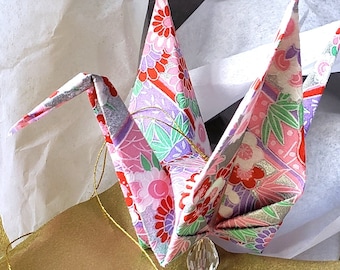
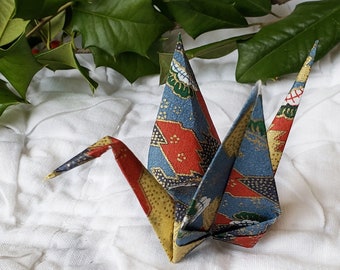
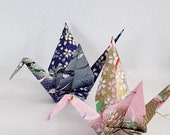
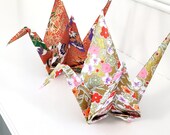
Connecting Through Cranes are made of exquisite paper in luxurious patterns and striking colors. When you want to give a small piece of art – one that is a simple expression of beauty and can help to bring calm in an overly busy world – these lovely origami cranes are a wonderful way to say thank you, happy birthday, or congratulations! Or you may want one of your own to make your own space a little sweeter.
❖ How did I get started? ❖
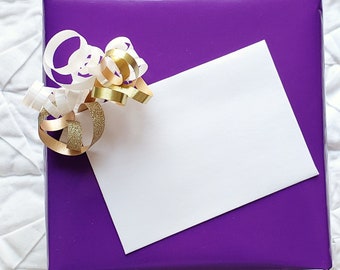
I began making origami cranes in 2005 after I saw a photo of one as an ornament made from an especially lovely paper. I’d never seen one that beautiful before. These cranes seemed like they would be perfect holiday gifts for my friends. For family, I attached them onto wrapped packages instead of bows as a special something extra and so they became bonus gift keepsakes.
What I was surprised and honored and happy to find was that the cranes I had made weren’t packed away by my friends at the end of the holiday season. I saw them around the office at work, on a file cabinet here, a houseplant there, hanging from a pushpin in a cubicle. They were being enjoyed year round (and I smiled whenever I saw one).
Each year I chose a pattern with colors that I knew the person liked, or one that matched their personality, or one that evoked the kind of sentiment that they seemed to need at that moment. Over time I sought more and different beautiful Japanese papers and eventually realized that I had become enchanted with the sumptuousness of the papers themselves.
The crane choices that are offered here are made from those papers that I found over time to be of the highest quality and of the patterns and colors that over and over have been good matches for the people in my life. Whether purely decorative or as your good match for one of your people, this selection of cranes should make your choice an easy pleasure.
❖ Symbolism, materials, and other cultural elements ❖
As part of this shop, I’d like to share some of what I’ve learned about the symbolism, tradition, and materials surrounding the origami cranes that I make. For those of you who want to delve even more deeply into the topics, the sources of my information can be found at the end of this section.
I hope that what you read will help you more greatly enjoy the richness of the stories being told by these little pieces of art.
✧ ORIGAMI
History: Let me start by saying that the more I’ve learned about origami, the more it has become clear that even experts will disagree on its origins. Unquestionably, the variety in details can be both fascinating and confusing, but I’ll pass along some of the more commonly held assertions on the basics.
The word origami originates from Japanese oru [“to fold”] and kami [“paper”].
While paper was invented by the Chinese nearly 2000 years ago, it is unclear where the practice of folding paper began -- China, Japan, Korea -- or whether it developed independently in another place, including the possibility of Spain. This was about 1000 years ago. Since paper was not common and was costly at that time, it is likely that folded items were primarily used for ceremonial purposes. One of the earliest examples was of the folded butterfly used to decorate Saki cups at wedding ceremonies. By the 1600s, origami had become a popular pastime in Japan. Its spread throughout the West was helped early on by the publishing of a book on origami by a German educator in the 1800s.
Techniques and Styles: Beyond folding from a single sheet of square paper (as is used in making these cranes), additional techniques include the use of multiple sheets, cutting, wet folding, decorating, multiple layers and more. Styles range from the practical forms such as cups, boxes, and envelopes to complex representational forms such as many-legged insects with antennae to amazing tessellations. And for the science lovers among you, you can now see the furthermost junction of art and science articles in academic literature such as “NTA directed protein nanopatterning on DNA origami nanoconstructs”.
✧ PAPERS
The paper used in making Cranes in Flight™ and the Resting Cranes™ are traditional long-fibered Japanese papers called “washi” (from the Japanese “wa” meaning Japan and “shi” meaning paper). These valuable papers are made from the fibers of the inner bark of certain plants, which accounts for the warmth, suppleness, and luster of the paper. Because the fibers are long and strong, they resist creasing, wrinkling and tearing. Of the three plants used to make washi papers, these cranes are made from a base of kozo (mulberry).
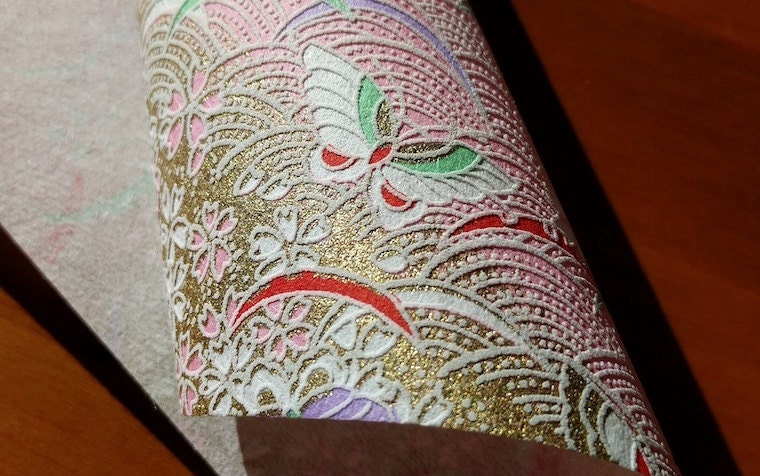
If you look at origami papers, both washi and non-washi, some of the terms describing them overlap in their meaning, and over time they have become interchangeable, but not always – and consequently can be a bit confusing. If you’re interested in the kind of distinctions that need to be sifted through when delving into origami papers, read on. So, for example, is the case of the use of the words Yuzen and Chiyogami. Yuzen has to do with the type of content and design of the imagery. Yuzen styles are based on the designs of Miyazaki Yuzen, from the Yuzen region outside of Kyoto. He was highly regarded for having devised a method for economically producing the sumptuously decorative cloth of kimonos. These designs frequently included many gold accents, and you’ll see that the Yuzen papers used in these the Cranes in Flight™ and the Resting Cranes™ have a great deal of gold in them. Chiyogami on the other hand has to do with how a pattern is small and repeated. The Chiyogami small pattern variations of the Yuzen designs came about so that paper doll kimonos could have the look of their real life counterparts. To tie up the loose ends of terminology, since many origami papers have been based on a Yuzen design and are configured small in a Chiyogami way, they can be called Yuzen Chiyogami. The separate terms have become fairly interchangeable and so a paper may be called Yuzen or Chiyogami to mean the same thing.
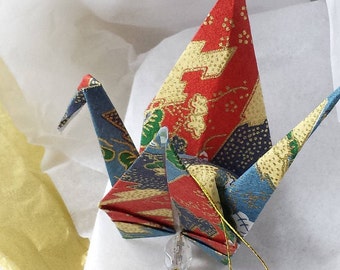
The Cranes in Flight and the Resting Cranes are made of these exquisite Japanese papers laid over with gorgeous patterns of rich silk-screened colors, some enhanced with silver or gold inks tracing through the imagery, some with raised patterns providing even greater texture to the paper.
✧ IMAGERY & MOTIFS
Some of the most popular images and motifs in Japanese design can be seen in the origami papers that are used in Cranes in Flight and the Resting Cranes. Each crane has a variety of these images, each with their own meaning; and, at times, with a symbolism that comes from a particular combination of images. For example a combination of plum blossom, pine and bamboo signifies enduring happiness and long life -- particularly auspicious for weddings and anniversaries. Below is a brief list of some of the more frequent elements present in the patterns for these cranes.
Pine: good fortune, dedication, and longevity
Maple leaf: change
Vines: continuity in both human relationships and in general
Peony: high honor and good fortune
Chrysanthemum: beauty, elegance, gentle disposition, happiness, repose, virtue, endurance and integrity, favored of emperors
Bamboo: longevity, fidelity, constancy
Plum blossoms: beauty, elegance and anticipated happiness
Cherry blossoms: the fragility and transience of life
Wisteria: youth and springtime
Butterflies: joy and longevity
Cranes: good fortune, fidelity and longevity
✧ THE CRANE: MYTHOLOGY, SYMBOLISM, LEGEND
Cranes are majestic birds and are wonderfully portrayed throughout Asian art. In origami, the earliest record of the use of a crane is in the 1600s. In Japan and many other East Asia countries, the crane is a symbol of long life, good fortune, and fidelity.
Long-life – In Japanese myth, the crane is said to live 1000 years. In addition, 1000 is a symbol of infinity in both Japanese and Chinese culture.
Fidelity – The crane is also monogamous. They mate for life. This makes them popular in wedding décor, particularly on formal kimonos.
Good luck – Cranes are associated with two of the Seven Gods of Good Luck.
Legend – According to legend, Senzaburu, upon the folding of a 1000 cranes, the folder may be granted a wish.
✧ THE STORY OF THE PEACE CRANE
The crane has been adopted by many groups, in particular among people living with cancer, as a story of hope and peace, healing and courage. This association originated in accounts of Sadako Sasaki, a Japanese girl who developed leukemia as a result of her exposure to the atomic bomb dropped on Hiroshima.
Sadako Sasaki spent the last 8 months of her life in a hospital and during that time took up Senzaburu, the legend-based practice of folding 1000 cranes as a way of obtaining a wish. She was 12 years old when she died in 1955. During her time in the hospital she folded over a thousand cranes! (Side Note: some websites and other references say that Sadako created 644 cranes; however, this information originates in a piece of historical fiction by Eleanor Coerr.)
This was a particularly heroic feat in the face of the debilitation associated with the progress of the disease. In addition, at that time there was a scarcity of paper; and in order to make what she had last, the size of her cranes became smaller and smaller until the cranes she made were the size of a bee – the folds so delicate she needed to use sewing needles to make them. The paper came from wherever it could be. Candy wrappers, medicine wrappers; even silver paper given by a doctor from the protective paper from x-ray plates.
So why should the crane become a symbol of hope and peace rather than one of sadness? Because the account is also about the simple, kind, and wonderful things that surround the circumstances. It is about the children who originally inspired Sadako to begin making her cranes when they had made them and brought them to the children in the hospital where Sadako was treated. It is about the many staff at the hospital who helped scrounge paper wherever they could to help her reach her goal. It is about her creativity, stretching those meager resources, making her cranes smaller and smaller. It is about a little girl taking back some power in an otherwise powerless situation. It is about the people who raised money after her death to put up a statue of her to remember her by at the Children’s Peace Monument at the Hiroshima Peace Memorial Park. There, a statue of Sadako holding a golden crane above her head has a plaque below her that reads, “This is our cry. This is our prayer. Peace in the world.”
- - - -
I hope you’ve enjoyed the background of these unique pieces of art. If you’d like even more details, these are the sources used to create the information above.
✧ Sources
Sources included books, websites, news articles, encyclopedia, and scholarly works. The books used were all non-fiction and websites used were both commercial and educational. Thank you to the writers for these works.
Books
- “To Hell and Back” by Charles Pellegrino. (Pelligrino took his work for the writing about Sadako from personal communication with her brother Masahiro in 2008 and 2010, and from letters written by Masahiro’s and Sadako’s mother that are in the Hiroshima Museum Archive.)
- “Notes on the History of Origami” by John S. Smith
- “Mythological Japan” by Alexander F. Otto and Theodore S. Holbrook
- “Japanese Papermaking: Traditions, Tools and Techniques” by Timothy Barrett
- “Enfolding Silence” by Brett J. Esaki
- “Symbols of Japan: thematic motifs in art and design” by Merrily Baird
Websites and web articles
- British Origami Society
- “Till Death Do Them Part: 8 Birds that Mate for Life” by Michele Berger, Audobon.org
- “Asian Symbolism and the Crane” by Jenny Nakao Hones, asianlifestyledesign.com
- The Japanese Paper Place (An excellent resource for background on many aspects of Japanese paper) japanesepaperplace.com
Encyclopaedia
- "Origami." Encyclopædia Britannica
Thesis and curricula
- “Japanese Design Motifs and Their Symbolism as used on Itajime-dyed Juban” by Susan Elizabeth Gunter
- “Patterns Around the World: Japanese, Maori, Islamic, Aztec/Mayan, African” by Catherine French
News article
- “Brother Keeps Sadako Memory Alive” by Masami Ito, The Japan Times
- - - - -
© 2017-2018 Connecting Through
Featured items
All items
Announcement
Reviews
-

Sarah on Sep 20, 2026
5 out of 5 starsBeautiful! Packaging used protected the cranes perfectly. Also got a bonus crane!
-
Jillian on Aug 31, 2026
5 out of 5 starsMy beautiful Crane arrived this morning along with 2 small extra Cranes ! And excellent service , with Cathy contacting me before sending the order , to ensure that I knew it was coming from the USA ( I live in Scotland )
-
Lynn on May 13, 2026
5 out of 5 starsHigh quality and beautiful paper used to make the cranes. Made better than some I found when I was in Japan. Highly recommend!!
-
Lynn on May 9, 2026
5 out of 5 starsBeautifully done and gorgeous paper! Reminds me of the origami cranes I saw in Japan.
-
Megan on May 2, 2026
5 out of 5 starsBeautiful! Just as described. Arrived quickly and well packaged cranes are lovely!
-
Lynn on May 2, 2026
5 out of 5 starsThe seller reached out to me to apologize for my order being delayed, because of an unexpected hospitalization. When my package arrived, it was beautifully packaged. Her work, making the cranes, is exquisite! Will definitely be a repeat customer!
-
Sarah on Mar 13, 2026
5 out of 5 starsThe beautiful cranes are the most perfect gift!! The concept and artistry are amazing! Terrific customer service in every way! Fast shipping too! Thank you very much!!!
-
Sarah on Feb 24, 2026
5 out of 5 starsExquisite origami cranes for gifting!! Connecting Through is a superb seller!! Great communication and exceedingly helpful!
-
ms. on Jan 2, 2026
5 out of 5 starsSuch a lovely ornament! I gave it as a gift, but really wanted to keep it. The seller was very responsive and got it to me in time.
-
Gene on Jan 1, 2026
5 out of 5 starsBeautiful ornament!! Made an amazing gift for a family member who recently traveled to Japan.
About ConnectingThrough
Shop policies
Shipping
Customs and import taxes
Payment options
Returns & exchanges
Cancellations
Cancellations: accepted
Request a cancellation: before item has shipped