




Digitale therapiewerkboeken, zelfzorgdagboek, printbare materialen voor mentale gezondheid, werkbladen voor emotioneel welzijn, zelf-devotionals
Digital Therapy Workbooks, Self-Care Journal, Mental Health Printables, Emotional Wellness Worksheets, Self-Devotionals
Ik groeide op in een huis waar stabiliteit de belangrijkste factor was en spontaniteit… optioneel. Mijn ouders voedden ons thuis op, en terwijl de wereld buiten bruiste van sociale gebeurtenissen, was er binnen een kalm ecosysteem waar alles consistent en onder controle bleef. Dat gaf me een diepe liefde voor routines – en een heel specifieke vaardigheid om chaos koste wat kost te vermijden.
Het blijkt dat het leven niet altijd rekening houdt met je kleurgecodeerde schema. Sociale situaties gaven me het gevoel dat ik een gastrol had in de sitcom van iemand anders, en in relaties vergiste ik 'comfortabel' soms in 'goed'. Nu probeer ik als ouder de gulden middenweg te vinden: een veilig, voorspelbaar nest creëren voor mijn kinderen, maar ook een beetje onschuldige chaos creëren (van die leuke soort, niet van die 'je wifi is uitgevallen'-soort).
Dit werkboek is precies wat ik in mijn twintiger jaren had willen hebben: deels zelfbewustzijn, deels emotionele regulatie, deels stand-upcomedy. Het is voor iedereen die de helderheid van therapie wil zonder de rekening, de scheve blik of de druk om een echte broek te dragen. Ik gebruik humor, want soms is de enige manier om een harde waarheid onder ogen te zien, er eerst om te lachen. Mijn doel is simpel: je de tools geven om je eigen rommelige, onvoorspelbare brein onder controle te krijgen – zonder dat je je voelt als een slecht sitcompersonage dat "het gewoon niet op orde krijgt".
Soms is de beste therapie een printer, een pen en een herinnering dat zelfs je meest dramatische momenten omgezet kunnen worden in iets nuttigs.
Ik maak digitale therapiewerkboeken voor mensen die de voordelen van zelfreflectie, emotionele regulatie en een beetje mentale bijscholing willen – zonder de planning, facturen of de druk om echte broeken te dragen. Mijn werk combineert praktische tools die je in de praktijk van een therapeut aantreft met de zwarte humor die je hoort van een vriend die weigert de werkelijkheid te verbloemen.
Elk werkboek volgt een duidelijke, herhaalbare structuur:
Trigger → Inzicht → Repareer.
Je krijgt begeleide opdrachten, bodyscanoefeningen en een wekelijkse emotionele planner. Want inzicht zonder oefening is gewoon cosplay van zelfbewustzijn.
De inspiratie komt voort uit mijn jeugd in een thuis waar stabiliteit hoogtij vierde en controle een geruststellende ervaring was. Het heeft de manier beïnvloed waarop ik omga met relaties, sociale situaties en nu ook met ouderschap. Ik weet uit eigen ervaring dat werken aan geestelijke gezondheid veiliger voelt als je het op je eigen voorwaarden doet. Daarom zijn mijn werkboeken flexibel: je kunt een hoofdstuk in één keer doorwerken, het over een paar dagen verdelen of een vriend(in) inschakelen voor morele steun.
Of je nu leert hoe je met jezelf kunt discussiëren en verliezen, een fort bouwt rond je kwetsbare gevoelens, of bezig bent met het volgende werkboek in de serie, het doel is hetzelfde: emotionele groei toegankelijk, nuttig en – ja – af en toe grappig maken.
Je hebt geen therapeut op snelkiesnummer nodig om te beginnen. Het enige wat je nodig hebt is een printer, een pen en de bereidheid om toe te geven dat je misschien – heel misschien – een paar van je eigen scripts kunt herschrijven.
I grew up in a house where stability was the main ingredient and spontaneity was… optional. My parents raised us at home, and while the world outside buzzed with social events, inside was a calm little ecosystem where things stayed consistent and under control. It gave me a deep love for routines—and a very specific skill set for avoiding chaos at all costs.
As it turns out, life doesn’t always respect your color-coded schedule. Social situations made me feel like a guest star in someone else’s sitcom, and in relationships, I sometimes mistook “comfortable” for “good.” Now, as a parent, I’m trying to find the middle ground: creating a safe, predictable nest for my kids while also inviting in a little harmless chaos (the fun kind, not the “your Wi-Fi’s down” kind).
This workbook is the thing I wish I’d had in my twenties: part self-awareness, part emotional regulation, part stand-up routine. It’s for anyone who wants the clarity of therapy without the invoice, the side-eye, or the pressure to wear real pants. I use humor because sometimes the only way to face a hard truth is to make it laugh first. My goal is simple: give you the tools to handle your own messy, unpredictable brain—without making you feel like a bad sitcom character who “just can’t get it together.”
Because sometimes, the best therapy is a printer, a pen, and a reminder that even your most dramatic moments can be rewired into something useful.
I create digital therapy workbooks for people who want the benefits of self-reflection, emotional regulation, and a little mental tune-up—without the scheduling, invoices, or pressure to wear real pants. My work blends practical tools you’d find in a therapist’s office with the dark humor you’d hear from a friend who refuses to sugarcoat reality.
Each workbook follows a clear, repeatable structure:
Trigger → Insight → Repair.
You’ll get guided prompts, body scan exercises, and a weekly emotional planner—because insight without practice is just self-awareness cosplay.
The inspiration comes from growing up in a home where stability reigned supreme and control was comforting. It shaped the way I navigate relationships, social situations, and now, parenting. I know firsthand that mental health work feels safer when it’s on your own terms. That’s why my workbooks are designed to be flexible: you can work through a chapter in one sitting, split it over a couple of days, or rope in a friend for moral support.
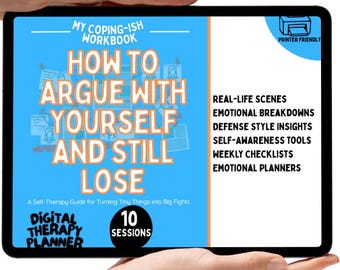
Whether you’re learning how to argue with yourself and lose, building a fortress around your fragile feelings, or tackling the next workbook in the series, the goal is the same: make emotional growth feel approachable, useful, and—yes—occasionally funny.
You don’t need a therapist on speed dial to get started. All you need is a printer, a pen, and a willingness to admit that maybe—just maybe—you can rewrite some of your own scripts.
