

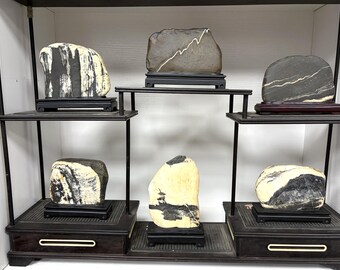
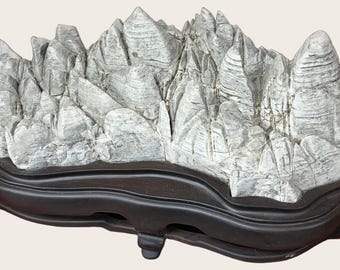
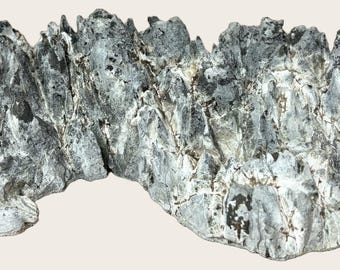
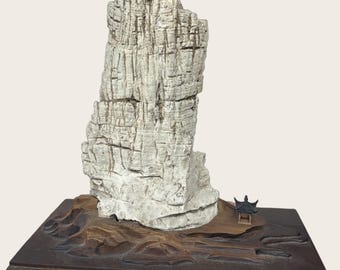
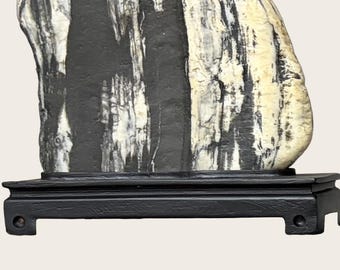
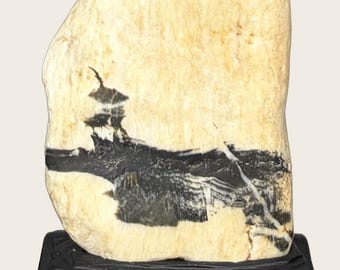

Naturliga utsiktsstenar från Tiotusen-topparnas skog
Natural viewing stones from the Forest of Ten Thousand Peaks
Mistfell började med bergen utanför mitt fönster.
Jag bor i Xingyi, en liten stad i karsthöglandet i Guizhou, sydvästra Kina – ett landskap så slående att det är en UNESCO Global Geopark, och så gammalt att stenen här fortfarande innehåller marina fossil från cirka 240 miljoner år sedan. I dess hjärta ligger Wanfenglin, "Tiotusen Toppars Skog": tjugotusen konformade berg som reser sig ur dimman.
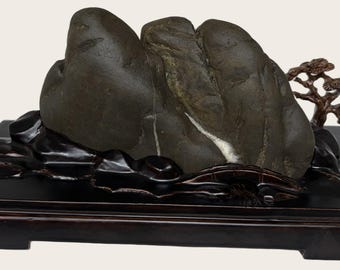
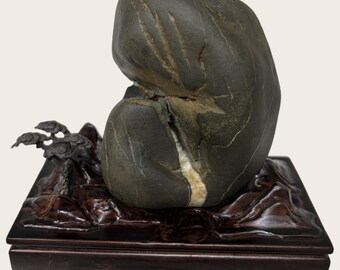
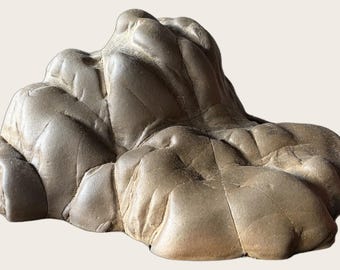
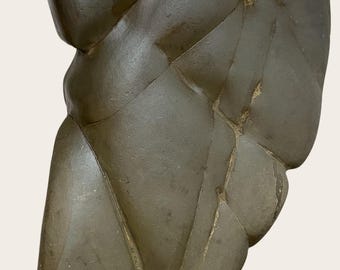
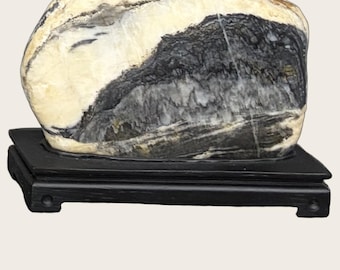
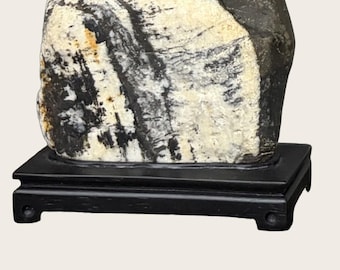
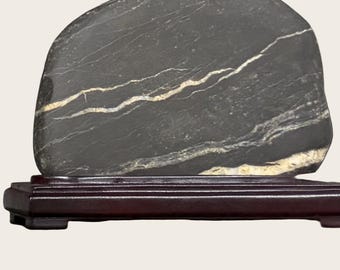
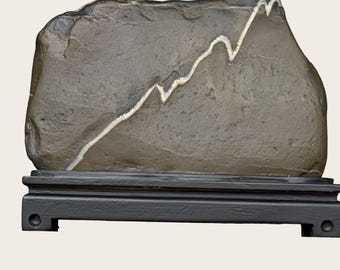
Mistfell för in den horisonten inomhus – inte som replikor, utan som bergens egna verk. Jag söker i floderna som skapar dessa toppar efter stenar som håller ett landskap: en åskant, en klippvägg, ett berg insvept i dimma. Varje sten är naturlig och oförändrad – formad av vatten och tid, aldrig huggen – och var och en är unik i sitt slag. De flesta vilar på handsnidade trästativ monterade på den enskilda stenen.
I den kinesiska lärdes tradition kallas dessa gongshi, eller betraktande stenar: berg i miniatyr, förvarade på skrivbordet som föremål för kontemplation. Denna butik fortsätter den traditionen, från den plats som bergen själva kallar sitt hem.
Tack för besöket. Om du vill ha fler bilder eller en video av någon sten, skicka ett meddelande till mig när som helst. — Lucy
Mistfell began with the mountains outside my window.
I live in Xingyi, a small city in the karst highlands of Guizhou, southwest China — a landscape so striking it's a UNESCO Global Geopark, and so ancient the stone here still holds marine fossils from around 240 million years ago. At its heart is Wanfenglin, the "Forest of Ten Thousand Peaks": twenty thousand cone-shaped mountains rising out of the mist.
Mistfell brings that horizon indoors — not as replicas, but as the mountains' own work. I search the rivers that carve these peaks for stones that hold a landscape: a ridgeline, a cliff face, a mountain wrapped in mist. Every stone is natural and unaltered — shaped by water and time, never carved — and every one is one of a kind. Most rest on hand-carved wooden stands fitted to the individual stone.
In the Chinese scholar's tradition these are called gongshi, or viewing stones: mountains in miniature, kept on the desk as objects for contemplation. This shop continues that tradition, from the place the mountains themselves call home.
Thank you for visiting. If you'd like more photos or a video of any stone, message me anytime. — Lucy