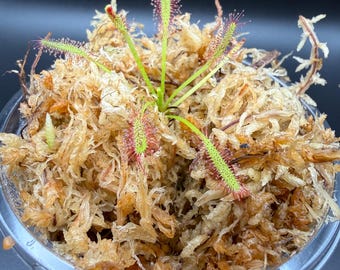

Información de cuidados generales:
Agua: Las plantas carnívoras requieren agua baja en minerales. El agua del grifo, de pozo y embotellada mata a la mayoría de las plantas carnívoras. Use únicamente agua destilada, de ósmosis inversa o de lluvia. Las plantas carnívoras suelen regarse con el método de bandeja, que consiste en colocar la maceta en una bandeja con agua para que la absorba por el fondo.
Macetas: El plástico es la mejor opción. ¡Nada de terracota! Filtra minerales en la tierra y, con el tiempo, matará lentamente la planta.
Luz: Todas las plantas carnívoras requieren luz intensa. No producirán trampas para carnívoras a menos que estén en un alféizar luminoso, bajo luz artificial o al aire libre, bajo la luz solar directa.
Suelo: Nunca utilice sustratos comerciales para plantas carnívoras. ¡Sin fertilizantes! Utilice una mezcla a base de musgo de esfagno de fibra larga o turba de esfagno sin fertilizantes.
Temperatura: Las plantas carnívoras disfrutan de un amplio rango de temperaturas. Las plantas templadas (como las atrapamoscas) entran en letargo en invierno y pueden soportar temperaturas gélidas sin problemas. Las plantas tropicales y subtropicales suelen preferir temperaturas de entre 13 y 27 °C.
Alimento: Los insectos son fertilizantes para las plantas carnívoras, y no necesitan mucho. Las plantas de exterior capturan muchas presas por sí solas. Las plantas de interior también capturan algunas. ¡Son excelentes cazadores de mosquitos del mantillo! Si quieres alimentar a tus plantas, lo mejor es alimentarlas con insectos (como gusanos de la harina liofilizados).
General Care Information:
Water: Carnivorous plants require water that is low in minerals. Tap water, well water, and bottled water will kill most carnivorous plants. Only use distilled, reverse osmosis, or rain water. Carnivorous plants are often watered with the tray method, which means setting the pot in a tray of water to be absorbed through the bottom.
Pots: Plastic is your best bet. No terracotta! It leaches minerals into the soil and will slowly kill your plant over time.
Light: All carnivorous plants require bright light. They will not produce carnivorous traps unless they are in a bright windowsill, under artificial light, or outdoors in direct sun.
Soil: Never use commercial potting soils for carnivorous plants. No fertilizers! Use either a mix based on long-fiber Sphagnum moss or one based on fertilizer-free Sphagnum peat.
Temperature: Carnivorous plants enjoy a wide range of temperatures. Temperate plants (like flytraps) go dormant in winter, and can safely experience freezing temperatures. Tropical and subtropical plants usually prefer temperatures of 55-80 degrees F.
Food: Bugs are fertilizer for carnivorous plants, and they don't need much. Plants grown outdoors will catch plenty of prey by themselves. Indoor plants will also catch some. They are excellent fungus gnat catchers! If you'd like to feed your plants, it's best to feed them bugs (like freeze-dried meal worms).