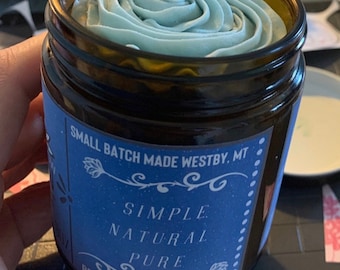
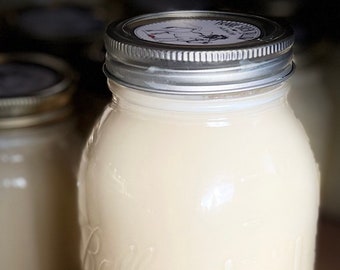
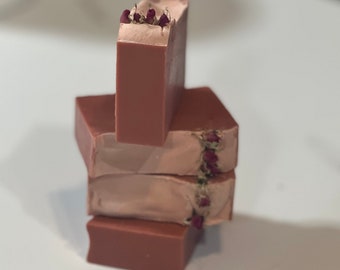
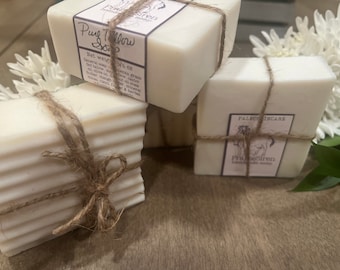
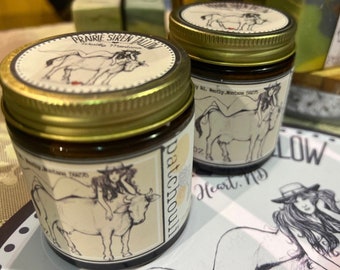
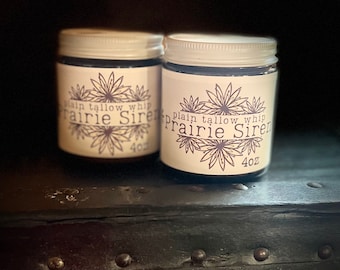
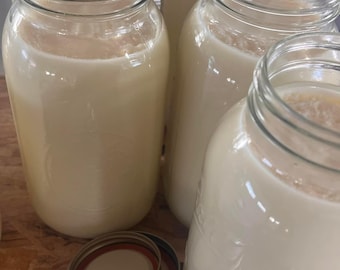
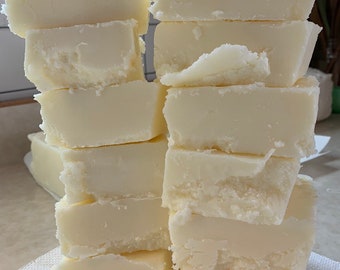
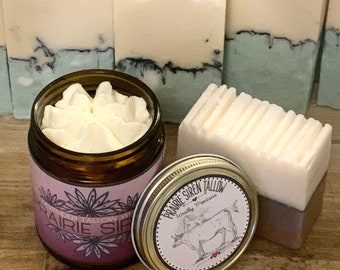
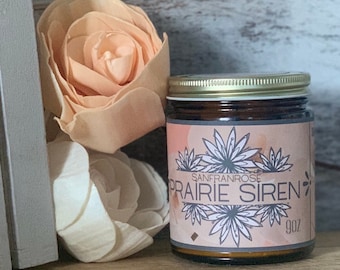
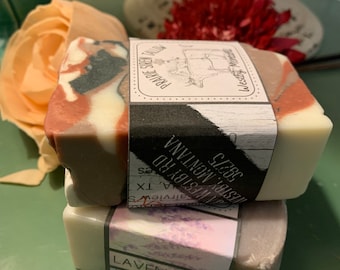
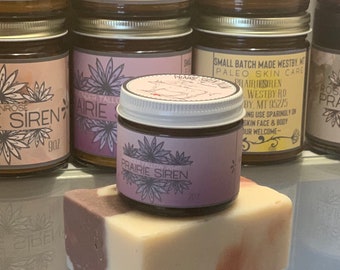
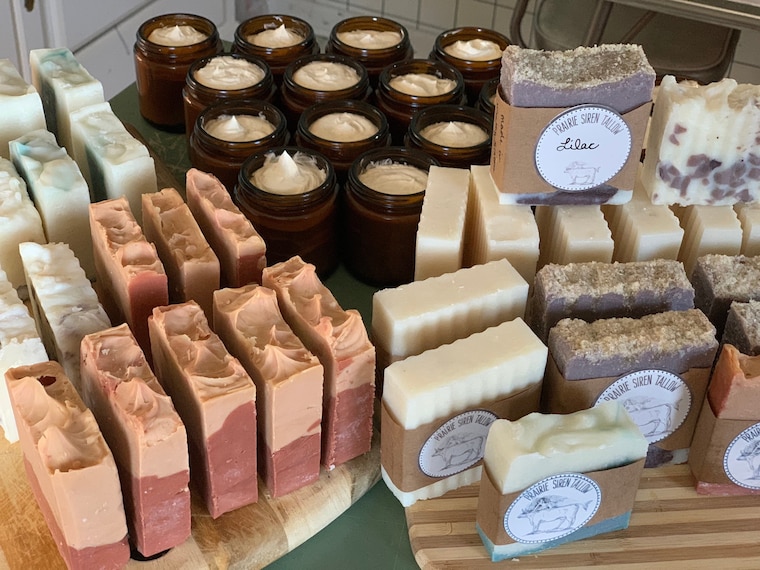
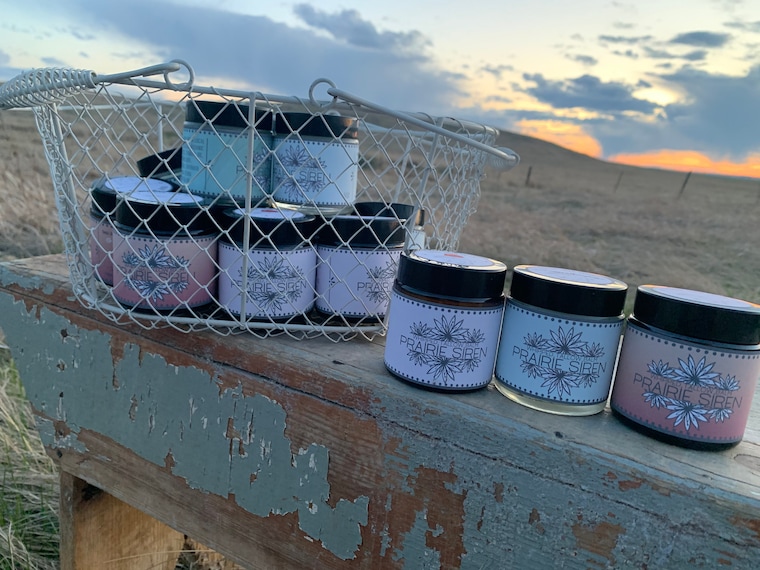
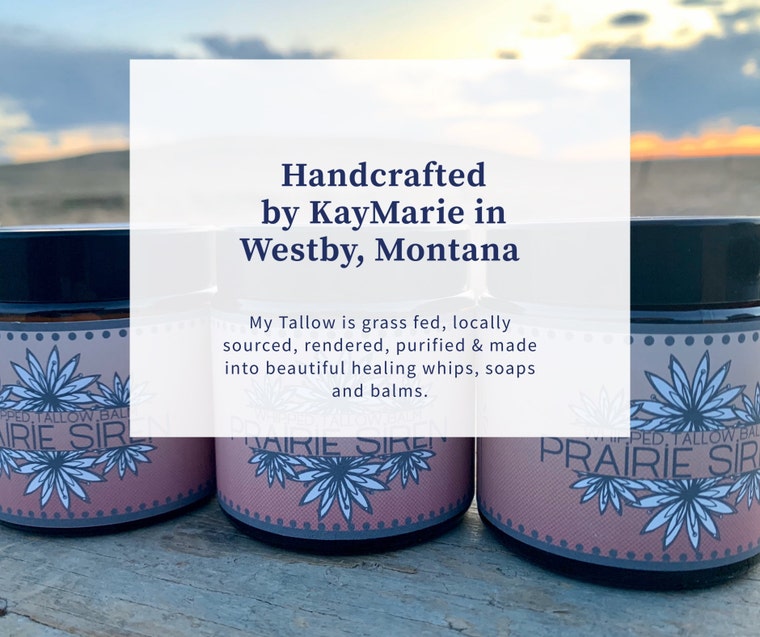
Alles in meinem Etsy-Shop ist von mir, KayMarie, handgefertigt. Der gesamte Talg, den ich in meinen Produkten verwende, stammt von unseren Kühen, die wir züchten, und/oder von benachbarten Ranches. Die Seifen werden aus dem Talg und den Körperfetten der Rinder hergestellt, die Hautcremes, Peitschen, Salben und Klamotten, ich verwende nur das Talgfett.
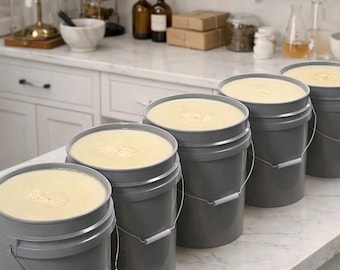
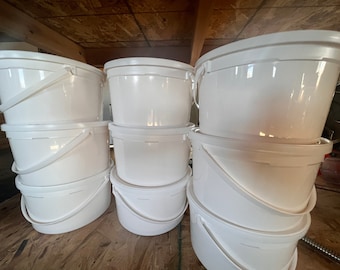
Alles, was ich herstelle, besteht aus Talg, den ich persönlich in meiner Werkstatt in kleinen Mengen reinige und verarbeite. Ich halte sie klein, damit ich die Reinheit und Konsistenz des Talgs genauer verfolgen und ein reines, nährstoffreiches Produkt für Sie erhalten kann, das nicht falsch gehandhabt, verbrannt, mit chemischen Konservierungsmitteln versetzt oder übermäßig verarbeitet wird, wie die meisten anderen Talge auf dem Markt . Ich weiß, was es da draußen gibt, ich habe sie alle schon einmal ausprobiert und deshalb habe ich angefangen, meine eigenen zu machen.
Das Rendern ist eine Kunst und Sie MÜSSEN mit einem sauberen Produkt beginnen, das vom Verlassen des Metzgers bis zum Eintreffen in der Werkstatt korrekt gehandhabt wird, um seine Integrität zu bewahren. Talg ist ein so schönes Produkt, wenn es richtig gemacht wird. Wenn es nicht richtig gemacht wird, können Ihre Lebensmittel und Schönheitsprodukte sehr abstoßend wirken. Stellen Sie sicher, dass Sie das Beste vom Bauernhof und möglichst direkt von der Quelle erhalten. Und hier können Sie.
WAS IST KUHTALG UND WARUM IST ES ERSTAUNLICH FÜR DIE HAUT?
Vor dem Einzug künstlicher Chemikalien und unnatürlicher Substanzen in die Hautpflege war Talg ein wichtiger Bestandteil der von unseren Vorfahren entwickelten und verwendeten Hautpflege.
Talg enthält hohe Konzentrationen an fettlöslichen Vitaminen A, D und K (in einer ausgewogenen Kombination mit ihren Aktivatoren), die einen tiefgreifenden Einfluss auf die Haut haben. Er ist bioidentisch, da seine Nährstoffe leicht von der Haut aufgenommen werden, da auch wir Tiere sind.
Rindertalg hat seit Jahrhunderten eine lange Tradition und eine kraftvolle Heilzutat –
Fette waren in den letzten Jahrzehnten ein völlig fremder und widersprüchlicher Aspekt der Gesundheit. Jahr für Jahr wurde uns gesagt, dass Fett schlecht sei, wir hätten Angst (sehr große Angst) und sollten uns weit, weit von uns fernhalten.
Zum Glück ändern sich die Zeiten und die Wahrheit kommt ans Licht.
Gesunde Fette sind tatsächlich nützlich UND unerlässlich, wenn es um unsere allgemeine Gesundheit geht, angefangen auf zellulärer Ebene.
Insbesondere ein Fett, Talg (speziell von grasgefütterten Kühen), ist bahnbrechend. Rindertalg ist nicht nur ein gesundes Speisefett, sondern wirkt auch als topisches SUPERFOOD für die Haut!
Was ist Talg?
Es handelt sich um eine unglaublich nährende, vitaminreiche Form von reinem, verarbeitetem tierischem Fett (insbesondere Blattfett), das in der Hautpflege schnell ein großes Comeback feiert.
Vitamin A ~ Fördert die Produktion von Kollagen, Elastin und gesunden Hautzellen + stärkt das Gewebe, um die Haut straff, glatt und jugendlich zu halten, und hilft gleichzeitig bei der Heilung von Hautproblemen von Akne bis hin zur Hautalterung.
Vitamin D ~ Trägt zur Entwicklung, Reparatur, zum Stoffwechsel und zur Immunfunktion der Hautzellen bei + schützt und verjüngt die Haut, indem es vor freien Radikalen schützt, die vorzeitige Hautalterung verursachen.
Vitamin K ~Spielt eine wichtige Rolle für den Hautton, die Textur und die allgemeine Gesundheit + lindert Hautentzündungen und Irritationen und trägt gleichzeitig dazu bei, den Heilungsprozess zu beschleunigen.
Vitamin E ~ Kraftvolles Antioxidans, das Schäden durch freie Radikale repariert und umkehrt + intensiv mit Feuchtigkeit versorgt und die Heilung des Hautbildes fördert.
Talg ist äußerst wirksam bei der Verbesserung der Gesundheit der Hautzellen, da er eine ähnliche Zusammensetzung wie unsere Haut hat. Die Zellmembranen bestehen hauptsächlich aus Fettsäuren, wobei mindestens 50 % gesättigte Fette sind. Talg besteht außerdem zu etwa 50 % aus gesättigten Fetten – der Rest ist einfach ungesättigt –, wodurch er mit unserer Zellbiologie kompatibel ist und für die Gesundheit unserer Zellen äußerst nährend ist.
Ein weiterer Hinweis auf seine positive Wirkung auf unsere Haut ist seine Ähnlichkeit mit Talg (der öligen, wachsartigen Substanz, die die Haut mit Feuchtigkeit versorgt, schmiert und schützt).
Talg wird im Lateinischen sogar mit „Talg“ übersetzt!
Sowohl Talg als auch Talg bestehen hauptsächlich aus Triglyceriden (die wirksame erweichende und hautauffrischende Eigenschaften haben).
Rindertalg hat seit Jahrhunderten eine lange Tradition und ist eine kraftvolle Heilzutat – deshalb liebe ich es, reine synthetische Seifen, Peitschen, Balsame, Lipgloss, Kerzen herzustellen ... wer weiß, was es sonst noch gibt!!
Meine Seifen vs. Waschmittel (was alle im Laden gekauften Seifen und Körperwaschmittel wirklich sind)
Bei den meisten „Seifen“, die Sie wahrscheinlich gewohnt sind, handelt es sich überhaupt nicht um echte Seife. Bei den meisten Körperwaschmitteln, Shampoos, Küchenseifen, Seifenstücken und flüssigen Handseifen handelt es sich eigentlich um Reinigungsmittel. Waschmittel sind ebenfalls Tenside, aber keine Seife. Stattdessen werden sie aus künstlich hergestellten Verbindungen wie Natriumlaurylsulfat (SLS) hergestellt – dem Stoff, der Zahnpasta zum Schäumen bringt und Ihre Zähne reinigt. Für die meisten Menschen ist es zwar nicht schädlich, aber Waschmittel sind auch nicht natürlich.
Sogar die Seifenstücke, mit denen Sie aufgewachsen sind oder die Sie in Geschäften zum Verkauf sehen, könnten ein Reinigungsmittel sein. Der beste Weg, dies herauszufinden, ist ein Blick auf die Verpackung. Wenn Sie das Wort „Seife“ nicht auf dem Etikett finden, handelt es sich nicht um Seife. Wenn dort „Schönheitsriegel“ oder so ähnlich steht, handelt es sich wahrscheinlich um ein Waschmittel. Gesetze schreiben vor, was Hersteller auf ihren Etiketten anbringen dürfen, aber sie werden ihr Bestes tun, um Sie zu täuschen.
Everything in my Etsy shop is handmade by me, KayMarie. All of the Tallow I use in my products is sourced from our cows that we raise and or neighboring ranches. The soaps are made from the suet and body fats of the cattle, the skin creams, whips, salves and clapsticks, I use only the suet fat.
Everything I make is from tallow that I purify and render personally in my workshop in small batches. I keep them small so I can more accurately keep track of the purity and consistency of the tallow and maintain a pure nutrient rich product for you that isn’t mishandled, scorched chemically treated preservatives added or over processed like most all other tallows on the market. I know what’s out there, I’ve tried them all before and it’s why I began making my own.
Rendering is very much an art and you MUST begin with a clean product that is handled correctly from the time it leaves the butcher to the time it gets into the workshop to maintain its integrity. Tallow is such a beautiful product when it’s done right. When not done right it can make your food and beauty products very off putting. Make sure you get the best from a farm and from the source if possible. And here you can.
WHAT IS COW TALLOW & WHY IS IT AMAZING FOR SKIN
Before the influx of man-made chemicals and unnatural substances in skincare, tallow was a prominent part of skincare developed and used by our ancestors.
Tallow contains high concentrations of fat soluble Vitamins A, D, and K (in a balanced combination with their activators) which have a profound impact on skin, it is bio identical as it’s nutrients are readily absorbed into the skin as we too are animals.
Beef tallow has been a long standing tradition and powerful healing ingredient for centuries –
Fats have been a completely foreign and contradicting aspect of health throughout the last few decades. Year after year we’ve been told that fat is bad, to be afraid (very afraid) and to stay far, far away.
Thankfully, times are changing and the truth is out.
Healthy fats are actually beneficial AND essential when it comes to our overall health, starting at a cellular level.
One fat in particular, tallow (specifically from grass fed cows), is a game changer. Not only is beef tallow a healthy cooking fat, but it also acts as a topical SUPERFOOD for the skin!
So what is tallow?
It’s is an incredibly nourishing, vitamin-rich form of pure, rendered animal fat (Specifically Leaf FAT) that’s quickly making a big comeback in skincare.
Vitamin A ~ Encourages the production of collagen, elastin and healthy skin cells + strengthens tissue to keep skin firm, smooth and youthful while helping to heal skin issues from acne to aging.
Vitamin D ~ Contributes to skin cell development, repair, metabolism and immune function + protects and rejuvenates skin by protecting against free radicals that cause premature aging.
Vitamin K ~Plays an important role in skin tone, texture and overall health + soothes skin inflammation and irritations while helping to speed up the healing process.
Vitamin E ~ Powerful antioxidant that repairs and reverses free radical damage + deeply hydrates and promotes healing in skin’s appearance.
Tallow is extremely effective in improving skin cell health due to the similar makeup it has to our skin. The cell membranes are made up of mostly fatty acids, with at least 50% being saturated fats. Tallow is also made up of about 50% saturated fats – with the remaining amount being monounsaturated – making it compatible with our cell biology and powerfully nourishing for our cell health.
Another indication of its positive impact on our skin is it’s similarity to sebum (the oily, waxy substance that moisturizes, lubricates and protects the skin).
Sebum is even translated to “tallow” in Latin!
Both sebum and tallow are also mainly comprised of triglycerides (which have effective emollient + skin replenishing properties).
Beef tallow has been a long standing tradition and powerful healing ingredient for centuries – which is why I’m loving to create pure synthetic free soaps, whips, balms , lip glosses, candles ...who knows what else to come!!
My SOAP’S vs. Detergent (what all store bought soaps and body washes really are)
Most of the ‘soap’ that you’re probably used to using isn’t real soap at all. Most body washes, shampoos, kitchen soap, bars of soap, and liquid hand soap are actually detergents. Detergents are also surfactants, but they are not soap. Instead, they’re made using manufactured compounds such as Sodium Lauryl Sulfate (SLS) – the stuff that makes toothpaste foam and cleans your teeth. For most people, it’s not harmful, but detergents are also not natural.
Even the bars of soap that you grew up with or see for sale in shops could be a detergent. The best way to know is to look at the packaging. If you can’t find the word soap on the label, then it’s not soap. If it says ‘beauty bar’ or something like that, then it’s probably a detergent. Laws dictate what manufacturers can put on their labels, but they’ll do their best to fool you.