







"The entire process of creating with clay claimed my soul."
I fell in love with pottery because it taught me to embrace my imperfections and find my creative sparkle.
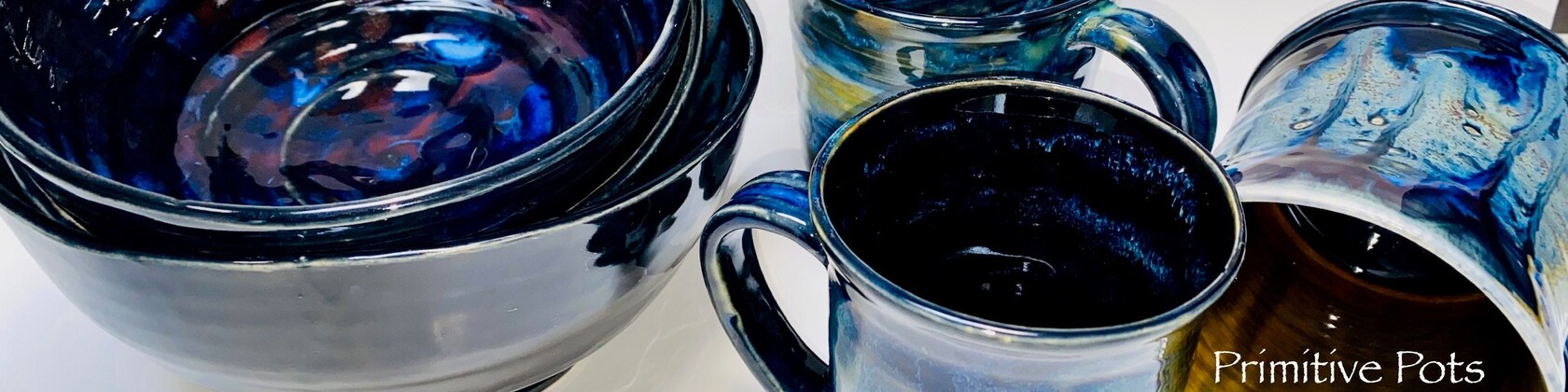
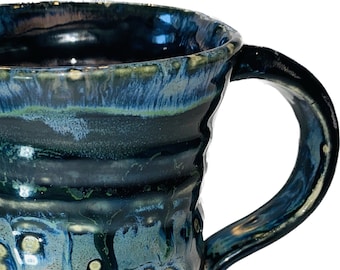
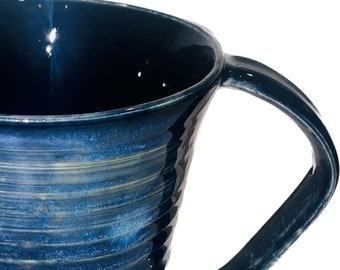
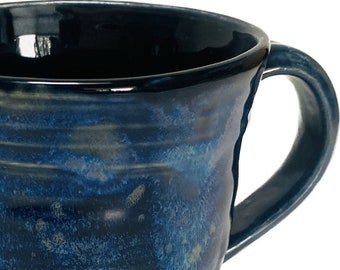
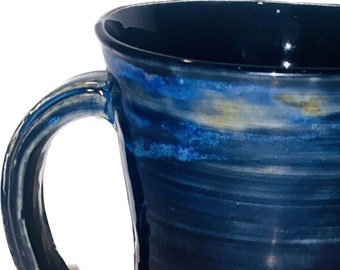
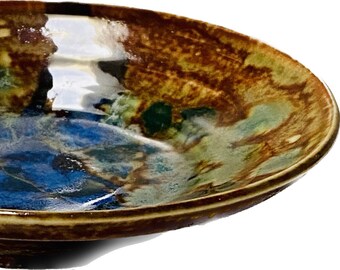
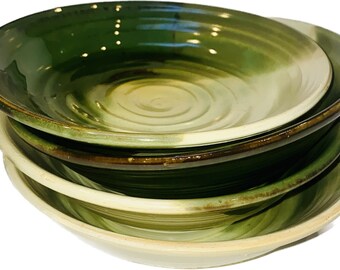
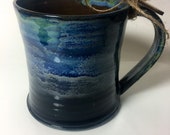
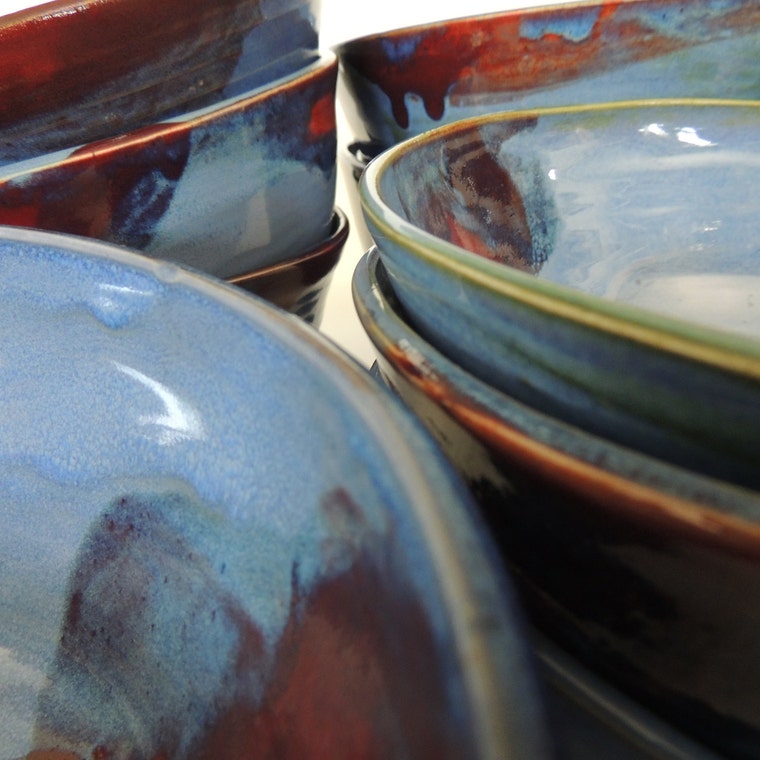
I truly enjoy the entire creative process in ceramics, but glazing is an area that reflects my moments of wild abandon and my innate need to continuously push the limits and see if the glazes play well together and create spectacular results.
ARTIST STATEMENT
Whether I am in the studio or working on a project in my home to make it a more enjoyable, functional space for my two sons, I am in my most joyful state of mind when I am able to be creative.
CERAMICS
Each piece begins with the most natural, organic and individual of materials: clay.
FORMATION
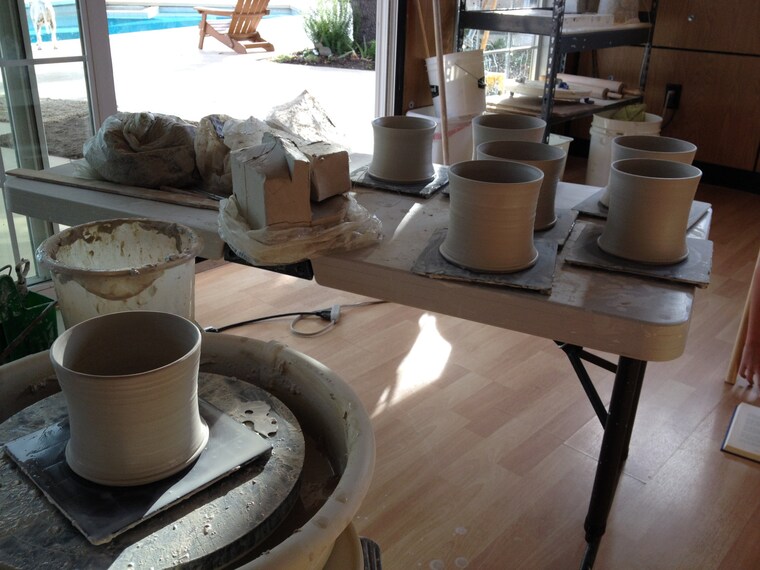
Molded by hand, either hand-built or wheel-thrown, and sometimes a combination of both; the formed clay is then fired up at least two times (sometimes more). The process to create one piece of beautiful pottery is time consuming and takes special skills in age-old crafts.
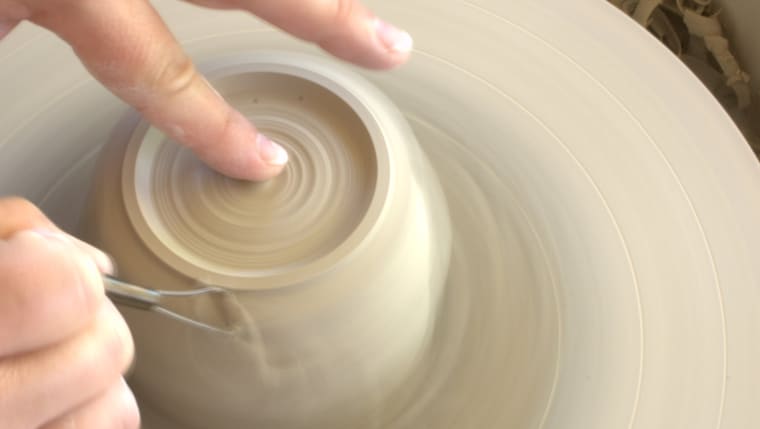
Next the piece is hand trimmed, and decorative and functional clay pieces—such as handles or buttons— are created before the clay is fired.
Before the piece is placed on a drying rack, the piece is signed.
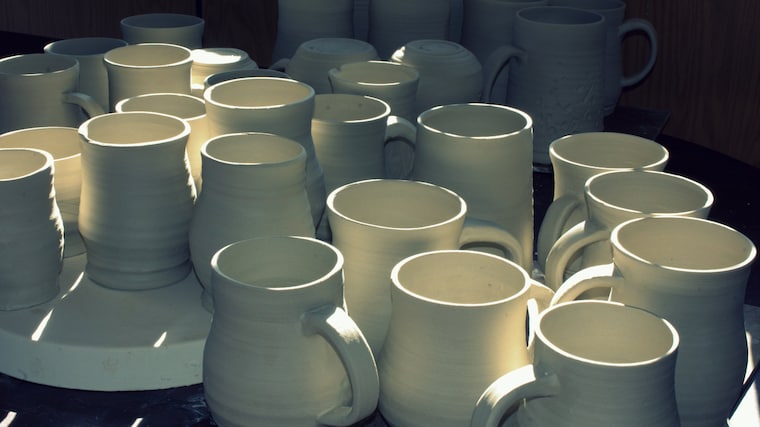
When the pottery is formed, fragile, and drying before it is fired in the kiln, it is called greenware.
The drying process can take three days to three weeks depending on the humidity and air temperature.
FIRST FIRING
The greenware is carefully stacked into the kiln where it will stay for 24 hours in temperatures reaching 1,810 degrees.
This kiln firing hardens the greenware into bisque. After the glazes are added, most pieces will be back in the kiln for at least one more firing, while some pieces will be back in the kiln multiple times.
WAX & GLAZE
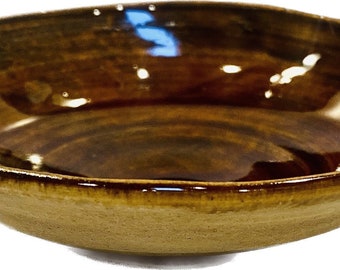
Each piece of my pottery will have a distinctive unglazed base or foot.
To keep this area unglazed during the decorating process, the bottom on the bisque piece is hand waxed with paraffin. Next, the entire piece is submerged in the glaze dip—a mixture of frit (ground glass) and other materials—and then set on a rack where it is ready for further decorating.
DECORATING
No two pieces are identical: even with my attempt to have an exact glazing plan, I am ususally overwhelmed with the urge to add just a little more glaze in order to try just one additional combination.
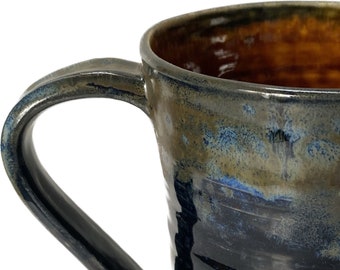
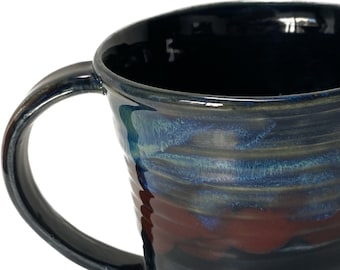
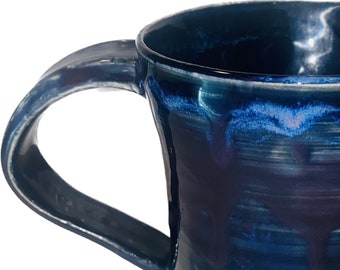
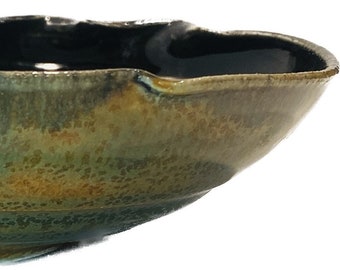
•In the heat of the second kiln firing, the glass frit in the glaze melts to form an impervious, glossy surface. You may see on closer inspection, pinholes and other variations in the glaze. These tiny dimples form when natural matter found in the clay explodes through the decorated surface of the product during the kiln firing. For some pieces, this may be the final firing. For others, there is more to come.
CURRENT PROJECTS
Although I will continue to work on functional pieces, I am slowly making a shift into the realm of sculpture.
Thank you so much for visiting my shop!
Tracey F. Crockett
