
Mi nombre es Greg. Tengo un doctorado en estadística, y me gusta el arte.
My name is Greg. I have a Ph.D. in statistics, and I like art.
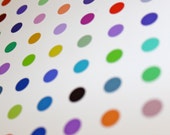
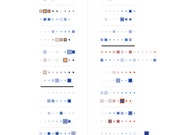
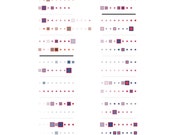
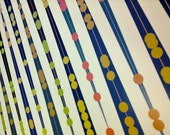
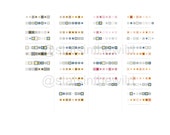
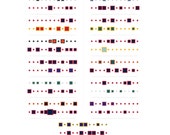
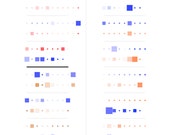
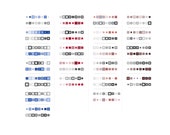
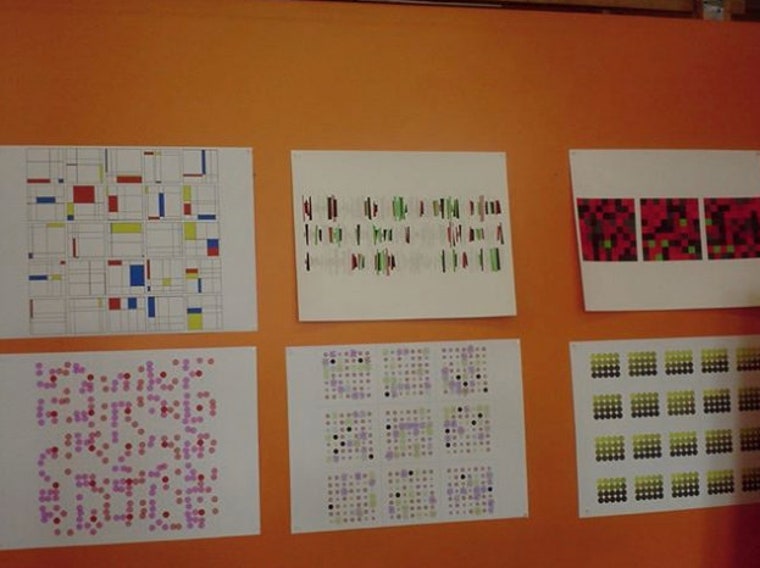
Mi trabajo explora la relación entre el azar, la aleatoriedad, la probabilidad y el impulso humano natural de buscar la estructura visual. Con influencias tan diversas como Piet Mondrian, Vilmos Huszár y Bart van der Leck del movimiento neoplasticista holandés (Nieuwe Beelding en holandés) de principios del siglo 20 y el artista contemporáneo Damien Hirst, mi objetivo es explorar estas conexiones a través del arte digital, combinando principios estéticos con visualizaciones de datos generadas utilizando software de computación estadística y generación de números pseudoaleatorios.
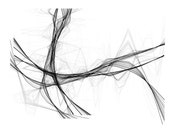
Mientras cursaba mi doctorado en estadística, me fascinó la infinita variabilidad aleatoria inherente a nuestro mundo y el orden instintivo que buscan nuestros cerebros. Si bien mi trabajo se concentra en la aleatoriedad, siempre hay una estructura contextual en juego. La apariencia de caos vs. orden depende en gran medida del alcance del espectador. Me interesa la yuxtaposición del caos aparente resultante de una perspectiva limitada con una estructura que existe fundamentalmente solo cuando algo se ve como un todo colectivo.
Hoy en día, términos tan populares como "big data" y "minería de datos" reflejan el concepto raíz de este trabajo de que los patrones solo son evidentes cuando se ven por completo, y los fragmentos individuales o pequeños de información solo dan una noción incompleta del todo. Sostengo que el individuo es análogo a la estadística en el sentido de que cada individuo tiene una perspectiva limitada y, en consecuencia, muchas cosas le parecen al individuo que no tienen orden. Las ideas estadísticas permiten aprender, de una manera basada en principios, sobre una parte más grande de la imagen colectiva, exponiendo así parte de la estructura subyacente y dando sentido al mundo.
¡Bien!
My work explores the relationship between chance, randomness, probability and the natural human impulse to seek visual structure. With influences as diverse as Piet Mondrian, Vilmos Huszár, and Bart van der Leck of the Dutch neoplasticism (Nieuwe Beelding in Dutch) movement of the early 20th century and contemporary artist Damien Hirst, my goal is to explore these connections through digital art, marrying aesthetic principles with data visualizations generated using statistical computing software and pseudo-random number generation.
While pursuing my Ph.D. in statistics, I became fascinated by the endless random variability inherent in our world and the instinctual order that is sought by our brains. While my work concentrates on randomness, there is always a contextual structure at play. The appearance of chaos vs. order depends heavily on the scope of the viewer. I'm interested in the juxtaposition of apparent chaos resulting from limited perspective with structure that fundamentally exists only when something is viewed as a collective whole.
Today such buzz terms as "big data" and "data mining" reflect the root concept of this work that patterns are only apparent when viewed completely, and individual or small bits of information give only an incomplete notion of the whole. I argue that the individual is analogous to statistics in that each individual has limited perspective and consequently many things appear to the individual to have no order. Statistical ideas allow one to learn, in a principled manner, about a larger part of the collective picture thus exposing some of the underlying structure and making sense of the world.
Cheers!