
In de fotografische blauwe ingang
Dans l'entre bleu photographique
Afgestudeerd in Podiumkunsten met een vermelding in cinematografische en audiovisuele studies en in Communicatie, zijn stilstaande of geanimeerde beelden altijd alomtegenwoordig geweest in mijn huis. Eerst onderwerp van studie, sensor van het T-moment, het is gedurende mijn hele professionele carrière als watermerk ingeprent.
Het cyanotype kwam bij toeval bij mij thuis terecht tijdens een creatie voor een van mijn creatieve vrijetijdswerken in 2017. Het was een fotogram op een canvas van een ligstoel. Ik ga door naar het volgende project, ik heb een strakke planning. Het cyanotype blijft in mijn achterhoofd.
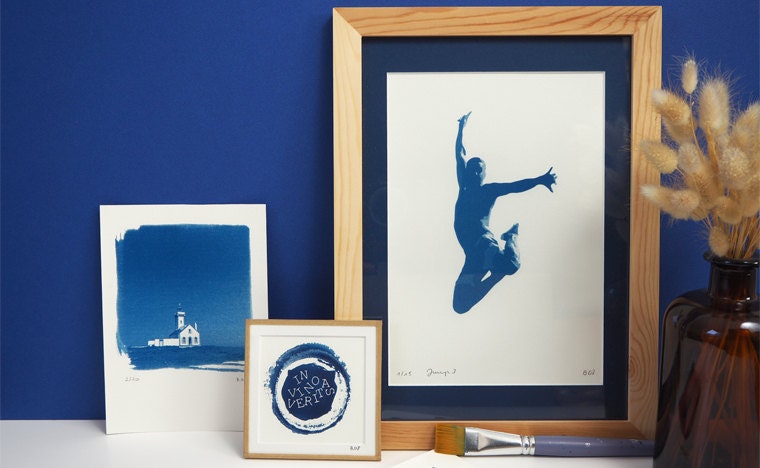
In 2022 duik ik letterlijk in cyanotypie, ik heb de kans om het proces van A tot Z te ‘meesteren’: van papiervoorbereiding tot ontwikkeling. Ik vind de emoties terug die ik voelde in het laboratorium tijdens mijn eerste afdrukken. Het is heel intens en bevredigend. Het stelt mij ook in staat fotografie en DTP met elkaar te verzoenen. De cirkel is rond. Niet alles is in één dag gedaan, het resultaat dat je ontdekt is het resultaat van talloze tests.
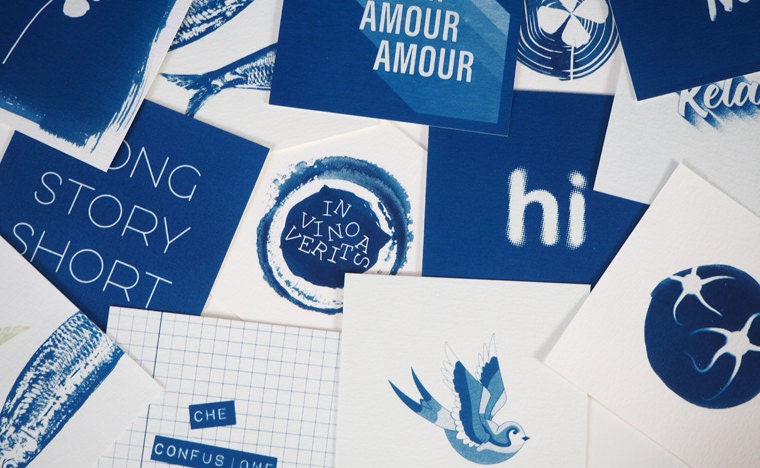
Eindelijk kwam de wens om mijn prints te delen. Waarom Bleu d’Août (B.08)? Het is het blauw van de zee dat ik aan het einde van de zomer in mijn gedachten vastleg. Ik denk dat ik kan zeggen dat ik contemplatief van aard ben. Wees dus niet verrast als je veel prints tegenkomt die verband houden met de zee en palmbomen. Bedenk dat mijn eerste cyanotype een ligstoel was! Er zijn ook andere creaties volgens mijn wensen en de woorden die in me opkomen.
Mijn wens hier is om je van nuances te laten houden. Die van blauw, maar niet alleen dat.
Instagram: bleu_d-aout
Een beetje geschiedenis:
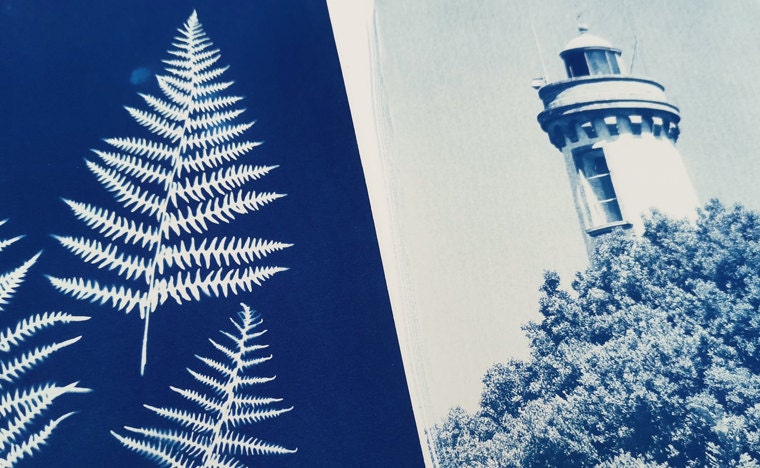
Het cyanotype werd in 1842 uitgevonden door John Herschel. Het is een monochroom fotografisch proces (Pruisisch blauw tot cyaanblauw) waarvoor 2 chemicaliën worden gemengd: ijzerammoniumcitraat en kaliumferricyanide. Dit fotogevoelige mengsel wordt vervolgens – meestal – aangebracht op papier dat in het donker laat drogen. Vervolgens wordt een negatief op het papier aangebracht dat wordt blootgesteld aan ultraviolet licht. Tenslotte wordt het papier gespoeld en in de open lucht gedroogd. Door een vorm op het papier te plaatsen, ontstaat een fotogram.
Diplômée en Arts du spectacle mention études cinématographiques et audiovisuelles et en Communication, l’image fixe ou animée est omniprésente chez moi depuis toujours. Sujet d’étude d’abord, capteur de l’instant T, elle est imprimée en filigrane sur tout mon parcours professionnel.
Le cyanotype, est arrivé chez moi par hasard lors d’une création pour un de mes ouvrages de loisirs créatifs en 2017. Il s’agissait d’un photogramme sur une toile de transat. Je passe au projet suivant, j’ai un calendrier serré. Le cyanotype reste dans un coin de ma tête.
En 2022, je plonge littéralement dans le cyanotype, j’ai la possibilité de « maîtriser » le procédé de A à Z : de la préparation du papier au développement. Je retrouve les émotions que j’avais ressenti en laboratoire lors de mes premiers tirages. C’est très intense et satisfaisant. Il me permet, de plus, de concilier photographie et PAO. La boucle est bouclée. Tout ne s’est pas fait en un jour, le résultat que vous découvrez est le fruit de nombreux essais.
Enfin est venue l’envie de partager mes tirages. Pourquoi Bleu d’Août (B.08) ? C’est le bleu de la mer que je fixe dans mon esprit à la fin de l’été. Je pense pouvoir dire que je suis d’une nature contemplative. Ne soyez donc pas surpris de trouver beaucoup de tirages en rapport avec la mer et des palmiers. Rappelez-vous que mon premier cyanotype était un transat ! Il y a aussi d’autres réalisations au gré de mes envies et des mots qui me trottent par la tête.
Mon souhait, ici, est de vous faire aimer les nuances. Celles du bleu mais pas que.
Instagram : bleu_d-aout
Un peu d’histoire :
Le cyanotype a été inventé en 1842 par John Herschel. C’est un procédé photographique monochrome (bleu de Prusse à bleu cyan) pour lequel 2 produits chimiques sont mélangés : le citrate d’ammonium ferrique et le ferricyanure de potassium. Ce mélange photo sensible est ensuite appliqué – le plus souvent - sur du papier qu’on laisse sécher dans l’obscurité. Ensuite, on applique un négatif sur le papier qu’on expose aux ultraviolets. Enfin le papier est rincé et séché à l’air libre. Déposer une forme sur le papier permet d’obtenir un photogramme.