





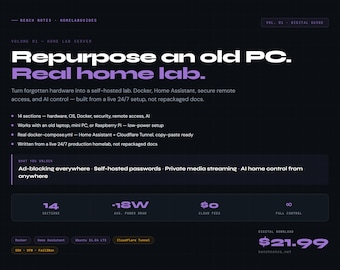

I started this because I couldn't find a guide that was actually written by someone who'd done it.
A few years ago I had an old Intel NUC sitting on a shelf. I knew there was something useful I could do with it — I just couldn't find a resource that explained it the way a knowledgeable friend would. Everything I found was either too basic ("here's how to turn on your computer") or way too deep in the weeds, assuming I already knew what Docker was, why I needed it, and how it related to Home Assistant.
So I built my own setup by trial and error. I learned what a Docker/UFW bypass was the hard way — by running a port scan on myself from my phone hotspot and finding Portainer wide open to the internet. I learned the BIOS power restore setting existed after a power outage left my server offline for two days before I noticed. I learned MCP by being the first person in my social circle to connect Claude AI to a real running home server and ask it "are all my containers running?" from a commuter train.
These guides are the resource I wished I'd had. Every section is written from real experience, not documentation. Every warning comes from a real mistake. Every recommendation is something I actually run in my own setup, right now.
I work in client success and operations, I have a family, and I built all of this in evenings and on weekends. If I can do it, you can too — and with these guides, it'll take you a fraction of the time it took me.
Welcome to the lab.
— Bob, HomeLabGuides
All items
Announcement
Last updated on 23 Apr, 2026
About HomeLabGuides
Sales
1
On Etsy since 2026
Shop policies
Last updated on 26 Mar, 2026
Digital downloads
Instant downloads
Your files will be available to download once payment is confirmed. Here's how.
Made-to-order downloads
I’ll create your items after purchase and you’ll receive an email when the files are ready to download. The time I need to complete these items can vary. Contact me if you have questions.
Payment options
Secure options
Accepts Etsy Gift Cards and Etsy Credits
Etsy keeps your payment information secure. Etsy shops never receive your credit card information.
Returns & exchanges
See item details for return and exchange eligibility.
Cancellations
Cancellations: not accepted
Please contact the seller if you have any problems with your order.