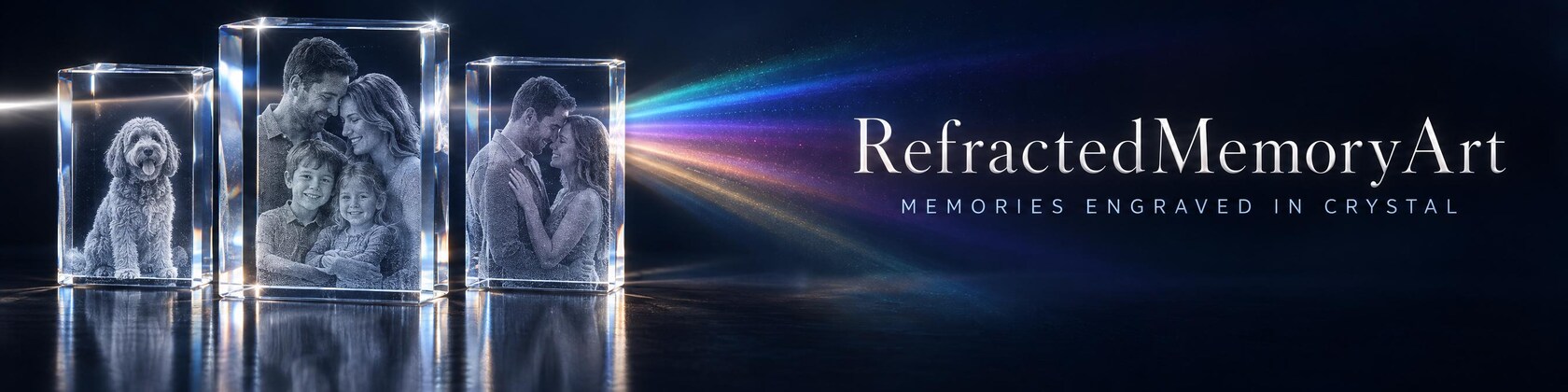
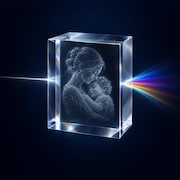
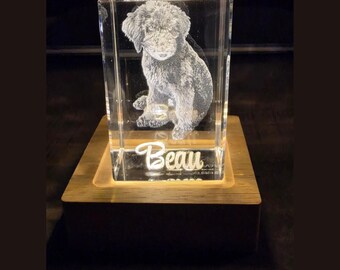
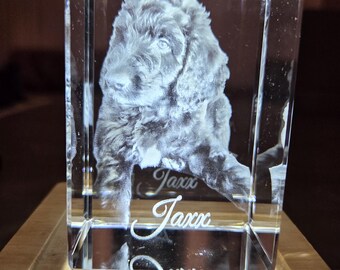

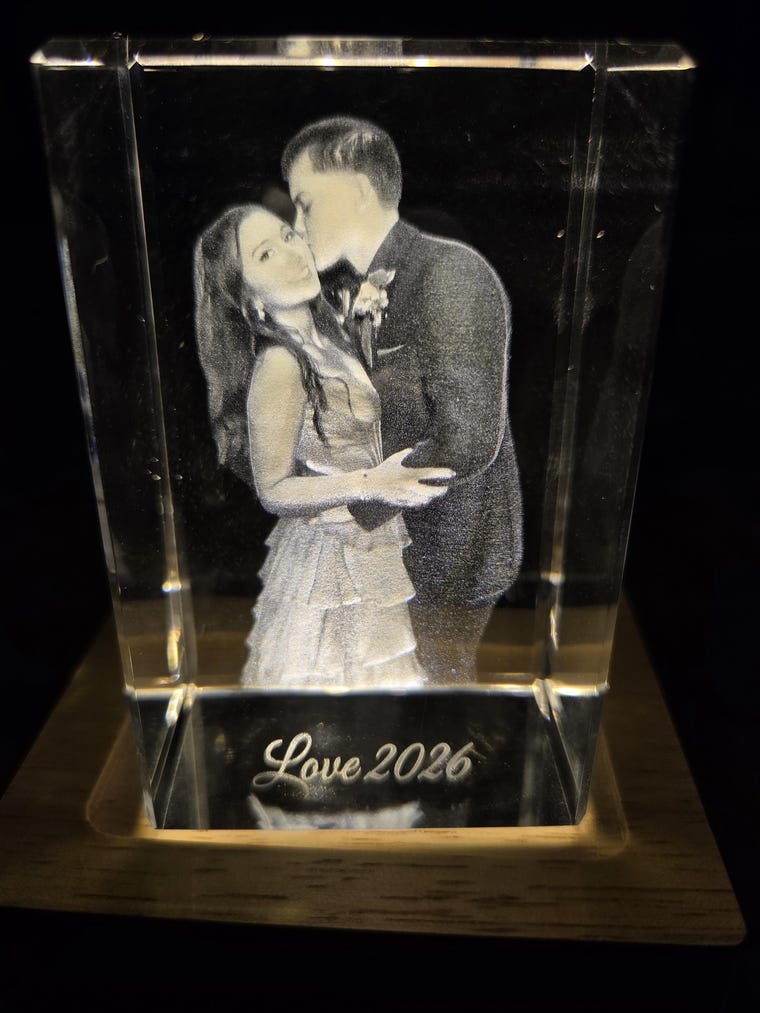
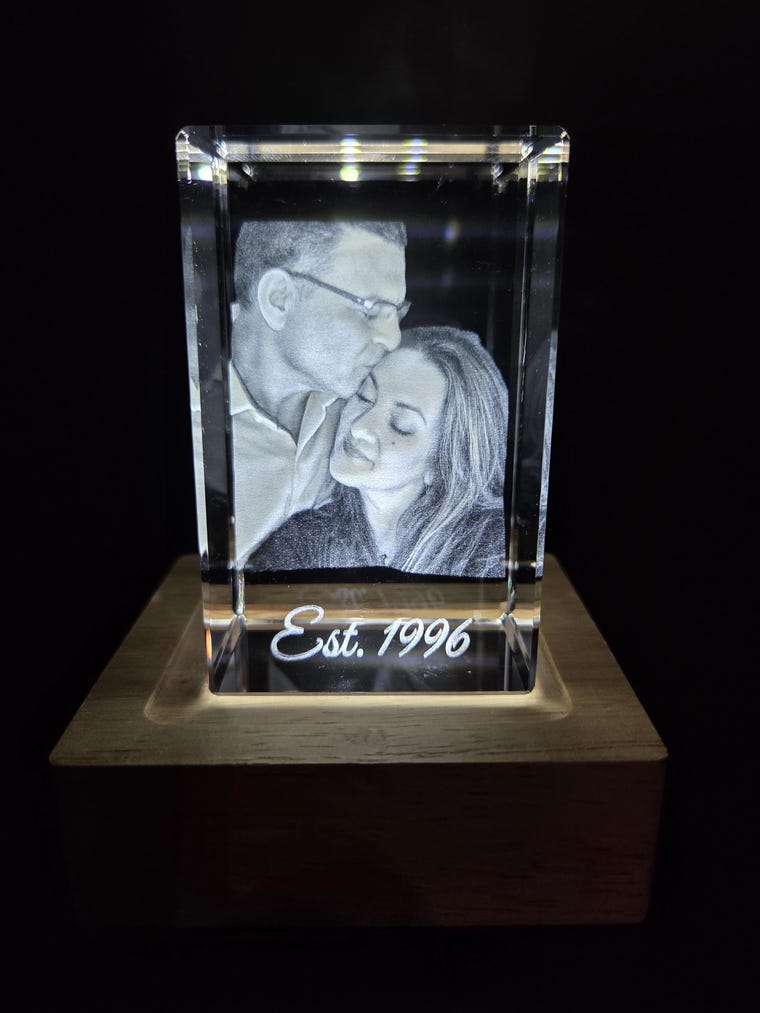
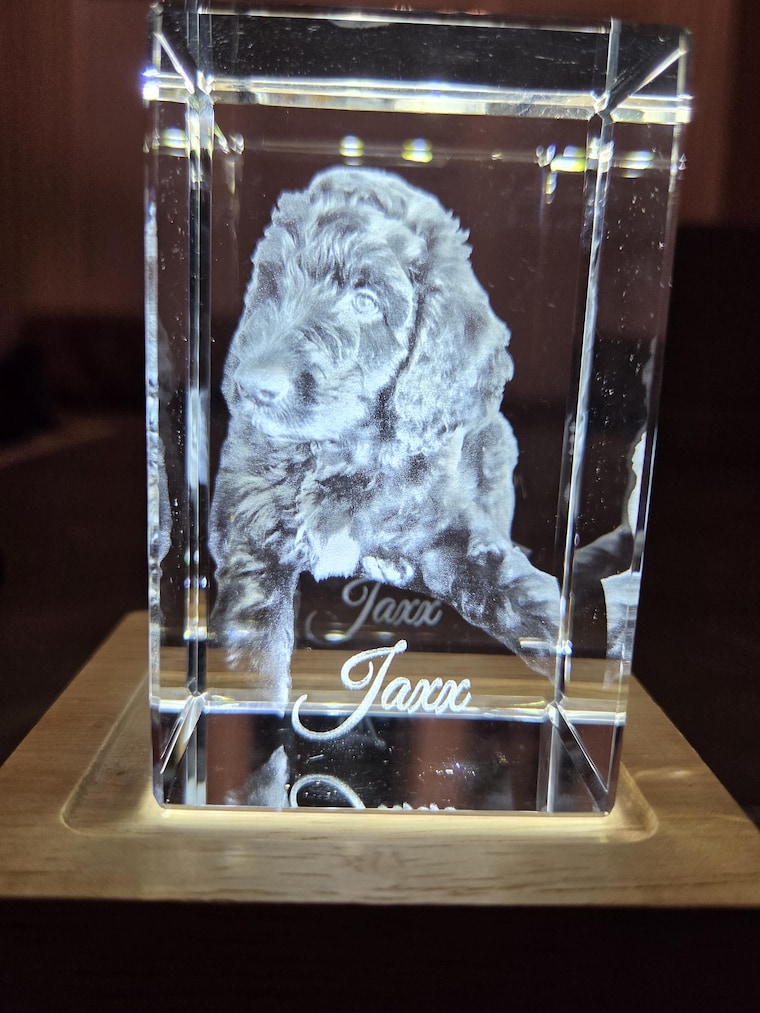
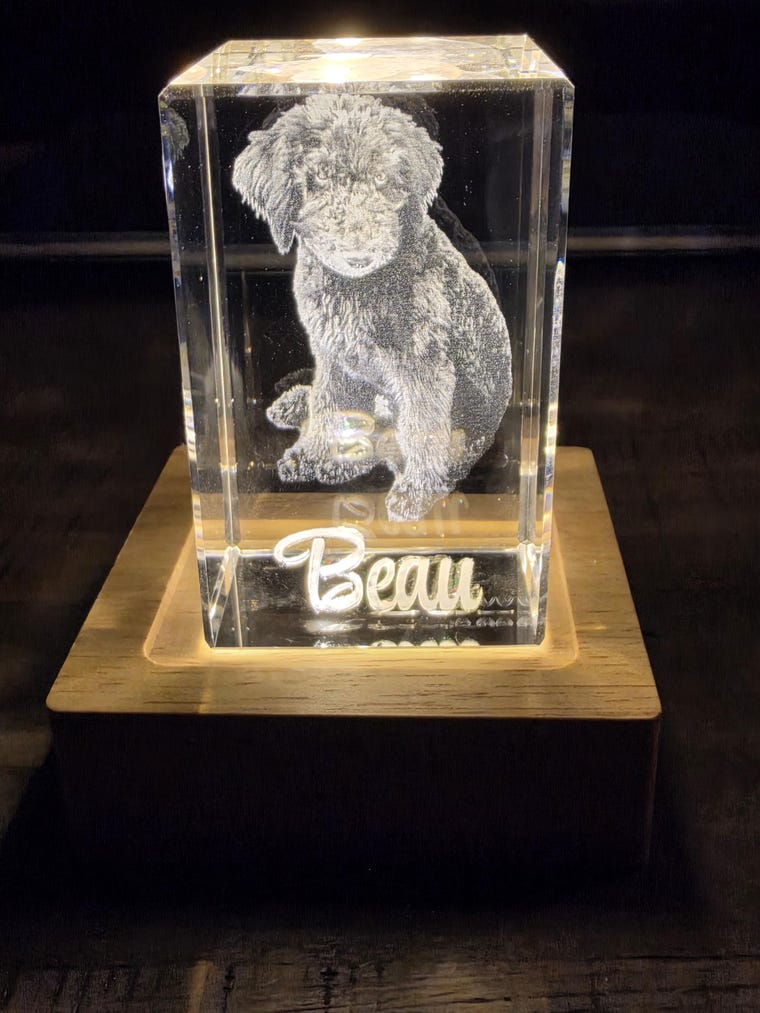
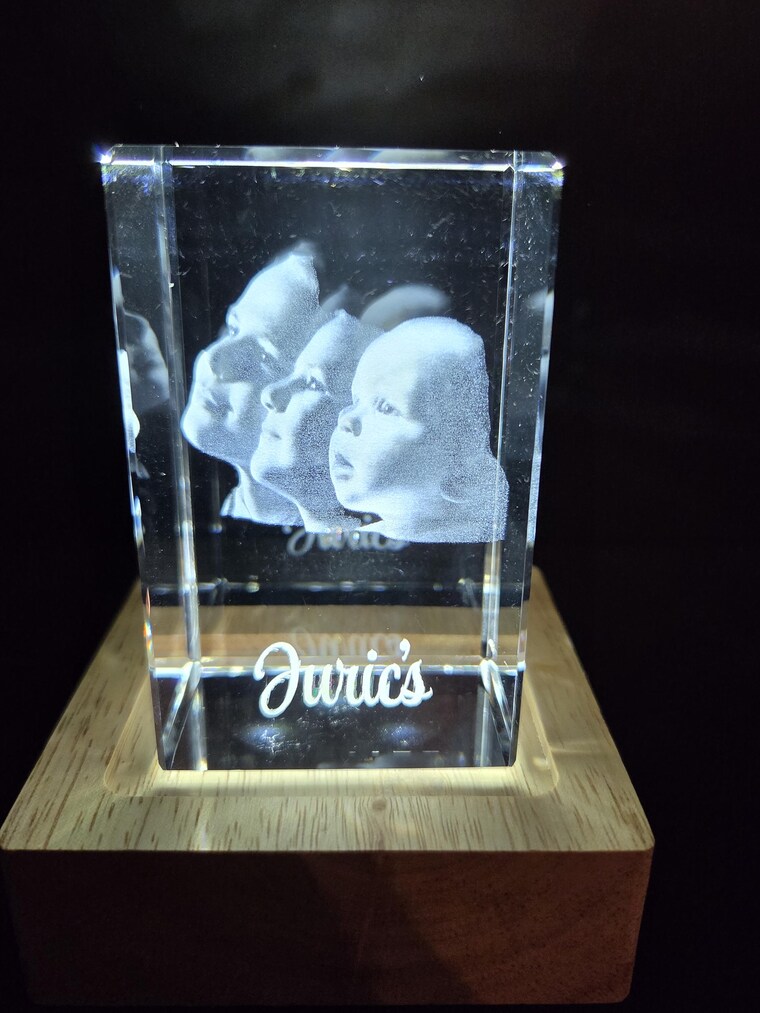
Tu foto, grabada en tres dimensiones dentro de un cristal macizo. Cientos de miles de puntos de luz, hechos para durar toda la vida.
Your photo, engraved in three dimensions inside solid crystal. Hundreds of thousands of points of light, made to last a lifetime
La foto que casi borraste
La mayoría tenemos miles de fotografías, pero casi ninguna colgada en la pared. Viven en el móvil, vistas durante dos segundos cada vez, y luego sepultadas bajo otras más recientes. Las mejores suelen ser las que casi borramos porque no son perfectas: un niño riendo a carcajadas, un perro esperando en la puerta, las manos de una abuela.
Esos son los que quiero. De ahí surgió esta tienda.
Lo que hago
No hay nada impreso en la superficie. Cada pieza comienza como un bloque sólido de cristal óptico K9, el material ultratransparente utilizado para lentes, sin tinte verdoso ni burbujas en su interior. Su imagen se graba en el centro de ese bloque mediante láser, en tres dimensiones.
Cómo funciona realmente
Es útil imaginar una impresora matricial, solo que los puntos se imprimen en el cristal en lugar de en el papel. Dirijo un láser UV a un punto preciso dentro del cristal, y en cada punto la energía crea una fractura microscópica, una pequeña partícula que capta y dispersa la luz. La fotografía se reconstruye a partir de cientos de miles de esas partículas, distribuidas a lo largo de todo el grosor del bloque.
Esa última característica es lo que la diferencia de una fotografía impresa. No hay tinta ni cuadrícula de píxeles. Si te acercas, puedes ver los puntos de luz individuales que cuelgan en el cristal, y como se encuentran a diferentes profundidades, la imagen cambia y se modifica según varíe la luz y tu ángulo de visión.
La parte que nadie ve
Antes de grabar, dedico tiempo a tu foto. La limpio y reparo lo que puedo, y luego la estudio para captar su profundidad. Una fotografía es plana; un grabado no. Tengo que decidir qué elementos deben destacar y cuáles deben quedar en segundo plano, o el resultado parecerá una imagen atrapada en una caja en lugar de algo vivo dentro del cristal.
Las fotografías difíciles se procesan igual que las fáciles. Las fotos antiguas escaneadas, las fotos nocturnas tomadas con el móvil y las de animales de pelaje oscuro, como los perros negros, requieren un trabajo adicional, y yo me encargo de ello antes de informarle sobre las posibilidades de recuperación. Si una foto realmente no se puede salvar, prefiero decírselo directamente antes que aceptar su dinero y entregarle un resultado decepcionante.
¿Por qué cristal?
Porque la imagen está dentro del material, no sobre él. No hay nada en la superficie que se desgaste. No se decolora con la luz del sol, no tiene ningún recubrimiento que se desprenda y el bloque es sólido. Dentro de treinta años lucirá exactamente igual que el día que la reciba, que es precisamente la esencia de un objeto de colección.
Cuidarlo
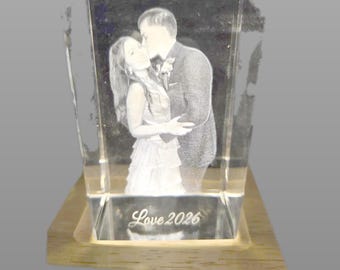
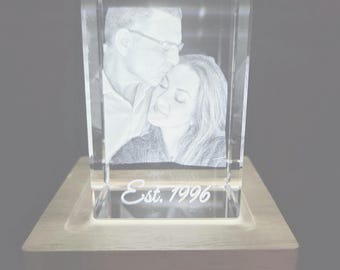
Trátalo como si fuera cristalería fina. Es más resistente de lo que parece y aguanta perfectamente el uso diario, pero no es algo que debas dejar caer sobre un suelo duro. Basta con un paño suave. Colócalo cerca de una ventana para que le dé la luz del día, o sobre una base iluminada para que brille, y verás por qué nunca me canso de él.
Envíame tu foto
No tiene que ser profesional. Tiene que ser algo a lo que siempre vuelvas. Envíamelo y te diré con sinceridad qué puedo hacer con él.
The photo you almost deleted
Most of us have thousands of photographs and almost none of them on a wall. They live on a phone, seen for two seconds at a time, then buried under newer ones. The best ones are usually the ones people almost delete because they are not perfect: a kid mid-laugh, a dog waiting at the door, a grandmother's hands.
Those are the ones I want. That is where this shop came from.
What I make
Nothing is printed on the surface. Each piece starts as a solid block of optical K9 crystal, the ultra-clear material used for lenses, with no green tint and no bubbles inside. Your image is engraved into the middle of that block by laser, in three full dimensions.
How it actually works
It helps to picture a dot matrix printer, except the dots land inside glass instead of on paper. I focus a UV laser to a precise point inside the crystal, and at each point the energy creates a microscopic fracture, a tiny speck that catches and scatters light. Your photograph is rebuilt from hundreds of thousands of those specks, arranged through the whole depth of the block.
That last part is what makes it different from a printed photograph. There is no ink and no pixel grid. If you lean in close you can see the individual points of light hanging in the glass, and because they sit at different depths, the image shifts and changes as the light and your viewing angle change.
The part nobody sees
Before any engraving happens, I spend real time on your photo. I clean it up and repair what I can, then study it for depth. A photograph is flat; an engraving is not. I have to decide what should come forward toward you and what should sit back, or the result looks like a picture trapped in a box rather than something alive inside the crystal.
Hard photographs go in the same queue as easy ones. Old scanned prints, phone shots taken at night, and dark-coated animals such as black dogs all need extra work, and I do that work before telling you what is possible. If a photo genuinely cannot be saved, I would rather say so up front than take your money and deliver something disappointing.
Why crystal
Because the image is inside the material, not on it. There is nothing on the surface to wear away. It does not fade in sunlight, there is no coating to peel, and the block is solid. In thirty years it will look exactly as it does the day it arrives, which is rather the point of a keepsake.
Looking after it
Treat it like good glassware. It is tougher than it looks and handles everyday life perfectly well, but it is not something to drop on a hard floor. A soft cloth is all it needs. Put it near a window for daylight, or on a lit base to make it glow, and you will see why I never get tired of this.
Send me your photo
It does not need to be professional. It needs to be the one you keep going back to. Send it over and I will tell you honestly what I can make from it.