
Retratos de desnudos
Nude portraits
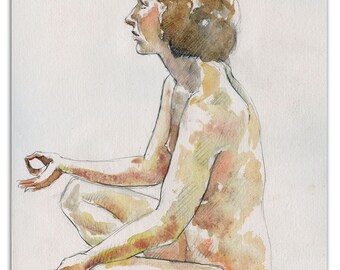
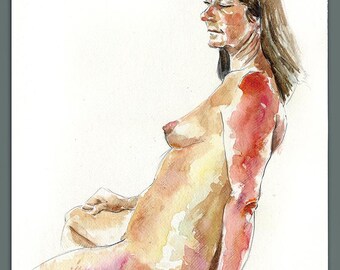
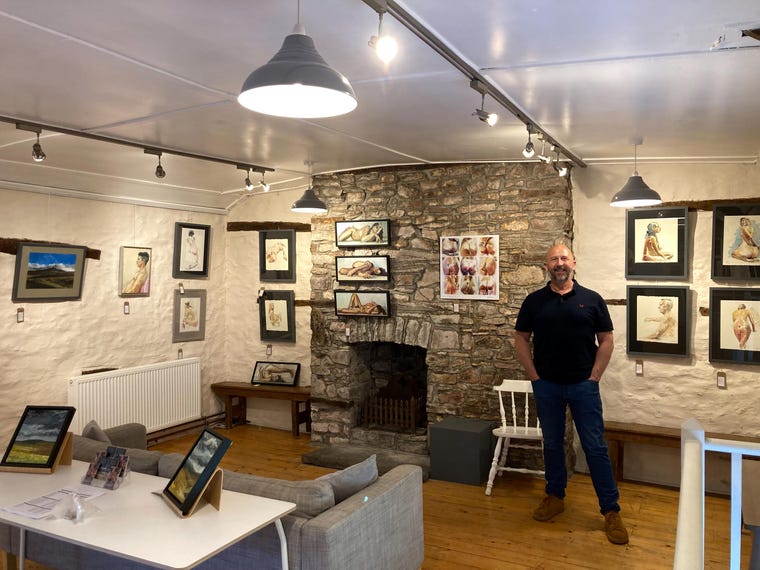
Llevo mucho tiempo dibujando personas desnudas. No pasa nada, todos saben que lo hago, y mi esposa también (¡a quien no le molesta en absoluto!). De hecho, suelo llegar a un acuerdo económico mediante el cual pago la sesión directamente a la modelo o a través del grupo organizador. Pero últimamente ha habido un cambio interesante: la gente me paga por dibujarlas. Así es como surgió.
Días del estudiante
Mi primera incursión en el dibujo del natural tuvo lugar durante un Curso Básico de Arte y Diseño de un año de duración en el Dyfed College of Art en 1982. Tuve como profesor al artista figurativo Paul Edwards, de voz suave y un talento envidiable. Había tenido como profesor a Lucien Freud en el Slade, quien a su vez había tenido como alumnos a Walter Sickert, y él, a Whistler y Edgar Degas. ¡Un linaje artístico que posteriormente he proclamado para mí!
La primera vez que una modelo se te revela, sin duda sientes un breve escalofrío de emoción ante la singularidad de la disposición: está desnuda, expuesta, mientras todos los demás están completamente vestidos. Entonces empiezas a dibujar, como si estuvieras dibujando un aparador. Te concentras en la tarea.
Al repasar mis primeros dibujos del natural, me doy cuenta de que tenía buen ojo para la proporción, aunque la calidad de mis trazos fuera un poco torpe. Desde el principio, me interesé más por la línea que por el tono o el color, y me esforcé por enfatizar variando la intensidad de mi trazo en lugar de sombrear o rayar demasiado. Seguí experimentando, según las indicaciones, con pintura, carboncillo y pastel, pero mi pasión por el lápiz ya había echado raíces. Siempre me han fascinado todas las obras maestras que encierra el fino lápiz.
Seguí buscando clases de dibujo al natural cuando pasé al siguiente nivel educativo, un HND en Ilustración Técnica en el Swansea Institute of Higher Education. El curso valoraba el dibujo y nos permitió participar en las sesiones de dibujo al natural de otros cursos, abiertos a todos los interesados en la Facultad de Arte. Además, aprendí dibujo analítico y la perspectiva aérea, la técnica de ilustración técnica que consiste en aumentar el grosor de una línea que se encuentra en el exterior de un objeto o delante de otra parte del mismo. Las líneas debajo de los objetos también se enfatizan para sugerir su peso. Esta técnica también se puede aplicar a la figura, o de hecho a cualquier cosa que dibujes. Todavía la utilizo.
Pasé estos años de desarrollo trabajando casi exclusivamente en monocromo. Había tanto que perfeccionar con solo un lápiz que no sentía la necesidad de añadir color. Seguí experimentando con pasteles y lápices de colores, pero no con la misma aplicación.
Luz de cristal
Cuando dejé la educación superior (brevemente, como se vería más tarde), seguí asistiendo a clases de dibujo al natural en mi ciudad natal, Swansea. Estas se celebraban entonces en los Estudios Glasslight, en la antigua estación de bombeo del Marina (ahora un pub de cadena). Glasslight estaba dirigido por un colectivo de artistas vitrales que se habían formado en el mundialmente famoso curso de la ciudad y organizaban una clase de dibujo al natural con un turno de modelos los jueves por la noche. Esta disciplina semanal me ayudó a mantener mis habilidades y a hacer contactos útiles en el mundo artístico. Cuando conocí a mi esposa en 1988, seguí asistiendo, a la vez que disfrutaba dibujando su esbelta figura en casa.
Nos fuimos de viaje durante un año a finales de 1990 y, aparte de un par de clases a las que me uní en Oregon, no hice ningún dibujo de la vida real hasta que regresamos y nos establecimos nuevamente, un descanso de casi dos años.
La Glynn Vivian
Swansea cuenta con una pequeña pero impresionante galería de arte eduardiano, la Glynn Vivian, y fue allí donde volví a dibujar desnudos durante unos años. Las sesiones, también los jueves, se celebraban en el vestíbulo principal, un espacio con preciosos suelos de baldosas, escaleras con balaustradas y balcones. Como la clase tenía muy buena asistencia y era tan grande, nos proporcionaron dos modelos a la vez, lo que nos dio muchísimas opciones. Las clases se impartieron durante varios años hasta que el ayuntamiento decidió retirarles la financiación, aunque me resultaba incomprensible cómo no obtenían beneficios con tantos asistentes.
Unas palabras sobre los modelos. No todos pueden hacer este trabajo. Se necesita confianza, determinación, paciencia y una sorprendente cantidad de fuerza y resistencia. Casi siempre me impresionan. A veces hay algún modelo mediocre, quisquilloso y poco dispuesto a esforzarse mucho con sus poses, pero por suerte son la excepción a la regla. La disciplina atrae a ciertos personajes, independientemente de su origen o educación. He dibujado constructores, profesores jubilados, soldados, bailarines, colegas artistas, gurús del yoga y jugadores de rugby, de dieciocho a ochenta años (la verdad, no tantos jugadores de rugby de ochenta años), y todos ellos han tenido una admirable autoconciencia y una gran confianza en sí mismos. Por lo que tengo entendido, nunca lo he intentado, pero posar les da una positividad corporal que a la mayoría nos llevaría mucho tiempo en terapia conseguir. Generalmente es un trabajo a tiempo parcial, pero hay algunas modelos que se ganan la vida con ello, posando para universidades y participando en las diversas clases de la zona. También hay oportunidades para posar individualmente para artistas en sus estudios, pero yo nunca he contratado a una modelo de esta manera. No es sorprendente que algunas modelos usen seudónimos para mantener el anonimato, pero la mayoría son completamente transparentes sobre lo que hacen.
Naturalmente, he experimentado algunas rarezas a lo largo del camino. Ha habido algún modelo que ha tenido una erección, generalmente ignorada por todos hasta que se desvanece. Hemos tenido un par de mujeres embarazadas en la última etapa cuyos pezones han empezado a gotear, y tuvimos a un desafortunado anciano que posó, felizmente inconsciente de que llevaba un rollo de papel higiénico. No creo que nadie lo haya incluido en su dibujo. Ninguno de estos incidentes me pareció vergonzoso; en todos los casos, simplemente te recuerda la humanidad que tienes el privilegio de presenciar.
Enseñanza
Alrededor de 1998 me pidieron que impartiera la clase de dibujo del natural en el curso básico del Swansea Institute. Siempre he disfrutado de la enseñanza práctica que requiere el dibujo, pero me resultaba frustrante estar en una sala de dibujo del natural durante dos o tres horas sin dibujar nada. Por lo tanto, aunque me dedicaba al dibujo del natural, ¡no lo hacía tanto! Anteriormente había impartido varias asignaturas como profesor a tiempo parcial, incluyendo dibujo analítico, diseño gráfico y dibujo en perspectiva, pero el dibujo del natural es algo completamente distinto.
En un grupo de estudiantes con habilidades diversas (lo cual es evidente desde el primer dibujo), descubrí que el mejor enfoque era mostrar mi forma de dibujar y luego animar al artista a encontrar su propio camino. Todo artista busca su estilo original, y es prácticamente imposible, y un tanto fatuo, prescribirlo o predecirlo. Hay tantas variables en cuanto al enfoque, la técnica y los materiales, que solo se les puede enseñar realmente cómo mirar.
He impartido muchas clases a lo largo de los años y, en general, creo que si un estudiante puede encontrar la chispa que define la forma de vida que tiene delante, mi trabajo está hecho.
Recientemente he vuelto a dar clases, realizando clases magistrales de dibujo del natural para otros artistas en la Royal Cambrian Academy of Art (de la que soy miembro) en el norte de Gales y en Ámsterdam, en la Galerie du Nord.
La calma
A medida que nuestra familia creció hasta tener cuatro hijos y el trabajo se volvió más exigente, mi dibujo habitual se volvió errático durante cinco o seis años. Era difícil mantener una rutina, ya que mi esposa y yo trabajábamos a tiempo completo y guiábamos a los niños por las aguas, a veces turbulentas, de la infancia. Durante parte de este tiempo, asistí a los restos reubicados de las sesiones de Glynn Vivian en Swansea Print Workshop, y este se convirtió en mi lugar predilecto durante varios años. Durante este período, dudo que llenara más de un par de cuadernos de bocetos en total, pero era inevitable.
Currículum de dibujo regular
Con el tiempo, volví a tener tiempo para una sesión semanal regular e incluso comencé a regalarme una sesión ocasional los lunes por la mañana en el Taller de Grabado. Esto me permitió conocer a un grupo diferente de artistas de mayor madurez. Estos veteranos llevaban más de cuarenta años dibujando y eran un grupo fantástico con una vasta experiencia e historias que contar. Un par eran muy buenos artistas, artesanos con mucha experiencia. Disfruté compartiendo mi trabajo con ellos y aprendí que la edad no era un problema cuando se trataba de dibujar. Es una necesidad para toda la vida. También había una pequeña emoción ilícita en escaparme del trabajo por la mañana para dibujar, un privilegio que puede permitirse de vez en cuando dirigir un negocio propio.
Llevaba un tiempo promocionando mi trabajo en una página web, sin mucho éxito, cuando, de repente, recibí una llamada de una mujer embarazada de Manchester que quería encargarme unos retratos de desnudos. Acordamos un precio que cubría mi tiempo y el viaje, y fui a dibujarla mientras su marido y yo escuchábamos la radio. Cualquiera que no haya asistido a una clase de dibujo al natural podría encontrar esto extraño, y soy muy consciente de la actitud de "Sigue adelante", de codazos, codazos, guiños, guiños que predomina en la mente de la mayoría, pero no resulta nada inusual ni incómodo una vez que te metes en la situación. La pareja estaba muy contenta con el recuerdo único y personal del embarazo, y yo disfruté de su compañía y recibí una buena recompensa por mi esfuerzo. Además, ganamos la radio.
El grupo de los jueves por la tarde en el Taller de Grabado llevaba tanto tiempo activo que había desarrollado sus propias reglas tácitas. Las mismas personas (más o menos) aparecían cada semana y se sentaban en los mismos sitios. Dirigido por Steve, pintor y decorador en horario laboral, quien organizaba a los modelos en turnos de unos seis habituales, abría y cerraba el espacio de trabajo y se llevaba el dinero. Incluso hacía de modelo cuando alguien no se presentaba. Y todo esto de forma voluntaria; no me habría sorprendido que también pagara por dibujar. Me maravillan las personas tan desinteresadas; son el motor que mantiene a gran parte de la sociedad en marcha. El único problema para mí fue que el grupo de modelos habituales que empleaban empezó a acostumbrarse demasiado a la repetición. Las poses solían ser las mismas, cada modelo tenía su propio repertorio, y empecé a extrañar las semanas con modelos que no me entusiasmaba dibujar. El grupo lleva funcionando casi veinte años y continúa haciéndolo después de una suspensión forzada por la pandemia, pero solo he estado un par de veces en los últimos dieciocho meses y me resultó difícil reintegrarme.
Alrededor de 2017, descubrí que podía asistir al grupo de dibujo del natural de la sociedad de arte de la Universidad de Swansea. Este presentaba un modelo diferente cada semana, compuesto por un grupo de estudiantes entusiastas, que a menudo posaban como parte de su lista de deseos. Siempre me parece sorprendente cómo un completo novato puede sentirse rápidamente cómodo desnudo frente a un grupo de desconocidos. Muchos de los estudiantes que dibujé posaban por primera vez, pero su profesionalidad y tranquilidad parecían indicar que llevaban años haciéndolo.
A veces viajaba al valle para asistir al grupo matutino del Centro de Artes Pontardawe los sábados por la misma época, y también a una clase ocasional en Crickhowell impartida por el siempre excelente Tony Tribe. En cada caso, descubrí que los grupos atraían a personas similares, como era de esperar, personas con las que a menudo tenía mucho en común.
Lo mismo ocurrió con el grupo que empezó a reunirse semanalmente los martes en la Galería Elysium de la ciudad alrededor de 2018. El montaje era muy agradable, con una gama de modelos diferentes a los que estaba acostumbrado a dibujar en el Taller de Grabado. También se celebraba en el bar de la galería, y la entrada incluía una bebida. ¡Fue una grata novedad sentarse con una pinta de Gower Gold mientras dibujaba durante dos horas!
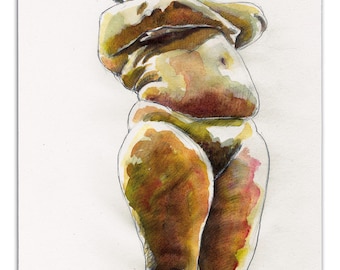
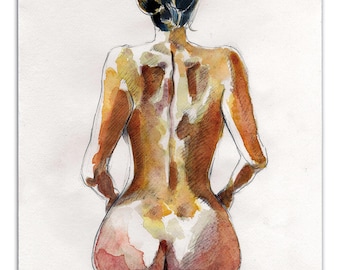
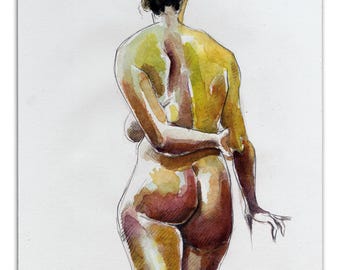
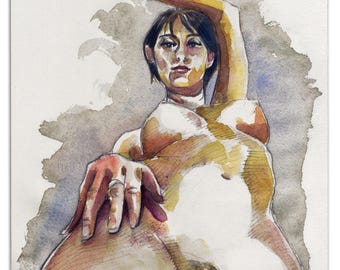
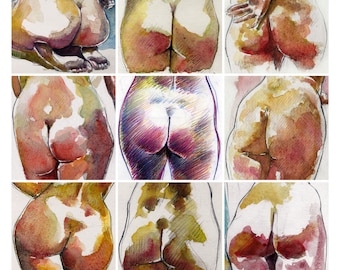
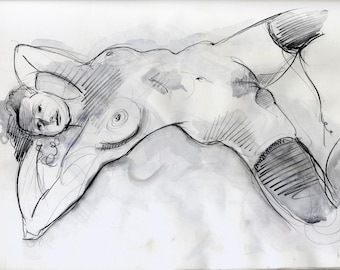
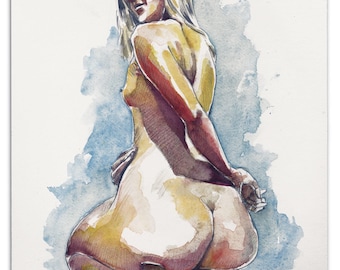
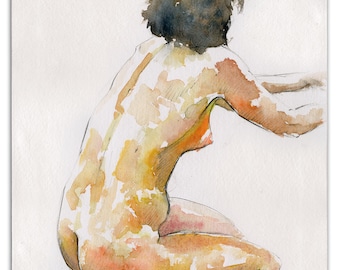
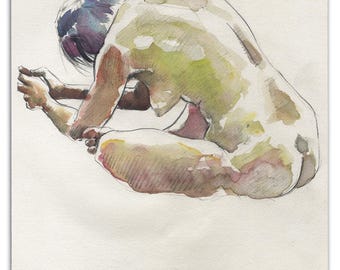
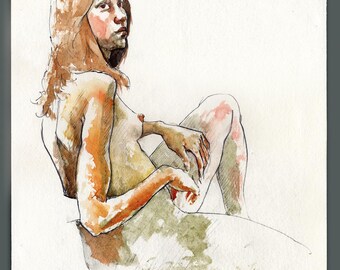
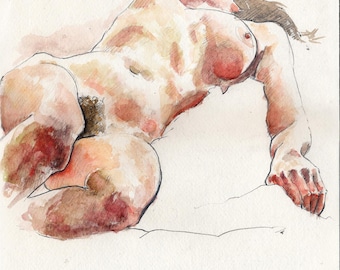
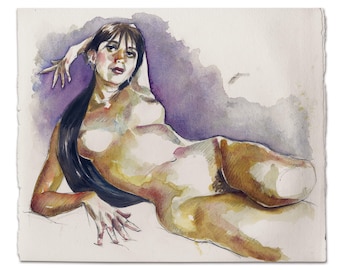
Unas palabras sobre la duración de las poses. El grupo de los jueves al que asistí durante tanto tiempo tenía un orden fijo de tiempos de pose: dos poses de cinco minutos para calentar, seguidas de tres poses de 30 minutos. Me acostumbré a este régimen y adapté mi estilo: las poses cortas las hacía vigorosamente con grafito soluble en agua 8B, difuminado con agua, y los dibujos más largos y definidos con lápiz soluble en agua 3B, difuminados con acuarelas. Cuando empecé a ir a las sesiones de Elysium, ofrecían poses de 10 minutos seguidas de otras de 20. Al principio, esto me desconcertó y me costó adaptar mi estilo de dibujo. Entonces me di cuenta de que tenía tiempo para añadir color a las poses cortas. Fue una revelación e inmediatamente empecé a soltar mis dibujos y pinturas para adaptarme al tiempo disponible. Esto resultó en dibujos mucho más vivos, aunque la tasa de éxito fue menor.
Para entonces, dibujaba dos o tres horas dos veces por semana y desarrollaba un estilo que me gustaba y que se adaptaba a la longitud de la pose. Luego llegó la pandemia y, como con tantas otras cosas, las clases se suspendieron.
Diversidad durante el confinamiento
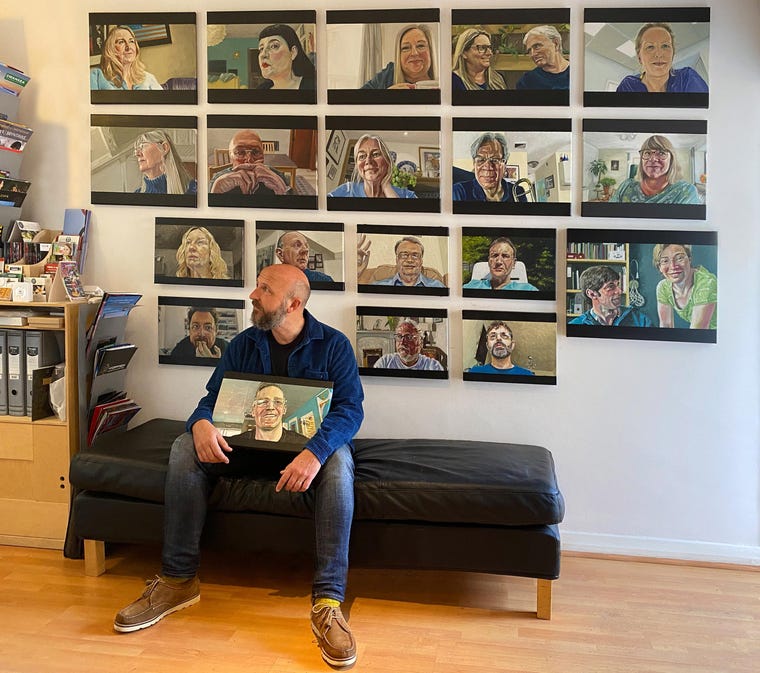
Sin clases, dejé de trabajar de golpe durante una semana aproximadamente. Mi trabajo de diseño gráfico estaba decayendo con la crisis y, aunque estaba incorporando cosas nuevas, me encontré con mucho tiempo libre. Ahora no se me da bien estar inactiva; me aburro enseguida y siento crecer en mí la necesidad de ser creativa. Empecé a enterarme de cómo la gente se mantenía en contacto durante el confinamiento y descargué Zoom para ver a qué se debía tanto alboroto. Fue una revelación. Al principio, convencí a mi tutora de escritura de que podía impartir sus clases con este nuevo software y funcionó bien; todos lo asimilaron enseguida. Durante una de estas clases, me di cuenta de que estaba obteniendo una perspectiva inusual de cada ponente, y me pregunté cómo sería dibujar un retrato (convencional) de alguien por Zoom. Así que pedí voluntarios en Facebook y me fue de maravilla, haciendo tres retratos al óleo uno tras otro. Esto me llevó a desarrollar un proyecto para pintar 19 retratos (Co-Vid 19) durante las doce semanas de confinamiento.
Mientras esto sucedía, aún tenía tiempo para hacer más, así que empecé a buscar sesiones de dibujo en vivo en línea que estaban apareciendo por todas partes. A veces, estas eran dirigidas por grupos que ya habían impartido clases presenciales, por personas emprendedoras o incluso por los propios modelos, y podían estar ubicadas en cualquier parte del mundo dentro de restricciones horarias razonables. Los arreglos dieron lugar a algunas combinaciones extraordinarias: un grupo organizado en Escocia con el modelo en México o un grupo en los Países Bajos con el modelo en la India, por ejemplo. Dibujé modelos en Australia, Estados Unidos, India, Colombia y Taiwán, todo en un par de semanas. Me puse a charlar con otros artistas de todo el mundo y descubrí, una vez más, que muchos eran personas con ideas afines, independientemente de su nacionalidad. Fue inspirador y aumenté mi tiempo de dibujo a tres o cuatro sesiones de tres horas a la semana y llené un cuaderno tras otro.
Mi estilo se adaptó de nuevo, ya que dibujar desde una pantalla plana a un metro de distancia es totalmente diferente a estar en una clase en vivo. Pero rápidamente descubrí que algunas cosas eran incluso mejores en Zoom. No tenía que ir a ningún lado ni llevar mis cosas conmigo, podía dibujar cuando quisiera, y algunos de los ángulos de cámara y distorsiones del objetivo que los modelos explotaban dieron lugar a un material muy interesante. Algunos modelos se convirtieron en favoritos: una chica que posaba desde su piso todos los lunes por la mañana en Ámsterdam, una actriz italiana que vivía en Barcelona, una australiana cuyas sesiones eran a las 9:00 a. m. GMT, donde los otros artistas locales tomaban una copa de vino por la noche mientras yo tomaba mi café del desayuno, y la maravillosa e imaginativa Olja, una actriz y bailarina polaca que vive en Bélgica. Olja subió el listón, presentando poses desafiantes desde ángulos extravagantes, a menudo inspiradas en artistas de los que nunca había oído hablar y a quienes había investigado para poses (Dennis Sarahzin, Ferdinand Hodler, Malcolm Liepke).
Empecé a experimentar con pasteles y lápices de colores por primera vez en años y me enamoré de nuevo del proceso. Todavía tengo alguna fase en la que me cuesta, a veces por el modelo, la longitud de las poses o una imagen de mala calidad, pero sobre todo porque no estoy a la altura todo el tiempo. No es algo que se pueda abrir y cerrar, pero cuanto más dibujas, mejor te va y menos dibujos malos haces. Casi siempre.
Naturismo
Después de todos estos años y miles de dibujos, casi nunca había vendido mi obra, aunque no me había esforzado mucho. Tenía un encargo en Manchester, había vendido uno a través de una galería local, un par a una modelo y un puñado por Instagram, pero no veía que hubiera mucho mercado para los desnudos. Tras una visita a una playa naturista en Grecia en 2019, se me ocurrió que quizá había encontrado un mercado potencial. La idea se estancó hasta que llegó el confinamiento y encontré tiempo para aprovecharla. Diseñé un anuncio para publicarlo en la revista British Naturism con la esperanza de que sus miembros se interesaran en encargar un retrato desnudo de ellos mismos o de su pareja. Tres semanas después, recibí una solicitud de un señor que, casualmente, vivía muy cerca de mi casa. Sin embargo, como esto era durante el confinamiento, todavía teníamos que usar Zoom. La sesión salió bien y le vendí un conjunto de retratos. Pero luego, nada.
Un par de semanas después, recibí una llamada de la revista para comprobar si el anuncio había funcionado. Cuando dije que no, me sugirieron que me hiciera miembro para poder promocionar mi trabajo en los foros de su página web. Funcionó y pronto ya tenía cinco o seis encargos (sí, todavía llevaba uno puesto; necesitaba un sitio donde guardar mis lápices). Desde entonces, he hecho encargos para naturistas en todo el Reino Unido, Portugal, España y Estados Unidos. Esa es la gracia de hacerlo por Zoom: da igual dónde esté la persona. Además, se sienten a gusto, quizá porque están acostumbrados a estar desnudos, pero también porque están en su entorno familiar.
A principios de este año, recibí una propuesta para dibujar a una pareja en su visita de 50 aniversario a un resort naturista en Gales. Esto fue un poco diferente, ya que los dibujaría cara a cara. ¡Lo que lo hizo aún más diferente fue que yo también tendría que estar desnudo! No sabía cómo tomármelo, pero me ofrecieron una buena suma por el trabajo y el tiempo parecía bueno, así que, tras consultar con mi siempre tolerante esposa, acepté. No tuve reparos en desnudarme; había estado en playas naturistas varias veces en el extranjero, pero siempre con un clima caluroso y soleado, y, por muy agradable que sea el oeste de Gales, no suele hacer tanto calor. Sin embargo, no hubo problema; los modelos fueron muy amables y enseguida me tranquilizaron, llevándome a dar una vuelta por el lugar e intentaron conseguirme más trabajo mientras estaba allí. Así que me senté allí desnudo, dibujando a través de una ligera y fresca neblina que todos hacían todo lo posible por ignorar. Fue un reto, no porque estuviera desnudo, a eso uno se acostumbra pronto, sino porque era la primera vez que dibujaba a alguien que no estuviera en pantalla en un buen año. Aun así, quedaron contentos con el trabajo y amablemente me prepararon la comida antes de volver a salir.
¿Qué sigue?
Entonces, aparte de un poco de dinero, ¿qué gano dibujando?, me pregunto a menudo. Encuentro paz en ello, es la respuesta corta. Desconecto mi mente cuando dibujo y dejo que el instinto y la práctica tomen el control. Dibujar, en cualquier forma, es una gran disciplina para un creativo visual (soy diseñador gráfico de profesión). Abarca línea, forma, color, composición, técnica, y desarrolla la concentración y el buen juicio. La limitación de tiempo impuesta por la resistencia del modelo exige trabajar rápido, con una reevaluación constante, sobre la marcha, de la línea, el valor y la proporción comparativa. Se comprende que los pequeños detalles pueden ser la fuerza vital de un dibujo: un toque aquí, una marca gestual allá, incluso una gota o salpicadura pueden animar una obra.
Recientemente empecé a hacer vídeos time-lapse mientras trabajaba, y los resultados fueron muy interesantes. No me había dado cuenta de que abordo cada dibujo de forma tan diferente: a veces esbozo ligeramente las proporciones primero, a veces empiezo por la cabeza, otras por los pies. Es un proceso intelectual, por supuesto, pero después de todos estos años de experiencia no lo pienso detenidamente, simplemente reacciono a lo que veo. Me alegra que demuestre que, incluso después de todo este tiempo, sigo aprendiendo del proceso. Me ha fascinado constantemente durante más de cuarenta años y no creo que termine pronto.
I’ve been drawing naked people for a very long time. It’s OK, they all know I’m doing it, and so does my wife (who doesn’t mind in the least!). In fact, there is usually some financial arrangement by which I pay for the session either direct to the model or via the organising group. But recently there’s been an interesting development — People have been paying me to draw them. This is how it came about.
Student Days
My first foray into life drawing took place during a year long Foundation Course in Art & Design at Dyfed College of Art in 1982. I was taught by the softly-spoken figurative artist Paul Edwards, himself an artist of enviable pedigree and skill. He had been taught by Lucien Freud at the Slade, who had in turn been taught by Walter Sickert, and he, by Whistler and Edgar Degas. An artistic lineage I have subsequently proclaimed for myself!
The first time you have a model reveal themself to you there is undoubtedly a brief frisson of excitement at the oddness of the arrangement by which they are naked, exposed, while everyone else is fully clothed. Then you start to draw and you might as well be drawing a sideboard. You concentrate on the task at hand.
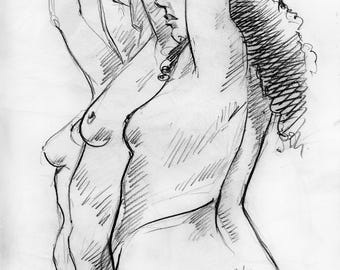
When I look back at my earliest life drawings I can see that I had an eye for proportion even if the quality of my linework was a little gauche. From the outset I was more interested in the line than the tone or colour and made efforts to delineate emphasis by varying the strength of my line rather than heavily shading or crosshatching. I still experimented, as directed, with paint, charcoal and pastels, but my abiding love affair with the pencil had already taken root. I have always been fascinated by all the potential masterpieces contained in the slim form of a pencil.
I continued to seek out life drawing classes when I moved on to the next level of education, a HND in Technical Illustration at Swansea Institute of Higher Education. The course valued drawing and was happy for us to add ourselves to other courses’ life sessions that were open to all-comers in the Faculty of Art. In addition, I learned analytical drawing and the perspective of air — the technical illustration technique by which you increase the thickness of a line that is on the outside of an object or in front of another part of the same. Lines underneath objects are also given more emphasis to suggest the object’s weight. This technique can also be applied to the figure, or anything you draw in fact. I still employ it today.
I spent these developmental years working almost entirely in monochrome. There was so much to perfect with just a pencil that I did not feel the need to add colour to the equation. I still fiddled about with pastels and coloured pencils but not with the same application.
Glasslight
When I left Higher Education (briefly, as it was to turn out) I continued to attend life drawing sessions in my hometown of Swansea. These were held at the time in the Glasslight Studios, in the old pump house of the Marina (now a chain pub). Glasslight was run by a collective of stained glass artists who had trained at the world renowned course in the city and arranged a life class with a rota of models on a Thursday night. This weekly discipline kept my skills up and helped make a number of useful contacts in the arts community. When I met my wife in 1988 I continued to attend while also benefitting from drawing her svelte form at home.
We went travelling for a year in late 1990 and aside from a couple of classes I joined in Oregon I didn’t do any life drawing until we returned and settled down again, a break of nearly two years.
The Glynn Vivian
Swansea has a small but impressive Edwardian art gallery, the Glynn Vivian and it was here that I went for a few years to draw nudes again. The sessions, again on a Thursday, were held in the main foyer, a space of beautifully tiled floors and balustraded staircases and balconies. As the class was very well attended, and in such a large space, they provided two models at the same time, spoiling us for choice. The classes ran for a few years until the council decided to withdraw funding, though how they didn’t turn a profit with so many attendees was beyond me.
A word here about the models. Not everyone can do this job. You need confidence, determination, patience and a surprising amount of strength and stamina. I am almost always in awe of them. You do get the odd lacklustre model who are finicky and unwilling to make much of an effort with their poses, but thankfully they are the exception to the rule. The discipline attracts a certain character regardless of their background or upbringing. I’ve drawn builders, retired teachers, soldiers, dancers, fellow artists, yoga gurus and rugby players, from eighteen to eighty (in truth, not so many eighty-year-old rugby players), and they have all had an admirable self-awareness and a comfort in their own skin. From what I understand, I’ve never tried it myself, posing gives them a body positivity that would take most of us a long time in therapy to achieve. It’s generally a part-time job but there are a few models who make a living out of it, posing for colleges and universities as well as doing the rounds of the various classes about the area. There are also opportunities to pose one-to-one for artists in their studios, but I have never engaged a model on this basis myself. It may not be surprising that some models use pseudonyms to remain anonymous but most are completely open about what they do.
Naturally, I’ve experienced a few oddities along the way. There has been the occasional model who got an erection —usually ignored by all until it fades. We’ve had a couple of late stage pregnant women whose nipples have started dripping, and we had one unfortunate elderly gent who posed, blissfully unaware that he was sporting a tail of toilet paper. I don’t think anyone included it in their drawing. I didn’t find any of these incidents embarrassing, in all cases you are just reminded of the humanity that you are being privileged to witness.
Teaching
Around 1998 I was asked to teach the life drawing class on the Foundation course at Swansea Institute. I have always enjoyed the hands on teaching that drawing necessitates, but I found it frustrating to be in a life room for two or three hours without doing any drawing myself. Consequently although I was involved in life drawing, I was not doing so much myself! I had taught a number of subjects as a part time lecturer previously, including analytical drawing, graphic design and perspective drawing, but life drawing is another thing entirely.
In a group of mixed abilities (which are obvious from the first drawing the student makes) I found that the best approach was to demonstrate the way I draw and then to encourage the artist to find their own way. Every artist wants to find their original style, and it is virtually impossible, and somewhat fatuous, to proscribe or predict what this may be. There are so many variables in approach, technique and materials alone, that you can only really teach them how to look.
I have taught many classes over the years and in the main I feel that if a student can find the spark that defines the life-form before them, my job is done.
I have recently been teaching again, holding life drawing masterclasses for other artists at the Royal Cambrian Academy of Art (where I am a member) in North Wales and in Amsterdam at the Galerie du Nord.
The Lull
As our family grew to four children and work became more demanding, my regular drawing became erratic for five or six years. It was difficult to have any routine with my wife and I both working full time and ferrying the kids through childhood’s occasionally turbulent waters. For part of this time I attended the relocated remnants of the Glynn Vivian sessions at Swansea Print Workshop, and this eventually became my venue of choice for several years to come. During this period I doubt I filled more than a couple of sketchbooks in total, but that could not be helped.
Regular Drawing Resumes
Eventually, I began to have time for a regular weekly session again and even began treating myself to an occasional Monday morning session at the Print Workshop too. This introduced me to a different set of artists of the more mature variety. These old guys had been drawing for forty years plus and were a fantastic bunch of characters with a wealth of experience and stories to relate. A couple were very good artists indeed, time served craftsmen. I enjoyed sharing my work with them and gained an appreciation that age was not an issue when it came to drawing. It’s a lifelong urge. There was also a little illicit thrill to nicking off work for the morning to draw, a privilege that running your own business can allow from time to time.
I’d been promoting my work on a website for some time by now with little success when I got a call out of the blue from a pregnant woman in Manchester who wanted to commission some nude portraits. We agreed a fee that covered my time and travel, and I went up for the day to draw her while her husband and I listened to the cricket on the radio. Anyone who hasn’t been to a life drawing class might find this odd, and I am acutely aware of the ‘Carry On’, nudge, nudge, wink, wink attitude that is foremost in most people’s minds, but it is not in the least bit unusual or uncomfortable once you are engaged in the situation. The couple were very happy with the unique, personal memento of the pregnancy, and I enjoyed their company and was well paid for my effort. We won the cricket too.
The Thursday evening group at the Print Workshop had been going so long by now that it had developed its own unspoken rules. The same people (more or less) would appear every week and sit in the same places. Run by Steve, a painter and decorator in work hours, who arranged the models in a rota of six or so regulars, opened and closed the workspace and took the money. He even filled in as the model on occasions when there was a no show. And all this on a voluntary basis, it wouldn’t have surprised me if he also paid to draw. I marvel at selfless people like this, they are the oil that keeps much of society running. The only issue for me was that the stable of regular models they employed began to get a bit too familiar with repetition. The poses tended to be the same, each model has their own repertoire, and I started to miss the weeks with models I was not keen on drawing. The group has now been running for nearly twenty years and continues to do so after an enforced pandemic lay-off but I have only been a couple of times in the last eighteen months and found it difficult to re-integrate.
Around 2017 I found that I could attend the life drawing group run by Swansea University art society. This presented a different model each week from an eager band of students, often posing as part of their bucket list. I always find it remarkable that a complete novice can quickly become comfortable nude in front of a group of strangers. Many of the students I drew were posing for the very first time, yet had a professionalism and calmness in the task that seemed to suggest they’d been doing it for years.
I sometimes travelled up the valley to Pontardawe Arts Centre’s Saturday morning group around the same period, and also to an occasional class in Crickhowell run by the always excellent Tony Tribe. In each case I found the groups attracted a similar type of person, not surprisingly people I often had a lot in common with.
The same was true of the group that began weekly on Tuesdays at the Elysium Gallery in the city in about 2018. The setup here was very nice with a range of different models to the ones I was overly accustomed to drawing at the Print Workshop. It was also held in the gallery bar, and the entry fee included a drink. It was a pleasing novelty to sit with a pint of Gower Gold while drawing for two hours!
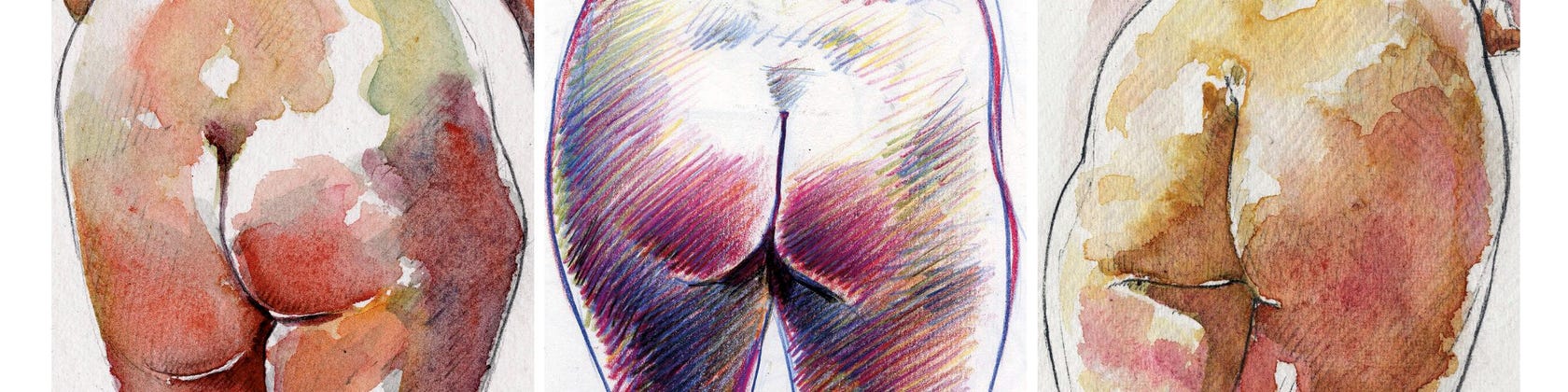
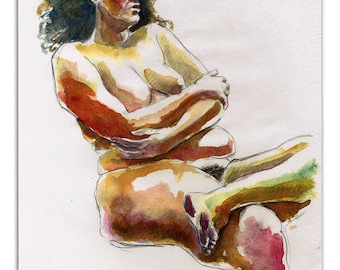
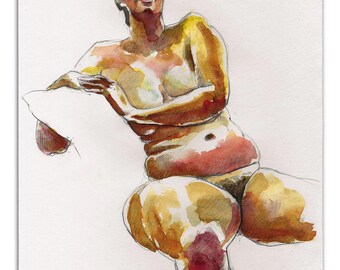
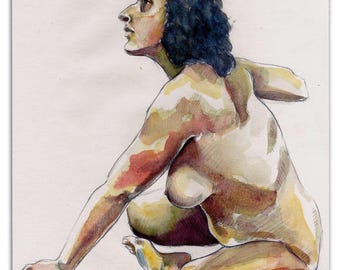
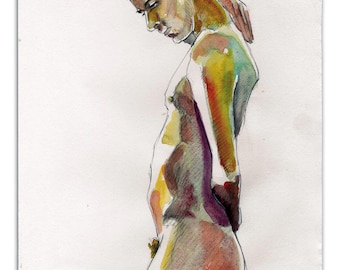
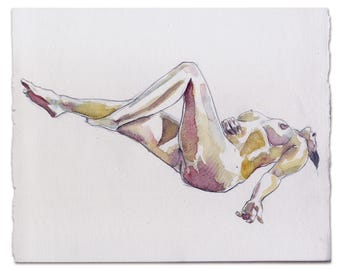
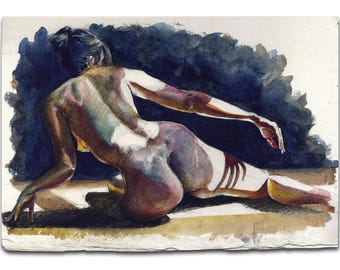
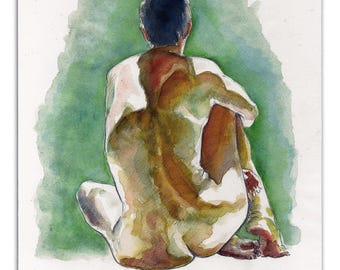
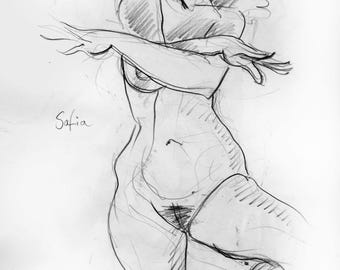
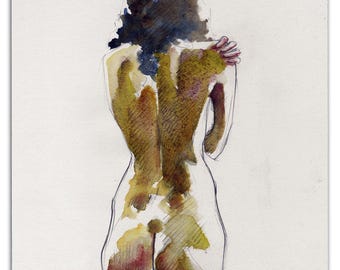
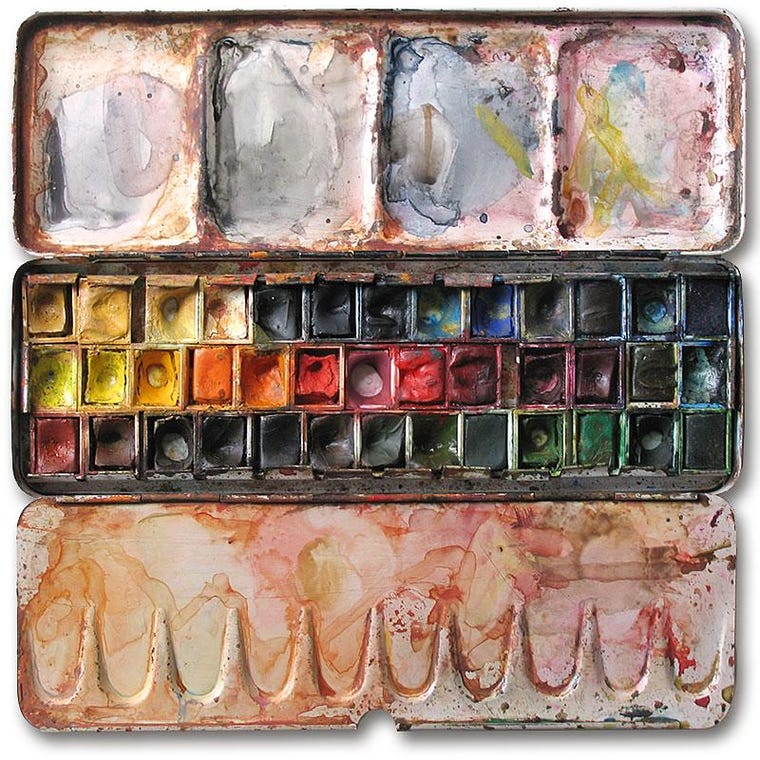
A word about the length of poses. The Thursday group I attended for so long had a set order of pose times — two five minute poses to warm up, followed by three 30 minute poses. I became used to this regime and tailored my style to suit, the short poses done vigorously in 8B water soluble graphite, blended with plain water, and the longer, tighter drawings in 3B water soluble pencil washed over with watercolours. When I started going to the Elysium sessions they offered 10 minute poses followed by 20 minute ones. Initially this threw me and I struggled to adjust my drawing style. It then occurred to me that I had time to introduce colour to the short poses. It was a revelation and I immediately began to loosen up my drawing and painting to fit the time available. This resulted in far more lively drawings, although the hit rate of successful ones was lower.
By now I was drawing twice a week for two to three hours and developing a style I was happy with that was adaptable to the length of pose. Then came the pandemic and, like much else, the classes were closed down.
Lockdown Diversity
With no classes taking place, I went cold turkey for a week or so. My graphic design work was waning in the downturn and, although I was getting some new stuff in, I found myself with plenty of time on my hands. Now I am not very good at being idle, I get bored quickly and can feel the urge to be creative building up in me. I started hearing about the ways in which people were keeping in touch during lockdown, and downloaded Zoom to see what the fuss was about. It was an eye-opener. At first I persuaded my writing tutor that she could run her classes with this new software and it worked well, everyone quickly assimilated. During one of these classes it dawned on me that I was getting an unusual perspective of each speaker in turn, and I wondered what it would be like to draw someone’s (conventional) portrait via Zoom. So I asked for volunteers on Facebook and found it went extremely well, making three oil portraits in quick succession. This led me to develop a project to paint 19 portraits (Co-Vid 19) over the twelve weeks of lockdown.
While this was going on I still had time to do more, so I started looking at the online life drawing sessions that were springing up all over the place. These were sometimes run by groups that had previously run in-person classes, by enterprising individuals, or even by the models themselves, and could be based absolutely anywhere on the globe within reasonable timezone restrictions. The arrangements threw up some extraordinary combinations — a group organised in Scotland with the model in Mexico or a group in the Netherlands with the model in India for instance. I drew models in Australia, the USA, India, Colombia and Taiwan — all in a couple of weeks. I got chatting with other artists across the globe and found once again that many were like-minded people regardless of nationality. It was inspiring and I increased my drawing time to three to four three-hour sessions a week and filled sketchbook after sketchbook.
My style adapted again, as drawing from a flat screen a metre in front of you is totally different to being in a live class. But I quickly found that some things were actually better on Zoom. I didn’t have to go anywhere or carry my stuff with me, I could draw anytime that suited, and some of the camera angles and lens distortions that the models were exploiting made for some very interesting material. Some models became favourites — a girl posing from her flat every Monday morning in Amsterdam, an Italian actress living in Barcelona, an Australian woman whose sessions were at 9.00 am GMT where the other artists local to her were having an evening glass of wine while I had my breakfast coffee, and the wonderful, imaginative Olja, a Polish actor and dancer living in Belgium. Olja raised the bar, presenting challenging poses from whacky angles, often inspired by artists I’d never heard of whom she’d researched for poses (Dennis Sarahzin, Ferdinand Hodler, Malcolm Liepke).
I began experimenting with pastels and coloured pencils for the first time in years and fell in love with the process again. I still get the odd phase in which I struggle, sometimes due to the model, the length of poses or a poor quality picture, but mostly because I am not up to it all the time. It’s not a tap you can turn on and off, but the more you draw, the better you get and the fewer duff drawings you produce. Most of the time.
Naturism
After all these years and thousands of drawings I had hardly ever sold any of my work — not that I had tried very hard. There was the commission in Manchester, I had sold one through a local gallery, a couple to a model and a handful via Instagram, but I could not see that there was much of a market for nudes. After a visit to a naturist beach in Greece in 2019 it dawned on me that I may have found a potential market. The idea stagnated until lockdown came along and I found the time to do something with it. I designed an advert to place in the British Naturism magazine in the hope that I could get some interest from its members in commissioning a nude portrait of themselves or partner. After three weeks I got an enquiry from a gentleman who, coincidentally, lived just down the road from me! This being during lockdown meant we still had to use Zoom however. The session went well though and I sold him a set of portraits. But then, nothing.
A couple of weeks later I got a phone call from the magazine to check if the advert had worked. When I said no, they suggested that I join as a member instead so that I could promote my work through the forums on their website. It worked and I soon had five or six commissions under my belt (yes, I was still wearing one — I needed somewhere to keep my pencils). I’ve since done commissions for naturists across the UK, in Portugal, Spain and in the US — that’s the beauty of doing it on Zoom, it doesn’t matter where the sitter is. They are also at ease, perhaps because they are used to being naked, but also because they are in their home environment.
Then, earlier this year I got an enquiry to draw a couple on their fiftieth anniversary visit to a naturist resort in Wales. This was a bit different as I would be drawing them face to face. What made it much different was that I would have to be naked too! I didn’t know how to take this, but they offered a good sum for the work and the weather looked ok so, after consulting my ever tolerant wife, I said yes. I had no qualms about stripping off, I’d been to naturist beaches several times abroad, but that was always in hot sunny weather and, nice as west Wales is, it’s not often that warm. It was OK though, the sitters were very welcoming and soon put me at ease, taking me around the site for a look around, and tried to canvass some more work for me while I was there. So I sat there naked, drawing through a cool, light mist that everyone was doing their best to ignore. It was a challenge, not because I was naked, you soon get used to that, but it was the first time I’d drawn anyone that wasn’t on screen for a good year. They were happy with the work though and kindly made me lunch before I set off again.
What next?
So, apart from a bit of money, what do I get from drawing? I often ask myself. I find peace in it, is the short answer. I switch my brain off when I draw and let instinct and practice take over. Drawing in any form is a great discipline for a visual creative (I am a graphic designer by trade). It encompasses line, form, colour, composition, technique, and develops concentration and judgement. The time limitation imposed by the stamina of the model demands a need to work quickly, with a constant, on the fly, reassessing of line, value and comparative proportion. You gain an appreciation that small details can be the life force of a drawing, a flick here, a gestural mark there, even a drip or splatter can enliven a piece of work.
I recently started making timelapse movies as I worked, and the results were very interesting. I hadn’t realised that I approach each drawing so differently, sometimes sketching out the proportions lightly first, sometimes starting at the head, other times at the feet. It is an intellectual process of course but after all these years of experience I’m not actively thinking it through, I just respond to what I see. I am happy that it shows that even after all this time I am still learning from the process. It has been constantly fascinating to me for over forty years and I can’t see that ending any time soon.