







De la ligne 10 à l'artisanat : une vie construite par itérations
From Line 10 to Craft: A Life Built in Iterations
Le terrain de jeu binaire
Tout a commencé avec la lueur d'un lourd écran cathodique et le cliquetis rythmé d'un clavier. Pendant que les autres enfants excellaient dans le sport ou la musique, j'apprenais la syntaxe d'un nouveau langage. Pour moi, le BASIC n'était pas qu'un simple code ; c'était mon premier super-pouvoir. Il m'a appris que le monde était quelque chose que l'on pouvait déconstruire, comprendre et, finalement, réécrire. Ces lignes de code numérotées étaient le plan qui allait façonner ma vision du monde.
Le résolveur de problèmes
Cette base logique m'a naturellement conduit vers le monde du support technique. Si la programmation consistait à créer des univers, le support technique, lui, consistait à les préserver. Je suis devenu celui ou celle qui pouvait déceler les dysfonctionnements techniques, transformant des pannes complexes en solutions. C'est là que j'ai compris que la technologie ne vaut que par la capacité de l'utilisateur à s'en servir – une leçon qui me marquera à jamais.
Le passage au visuel
Finalement, j'ai voulu voir l'impact de mon travail instantanément. Je me suis donc tourné vers le graphisme, troquant les fenêtres de terminal contre des calques de toile. Mais même en tant que designer, je suis resté un geek dans l'âme. Je ne voulais pas seulement que les choses soient « cool » ; je voulais qu'elles aient une logique interne, une symétrie et une fonction. Quand la 2D ne me suffisait plus, je suis passé à la 3D. La modélisation 3D a été comme un retour aux sources. C'était l'alliance parfaite de mes deux vies précédentes : la précision technique d'un programmeur et le sens esthétique d'un designer. Je ne dessinais plus seulement ; je sculptais la réalité numérique.
Chapitre actuel : Concevoir pour ma tribu aujourd’hui,
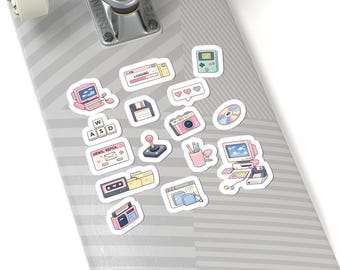
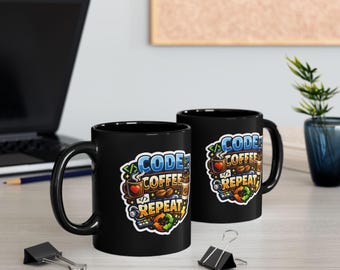
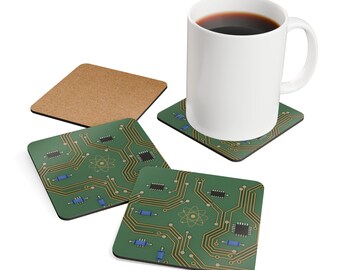
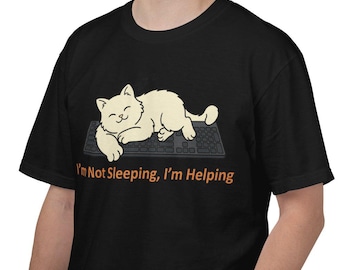
J'ai quitté l'écran pour le monde physique. Ma passion m'a mené au design de produits, avec une approche très spécifique. Je ne conçois pas pour l'utilisateur « moyen », mais pour nous : ceux qui apprécient le clic d'un interrupteur mécanique, l'ergonomie d'un outil bien pensé et la beauté d'un produit qui respecte l'intelligence de son utilisateur. Si mon parcours technique m'a finalement conduit à la puissance et à la structure du C#, l'objectif reste le même : créer des systèmes efficaces et esthétiques, qu'ils soient compilés ou installés sur le bureau d'un utilisateur. Je crée pour ceux qui partagent ma passion : les passionnés, les créateurs et les éternels apprenants qui m'accompagnent depuis mes débuts.
The Binary Playground
It started with the glow of a heavy CRT monitor and the rhythmic clacking of a keyboard. While other kids were mastering sports or instruments, I was busy learning the syntax of a new language. For me, BASIC wasn't just code; it was my first superpower. It taught me that the world was something you could deconstruct, understand, and eventually, rewrite. Those numbered lines of code were the blueprint for how I would eventually see everything else in life.
The Problem Solver
That logical foundation led me naturally into the trenches of tech support. If coding was about building worlds, tech support was about saving them. I became the person who could see the "ghost in the machine," translating complex technical failures into solutions. It was here I realized that technology is only as good as the person’s ability to use it—a lesson that would stay with me forever.
The Shift to the Visual
Eventually, I wanted to see the impact of my work instantly. I transitioned into Graphic Design, trading terminal windows for canvas layers. But even as a designer, I remained a nerd at heart. I didn’t just want things to look "cool"; I wanted them to have internal logic, symmetry, and purpose. When 2D wasn't enough, I stepped into the third dimension. 3D Modeling felt like coming home. It was the perfect marriage of my past lives: the technical precision of a programmer and the aesthetic eye of a designer. I wasn't just drawing anymore; I was sculpting digital reality.
The Current Chapter: Designing for My Tribe Today,
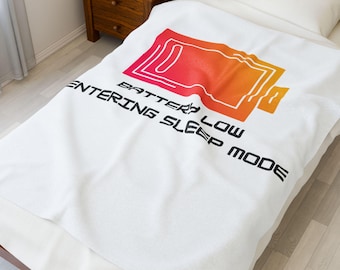
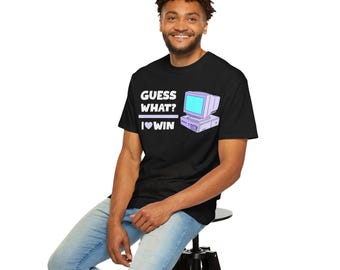
I’ve stepped out of the screen and into the physical world. My passion has culminated in Product Design, but with a very specific focus. I’m not designing for the "average" user. I’m designing for us—the ones who appreciate the click of a mechanical switch, the ergonomics of a well-thought-out tool, and the beauty of a product that respects its user's intelligence. While my technical journey eventually led me to the power and structure of C#, the goal remains the same: creating efficient, beautiful systems—whether they live in a compiler or on a person's desk. I’m building things for the like-minded: the nerds, the makers, and the lifelong learners who have been right there with me since line 10.