





Epida est belle
Epida is Beautiful
D’aussi loin que je me souvienne, je couds, brode et matelasse. Enfant, je consultais tous les livres sur ces choses dans ma bibliothèque locale.
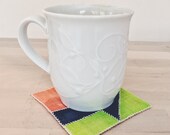
En 2009, j’ai eu l’occasion d’emmener ma jeune famille vivre en Corée du Sud. Là, j’ai pu apprendre un nouvel art patchwork (pour moi) - pojagi. Ces techniques de couture existent depuis des milliers d’années et comprennent une méthode spéciale pour le patchwork réversible.
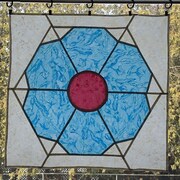
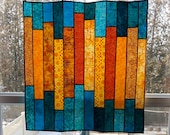
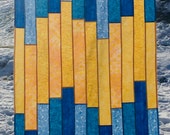
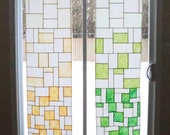
Après mon retour au Canada, j’ai développé une méthode pour coudre un patchwork réversible à la machine. Je l’appelle pojagi moderne. Le résultat est des tentures de fenêtre en tissu qui brillent comme des vitraux.
J’ai inventé le nom « Epida » pour mon studio parce qu’il ressemble au mot coréen pour beau. C’est un hommage à la belle forme d’art coréenne et aux milliers de femmes anonymes qui l’ont développée au cours des siècles.
Epida Studio
Faire. Beau.
For as long as I can remember, I have been sewing, embroidering and quilting. As a child, I checked out every book about those things from my local library.
In 2009, I had the opportunity to take my young family to live in South Korea. There I was able to learn a new (to me) patchwork art - pojagi. These stitching techniques have been around for thousands of years and include a special method for reversible patchwork.
After returning to Canada, I developed a method to stitch reversible patchwork by machine. I call it modern pojagi. The result is fabric window hangings that glow like stained glass.
I made up the name "Epida" for my studio because it sounds similar to the Korean word for beautiful. It is a tribute to the beautiful Korean art form and the thousands of unnamed women who developed it over the centuries.
Epida Studio
Make. Beautiful.
