

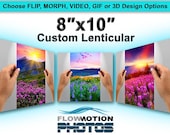



Bienvenido a mi estudio de diseño lenticular en línea. Soy Eric, aquí para ayudar a guiar tus conceptos a la realidad. Disfruto trabajando con mis clientes para crear sus propias imágenes lenticulares increíbles personales. Cada proyecto ofrece oportunidades únicas para un resultado hermoso.
Al desarrollar su diseño, primero considere el propósito. Esto puede ser para honrar cualquier evento desde el nacimiento hasta la muerte, incluidos cumpleaños, graduaciones, bodas, aniversarios, celebración de amistades o simplemente porque sí.
A continuación, echa un vistazo a nuestra línea de productos, pensando en cómo podrías mostrar tu diseño. Puede hacer tarjetas de visita, llaveros, pasadores de solapa, colgantes, colgadores de espejos retrovisores, imanes de refrigerador, impresiones de billetera a 8 "x10" y carteles de 11 "x14" a 19 "x27". Los tamaños personalizados no son un problema.
A continuación, considere el efecto que desea producir. Esto definirá cuántas imágenes de origen necesitará. Una sola imagen es todo lo que se requiere para un proyecto 3D. Dos fotos es ideal para secuencias de tipo 'antes y después'. Además, puede optar por transformar una imagen a otra. Transformar a la misma persona en diferentes períodos de su vida produce el efecto de envejecer o volverse más joven, dependiendo de la forma en que se mueva más allá de la imagen final. Transformar dos fotos de la misma sesión de fotos reanima el movimiento entre las poses. Con dos o tres fotos puedes crear una transición FLIP o de disolución natural. Esta es nuestra opción de diseño más popular. Cada imagen permanece distinta a medida que recorren la secuencia.
Más allá de tres imágenes, cada fotograma tiene que ser de naturaleza similar, como los fotogramas de un clip de película. Podemos codificar hasta 40 fotogramas individuales, lo cual es necesario para animaciones 3D más complejas. Se pueden generar efectos suaves utilizando solo 20 fotogramas. Si estás pensando en diseñar una animación, ten en cuenta que más distancia equivale a un mayor desenfoque. A veces es mejor dejar que algunos elementos de la animación simplemente se volteen / disuelvan en una nueva posición que hacer que se mueva fotograma a fotograma en su lugar. Por ejemplo, las ruedas que giran en una bicicleta son efectivas, pero hacer que la bicicleta en sí se mueva a través del cuadro sería menos exitoso.
Al elegir las fotos reales, tenga en cuenta que grandes áreas de colores sólidos (especialmente blanco y negro) permitirán que el siguiente fotograma aparezca antes en esas zonas, y el marco anterior se retrasará más. Esto se llama el efecto 'ghosting', que a veces es agradable, a veces no. Generalmente queremos textura sobre textura y que ambos tengan el mismo rango tonal. Si su proyecto requiere orientación vertical, lo que la mayoría hace, tenga en cuenta la orientación de las imágenes que proporciona. A veces las personas envían dos tomas de cabeza (retrato) y luego una imagen grupal que está orientada a lo ancho (paisaje), y tenemos que perder personas en los bordes o agregar datos a la parte superior e inferior. Cada imagen tiene que ajustarse a la dimensión del proyecto como un solo marco. Solo tenga esto en cuenta al seleccionar entre sus favoritos. Por favor, envíe las imágenes originales inalteradas y permítame recortarlas en su lugar en este extremo. Parte de mi servicio es hacer que cada fotograma pase muy bien al siguiente, por lo que el estiramiento adicional y el margen de maniobra permiten este paso. Trato de alinear bordes y elementos dentro de las composiciones para que "jueguen bien" entre sí en la transición.
No dude en ponerse en contacto conmigo con cualquier pregunta. Espero poder ayudarte a crear un impresionante diseño lenticular.
Welcome to my online lenticular design studio. I'm Eric, here to help guide your concepts to reality. I enjoy working with my clients to create their own personal amazing lenticular images. Each project provides unique opportunities for a beautiful outcome.
In developing your design, first consider the purpose. This can be to honor any event from birth to death, including birthdays, graduations, weddings, anniversaries, celebrating friendship, or just because.
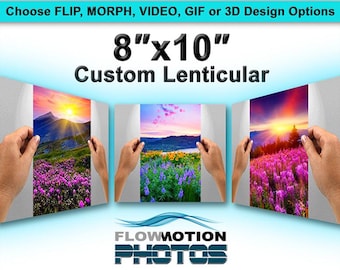
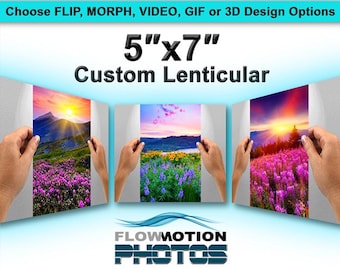
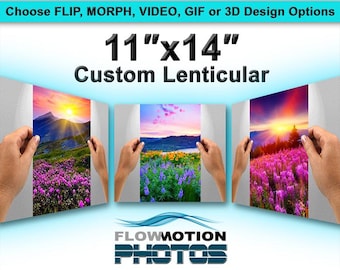
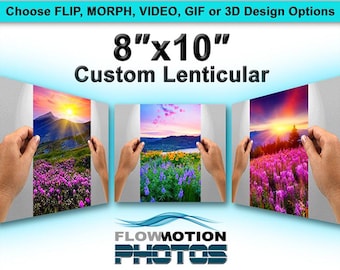
Next, check out our product line, thinking how you might showcase your design. You can make business cards, keychains, lapel pins, pendants, rearview mirror danglers, refrigerator magnets, prints from wallet to 8"x10", and posters from 11"x14" to 19"x27". Custom sizes are not a problem.
Next consider the effect you wish to produce. This will define how many source images you will need. A single image is all that's required for a 3D project. Two photos is great for 'before and after' type sequences. Also, you could choose to MORPH one image to another. Morphing the same person at different periods of their life produces the effect of aging or getting younger, depending on which way you move past the final image. Morphing two photos from the same photo shoot reanimates the movement between the poses. With two or three photos you can create a FLIP or natural dissolve transition. This is our most popular design option. Each image remains distinct as they cycle through the sequence.
Beyond three images, each frame has to be similar in nature, like frames from a movie clip. We can encode up to 40 individual frames, which is necessary for more complex 3D animations. Smooth effects can be generated using only 20 frames. If you are thinking about designing an animation, keep in mind that more distance equals greater blurring. Sometimes it's better to let some elements of the animation simply flip/dissolve into new position than to have it move frame by frame into place. For instance, wheels spinning on a bicycle is effective, but to have the bicycle itself move across the frame would be less successful.
When choosing the actual photos, keep in mind that large areas of solid colors (especially black and white) will allow the next frame to appear sooner in those zones, and the previous frame will delay longer. This is called the 'ghosting' effect, which is sometimes nice, sometimes not. Generally we want texture over texture and both to have the same tonal range. If your project requires portrait orientation, which most do, then note the orientation of the images you provide. Sometimes people will send two head shots (portrait) and then a group image that is oriented wide (landscape), and we have to either lose people on the edges or add data to the top and bottom. Each image has to fit the dimension of the project as a single frame. Just keep this in mind when selecting from your favorites. Please send the original unaltered images and allow me to crop them into place on this end. Part of my service is to make each frame transition nicely into the next, and so the extra stretch and wiggle room allows this step. I try and align edges and elements within the compositions so that they will 'play nice' with each other in the transition.
Feel free to contact me with any questions. I look forward to helping you create a stunning lenticular design.