


Rare find
Price:$575.00
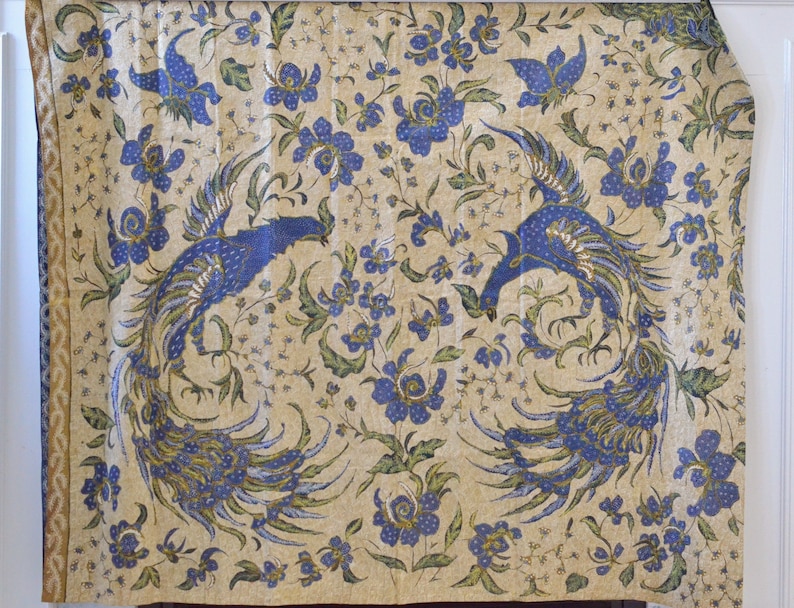
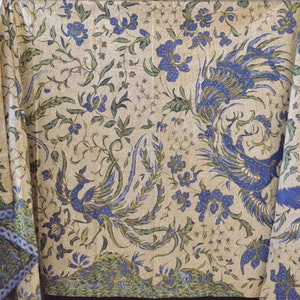
1960 Tjoa Siang Gwan Dancing Phoenix Orchid Indonesia Vintage Batik Tulis Hand Drawn Peranakan Tiga Negeri Antique Oriental Tapestry Textile
Returns accepted
You can only make an offer when buying a single item
Highlights
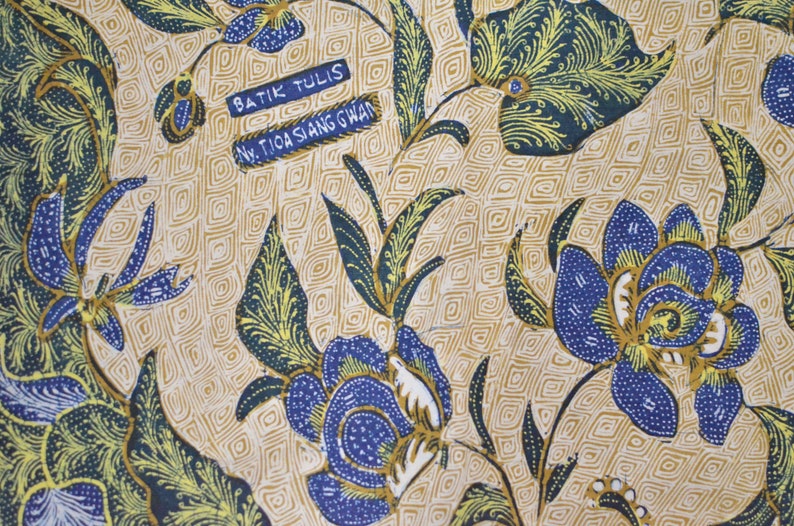
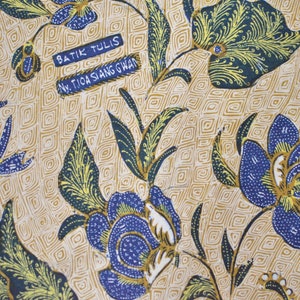
🌸🌸Vintage Tjoa Siang Gwan’s 100% hand drawn batik with legible name signature and no questionable misspelling.
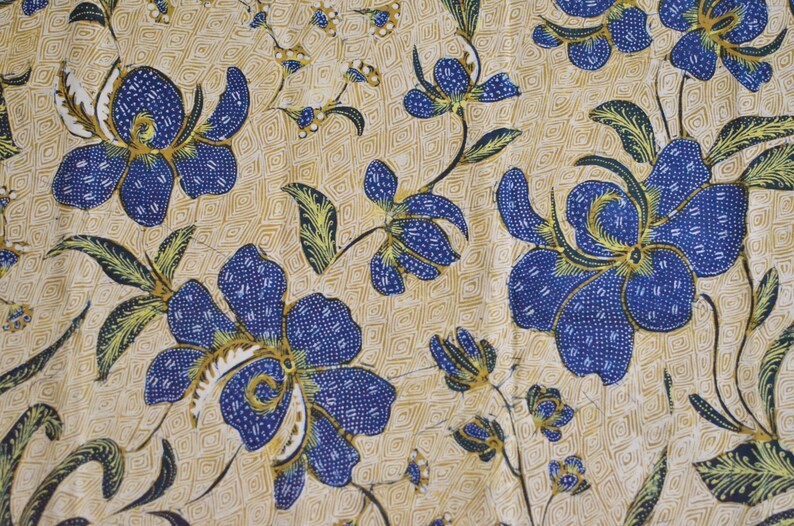
🌿 Every single detail, dot and line on this fabric was hand drawn on a finely woven 100% cotton fabric.
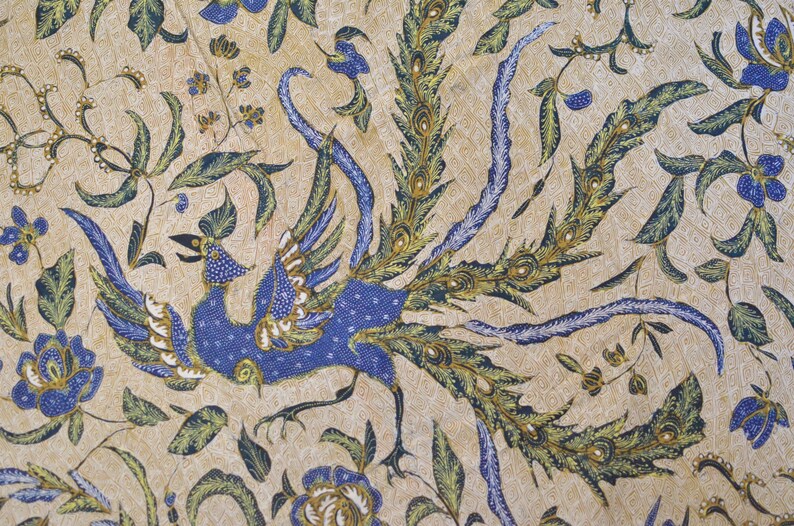
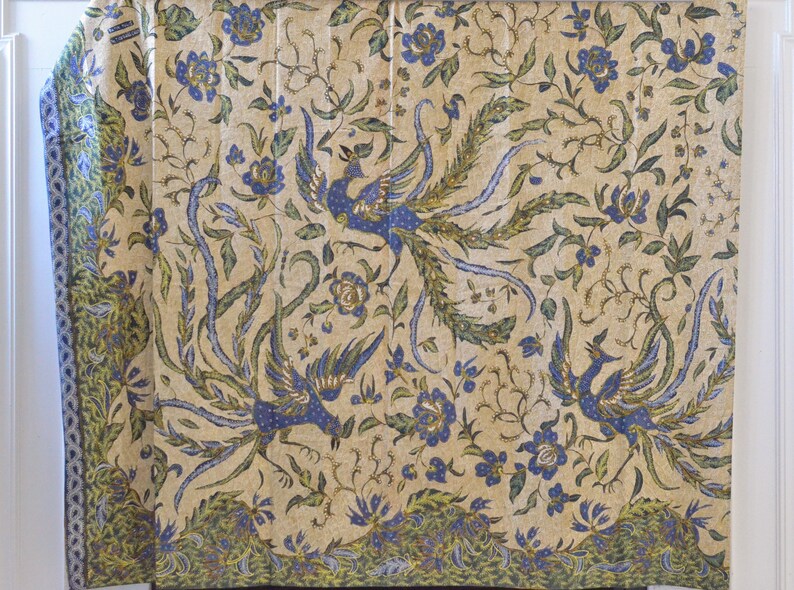
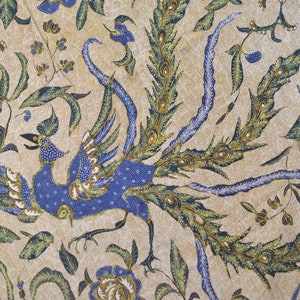
🌿Between the year of 1960-1980, Tjoa Siang Swie and Tjoa Siang Gwan created a limited edition Batik design called “Galaran Dancing Peacock/Phoenix”. Very few of these actually have their name signature added to the fabric as a result of political turmoil in Indonesia in the year of 1965 which made many “peranakan” Chinese ( Chinese descent) family no longer feel safe to add their unmistakably Chinese name to their batik creation. Any of these batiks that have the name signatures such as this one, are only the ones made in the early 60’s, prior to September 1965, making this a very rare and sought after piece indeed.
🌿 In pristine used condition with bright bold colors. No flaws, no rip, hole or tear. It is quite rare to find this in this kind of condition, and the design and color is rare as well.
Tiga negeri batik price can vary quite a bit, depending on the rarity of the motif, condition and how fine the details are.
This one is even more special as it has a different color combination than most other Tjoa dancing peacock batiks. The Tjoa dancing peacock batiks are more often found in combinations of purple , brown, blue and green.
I strive to offer special rare quality vintage batik with the best condition only that is distinctive from the ones offered by other sellers.
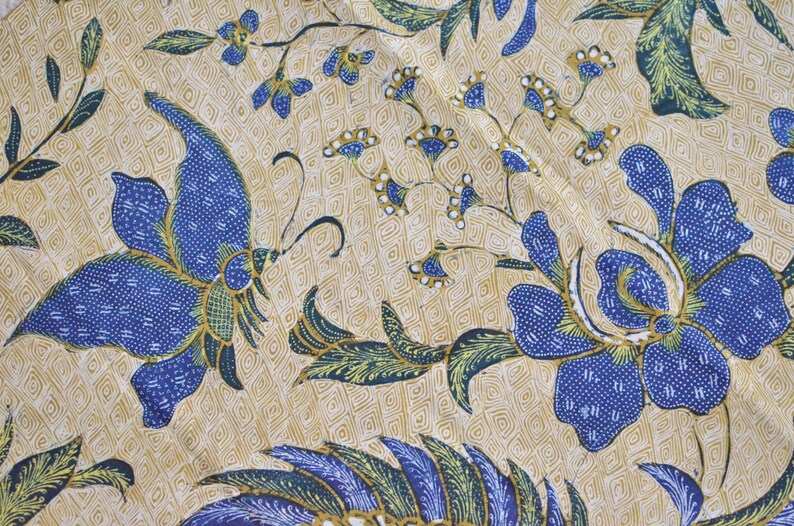
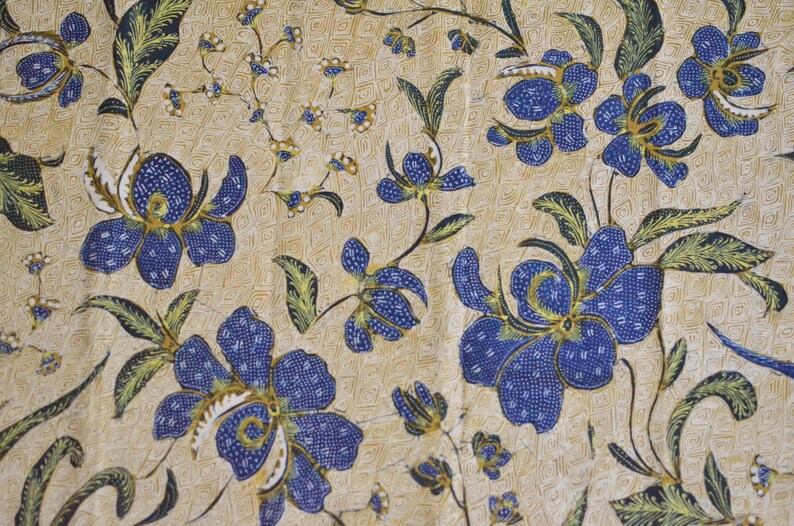
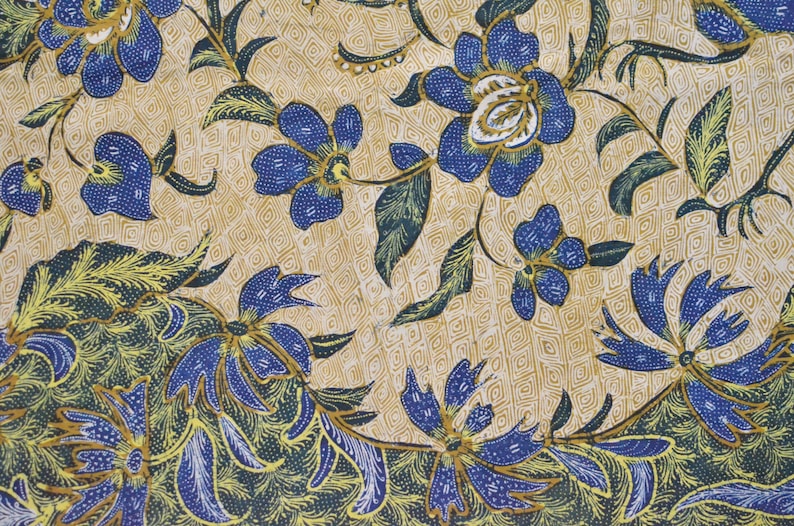
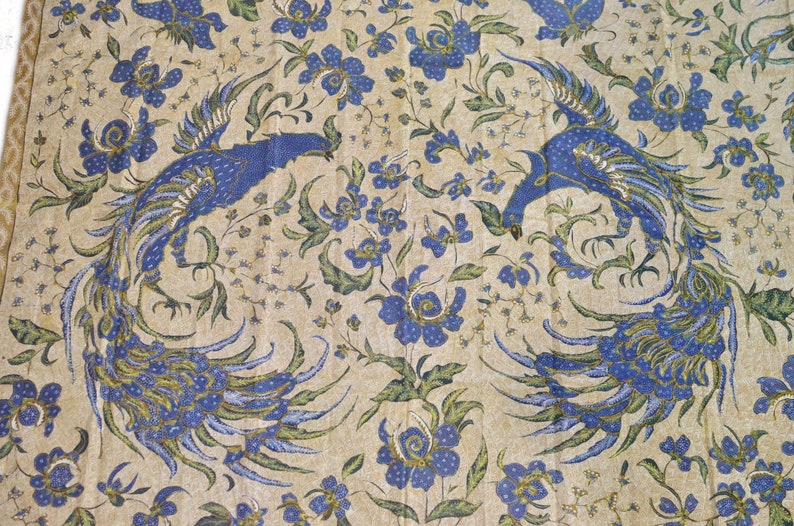
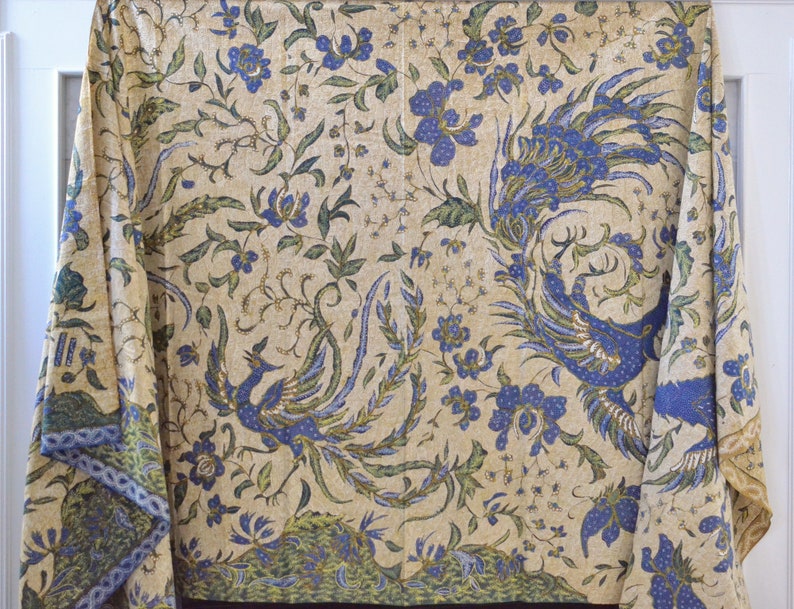
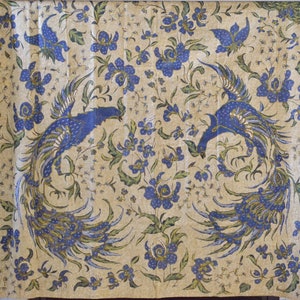
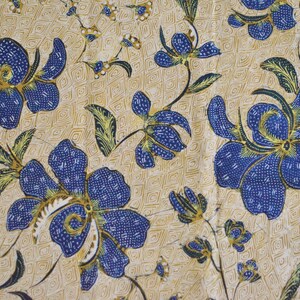
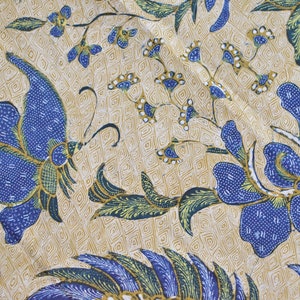
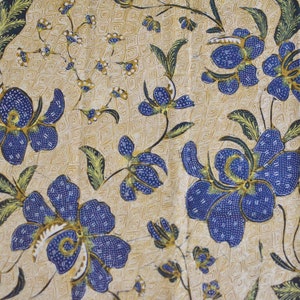
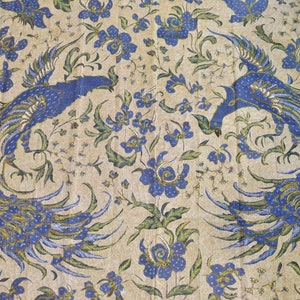
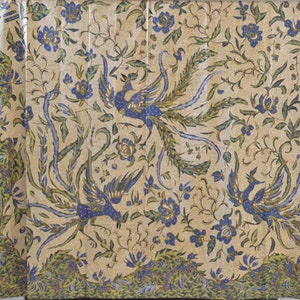
🌿 Made in “Pagi Sore” style or Morning Evening style where it is as though an imaginary line had been drawn across the textile and each side of the slanting line has a totally different motif drawn on it. The result is that one batik has two styles which makes it as good as having two batiks in one. One side of this batik shows a pair of Phoenixes surrounded by arrangement of Orchids and butterflies while the other half depicts a different Phoenixes and “ Cempaka Mulya” or Magnolia Champaca flowers on the “Sushimoyo Tumpal” wide border that show Japanese influence.
🌿 Authentic Three Kingdoms (Tiga Negeri) batik, which creation process involved dyeing that had to be done in 3 separate regions in Indonesia.
You can find informative article from Indonesian National Geographic magazine explaining one aspect of the red dyeing process of Tiga Negeri batik that is done in Lasem here (The making of Blanko Merah): https://nationalgeographic.grid.id/amp/131686176/blanko-merah-yang-menautkan-kisah-batik-tiga-negeri-di-pulau-jawa
More information and history of Tiga Negeri Batik are explained farther down below.
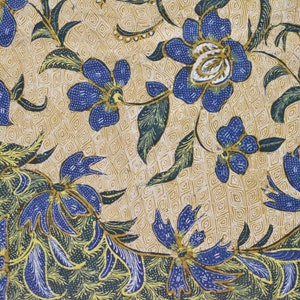
Just like any other batik tulis, every single line, dot and details are hand drawn. Even the seemingly sand colored background consists of hand drawn brown spiral design, called “ ukelan” or hooks.
🌿“Batik tulis” in short is a drawing/painting/ a form of writing using hot melted wax on cotton cloth using a tool called canting, which then dyed by being repeatedly submerged in dye solution. The wax that was previously applied works as a barrier to keep dye from getting absorbed into certain area of the cloth (wax resist dyeing).
Generally it takes more than one year to finish the creation process of a Three Kingdoms batik such as this one.
🌿 The Tjoa family are “peranakan Cina “ family ( Chinese who was born and live in Indonesia) who produced Tiga Negeri batiks for several generations – from 1910 until 2014. The Tjoa family's batik business was pioneered by Tjoa Giok Tjiam around 1910 . Tjoa’s workshop was the one that gave this particular style of batik the name Batik Tiga Negeri. Tjoa Giok Tjiam passed down her batik business and expertise to the next 2 generations of Tjoa family. Tjoa Siang Gwan is the third generation of of the batik artisan Tjoa family.
Tiga Negeri batiks produced by the Tjoa family usually bear the Tjoa name which usually are written close to the corner of the fabric, together with the printed “batik tulis” writing. This was a common practice done by many batik artisans back then to protect their copyright, and as a mean for advertisement.
🌿 Searching for Tjoa or tiga negri batik with specific signature or style to complete your collection? Feel free to contact me. We have an extensive collection of them and vintage batik as a whole. Being a small business means that we don’t always have the resources to list everything we have on Etsy. But we will be happy to help you find something special to be added to your collection.
🌺🌺🌺SHIPPING INFORMATION🌺🌺🌺
🌿Ready to ship within 3 business days.
🌿I try to describe the item as accurately as possible with the best of my availability, but color variations may occur due to screen and setting variations.
Due to its hand drawn nature, Batik Tulis will never have the “perfection” that is expected from a printed fabric. Please be aware of this before purchasing.
🌿If you have any questions please email me and I would be happy to help you with more information about this fabric.
🌿Any custom fees and tax are the responsibility of the buyer. When you purchase this item you are agreeing to pay any custom fee, tax and any fees associated with it, including but not limited to return shipping to the seller if buyer refuse to pay any custom fees or taxes. Return is not allowed and refund will not be issued in the case where buyer refuse to pay any custom fees, taxes or any fee associated with the purchase of this item.
🔹🔹🔹🔹🔹🔹🔹🔹🔹🔹🔹🔹🔹🔹🔹🔹🔹🔹🔹🔹
But to only give you the description of the physical characteristics of this batik would be such a disservice to you as a buyer, and will not do justice to this rare one of a kind antique.
Therefore, do come to your favorite reading spot, take your favorite drink and snack with you, and lets immerse ourselves in the history and story of this particular batik.
🌺🌺Feel free to skip if you are a seasoned batik collector, every detail in regard to the specific batik listed is already covered above. 🌺🌺🌺
🦋🦋🦋🦋 HISTORY OF THREE KINGDOMS BATIK 🦋🦋🦋
“Tiga Negeri” batiks, literally translated as Three Kingdom batiks, are very special in and of itself, because of journey it takes in their dyeing process. The three kingdoms refers to the three different places where a single batik cloth was dyed. Batik Tiga Negeri is also very special in a way that it seamlessly combines both the symbolism and details of “batik pedalaman”, or inland batiks ( also known as Javanese court batik) and colors and cultural influence of “batik pesisir” or coastal batik.
The special characteristic of Three Kingdom batik is that the cloth was sent to three different parts of Java, namely Lasem, Solo and Pekalongan during its creation process to be dyed red, brown and blue respectively with natural dyes. Batik making process is such a complex process that be affected by so many factors. Often time, the formulation of the wax and dyes that are being used are so closely guarded, that sometimes it is impossible for other batik artisans to copy the color and complexity of other batik artisan’s design. In addition to that, due to differences in the acidity and mineral content of the water sources, each area is known to produce a signature color of a superior quality as compared to other batik towns. Solo, Lasem and Pekalongan are best known for their sogan (brown), abang gethih pithik (deep red that resembles chicken’s blood) and Indigo blue colour, respectively.
A tiga negeri batik cloth typically started its journey in Lasem, a coastal city in North Coast Java to be dyed deep red color, which is produced from the roots of the Noni plant and Castor oil. No one could match the Laseman's distinctive red color. The unique red color of Lasem is believed to be due to the unique mineral content of the groundwater. This deep red color is deep rooted in Chinese tradition. Back in the 13th century, the city of Lasem was known as Little China because it was the first in area in Java that was visited by Admiral Zheng He, in the 13th century AD. One of Zheng He’s man named Bi Nang Un chose to live and settle in Lasem City, resulting in an acculturation process between the two ethnicities namely Javanese and Chinese.
Bi Nang Un’s wife named Na Li Ni was the one who introduced the batik making process in Lasem.
Following the completion of dyeing process in Lasem, a Tiga Negeri batik would then continue its journey to Pekalongan, another coastal city in North Java to be dyed Indigo blue, produced from Indigofera plant. This Indigo blue color is the result of European, namely Dutch influence. The cloth would end its journey in Solo, a city in Central Java to be dyed Sogan brown, which is produced from “Soga Tinggi “ tree bark.
In later development of Tiga Negeri batiks, the colors green and purple were added as well. The design is usually “buketan” or bouquet of flowers design of Pekalongan which shows European influence and the flowers were usually dyed red and blue. The batiks were nearly always in the “pagi sore” or morning and afternoon style. In this style it is as though an imaginary line had been drawn across the textile and each side of the slanting line has a totally different motif drawn on it. The result is that one batik has two styles which makes it as good as having two batiks in one. The background was originally always the “ukelan” or hook design in a brown soga colour. This is considered an auspicious motif to wear when a single person wants to “hook” a spouse. In Solo, batiks with such characteristics were known as batik gendologiri. The Three Counties Batik is trully the perfect reflection of amalgamation of batik traditions, styles and motifs of Central Java with those of the North Coast of Java. It tells such a beautiful story of acculturation and harmonious relationships between many ethnicities that lived side by side.
🌸🌸🌸HISTORY AND BATIK MAKING PROCESS🌸🌸🌸
The word “Batik” was derived from Javanese word “Amba”, which means wide, and “ Nitik”, which means dot. The literal translation of it is therefore “writing or to write on a wide fabric”.
To appreciate batik tulis fully, one must understand the intricate process, skills and and the time involved in the process of creating batik tulis.
Batik is made in a process called wax resist dyeing with a tool called “Canting”. Canting is a tool that is made of Copper with bamboo handle and works much like fountain pen, albeit dispensing hot liquid wax instead of ink. The main part of Canting called “Nyamplungan”, which works as the reservoir for the hot melted wax. The “Cucuk” part of the Canting that is shaped like a thin bent pipe, channels the wax from the reservoir onto the fabric.
The whole batik making process involves multiple steps, and depending on the intricacy of the motif, it may take batik artisans several months or even years to create a batik tulis. Batik artisans meticulously draw every single dot, line, curve on that batik by hand, one by one. Not surprisingly, because of the intricacy and the time needed to create batik tulis, some of them can be priced in the range of tens of thousands of dollars. Batik was also lauded by the UNESCO as a Masterpiece of Oral and Intangible Heritage of Humanity in 2009.
One piece of batik is a hard work from multiple people with multiple roles.
The process begins with these artisans drawing the batik pattern onto the white fabric. The batik artisans then apply hot wax mixture onto the fabric to create the outline of the motif of the batik, onto both sides of the fabric. The wax on the fabric will keep dye from penetrating the fabric, hence this area of fabric that is covered with wax, will resist subsequent dyeing process. The wax formulation can significantly affects the quality of the batik, hence it often time is a closely guarded family secret. Everyone knows the list of ingredients that goes into the wax mixture, but only the best artisans knows the perfect ratios to create the best batiks that are uniquely theirs. The same can be said in regard to the dyes. Long time ago, batik was created with only natural dyes. But with the advance of technology, man made dyes are also sometimes used to create more variety of colors. Even when factory made dyes are used, the resulting colors will be affected by so many factors such as ( but not limited to) humidity and temperature. It is even more challenging to create the perfect shade of colors when natural dyes are used. Only the most experienced artisans know how to produce the exact colors that they are aiming for on their original design.
Batiks are dyed by immersing them in dye solution. After the first dyeing process, wax will be removed from the fabric and wax will be reapplied again in the areas that need to be resistant to the dye used in the next dyeing process. Depending on how many different colors used for that fabric, the batik fabric could be dyed multiple times, hence the same areas of a batik fabric most likely will be waxed several times as well throughout the course of batik making process.
Because of the intricacy of the batik making process, a piece of batik tulis is a one of a kind piece of art that is almost impossible to be reproduced, even when the same batik artisan intends to create an exact copy of a batik that she or he has created before.
Batik tulis is therefore highly prized and sought after. With the increasing demand and the advance of technology, another different process of batik making was introduced. “Batik Cap” (literally means stamp batik), is produces when the wax is instead applied using metal stamp/printing blocks, which can significantly reduce the time needed to finish the batik making process. With the advance of batik cap, “batik” is now can be produced in larger quantities within shorter period of time, resulting in batik becoming more affordable for more people.
For batik purist though, and etymologically speaking, “ batik cap” is no longer considered batik. Although there are some instances where both process of stamping and also drawing with canting are used to create a batik.
A more widely accepted view of the authenticity of batik considers something as a batik if wax is involved in the creation process. Therefore any batiks made with hand stamping (Batik Cap), and ones created with the combination of hand drawing and hand stamping are also considered authentic Batik.
Because of the lengthy process of batik making, sustainability and affordability have always been an issue. To solve this problems, some batik artisans invented batik screen printing, which is different than machine printing. Batik screen printing is an innovative way of creating a more affordable batik while retaining the human hand work elements in the equation, thus retaining some of its traditional elements of this ancient art. If you would like to know more about screen printed batik, please do check our other listings of screen printed batiks. We discuss in more detail the process that is taken to create screen printed batik in the description of those listings.
In short, screen printed batiks have the motif that looks like batik, but they are not batik in its truest sense. They are of course priced significantly lower than Batik Tulis and definitely is not one of a kind. But they are also beautiful and much more affordable, hence enable more people to enjoy the beauty of batik motif. But do make sure that you do not pay the premium price of a batik tulis for a screen printed batik.
Lastly, thank you very much for your interest for the authentic hand drawn batik, your support and for helping us preserve the batik making tradition.
Many sellers nowadays try to sell screen printed batik and while nothing is inherently wrong with selling printed batik, it is wrong for them to use vague description into trying to convince buyers to believe that they are selling hand drawn batik (Batik Tulis). They charge so much more for a significantly cheaper product, one that costs almost 1/10th of an authentic hand drawn batik, and cause a significant damage to sustainability of the authentic hand drawn batik artisans’ business and livelihood in the process. These sellers often use the term hand printed, hand painted to confuse buyers.
🦋🦋🦋SO HOW CAN WE DIFFERENTIATE AUTHENTIC BATIK FROM BATIK PRINTED FABRIC?🦋🦋🦋
🌿 The first clue is usually the color of the reverse side of the fabric. Authentic Batik will have bold colors and some motif on both front and reverse sides. Sometimes the intricate motif will be slightly muted on the reverse side of the fabric compared to the front side, but only ever so slightly. This sometimes also apply to Hand Stamp Batik as well. Some Batik Tulis (hand drawn batik) will have bold color and motif on both sides as a result of “ Nerusi” process done during the creation of hand drawn batik. “Nerusi” literally means “ to continue, to make it continue or to make it go through”. It is a process where wax was applied on the reverse side of the fabric, as a continuation of the wax application process on the front, to make sure that the wax go all the way through both sides of the fabric, hence resulting in bold color and motif on both sides.
🌿 New authentic batik also has a distinctive wax smell. With wax continuously applied and reapplied throughout the lengthy process of batik making, the smell of wax does usually stay with the fabric, but will subside after several washes. This of course doesn’t apply to used antique batik, since they would have lost their wax smell after being washed several time.
🌿 There will be slight deviations on the motif or “imperfections” because of its hand drawn nature. This probably is the main clue. You will be able to tell that the size of the lines are not consistent and identical because of the difference in pressures applied by human hands that applied the wax manually. You might also see some small smudge lines where the wax layer might have cracked during the making of the batik, or missing color because wax has accidentally dripped on some areas.
🌿 As a rule of thumbs, if you see many fabrics with the same motifs that looks exactly the same, that is a good indication that they are mass produced, therefore not usually authentic hand drawn or stamped batiks. Due to the lengthy process and intricacy of batik making, batik will never be able to be mass produced.
🌿 Lastly, please do make sure that you purchase your batik from a trusted seller. By buying an authentic hand drawn batik, you are supporting the batik artisans and help preserve this precious ancient art.
🌼🌼🌼HOW TO CARE FOR YOUR BATIK🌼🌼🌼
🌿Hand washing is always the best and safest method for washing Batik. Please avoid machine washing your batik.
🌿Use only mild detergent specially formulated for batik, but for the best result use soap nuts or “Lerak” that have been traditionally used for hundreds of years to wash batik and have been proven to better preserve its color. When none of those are available, use gentle shampoo instead.
🌿Never scrub the batik. Soak the batik for about 10-20 minutes and gently agitate the water with your hands.
Rinse well by running cool water through the item until the water is no longer soapy. Do not wring. Instead, press the water out of the item.
If there is color in the water, don’t worry! It’s normal, especially during the first few washes, therefore it is always a good practice to wash the batik separately.
🌿Air dry your batik away from direct sunlight. It is recommended to always keep your vintage batik away from direct sunlight as sunlight has the ability to make any color on any fabric fades away over time.
🌿If the batik needs to be ironed, put a damp fabric on top of batik to avoid direct contact between fabric and the iron.
-
Order today to get by Sep 30-Oct 9
Your order should arrive by this date if you buy today. To calculate an estimated delivery date you can count on, we look at things like the carrier's latest transit times, the seller's processing time and shipping history, and where the order is shipping to and from.
-
Returns accepted within 14 days
Buyers are responsible for return shipping costs. If the item is not returned in its original condition, the buyer is responsible for any loss in value.
-
Cost to ship: $7.00
-
Ships from: Fredericksburg, VA
There was a problem calculating your shipping. Please try again.
Etsy Purchase Protection
Shop confidently on Etsy knowing if something goes wrong with an order, we've got your back for all eligible purchases —
see program terms

Be the first to review this item

More from this shop
Visit shop-
Vintage Tjoa Siang Swie Indonesian Batik Tulis Phoenix Hand Drawn Peranakan Tiga Negeri Negeri. 1960's Antique Oriental Tapestry Textile
$1,000.00
-
1950’s Tjoa Siang Gwan Tiga Negri Negeri Vintage Indonesian Batik Tulis Hand Drawn Peranakan Fabric Java Antique Oriental Tapestry Balinese
$457.00
-
Exceptional 1940 Kudus Indonesian Vintage Hand Drawn Batik Tulis Peranakan Java Dutch Oriental Tapestry Textile Collector's Item Wax Resist
$485.00
-
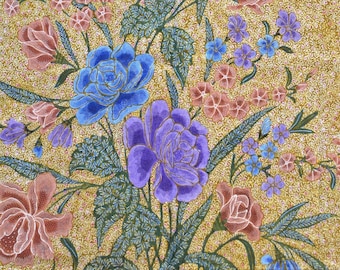
1940's Phoa Tjian Nio Vintage Batik Tulis Antique Indonesian Peranakan Java Bali Dutch Tapestry Collector's item Old Batik Sarong Textile
$1,750.00
-
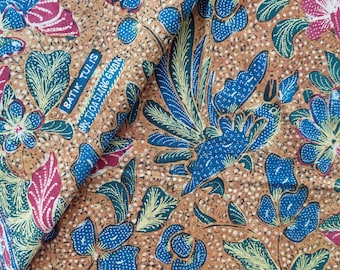
1960s Tjoa Siang Gwan Vintage Batik Tulis: Peranakan Tiga Negeri Textile
$195.00
-
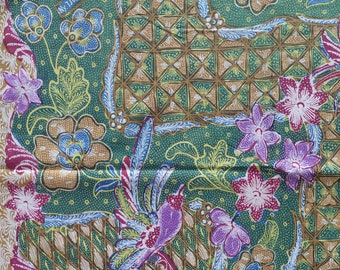
1950s Tjoa Siang Gwan Vintage Batik Tulis: Peranakan Tiga Negeri Textile Art
$195.00
-
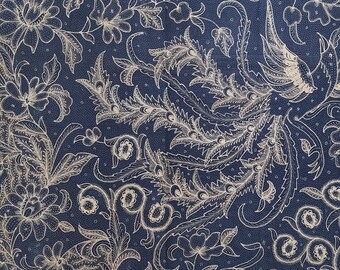
1950s Monochrome Tjoa Siang Gwan Antique Batik Tulis, Dancing Peacock Vintage Batik Tapestry
$625.00
-
1970s Ling Sala Batik Tulis: Vintage Peranakan Tiga Negeri Artwork
$375.00
-
1960s Tjoa Siang Gwan Vintage Batik Tulis: Buketan Cendrawasih Peranakan Batik
$195.00
-
1960s Sie Djien Soen Vintage Batik Tulis: Peranakan Tiga Negeri Textile Art
$295.00
-
1950s Vintage Batik Tulis Shawl: Indonesian Peranakan Tiga Negeri Artwork
$215.00
-
1970s Vintage Batik Tulis: Indonesian Ling Sala Peranakan Artwork
$295.00
-
1960s Peranakan Batik Tulis Tiga Negeri, Vintage Batik Artwork, Chinese Traditional Textile Fabric
$285.00
-
1960s Tree of Life Batik Tulis: Vintage Indonesian Peranakan Artwork
$315.00
-
Vintage Batik Tulis Tapestry: Mid-Century Indonesian Peranakan Artwork
$425.00
-
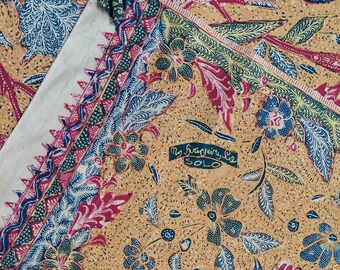
1960s Vintage Batik Tulis: Tjoa Siang Lie Turmeric Peranakan Batik
$685.00
Disclaimer: Etsy assumes no responsibility for the accuracy, labeling, or content of sellers' listings and products. Electrical or electronic products may pose a risk of fire or electrocution. Vintage, handmade, refurbished, or modified electrical or electronic products may not meet current safety standards and may not be in safe working order. Inspect carefully before use and message the seller if you have concerns relating to the product. Do not use a vintage electrical or electronic item if its safety cannot be verified. To reduce the risk of fire, never leave vintage electrical or electronic products plugged in unattended. See Etsy's Terms of Use for more information.
Shoppers with similar taste loved these
-
Digital download
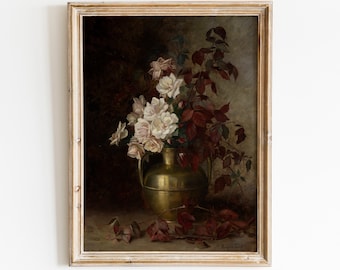
Moody Floral Oil Painting: Vintage Flower Art Print (Digital Download)
Sale Price $2.40
Original Price $5.99
-
Digital download
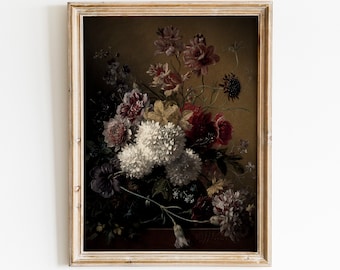
Moody Floral Oil Painting | Vintage Botanical Art Print (Digital Download)
Sale Price $2.40
Original Price $5.99
-
Digital download
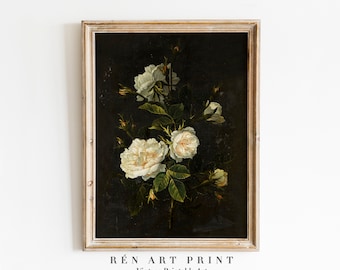
Antique Rose Oil Painting | Moody Floral Print (Digital Download)
Sale Price $2.40
Original Price $5.99
-
Digital download
Dark Floral Still Life Print: Moody Vintage Oil Painting (Digital Download)
$7.37
-
Digital download
Moody Floral Wall Art | Dark Academia, Vintage Floral Art, Antique Oil Painting, Moody Wall Decor, Dark Botanical Print, Digital Download
Sale Price $4.20
Original Price $12.00
-
Digital download
Dark Floral Oil Painting | Moody Botanical Print (Digital Download)
Sale Price $2.40
Original Price $5.99
-
Digital download
Roses Painting, Antique Still Life Botanical Wall Art, Printable Flower Wall Art, Digital Download, Vintage Floral Print
Sale Price $4.34
Original Price $6.21
-
Digital download
Vintage Neutral Landscape Set of 3 Print, Antique Meadow Oil Painting, French Country 3 Pieces Wall Art, Farmhouse Decor - PRINTABLE
Sale Price $8.68
Original Price $12.40
-
Digital download
Neutral Wildflower Wall Art, Country Landscape Vintage Wall Art, Soft Tones Countryside Painting, Rustic Farmhouse Wall Decor - PRINTABLE
Sale Price $4.34
Original Price $6.21
-
Digital download
Green Neutral Painting, Ninfee Monet Print, Antique Country Painting, Vintage Summer Countryside Wall Art, Farmhouse Wall Decor - PRINTABLE
Sale Price $4.34
Original Price $6.21
-
Digital download
William Morris Exhibition Poster, Vintage Art Nouveau Print, Flowers Wall Art, William Morris Pattern Art, Botanical Painting, Textile Art
Sale Price $4.34
Original Price $6.21
-
Digital download
Wildflower Field Set of 6 Prints, Country 6 Pieces Vintage Wall Art, Landscape Painting, Neutral Gallery Wall, Farmhouse Decor - PRINTABLE
Sale Price $12.98
Original Price $18.55


Looking for more? Find it on Etsy