
Rzadkie znalezisko
Cena:462,86 zł
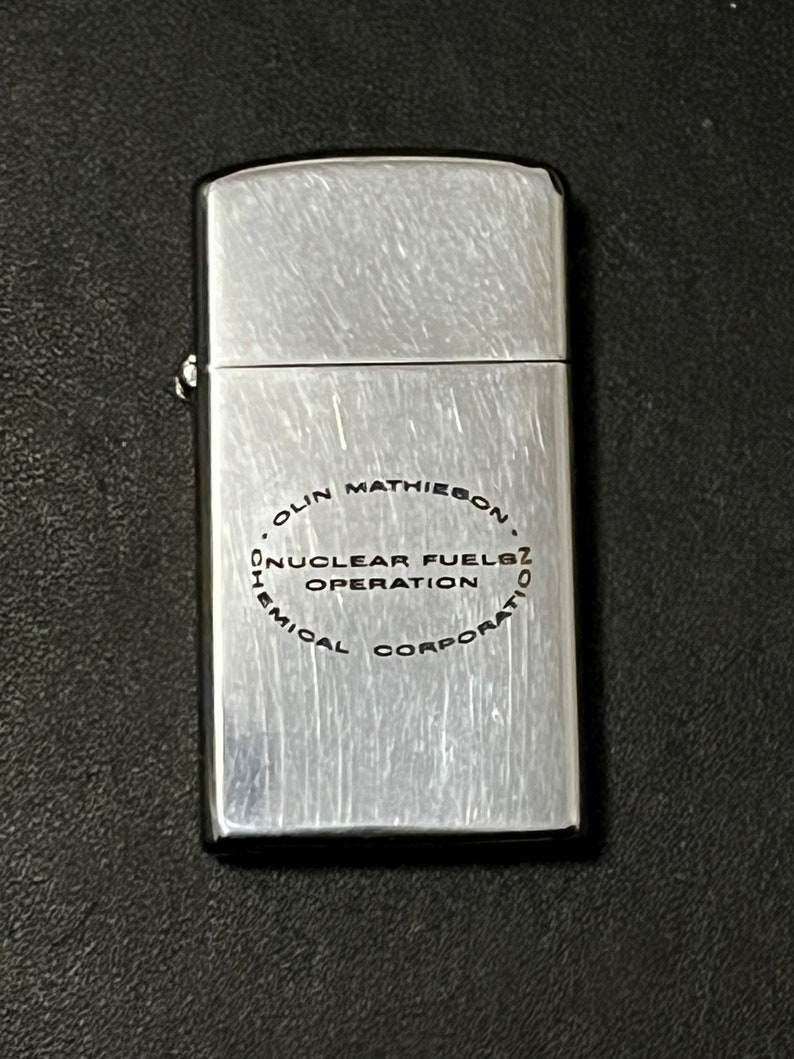
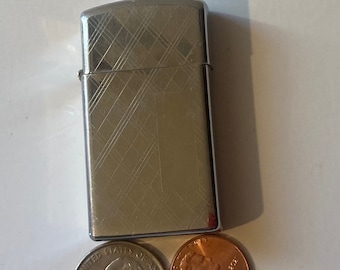
Olin Mathieson Chemical Corporation Nuclear Fuel Operations Zippo Slim Advertising Lighter - 1960 Used
Sprzedawca na medal
Sprzedawcy na medal mogą się poszczycić doskonałą obsługą klienta: konsekwentnie otrzymują oceny z 5 gwiazdkami, punktualnie wysyłają zamówienia i szybko odpowiadają na wiadomości.
Zwroty i wymiany są akceptowane
Możesz złożyć propozycję ceny tylko przy zakupie pojedynczego produktu
Sprzedawca na medal Ten sprzedawca konsekwentnie uzyskiwał opinie z 5 gwiazdkami, wysyłał zamówienia na czas i szybko odpowiadał na wiadomości.
Co wyróżnia produkt
Zippo Slim Advertising Lighter - Olin Mathieson Chemical Corporation Nuclear Fuel Operations- 1960 Used :
The Olin Corporation is an American manufacturer of ammunition, chlorine, and sodium hydroxide. Based in Clayton, Missouri, it traces its roots to two companies, both founded in 1892: Franklin W. Olin's "Equitable Powder Company" and the "Mathieson Alkali Works". After being headquartered for many years in Stamford, Connecticut, it is now headquartered in Clayton, Missouri.
The company was started by Franklin W. Olin in East Alton, Illinois, as the Equitable Powder Company. Olin created the company for the purpose of supplying the area's coal mines and limestone quarries with explosives. Olin's blasting and gunpowder company expanded into the production of cartridges in 1898.
Franklin Olin, along with his two sons John and Spencer, formed the Western Cartridge Company in direct competition with Remington and Winchester. For a time, his competitors were able to get their suppliers to shut off sources of raw materials in an attempt to drive Olin out of business. In order to survive, Olin diversified the activities of the company.
The company bought a paper manufacturer (the Ecusta Paper Company in Pisgah Forest, North Carolina), a lead shot facility, an explosive primer facility, a cartridge brass manufacturing facility, and a fiber wad facility. The company also started its own brass mill. Together, these companies became the Western Cartridge Company. Through it, the Olins made a fortune supplying ammunition during World War I.
In 1931, Western bought the Winchester Company. Olin merged the two in 1935, forming Winchester-Western.
In 1944, the various Olin companies were organized under a new corporate parent, Olin Industries, Inc. At the time, Olin Industries and its subsidiary companies ran the St. Louis Arsenal and contributed to the war effort with manufacturing roles at the Badger Army Ammunition and Lake City Army Ammunition Plants. Olin's New Haven and East Alton plants employed about 17,000 workers each—producing the guns and small-caliber ammunition needed during World War II. The war production helped the Olins to become one of the wealthiest American families of the time.
After the war, the Olins acquired the Mathieson Chemical Corporation-also founded in 1892, unrelated then to Olin, Mathieson Alkali Works began business in Saltville, VA and in 1893 acquired its neighbor, the Holston Salt and Plaster Corp. Saltville then became a quintessential company town. In Saltville it produced chlorine and caustic soda, leaching a considerable amount of methylmercury (by the company's own estimates, up to 100 pounds per day) into the soils and the North fork of the Holston River. This site was declared a Superfund site in 1982. In 1952, the Mathieson Chemical Company, as it was known by then, acquired the pharmaceutical firm of E.R. Squibb & Sons, spun off in 1968 and is now part of Bristol-Myers Squibb.
In 1952, Mathieson bought a controlling interest in the pharmaceutical firm of E. R. Squibb & Sons (now part of Bristol-Myers Squibb). Afterward, the corporation diversified its interests into a wide variety of businesses, including plastics, cellophane, bauxite mining, automotive specialties, Ramset nailing tools, and home construction. The Olin Ski Company manufactured camping and skiing gear. (Olin skis are now produced under a licensing agreement by K2 Sports.)
Olin Industries and Mathieson Chemical merged in 1954 to form the Olin Mathieson Chemical Corporation. The new company had 35,000 employees, 46 domestic and 17 foreign plants. The company manufactured phenoxy herbicides and anti-crop agents for Fort Detrick under contract to the U.S. Army Chemical Corps. John Olin retired in 1963; the following year, the company brought in hardware experienced executives to run Winchester. The new management team introduced cheap, forged-metal parts into the Winchester line, which eventually damaged the quality reputation Winchester had previously enjoyed.
1924 "Muck Dam Collapse"
Nearly 30 years prior to Olin acquiring Mathieson Chemical, a muck dam collapsed, sending a 30-foot wall of water, mud, mercury, and alkali down the Holston River valley into the company town of Henrytown, a community of Saltville, VA. Bodies, homes, and cars were washed as far as seven miles down the valley. In the aftermath of the flood, 14 people had died, one was missing, and as many as 20 were injured.
The company became the Olin Corporation in 1969, and began to sell off many of its acquired businesses. Since then, the Olin Corporation has been shrinking (except for brief expansion in the early 1980s).
In addition to the above-mentioned, Olin Corporation was the first U.S. corporation to be prosecuted for violations of the arms embargo, and eventually was convicted in the early 1978 for selling Winchester rifles to private dealers in the South Africa. When charged, the Winchester Division of the Olin Corporation affirmed in a legal brief that:
...the Winchester employees principally responsible for dealing with the State Department on export license matters over the years developed the belief that the Department was "winking" at the representation [by the company] that arms sent to South Africa were said to be destined for other countries.
— brief filed in U.S. District Court, New Haven, Conn. (20 March 1978). "Memorandum on Behalf of Olin Corporation"
After ongoing declines in its business at Winchester, on December 12, 1980, Olin made the decision to sell Winchester firearms to the firm's employees under the name US Repeating Arms Company. Olin, however, kept the Winchester brand name and licensed it to US Repeating Arms Company. Olin sold its European Winchester ammunition business, and also licensed the Winchester brand name, to GIAT (of Versailles, France). Olin transferred its ball propellant manufacturing plant to General Dynamics subsidiary St. Marks Powder in 1998.
Olin spun off its specialty chemicals business on February 8, 1999, as Arch Chemicals, Inc. It now focuses more on its ammunition, brass and chlor-alkali businesses. Olin is the third largest chlor-alkali producer in the USA.
Olin announced the sale of its Brass Division in October 2007 (losing $140 million in the sale). Olin Brass is now owned by Global Brass.
The ammunition business was and is strong due to the Iraq and Afghanistan wars. Since 2004, the Olin Corporation has been moving some manufacturing of its Winchester products from East Alton to Oxford, Mississippi, which started with the rimfire cartridge (.22LR) production, then its load and pack operations. In 2010, the company announced the move of centerfire manufacturing to Oxford, Mississippi. A maintenance building at the Winchester Ammunition Plant, in an isolated area of East Alton, burned and was a total loss on Sunday, February 9, 2014; the cause is under investigation, but no one was killed or injured. Seven area fire departments assisted in the response, but encountered heavy smoke and fire, according to East Alton Fire Chief Randy Nelson.
On March 27, 2015, Dow Chemical Company announced that it would spin off its chlorine and Epoxy businesses and merge them with the Olin Corporation, in a deal that would give Dow control of the Olin Corporation.
On October 5, 2015 Olin successfully acquired the Dow's U.S. Gulf Coast Chlor-Alkali and Vinyl, Global Chlorinated Organics, and Global Epoxy business units, in addition to 100 percent interest in the Dow Mitsui Chlor-Alkali joint venture.
The former United Nuclear Corporation (UNC) Naval Products facility is located in New Haven, Connecticut. The site is located near an industrial redevelopment area. Licensed material was used for research and fabrication of nuclear fuel components for the U.S. Navy. The radioactive material used at the site was primarily enriched uranium with lesser quantities of natural uranium, depleted uranium, and thorium. The work was performed in a large building containing chemistry laboratories and an assembly area. The U.S. Nuclear Regulatory Commission (NRC) released the site for unrestricted use and the site has since been utilized for commercial use.
The UNC Naval facility was operated by Olin Mathieson Chemical Corporation (Olin) from 1956-1961) and by UNC from 1961-1976. In 1960, the Atomic Energy Commission (AEC) issued Olin a special nuclear materials license (SNM-368) for the fabrication and manufacturing of reactor fuel components. The license was later transferred to UNC in 1961. In 1974, UNC transferred the radioactive materials from the facility in New Haven to a facility in Montville, Connecticut. Following the decontamination and decommissioning of the site, the NRC performed surveys New Haven facility and amended license SNM-368 to remove the New Haven facility from the license. Consistent with guidelines at the time, the site was released for unrestricted use. The NRC terminated license SNM-368 in 1994 after the UNC facility in Montville, Connecticut was decontaminated and decommissioned.
-
Wysyłka w ciągu 1–2 dni roboczych
-
Zwroty i wymiany są akceptowane w ciągu 30 dni
Kupujący ponoszą koszty odesłania produktu. Jeśli produkt nie zostanie zwrócony w pierwotnym stanie, kupujący będzie odpowiedzialny za ewentualną utratę wartości.
-
Miejsce nadania: Stany Zjednoczone
Ten produkt nie jest wysyłany do: Polska Skontaktuj się ze sklepem, aby dowiedzieć się więcej o dostępnych opcjach wysyłki.
Wystąpił problem podczas obliczania kosztów wysyłki. Spróbuj ponownie.
Ochrona procesu zakupu na Etsy
Kupuj na Etsy bez obaw – jeśli coś pójdzie nie tak z zamówieniem, możesz na nas liczyć w przypadku wszystkich kwalifikujących się zakupów –
zobacz warunki programu

Dodaj pierwszą opinię o tym produkcie

Wzorcowa wysyłka Może się poszczycić punktualną wysyłką ze śledzeniem przesyłek.
Szybkie odpowiedzi Szybko odpowiada na wiadomości.
Doskonałe oceny Średnia z ocen wynosi 4,8 lub więcej.
Więcej produktów z tego sklepu
Odwiedź sklep
-
Zapalniczka kieszonkowa Vintage Cigarette - Zippo Made In USA
133,42 zł
-
Zapalniczka kieszonkowa Vintage Cigarette - Zippo Made In USA
133,42 zł
-
NOWA zabytkowa zapalniczka Zippo Kendall Motor Oil z 1983 r., nowa, nieużywana, w oryginalnej puszce z papierami.
1 615,43 zł
-
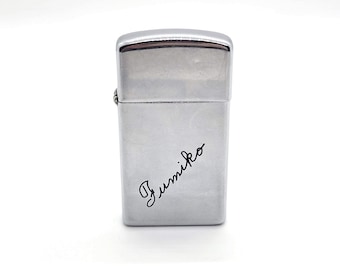
Zapalniczka Zippo z 1968 roku z grawerunkiem FUMIKO **NIETESTOWANA**
Cena w promocji 149,57 zł
Pierwotna cena 186,98 zł
-
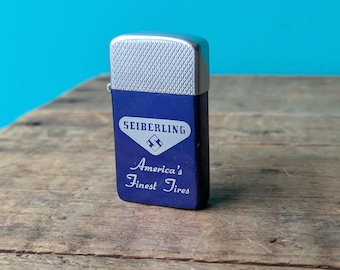
Zabytkowa zapalniczka wielokrotnego użytku, zapalniczka promocyjna Seiberling America's Finest Tires. Wyprodukowano w USA.
239,16 zł
-
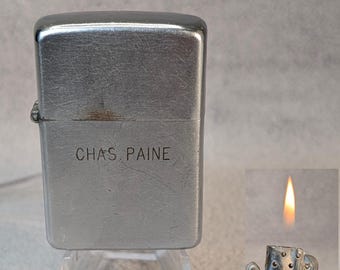
1951 Stalowa obudowa Zippo - Logo z literami blokowymi, szczotkowane wykończenie - Dobrze zużyta, działająca zapalniczka vintage - Otwierana na zatrzask, wiatroszczelna - Wyjątkowy prezent dla palaczy
Cena w promocji 695,45 zł
Pierwotna cena 665,19 zł
-
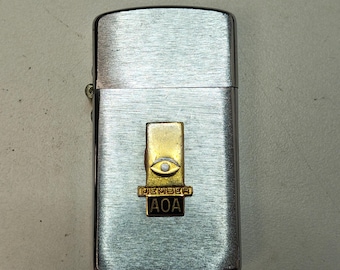
Zapalniczka benzynowa Vintage Park Industries AOA Member Fraternal | Wyprodukowano w USA | Bez paliwa, bez krzesiwa
373,99 zł
-
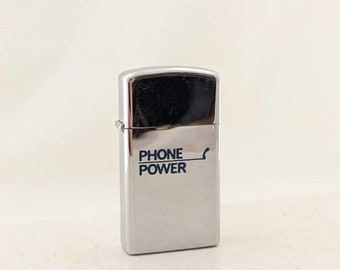
Zapalniczka Zippo w stylu vintage Slim „Phone Power”
Cena w promocji 540,50 zł
Pierwotna cena 772,13 zł
-
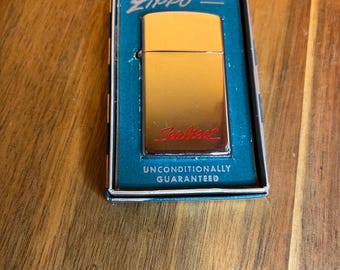
Zapalniczka Zippo Slim z 1961 roku z certyfikatem Sealtest i pudełkiem
771,43 zł
-
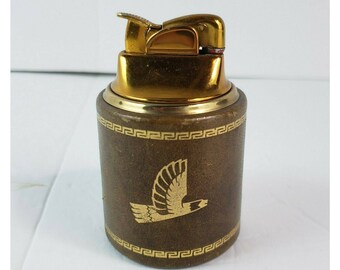
Zabytkowa zapalniczka samochodowa Richfield Motor Oil Reklama Skórzana Metalowa 2.5"
607,75 zł
-
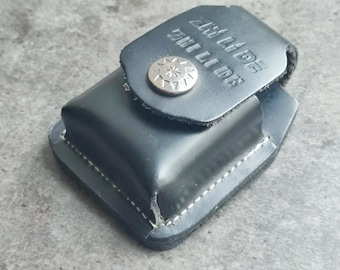
Zabytkowe etui na zapalniczkę ZhiLiDe, czarna skóra, lata 90.
Cena w promocji 130,87 zł
Pierwotna cena 186,98 zł
-
Zapalniczka metalowa Vintage, trawiona, cienka, Zippo, wyprodukowana w USA, papierosy, więcej
140,26 zł


