

Rare find
NowPrice:$669.00
Original Price: $892.00
25% off
Sale ends on October 20
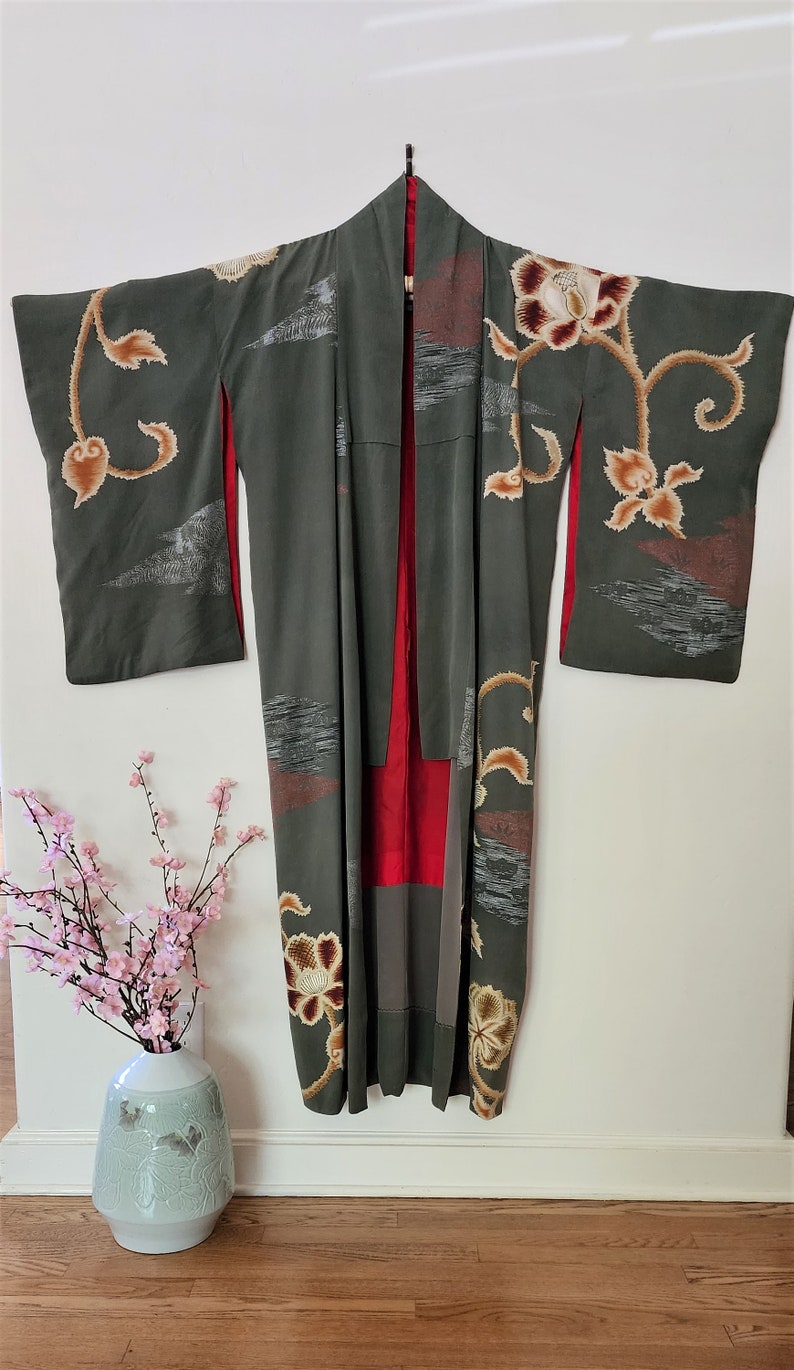
Meiji Period Furisodo Kimono Green Omeshi Silk Peonies Paulownia Pine and Bamboo
Your order should arrive by this date if you buy today. To calculate an estimated delivery date you can count on, we look at things like the carrier's latest transit times, the seller's processing time and shipping history, and where the order is shipping to and from.
You can only make an offer when buying a single item
Highlights
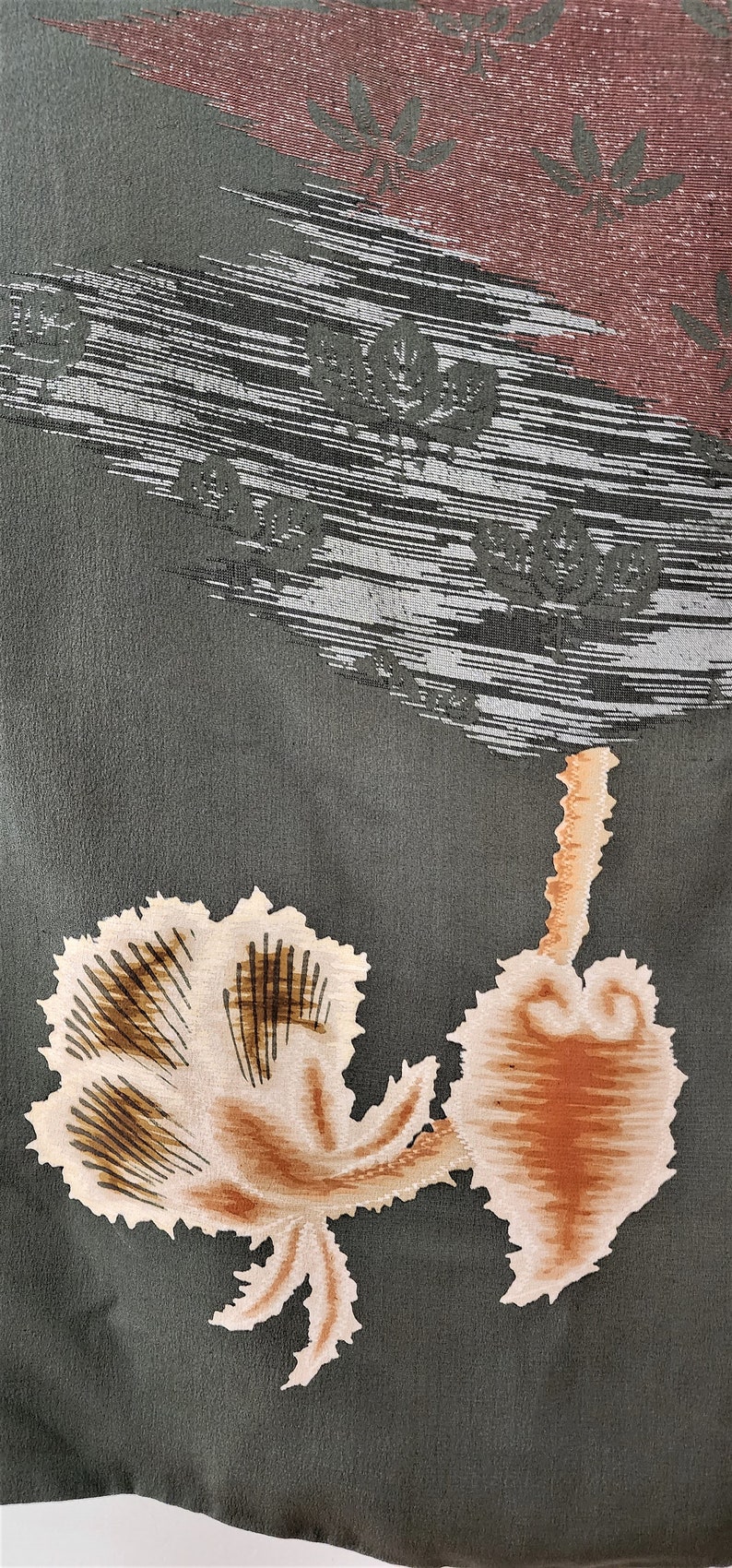
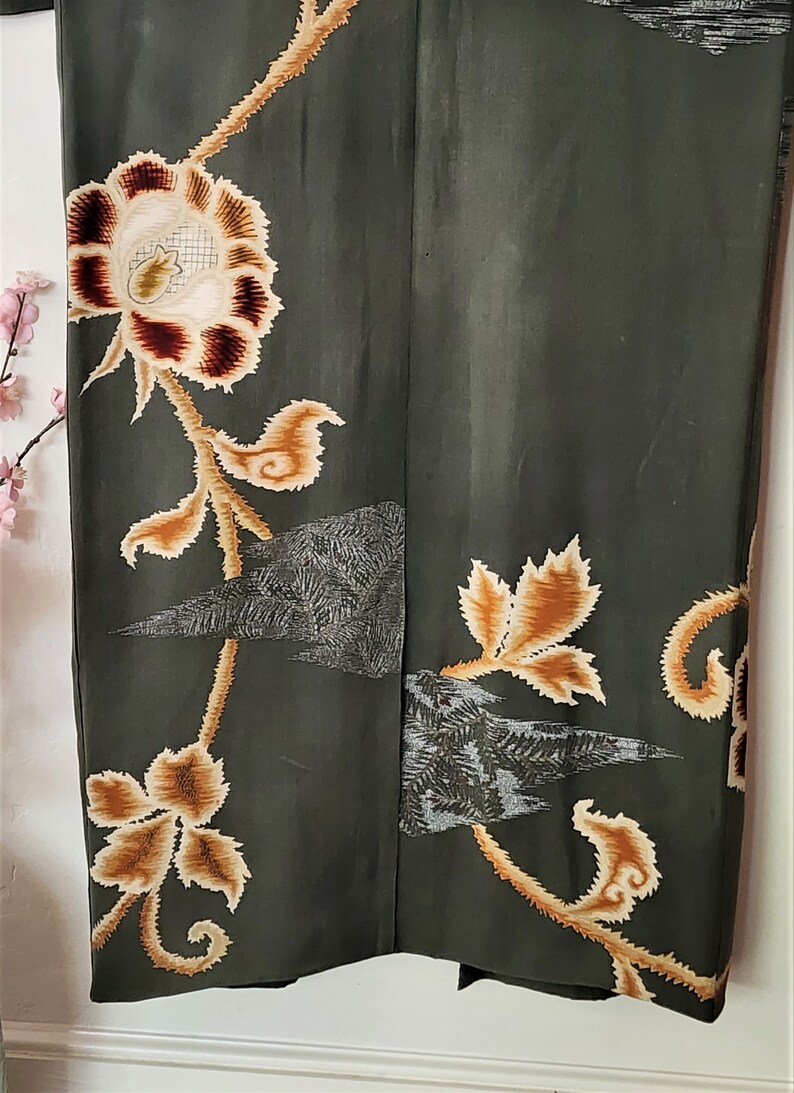
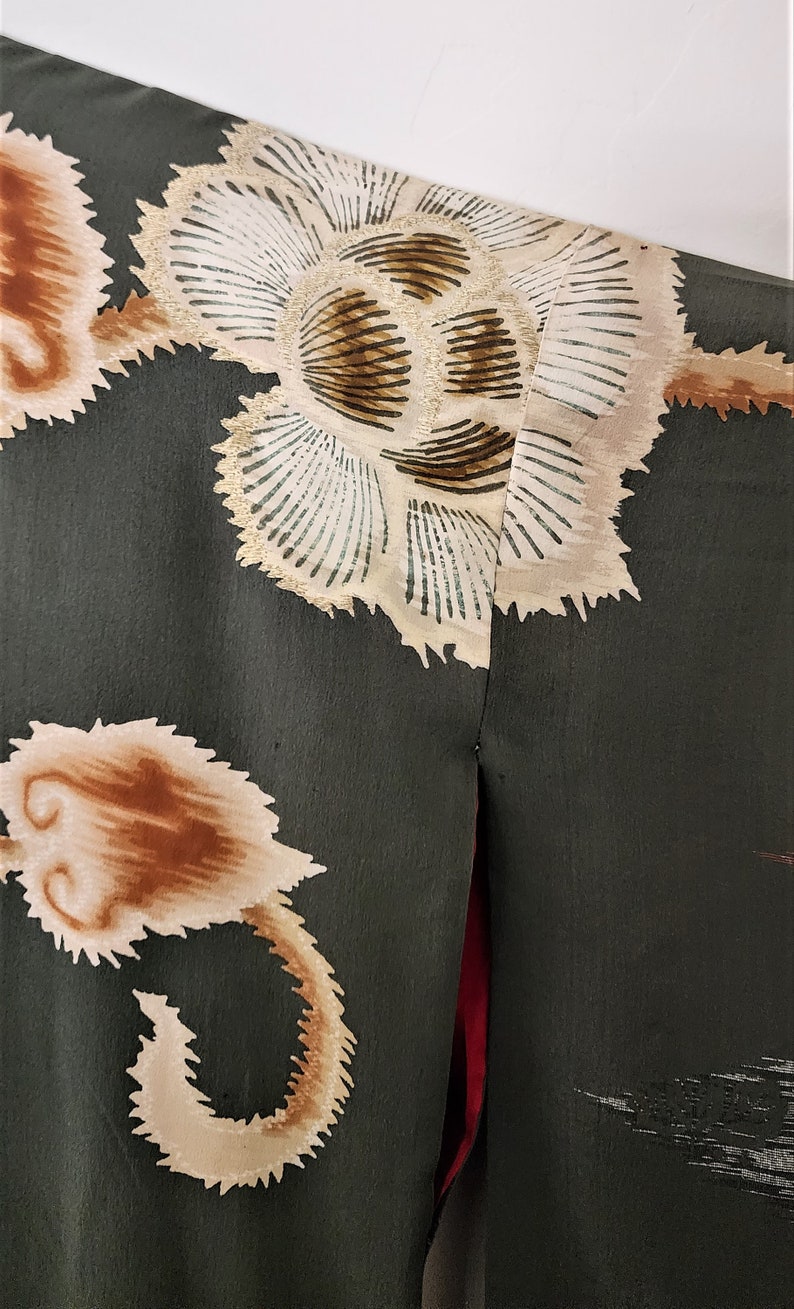
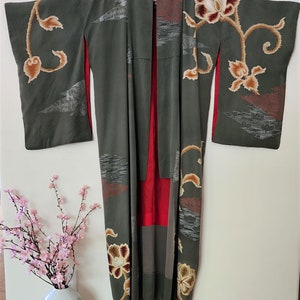
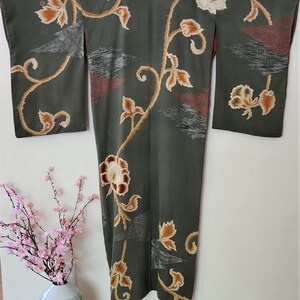
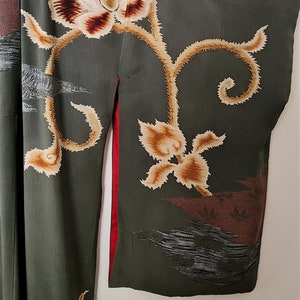
No matter how many photos we take, we can’t truly capture the beauty of this magnificent Meiji Period furisodo kimono. Perhaps it will give you some sense of how spectacular the kimono is, if I tell you that this would not be in our shop if we had an adequate place to properly display it in a way that would protect it and do it justice. The unusual decoration and the staggering number of hours and pure artistry that went into every aspect of its creation are humbling.
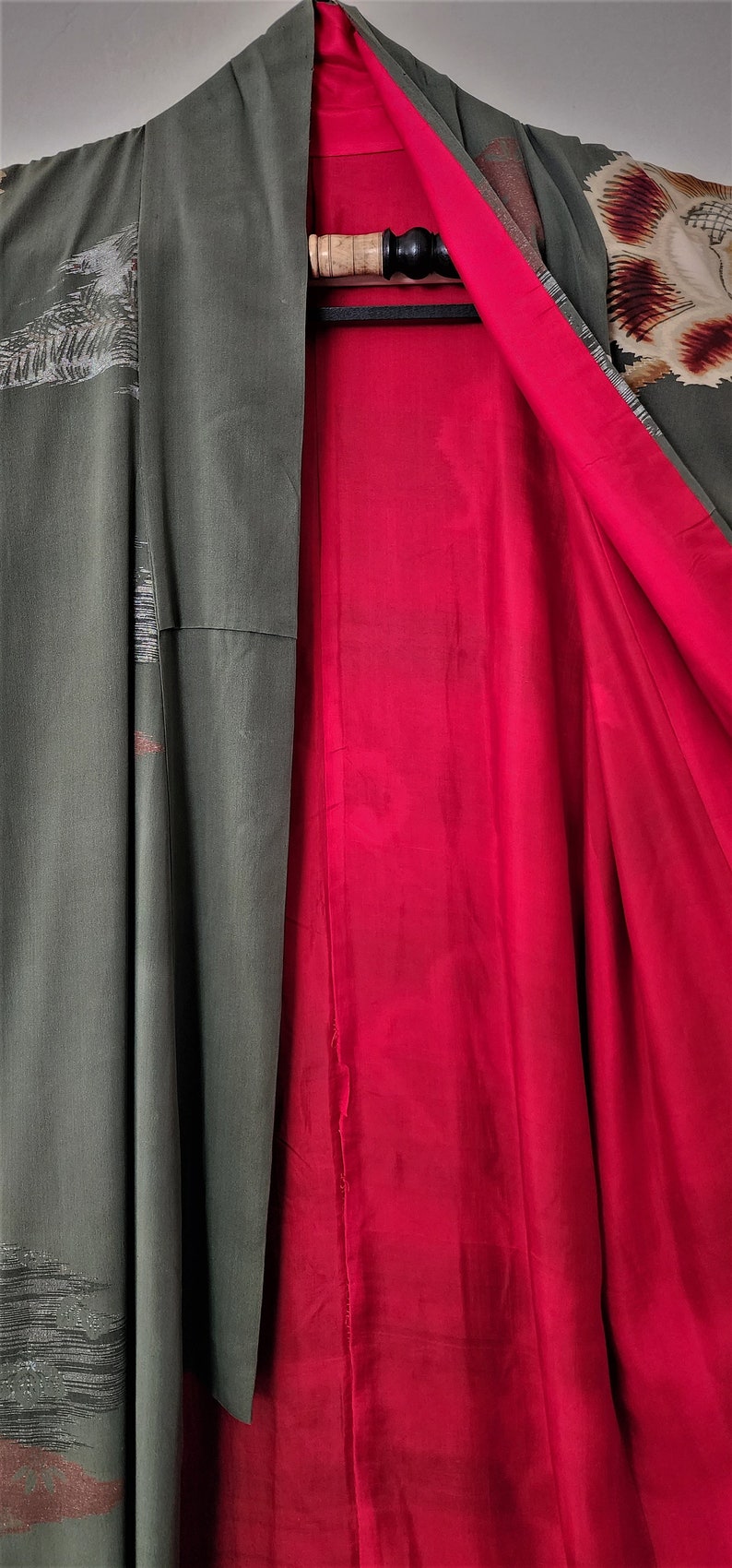
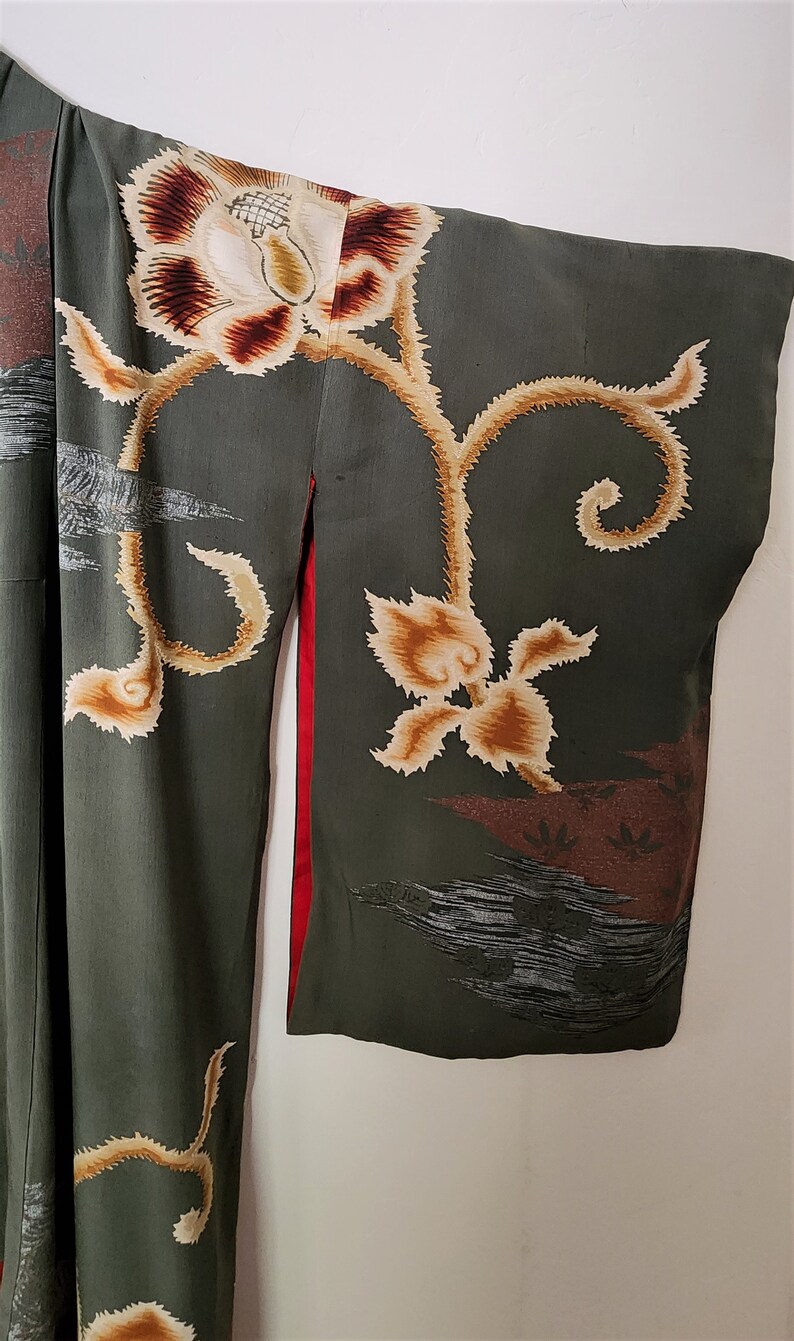
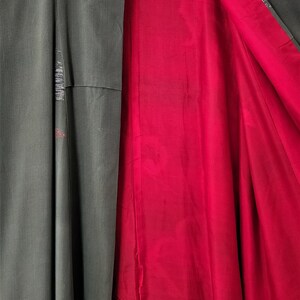
The kimono is made of fine omeshi silk in a subdued, olive green. In Japan, green is often seen to represent new beginnings, and that is particularly true of this hue that the Japanese refer to as tokusa-iro, which is literally the color of the horsetail reed. Horsetails are viewed in Japan as a harbinger of spring, as their slender shoots start emerging from the earth in early March. Though, in this case, the color may simply have been an effect to set off the russet hues of the amazing decoration. The kimono is lined with a momi, which is a specific scarlet lining that is common in kimono made in the Meiji and Taisho Periods. By the late Meiji when this piece was made, the traditional method of producing red dye by using the beni flower had given way to the use of aniline dye, which was first introduced in Japan in the 1860s. This shade of red is both brighter than those produced with more traditional methods, and more durable, with less propensity to fading.
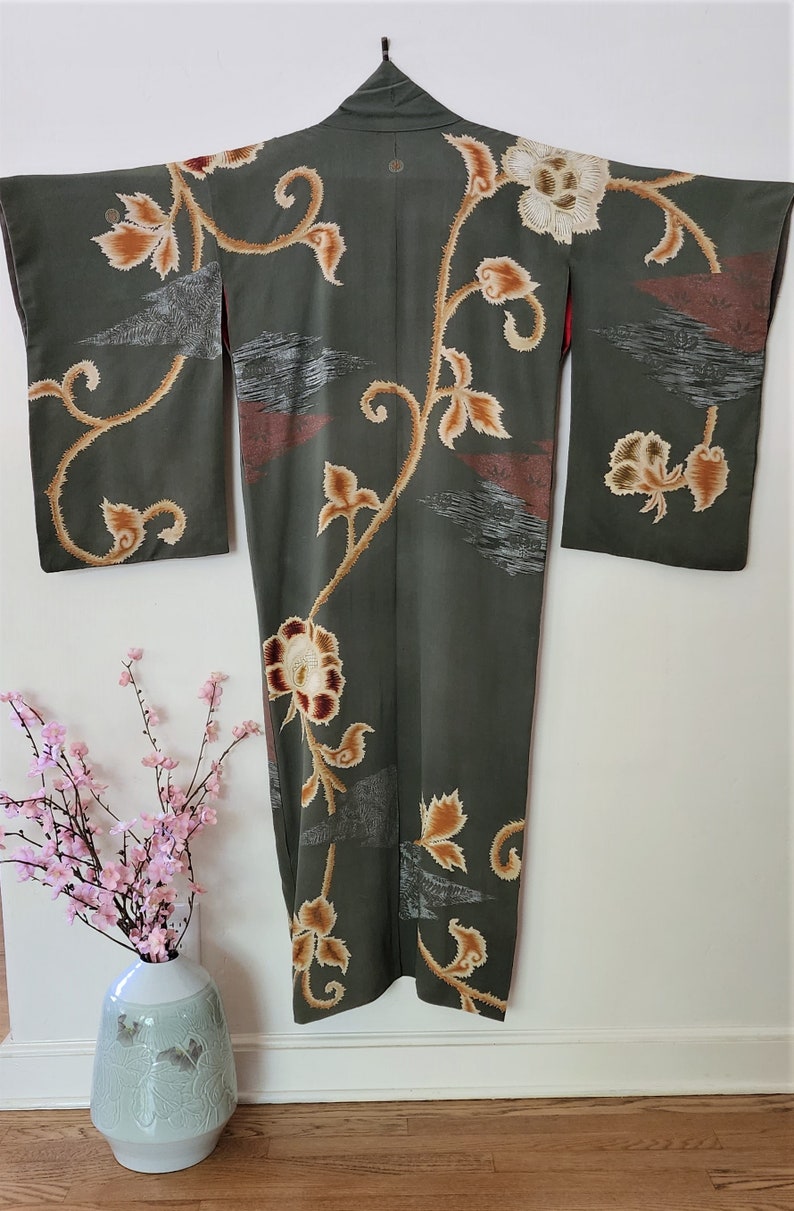
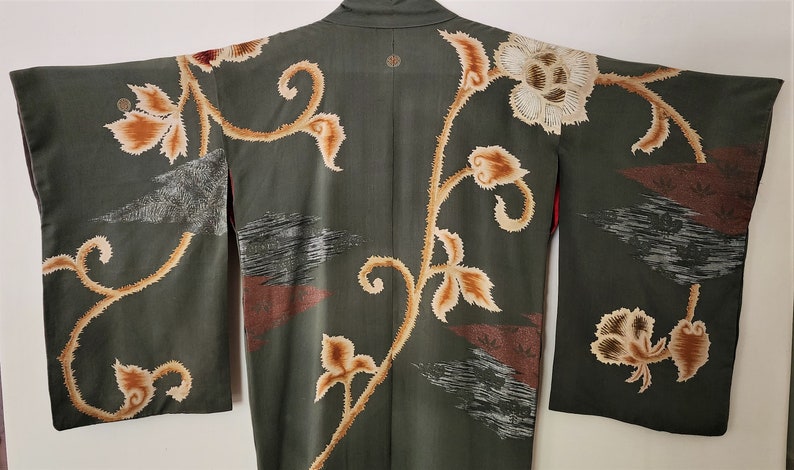
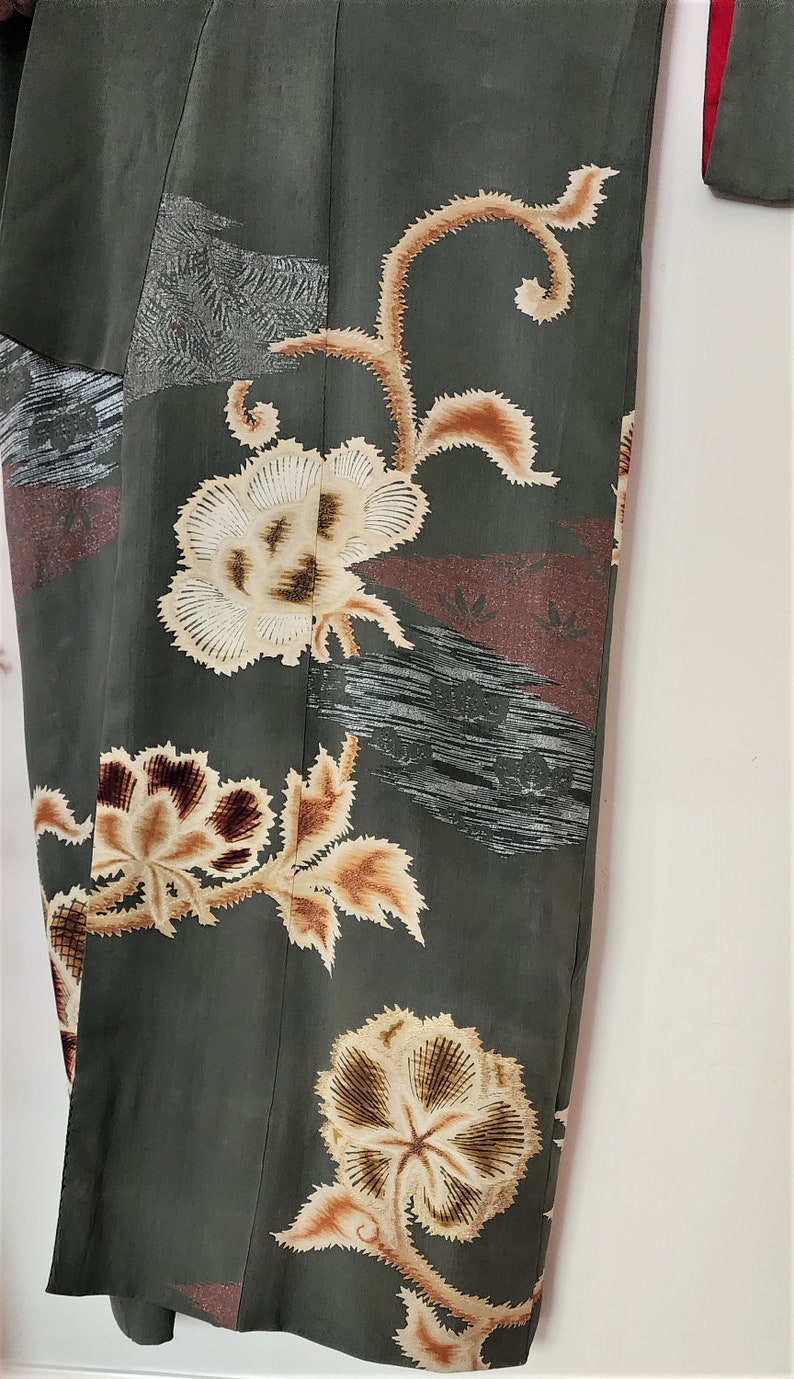
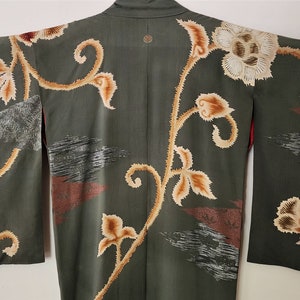
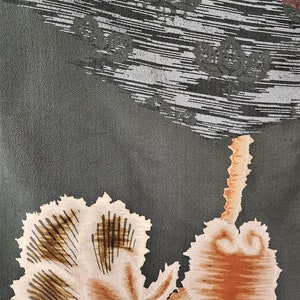
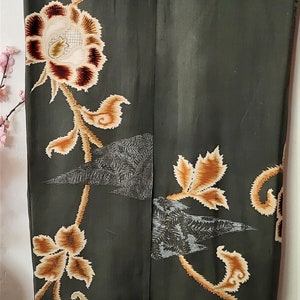
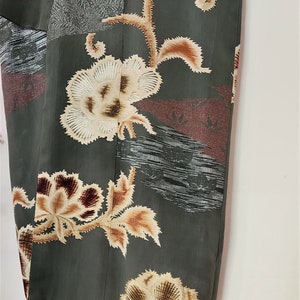
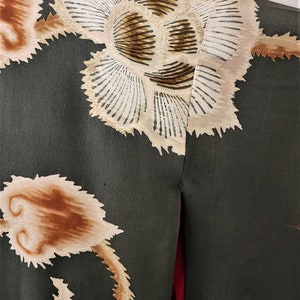
The omeshi silk is beautiful to touch, not silky, but with a soft hand, subtle texture, and a substantial, elegant drape that gives the piece a sense of weight and importance, and a subtle gloss that feels rich without being ostentatious. The kimono is decorated with resist dyed (yuzen) flowers which are seen almost in negative, rather like a cyanotype, as they are mostly picked out in the creamy white of the natural silk, with delicate washes of rust and chocolate brown used to define the details, giving the appearance of impressionistic watercolor paintings. The pattern is a floral fantasy that spills over the surface. I believe the flowers are intended to be peonies, symbols of prosperity and honor, but a rather fanciful version of the flower. As exuberant as peonies are, they aren’t generally as acrobatic as these examples, the variance in blossom color and leaf shape only add to this whimsical impression. The exotic, abstracted shapes of the flowers have some feel of Iznik tiles, perhaps an echo of Islamic influence from the time when Japan was under the sway of the Mongol Empire, or perhaps more indirectly influenced by Islamic characteristics in Chinese art. The almost pixilated edges of the vegetation also hold echoes of foreign influence, part of the kasuri tradition that gradually developed after examples of ikat textiles were introduced from China in the 8th century. Some fine details of the scrolling flowers are accentuated with embroidery done with gleaming silk in gold and copper that shimmers when it catches the light, an unexpected delight.
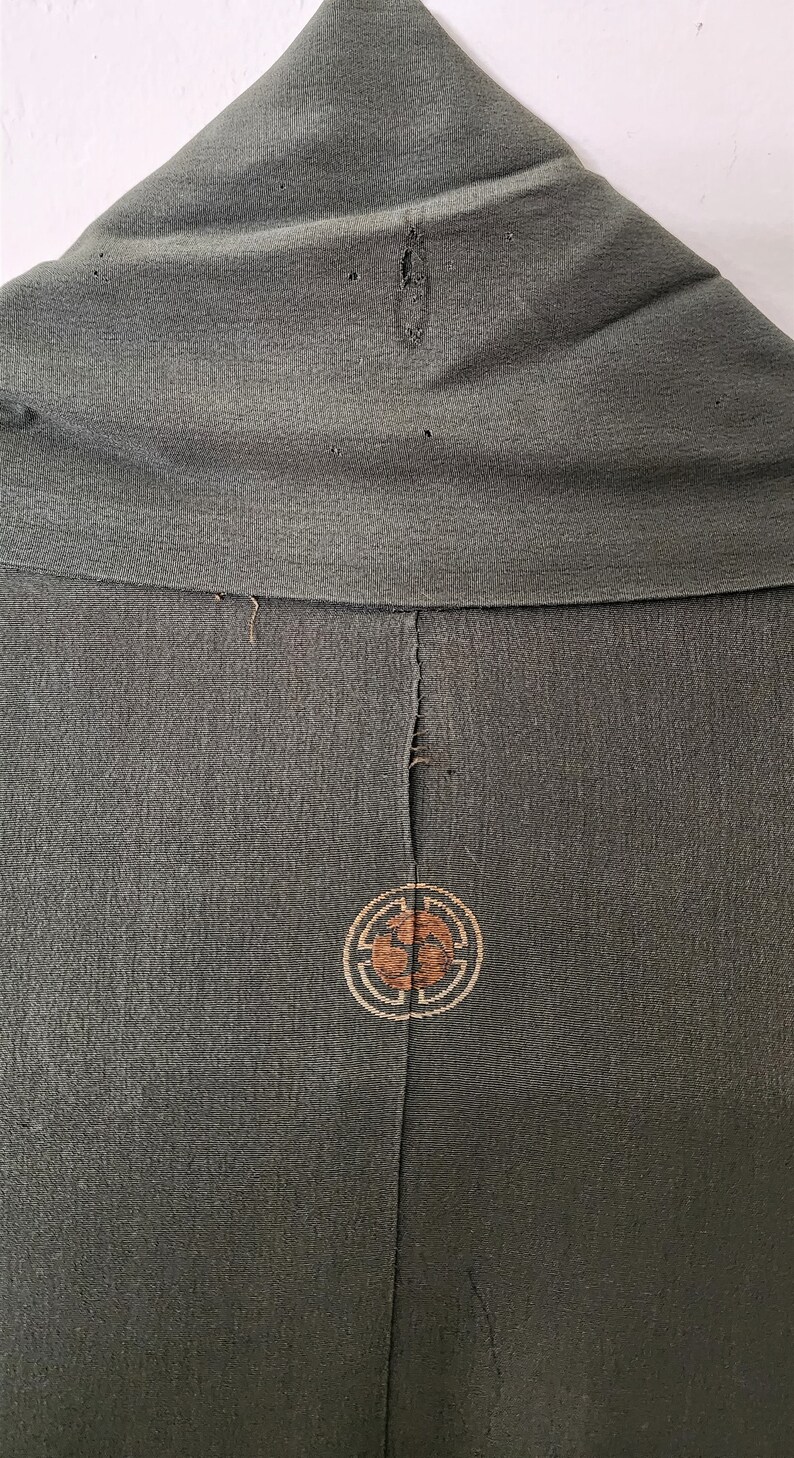
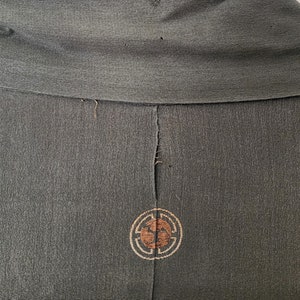
The exuberant floral scroll pattern is accented by more subtle details done in urushi work. Threads of silk are coated with lacquer in various colors, some with added gilding or silvering and then woven into the fabric to create a jacquard pattern that resembles gossamer embroidery. In this case, the result is delicate webs of color that depict bamboo leaves, paulownia blossoms, and pine boughs. I suspect that the paulownia and bamboo may be a subtle reference to the houou bird or phoenix, as the phoenix perches only on the paulownia and eats only bamboo according to legend. The pine likely symbolizes prosperity, longevity and stability. The kimono is embroidered on the back with three family crests (kamon) in the form of migi mitsudomoe, swirling triskelion that seem like punctuation at the end of a poem.
Marks: The kimono is unlabeled.
Approximate Measurements:
Length: 60”
Mid-neck to Sleeve Hem: 27”
Width (measured across the back, seam to seam): 22 ½”
Length of Sleeve Hem (sleeve drop): 24”
Condition: The kimono is in very good condition for an antique garment. The fabric is still strong and supple, and the colors are still quite vivid. There is a small area at the back of the neck with a small hole and some light discoloration along with some very tiny, pinprick holes scattered near it, which I presume are old insect damage. There are two or three spots where a short section of the seam has begun to separate. There are a few scattered white stains, which are faint and difficult to see, in addition to two small black stains that look like ink in the lining, which are not visible from the outside. Considering the age, it is astonishing that the garment survives in this condition.
From the estate of renowned bead collector Naomi Lindstrom.
Naomi Lindstrom (1924-2014) was a collector of the purest sense. A longtime flight attendant for Pan Am, she traveled the world rubbing elbows with sheiks and presidents, all the while collecting what she loved along the way, carting it home in her checked luggage. With an amazing eye for art and beauty, she collected one of the most significant collections of beads in the United States, as well as a large collection of ethnographic and ancient artifacts from around the world. We feel very fortunate to be handling a piece from her collection.
Please note that, while we do our utmost to accurately depict and describe each of our items, small issues and subtle imperfections are often difficult or impossible to capture in a photo. And the perceived color of an item may change depending on lighting conditions and can vary depending on the settings and quality of your monitor. Our items are all vintage or antique and have some degree of wear commensurate with their age. Any hand crafted item will have the beautiful imperfections that artisan work embodies. Please read our description carefully and feel free to ask for additional photos from different angles or in different light, or if there is other information that we can provide. As a tiny business, we are unable to absorb the cost of returns unless the item was not as described, but we want all of our customers to love the item they purchase as much as we do. If you have an issue with a purchase or there is some problem with the shipping, please reach out to us and we will do our best to help resolve the problem.
-
Order today to get by Oct 8-10
Your order should arrive by this date if you buy today. To calculate an estimated delivery date you can count on, we look at things like the carrier's latest transit times, the seller's processing time and shipping history, and where the order is shipping to and from.
-
Returns & exchanges not accepted
But please contact me if you have problems with your order
-
Cost to ship: $28.10
-
Ships from: Sacramento, CA
There was a problem calculating your shipping. Please try again.
Etsy Purchase Protection
Shop confidently on Etsy knowing if something goes wrong with an order, we've got your back for all eligible purchases —
see program terms

Be the first to review this item

Smooth shipping Has a history of shipping on time with tracking.
Rave reviews Average review rating is 4.8 or higher.
More from this shop
Visit shop-
19th Century Peking Glass Fluted Bowl Amber Chinese Qing Dynasty Antique
Sale Price $147.00
Original Price $196.00
-
Victorian Jelly Mold White Salt Glaze Stoneware Chicken Design Antique
Sale Price $45.75
Original Price $61.00
-
Czech Bohemian Amber Cut Glass Perfume Bottle Antique Art Deco
Sale Price $52.50
Original Price $70.00
-
Antique Moser Purple Fade Glass Pitcher and Tumbler Set Gold Enamel Flowers
Sale Price $596.25
Original Price $795.00
-
Vintage kimono LS 1418, green, silk
$35.94
-
Jewelry Box - Bamboo with Pine Divider - Personalized, Engraved, Etched
$34.99
-
Digital download
Ink bamboo pine Chinese style | Wall Art, Printable, Digital Download, Home Decor, Drawing, Minimalist
Sale Price $16.20
Original Price $18.00
-
BARBADOS, SILK KIMONO, jacket, cruise , lagenlook ,kimono, green
$197.00
-
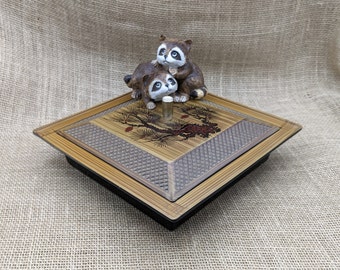
Vintage Otagiri Lidded Storage Box: Asian Bamboo Pine Design
$38.00
-
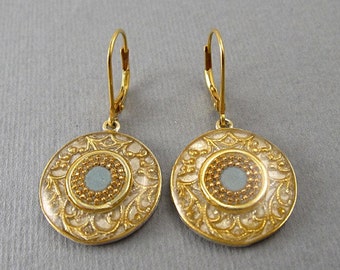
Golden filigree earrings with grey center encircled with golden dots, Dangle sterling silver earrings, leverback earrings
$134.00
-
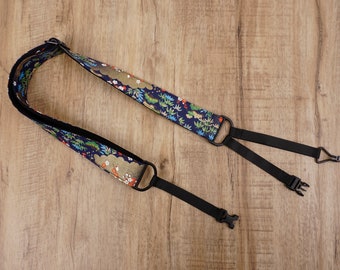
Pine, bamboo and plum blossom clip on ukulele hook strap, no drilling, no button
Sale Price $24.50
Original Price $35.00
-
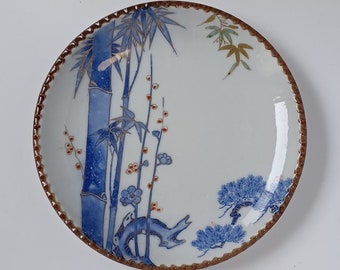
Antique Japanese Porcelain Plate – Arita Igezara by Uwataki Kiln, Pine Bamboo Plum, Meiji–Taisho
Sale Price $228.00
Original Price $285.00
-
Happy New Year pine bamboo plum "SHOUTIKUBAI" postcard / 3 piece set naturako
$6.00
-
Distressed Denim Jacket with Cyanotype Panel, Reclaimed, Embroidery, Nature, Floral Design, Blue and White Handmade Clothing
$59.00
-

Personalized Wood Keepsake Box with Brass Latch, Custom Engraved Bamboo or Pine Memory Box, Anniversary Gift
Sale Price $56.89
Original Price $71.11
-
Pine Bamboo Stretch Fleece
$7.91
Shoppers with similar taste loved these
-
KISHI Sadao Kokeshi (22cm/8.7"), Vintage Sosaku Wooden Doll
$83.00
-
Vintage creative kokeshi by Hajime Miyashita
$275.75
-
Vintage TSUJITA Ryozo Kokeshi (15cm/5.9"), Japanese Sosaku Creative Wood Doll - Dragonflies
$90.00
-
Sosaku Creative Kokeshi by Yajima Suihō
$70.00
-
Huge Exclusive Vintage Kokeshi Doll by Master Issetsu Kuribayashi (54cm/21 inches) Free Shipping
$1,420.00
-
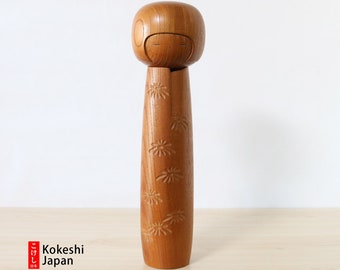
Vintage Creative Kokeshi Doll by Masashi Takeda - Wild Flower (36cm/14.1 inches) Free Shipping
$235.00
-
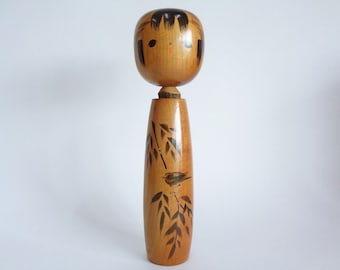
Kokeshi Doll by Tamura Noboru Japanese Artistic Wood Art
Sale Price $151.20
Original Price $189.00
-
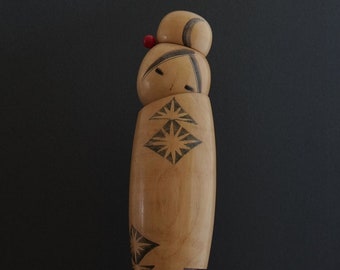
Vintage Kokeshi Doll by Yajima Suihou, Japanese Folk Art (25.6 inches)
Sale Price $197.25
Original Price $263.00
-
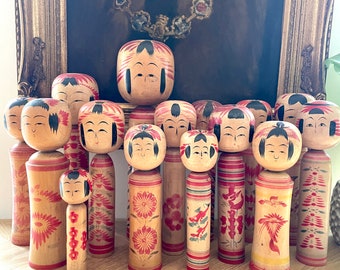
Vintage Japanese Kokeshi Dolls | Japanese Wooden Kokeshi dolls | Original Japanese wooden dolls | Far East Decor
$55.30
-
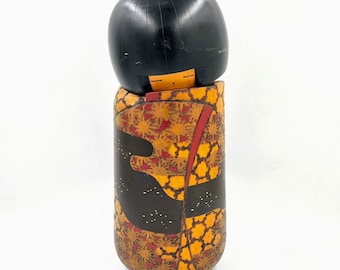
Large Sasaku Kokeshi doll by Inosuka Kobayashi
$280.00
-
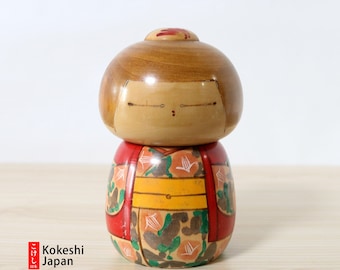
Vintage Kokeshi Doll by Sekiguchi Toa (15cm/5.9 inches) Free Shipping
$115.00
-
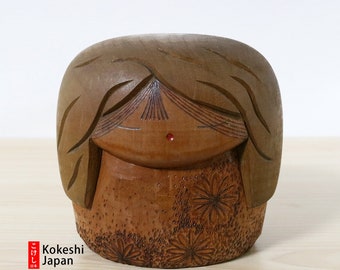
Vintage Creative Kokeshi Doll by Aida Seiho (12cm/4.7 inches)
$225.00


Looking for more? Find it on Etsy