



Only 2 left and in 4 carts
NowPrice:$8.09+
Original Price: $8.99+
10% off
Sale ends on September 16
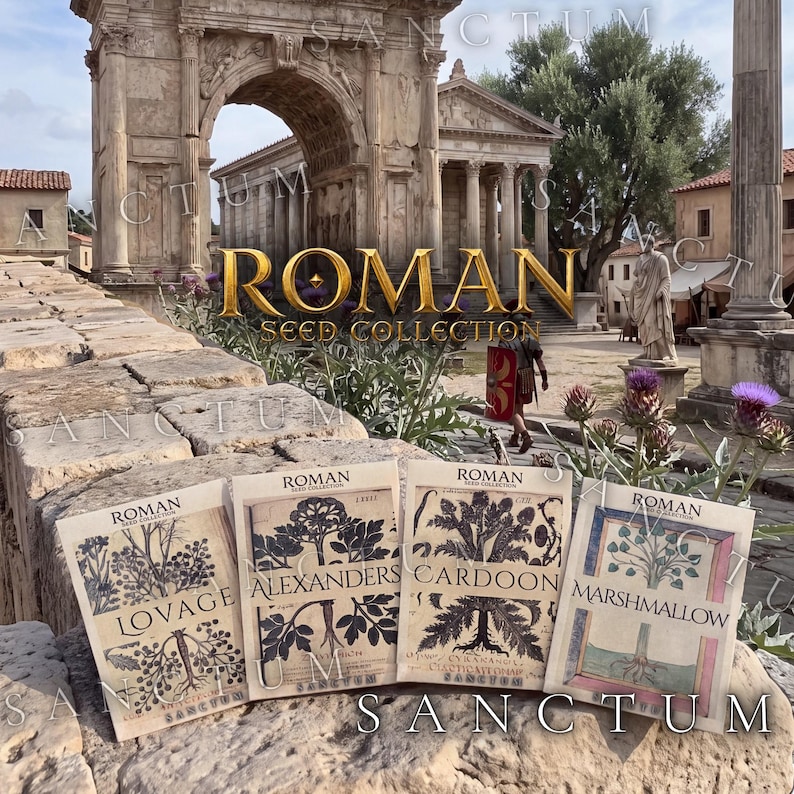
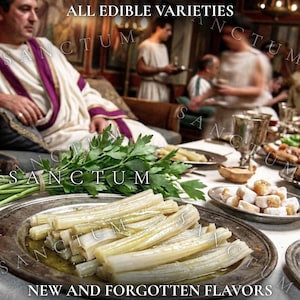
Roman Garden Seed Collection | 4 Rare Edible Ancient Roman Plants | Unique Vegetables Alexanders, Cardoon, Lovage
Star Seller
Star Sellers have an outstanding track record for providing a great customer experience—they consistently earned 5-star reviews, shipped orders on time, and replied quickly to any messages they received.
Your order should arrive by this date if you buy today. To calculate an estimated delivery date you can count on, we look at things like the carrier's latest transit times, the seller's processing time and shipping history, and where the order is shipping to and from.
You can only make an offer when buying a single item
Star Seller. This seller consistently earned 5-star reviews, shipped on time, and replied quickly to any messages they received.
Highlights
Step back in time to the gardens of Ancient Rome and unlock a world of new, ancient flavors.
Imagine:
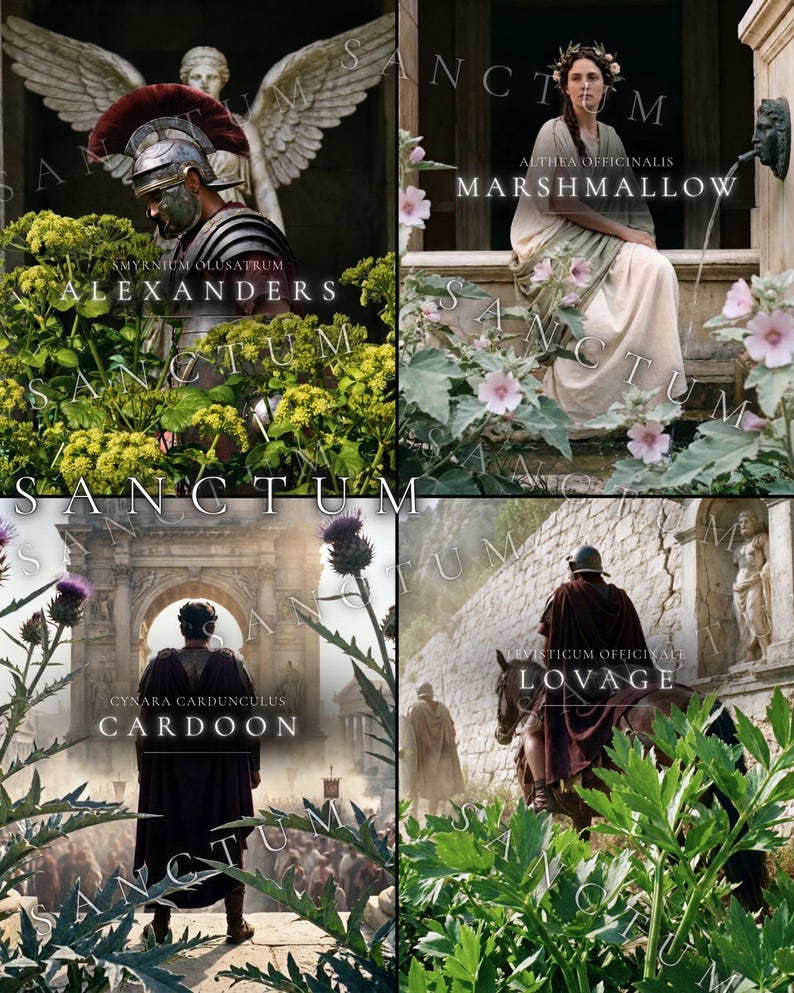
• Biting into an Alexanders leaf, the "Parsley of Alexandria" that followed the legions across Europe.
• Tasting Cardoon and watching your garden fill with statuesque silver ribs.
• Crushing a leaf of Lovage, the intense ancient celery used in numerous Apician sauces
• Harvesting velvety Marshmallow leaves, the humble herb Horace championed for a virtuous life.
This is not a random “heirloom” mix. Inside you’ll find seed packets featuring real edible plants once grown across the Roman Empire. Cardoon, Alexanders, Lovage, and Mallows were culinary cornerstones of the classical world, each one immortalized in real texts like Apicius’s cookbook De Re Coquinaria (c. 1st Century), allowing you to grow familiar flavors that once graced the tables of emperors and stoics alike.
These plants brighten up a patio, fit into a backyard garden seamlessly, and add a unique twist to cooking. It is highly giftable for anyone who loves history, cooking, Tuscan aesthetics, or just growing truly uncommon edibles.
CALIFORNIA RESIDENTS: Unfortunately, Cardoon cannot be shipped to California. Please select the "California" option when ordering.
Note: Alexanders and Marshmallow have slower, more specific germination needs than common garden annuals and require fall sowing or extensive cold-moist stratification before spring planting.
What’s Included?
• 4x Seed packets featuring authentic ancient manuscript artwork
• Approx. 25 Cardoon, 20 Alexanders, 100 Lovage, and 50 Marshmallow seeds
• Non-GMO, 100% open-pollinated
• Hand-packaged in rustic kraft paper packets.
Full Details:
• Alexanders (Smyrnium olusatrum): Before the development of modern celery, Alexanders was an important potherb of the classical world. Later known as “Parsley of Alexandria,” this aromatic biennial was deeply associated with Roman cultivation and movement across Europe, spreading wherever Rome’s influence reached. Dioscorides says plainly that “the Romans call it olusatrum,” and explains that the leaves and stalks could be cooked “with fish” or “preserved raw in brine.” Pliny the Elder marveled at its vitality, writing that olusatrum was of a marvelous nature and reproduced from the tear-like gum, or sap, of its own stem. Columella, the Roman master of agronomy, advised sowing the seeds around the festival of the Vulcanalia, August 23, to ensure a harvest of fresh greens by February. There is even a reported Roman-period seed find from Caerwent in Wales. The edible leaves and fleshy leaf stalks offer a robust flavor akin to celery and myrrh, bringing an authentic taste of antiquity to the modern kitchen.
• Lovage (Levisticum officinale): Known in Latin as ligusticum, the name Lovage echoes its origins in the Liguria region of Italy, where Pliny the Elder noted, “Wild ligusticum is in the mountains of its native Liguria; it is sown everywhere.” This herb was an aromatic staple of the Imperial kitchen, offering an intense, concentrated celery flavor that could stand up to the bold, fermented textures of the era. The famous Roman cookbook De Re Coquinaria, attributed to Apicius, is full of the formula “piper, ligusticum...” The sheer repetition of the herb through fish sauces, meat dishes, and highly seasoned dressings makes it seem like one of the signature aromas of the classical world. For soft or poached eggs, Apicius even dictates a precise dressing of pepper, lovage, and soaked pine nuts: “In ovis hapalis: piper, ligusticum, nucleos infusos.” Its tall, sturdy stems can reach up to six feet, crowned with umbrella-like clusters of delicate yellow-green flowers. The plant is fully functional as a culinary herb, offering a bold, aromatic flavor reminiscent of a robust blend of celery and parsley. The edible young leaves are excellent for flavoring soups, stocks, and traditional pottages.
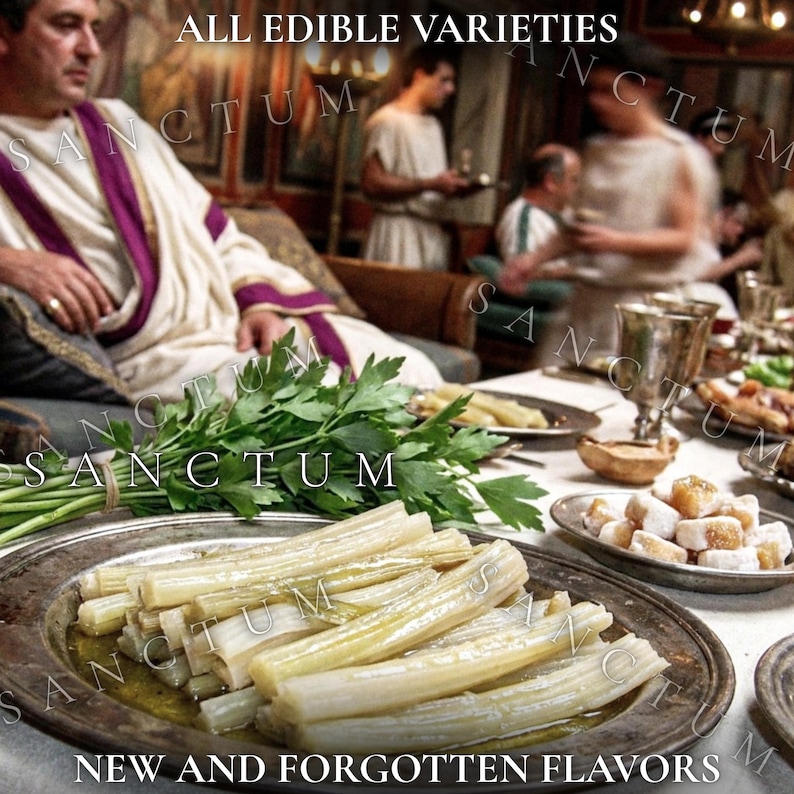
• Cardoon (Cynara cardunculus): Known to the Roman world through edible thistles such as cinara and carduus, the statuesque cardoon belongs to the same ancient lineage as the modern artichoke. While contemporary gardeners often focus on the artichoke's flower bud, Roman sources highly prized the dressed and preserved stalks of these thistle crops. Their agricultural value was immense; Pliny the Elder noted that well-kept thistle plots could bring in 6,000 sesterces a year, delighting in the fact that they could be preserved so that “a day may not pass without our having thistles at table.” The ancient Roman cookbook De Re Coquinaria, attributed to Apicius, provides precise culinary instructions for their preparation, stating in Recipe 112: “Cardoons are eaten with a dressing of briny broth, oil, and chopped hard eggs.” Fully edible when properly prepared, these stalks offer a mild, complex artichoke flavor. To ensure the best culinary quality, the stems are typically wrapped and blanched in the garden for a few weeks before harvest to soften their texture and reduce bitterness.
• Marshmallow (Althaea officinalis): Rooted in the wider Roman mallow tradition, marshmallow belongs to a family of plants that historically represented plain and virtuous fare. The renowned Roman cookbook attributed to Apicius opens a recipe with the brisk phrase “Malvas minores oleogaro...,” while the poet Horace famously declared his preference for the humble plant over imperial excess: “As for me, olives, endives, and mallows provide sustenance” (me pascunt olivae, me cichorea levesque malvae). Pliny the Elder praised “both the cultivated and the wild” mallows, deliberately singling out marshmallow, or althaea, for its immense value in Roman botanical lore. The Greek physician Dioscorides also recognized its importance, lingering over its “white sticky root” in his writings, firmly securing this quiet marshland plant a place in both the classical kitchen garden and ancient tradition. The plant offers several edible parts; the young leaves offer a mild flavor and a naturally mucilaginous texture that acts as an excellent thickener for traditional soups and pottages.
© 2026 Sanctum Seeds. Original translations, editorial content, arrangement, and presentation protected. All rights reserved.
**Modern cultivars of historically documented plant species. No representation is made or implied that the seeds themselves are of historical or ancient origin/lineage.
-
Order today to get by Sep 10-17
Your order should arrive by this date if you buy today. To calculate an estimated delivery date you can count on, we look at things like the carrier's latest transit times, the seller's processing time and shipping history, and where the order is shipping to and from.
-
Returns & exchanges not accepted
But please contact me if you have problems with your order
-
Cost to ship: $5.97Enjoy free shipping to the US when you spend $35+ at this shop.
-
Ships from: Clackamas, OR
There was a problem calculating your shipping. Please try again.
Etsy Purchase Protection
Shop confidently on Etsy knowing if something goes wrong with an order, we've got your back for all eligible purchases —
see program terms

Reviews for this item
What buyers say, summarized by AI: Well packaged Fast shipping

Amazing seeds! I just love them!
Quick shipping and well-packaged. Will update if/when I attempt germination.

Wonderful seeds and quick shipping

I'm excited to try these!
Smooth shipping Has a history of shipping on time with tracking.
Speedy replies Has a history of replying to messages quickly.
Rave reviews Average review rating is 4.8 or higher.
More from this shop
Visit shop-
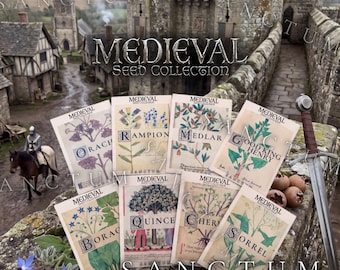
Medieval Garden Seed Collection | 8 Rare Edible Medieval Plants | Good King Henry, Rampion, Orach, Medlar
Sale Price $13.49
Original Price $14.99
-
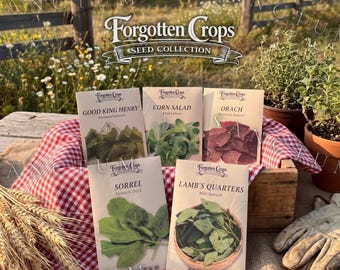
Forgotten Greens Garden Seed Collection | 5 Rare Edible Heritage Greens | Good King Henry, Sorrel, Orach
Sale Price $13.49
Original Price $14.99
-
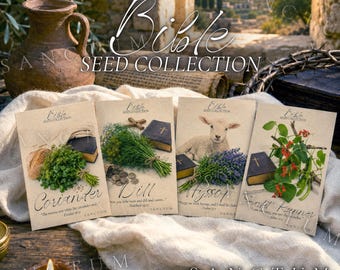
Bible Garden Seed Collection | 4 Edible Faith Inspired Plants | Grow God's Scripture Unique Herbs & Vegetables
Sale Price $10.79
Original Price $11.99
-
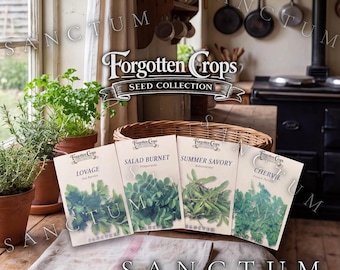
Forgotten Herbs Garden Seed Collection | 4 Unique Edible Heritage Herbs | Lovage, Chervil, Burnet Seeds
Sale Price $10.79
Original Price $11.99
-
Medieval Food Forest Box, Gift Box, Perennial Ancient Seeds, 12 Individual Packs, 01MC12
Sale Price $59.00
Original Price $118.00
-
Lovage Herb Seeds | Perennial Culinary & Medicinal Plant
Sale Price $1.99
Original Price $3.98
-
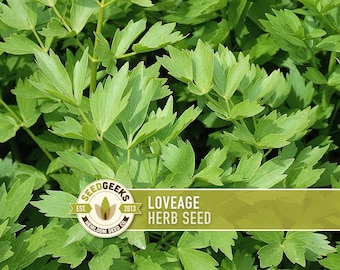
Lovage Herb Seeds, Heirloom Variety, Medicinal Use
Sale Price $1.99
Original Price $3.98
-
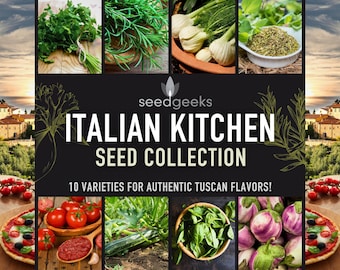
Italian Kitchen Garden Seed Collection – 10 Heirloom Varieties, Non-GMO
Sale Price $24.95
Original Price $49.90
-
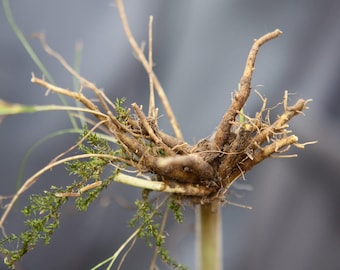
Valerian Root Seeds, Valerian Seeds, Organic Seeds, Heirloom Seeds, Garden Seeds, Medicinal Herb Seeds, Rare Gardening Seeds
$4.99
-
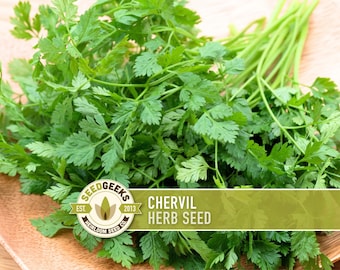
Chervil Herb Seed | 100+ Seeds, Organic, Non-GMO Culinary & Medicinal, Medieval Rare French Herb
Sale Price $1.99
Original Price $3.98
-
Chervil Herb Seed | 100+ Seeds, Organic, Non-GMO Culinary & Medicinal, Medieval Rare French Herb
Sale Price $1.99
Original Price $3.98
-
3,700 Lovage Seeds | Perennial Herb Seed Packet, Vegetable Gardening, Levisticum officinale
$5.99
-
Lovage Seeds – Levisticum officinale 50 Seeds | Aromatic Culinary & Medicinal Herb, Hardy Perennial
Sale Price $1.99
Original Price $3.98
-
Heirloom Italian Herb & Vegetable Seed Collection – 10 Non-GMO Varieties
Sale Price $24.95
Original Price $49.90
-
Sorrel Seeds | 200+ Seeds, Perennial, Organic, Lemon Flavor, Medieval Culinary Herb | Rumex acetosa
Sale Price $1.99
Original Price $3.98
-
Lovage Seeds Levisticum Officinale, Shipped with Tracking, Herb Garden Seeds, Culinary Herb, Kitchen Plant Seed
$1.93
Shoppers with similar taste loved these
-
Digital download
Kohler's Medicinal Plants Volume 3 Complete Set 80 Plates Printable Wall Art Bundle Vintage Flowers Botanical Illustrations Digital Download
$3.98
-
Digital download
Kohler's Medicinal Plants Volume 1 Complete Set 88 Plates Printable Wall Art Bundle Vintage Flowers Botanical Illustrations Digital Download
$3.98
-

Digital download
Kohler's Medicinal Plants Volume 4 Complete Set 21 Plates Printable Wall Art Bundle Vintage Flowers Botanical Illustrations Digital Download
$2.00
-
Digital download
Kohler's Medicinal Plants Volume 2 Half Set 57 Plates Printable Wall Art Bundle Vintage Flowers Botanical Illustrations Digital Download
$3.50
-
Digital download
Kohler's Medicinal Plants Volume 2 Half Set 58 Plates Printable Wall Art Bundle Vintage Flowers Botanical Illustrations Digital Download
$3.50
-
Digital download
88 Vintage Botanical Clipart Bundle, Koehler Medicinal Plants, Antique Herbalist Illustrations for Junk Journals
$5.99
-
Digital download
Vintage Medicinal Plant Illustrations – Koehler's Vol 2 (Printable Download)
$5.99
-
William Morris Print, Kew Gardens Print, London Print, William Morris Poster, Vintage Wall Art, Floral Art, Vintage Poster
Sale Price $14.86
Original Price $18.58
-
William Morris Print, Kew Gardens Print, London Print, William Morris Poster, Vintage Wall Art, Floral Art, Vintage Poster
Sale Price $14.86
Original Price $18.58
-
William Morris Print, Kew Gardens Print, London Print, William Morris Poster, Vintage Wall Art, Floral Art, Vintage Poster
Sale Price $14.86
Original Price $18.58
-
Kew Gardens Print, London Print, Botanical Gardens Print, William Morris Poster, Vintage Wall Art, Floral Art, Vintage Poster, A1/A2/A3/A4
$18.39
-
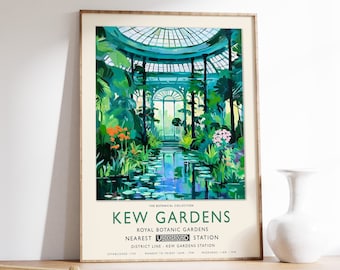
Kew Gardens Print, London Print, Botanical Gardens Print, William Morris Poster, Vintage Wall Art, Floral Art, Vintage Poster, A1/A2/A3/A4
$18.39


