









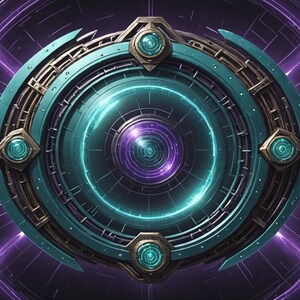

Price:$6.99
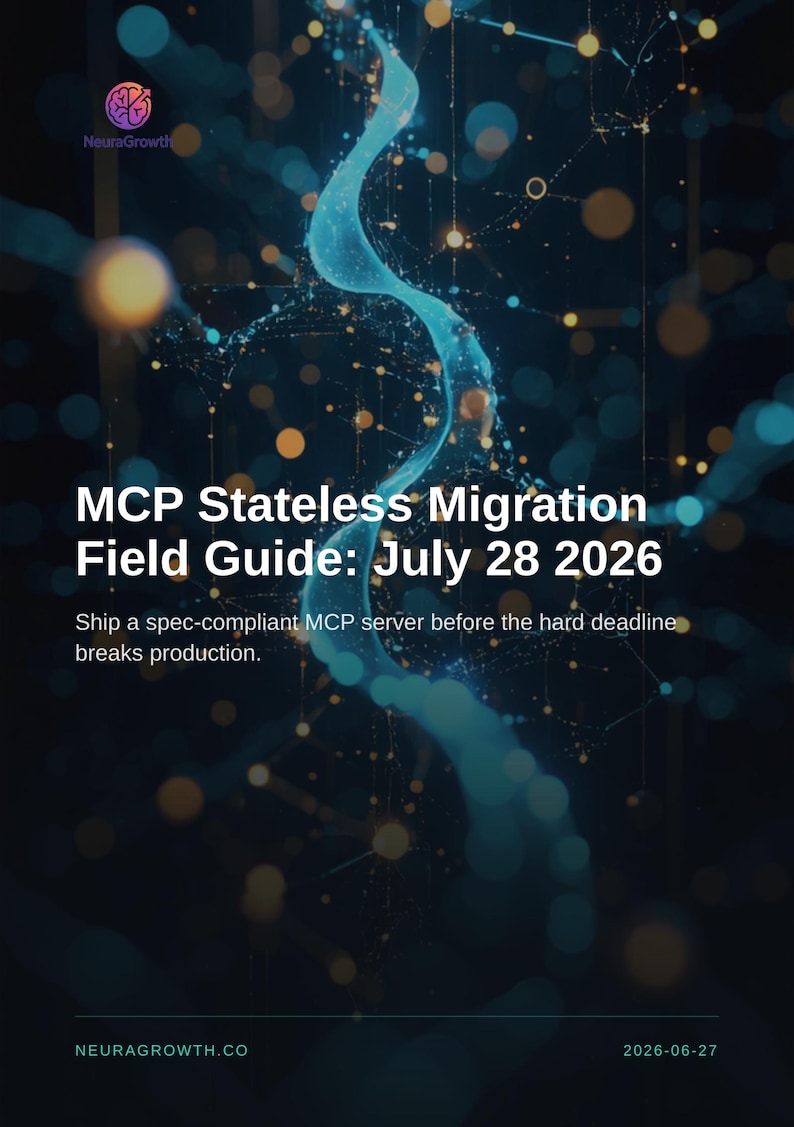
MCP Server Migration Guide: July 28 Stateless Deadline
You can only make an offer when buying a single item
Highlights
You built an MCP server that works today. On July 28, 2026, it stops working.
The Model Context Protocol is shifting to stateless operation. If your server still emits session assumptions or legacy header formats, it will fail negotiation with updated clients. Production breaks. You lose integration trust. Fixing it under pressure costs days.
This guide walks you through the exact changes required before that deadline, in order of impact and effort.
## The Problem You're Facing
MCP underwent a breaking specification update. Three core changes hit hardest:
- Mcp-Session-Id is no longer assumed or required. Servers must operate without session state.
- Header emission now requires explicit Mcp-Method and Mcp-Name fields on streamable HTTP responses.
- Experimental task lifecycle was finalized. Old task patterns fail validation.
If you haven't migrated, your server will reject client requests come July 28. You'll see negotiation failures in logs. Clients will move to competing integrations. There's no graceful fallback.
## What's Inside This Guide
Section 1: The 60-Second Self-Assessment
Run a diagnostic against your production server right now. Identify which breaking changes affect your code.
Section 2: Dropping the Mcp-Session-Id Assumption
Exact code patterns to remove session-state dependencies. Refactor your request handlers to treat each call as stateless. Includes before-and-after examples for Node.js, Python, and Go.
Section 3: Emitting Mcp-Method and Mcp-Name on Streamable HTTP
The most common breakage point. Learn where these headers go in your response payloads. Covers standard HTTP frameworks and custom transport layers. Includes a checklist for testing header compliance.
Section 4: Migrating Experimental Tasks to the Finalized Lifecycle
Task schema changed. Walk through the specific field renames and new validation rules. Update your task registry without rewriting task handlers.
Section 5: Testing and Rollout Strategy
How to validate your changes against the spec before deploying. Staging checklist. Rollback plan if you discover edge cases.
Section 6: Common Pitfalls and Fixes
What catches most teams during migration. Session leak debugging. Header emission gotchas. Task lifecycle surprises. Solutions for each.
## Why This Matters Now
You have until July 28. That sounds distant until you factor in staging, testing, rollback buffers, and other production work. Teams that wait until June face panic scheduling and botched deploys.
Fixed early, you gain confidence. Your server stays compatible through the transition. Clients trust your integration. You avoid the 2 AM incident when the deadline arrives.
## What You'll Accomplish
After working through this guide, you will:
- Know exactly which parts of your server code need to change.
- Have runnable code snippets ready to drop into your codebase.
- Understand the why behind each breaking change (so you can explain it to your team).
- Have a tested migration path from your current spec to July 28 compliance.
- Be ready to deploy weeks ahead of the deadline.
## Format and Access
This is a digital PDF guide. 40 pages. Code examples are copy-paste ready. Diagrams show request/response flow for each migration step. Checklist templates included so you can track progress across your services.
Download it once, reference it offline. Share with your team. Use it as your specification decoder for the MCP July 28 transition.
Start with the self-assessment in Section 1. Run it against your production server today. Identify which changes apply to you. Then work through the relevant sections in whatever order fits your codebase.
The guide is built for speed. No filler. Straight technical instruction and working code. You'll have your server assessed and your first migration steps planned within an hour.
About this product
NeuraGrowth is an AI-assisted, human-curated digital studio made in Poland. Concept, structure, and final pass on every product are human-directed. Drafting, layout, illustration, and image rendering use generative AI tools (Claude by Anthropic, Stability AI, Ideogram, DALL-E, Gemini, and FLUX), selected per task for the best output. We don't auto-publish. Every file passes hands-on review before it goes live.
Instant Download
Your files will be available to download once payment is confirmed. Here's how.
Instant download items don’t accept returns, exchanges or cancellations. Please contact the seller about any problems with your order.
Etsy Purchase Protection
Shop confidently on Etsy knowing if something goes wrong with an order, we've got your back for all eligible purchases —
see program terms

Be the first to review this item
More from this shop
Visit shop-

Digital download
Claude MCP Obsidian Setup Guide | Connect Desktop to Vault
$4.99
-
Digital download
Claude MCP Setup Guide: No Terminal Required
$6.99
-
Digital download
Summer Activity Planner: 90-Day Family System for Screen-Free Fun
$6.99
-

Digital download
Godot 4 Game Jam Template: Complete Survival Guide for Solo Developers
$4.79

