

Rare find
Price:$158.88
有線七宝 Yusen Shippo Cloisonne Vase Floral 紅薔薇 Red Rose 薔薇 White Rose Blossoms Vaas Akasuke Red Ginbari Foil Jar Bird Jug Bamboo Urn Japan
Your order should arrive by this date if you buy today. To calculate an estimated delivery date you can count on, we look at things like the carrier's latest transit times, the seller's processing time and shipping history, and where the order is shipping to and from.
You can only make an offer when buying a single item
-
Order today to get by Apr 29-May 4
Your order should arrive by this date if you buy today. To calculate an estimated delivery date you can count on, we look at things like the carrier's latest transit times, the seller's processing time and shipping history, and where the order is shipping to and from.
-
Returns & exchanges not accepted
But please contact me if you have problems with your order
-
Cost to ship: $25.00
-
Ships from: Guam
-
Deliver to United States, 43215
There was a problem calculating your shipping. Please try again.
What to know
About this item
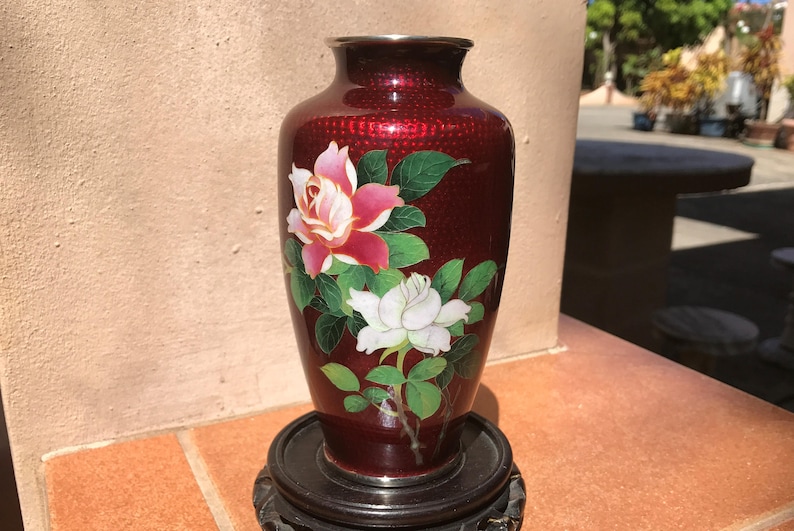
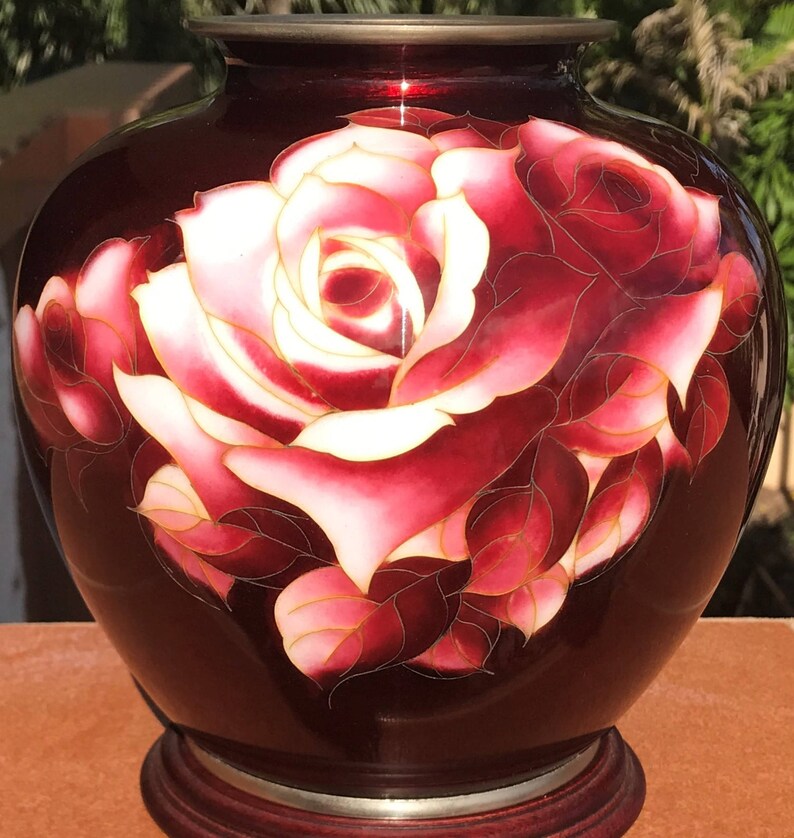
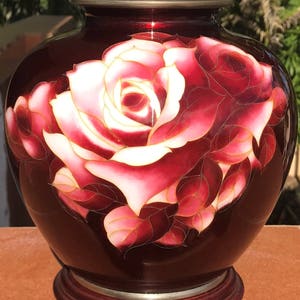
Beautifully hand painted ROSES Pattern VASE from Japan!
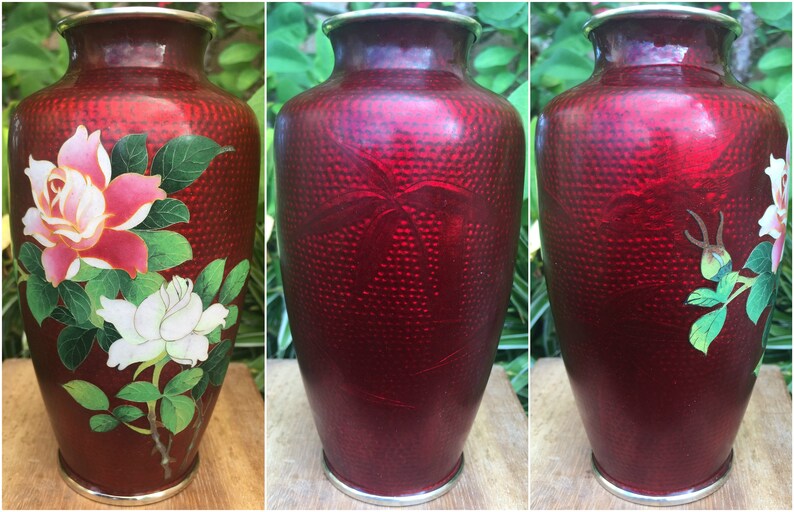
Fine example of Shippou Yaki featuring a classical pattern of Red & White Roses! Intricately built up enamel glazes filling in the silver wire outlines. The Rose Blossoms are done in graduations of pastel pink colors to primary color fuschia. The White Rose is tinged in both a light/light pastel mint-green and pastel pink, as in real-life white roses. The one immature bud also graduates in colors from green to mocha.
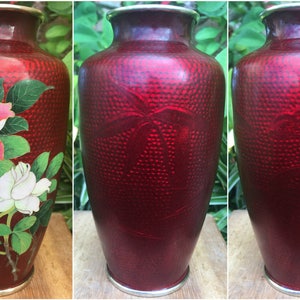
The Akasuke/Pigeon's Blood Foil... is embossed with 3 stalks of Bamboo in a 3D effect on back. As you turn the vase clockwise, near the top, there's an embossed plump Swallow in flight!
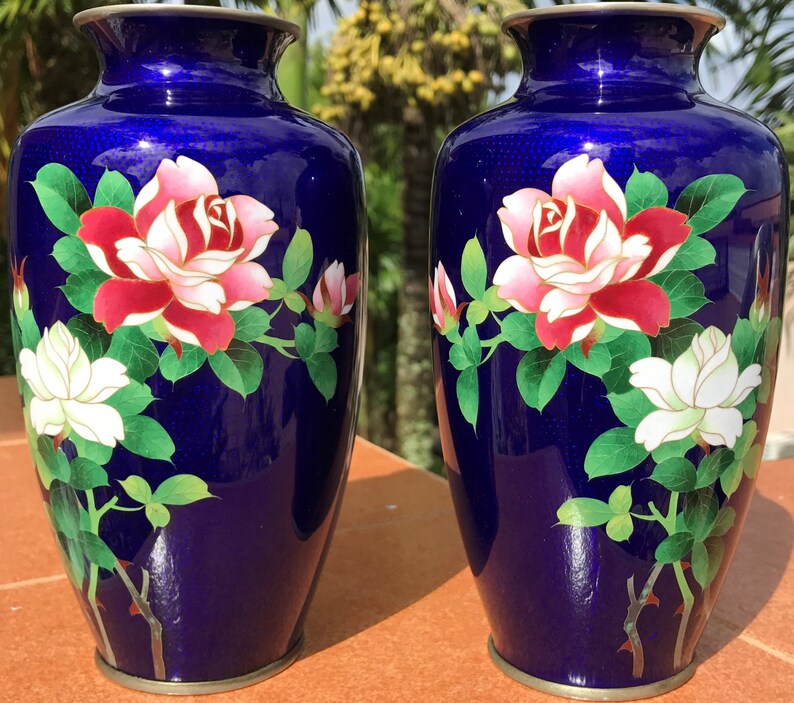
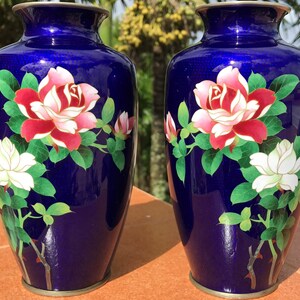
PIC 4 - STUNNING PAIR OF ROSES CLOISONNE ON BLUE GINBARI >
https://www.etsy.com/listing/493452984/mirror-pair-vases-yu-xian-q-bo-yusen
PIC 5 - BEAUTIFULLY LARGE ANDO ROSE GINBARI VASE >
https://www.etsy.com/listing/517584452/ando-large-yu-xian-q-bo-yusen-shippo
HANAKOTOBA 花言葉 - Ancient Japanese "Language of Flowers"
BENIBARA 紅薔薇 - Red Rose = Love/In Love
BARA 薔薇 - White Rose = Innocence/Silence/Devotion
SHIPPOU YAKI 七宝焼 - Cloisonne Ware
TOMEIYU SHIPPO 透明釉七宝 - Transparent Enamels
YUSEN SHIPPO 有線七宝 - Wired Cloisonne Technique (usually silver)
GINBARI 銀針 - Embossed Foil
CLOISONNE enamels are painted on and fired and the process done for several layers/firings to build up the enamels to fill in the silver wire spaces of the design until the item is smooth to the touch.
Searching for that PERFECT VASE? Please visit my shop with 200+ Antique Vases from Old Delft, Faience, Chinois to Japonais Fukagawa/Koransha >
https://www.etsy.com/shop/GuamAntiquesNstuff?section_id=17084253
Would make a perfect gift for MOM'S BIRTHDAY or an excellent affordable addition to your own collection!
* SHIPPING MOST COUNTRIES
* Guahan local PU only
- Please click on the tab above below the pics for SHIPPING & POLICIES
- Combine Shipping & SAVE!
PHOTOS - integral to description, please use zoom feature to view details.
MARK - n/a
SPECS - about 6.125"H x 3.25"D
CONDITION - EXCELLENT!
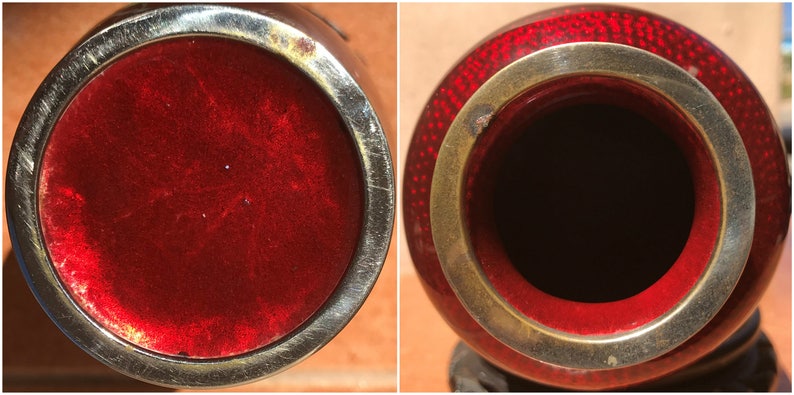
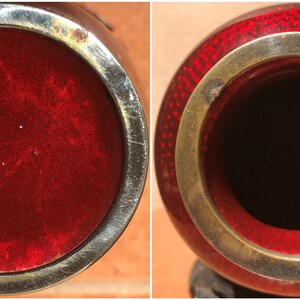
- tiny/minute scratches to the clear glaze here and there
- pitting to silver rim requires professional polish
- otherwise, no knocks/cracks
MY SUBJECTIVE GRADING GUIDE >
Outstanding - pristine, like new
Excellent - excellent as it's antique/vintage (minor issues)
Good - moderate issues
Fair - more than moderate issues, okay for display, but not a prized piece
Poor - major issues = a bargain deserving of continued existence
🌴 🌴 🌴 🌴 🌴 🌴 🌴 WHERE AMERICA'S DAY BEGINS! 🌴 🌴 🌴 🌴 🌴 🌴 🌴
🌺 HÅFA ADAI from the tropical island paradise of GUAHAN (Guam/USA) 🌺
"Although Chinese cloisonné enamels had long been highly valued it was not until the late sixteenth century that cloisonné enamels became more widely used in Japan.
Enamelling was employed primarily on architectural fittings, for example hikite (door-pulls) and kugi-kakushi (decorative nail covers) as well as for the decoration of small objects such as suiteki (water-droppers), part of writing sets and used in the preparation of ink.
There had long been a demand among the samurai for fine decoration of sword fittings and cloisonné enamels were used on tsuba (sword guards). The finest of these were made by the Hirata School, founded by Hirata Dōnin (died 1646) which was active well into the nineteenth century.
The renaissance of Japanese cloisonné manufacture is credited to the former samurai, Kaji Tsunekichi (1803 - 1883) of Nagoya in Owari Province (modern Aichi Prefecture). Kaji, like many other samurai of his time, was forced to find ways to supplement his meagre official stipend. It is believed that around 1838 he obtained a piece of Chinese cloisonné enamel and by taking it apart and examining how it was made, he eventually produced a small cloisonné enamelled dish.
By the mid-1850s he was sufficiently confident take on pupils and by the late 1850s was appointed official cloisonné maker to the daimyō (feudal chief) of Owari. He based his designs on the motifs and colour-schemes of Chinese cloisonné enamels and his early works are characterised by the use of a larger number of background wires. These were decorative, forming an integral part of the design, and practical in that they prevented the enamels from running during firing."
🌸 🎏 家族 🎏 家族 🎏 家族 🎏 家族 🎏 家族 🎏 家族 🎏 家族 🎏 家族 🎏 🌸
I'm not an expert on Porcelain. The information above is based on my research as a collector. It's time to downsize and find an appreciative home for this exquisite piece!
Feel free to contact me if you have questions or need additional photos.
Be the first to review this item


More from this shop
Visit shop-
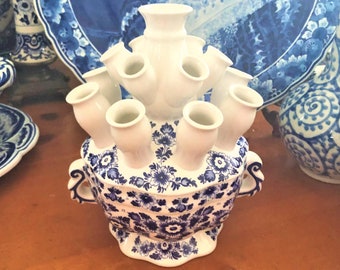
Delft Tulipiere Vase Delfts Blauw Vaas 15 Neck 花王 Kaou Pioen Peony Blossoms Pique Fleurs Tulipier Floral Finger Jar Flower Jug
$388.88
-
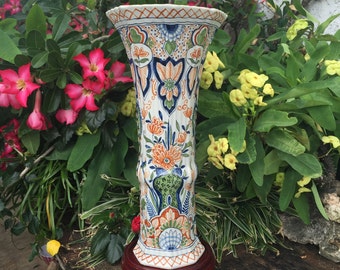
1800's Makkum Tichelaar Tall Delft Polychrome Vase Delfts Polychroom 菊 Kiku Chrysant Chrysanthemum Vaas Friesland Netherlands *Free SH
$488.88
-
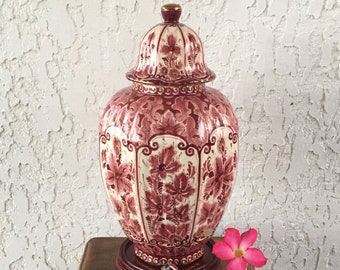
LARGE! Regina Delft Red Ginger Jar Delfts Rood Deksel Vaas Orchid & Tiger Lily Pink Gold Temple Vase Lidded Urn Jug Netherlands Free SH
$777.77
-
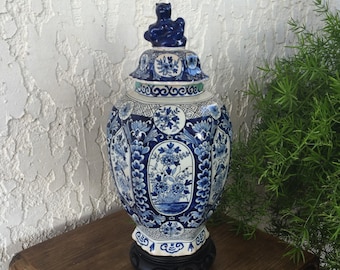
1700's Old Delft Ginger Jar Vase Delfts Blauw Chinois 花王 Kaou Pioen Peony Deksel Vaas Signed Jacobus Pynacker? Urn Netherlands *Free S&H
$388.88
-
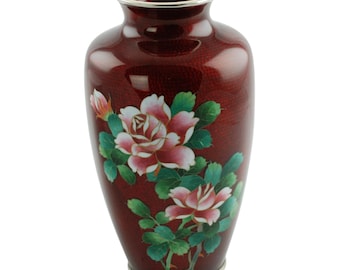
Vintage Japanese Akasuke Ginbari Cloisonné 7" Vase with Rose Motif
$175.00
-
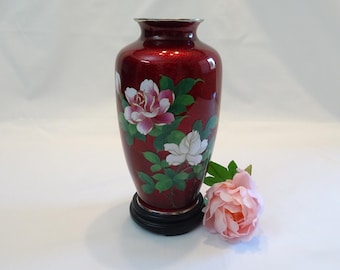
Japanese Pigeon Blood Red Ginbari Vase on Wooden Stand, Vintage Foil Cloisonné Enamel Floral Vase, Collectible Asian Decorative Accent
$89.00
-

Vintage Hinode Craftsman Cloisonné Vases Pair, Blood Red Roses, Original Tag
$89.99
-
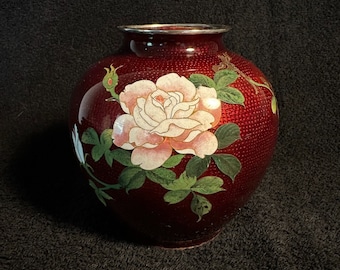
Fine Japanese Cloisonne Akasuke Pigeon Blood Round Vase with Roses
$75.00
-
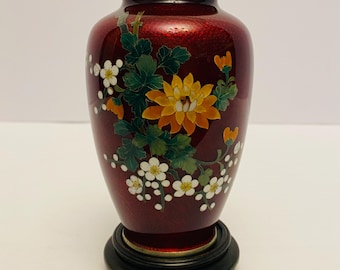
Vintage Japanese Ginbari Pigeon Blood Red Cloisonne Flower 6” Tall Vase.
Sale Price $55.98
Original Price $79.97
-
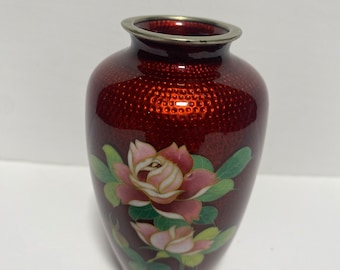
Japanese Small Cloisonne Pigeon Blood Red Ginbari Red Foil Rose Floral Vase - 5”
$49.99
-
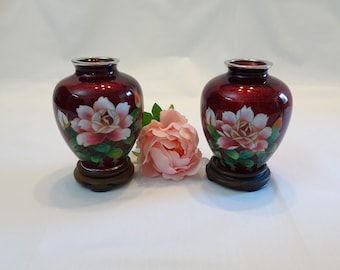
Small Japanese Pigeon Blood Red Ginbari Vase on Wooden Stand, Vintage Foil Cloisonné Enamel Floral Vase, Collectible Asian Decorative Accent
$34.00
-
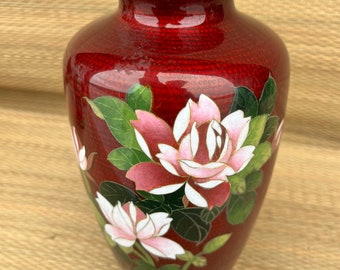
7 1/2” Japanese Cloisonne Enamel Pigeon Blood Red w/Floral Design Vase Ginbari
$195.00
-
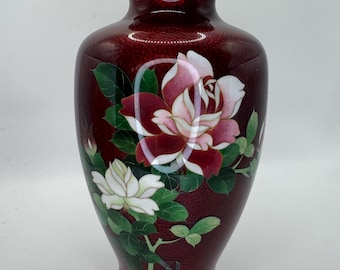
Vintage Japanese Ginbari Cloisonne Akasuke Pigeon Blood Roses Vase
$58.00
-
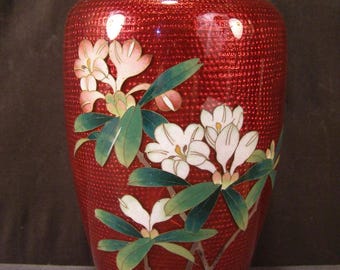
Antique Japan Cloisonne Pigeon Blood Enamel Ando Akasu Ginbari Foil Flower Vase Red
$99.95
-
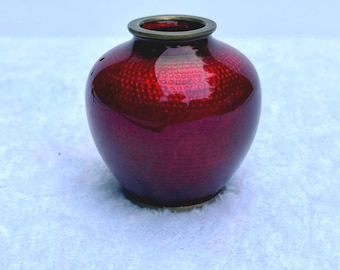
Vintage Japanese Cloisonné Ginbari Vase 3" | Pigeon Blood Red Enamel | Floral Foil Art Mini Vase | Bamboo design
$84.68
-
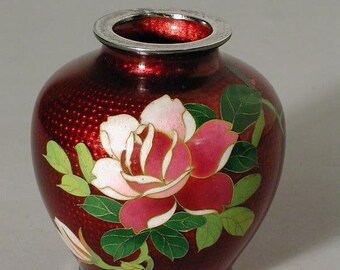
Ginbari cloisonne enamel bud vase, pink roses and bamboo, red ground, antique, Japan
$200.00


