

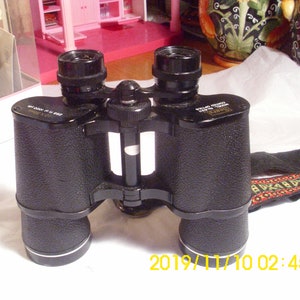
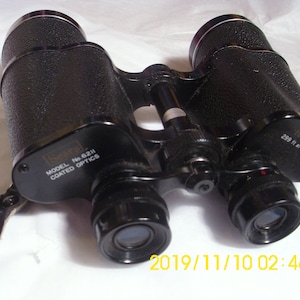
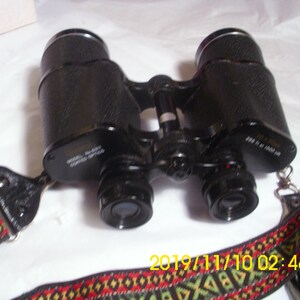
Vintage Sears Binoculars: Coated Optics, 10x50mm, Colorful Strap
Item highlights
Seller's description
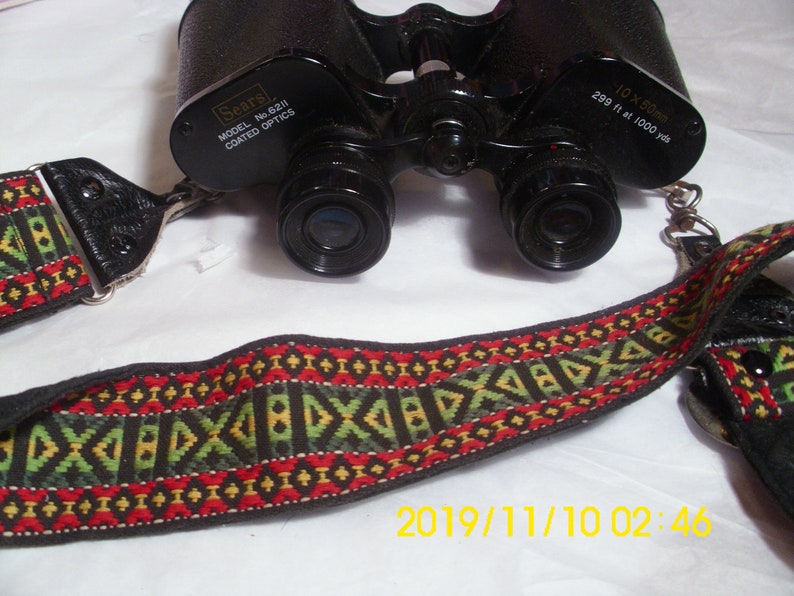
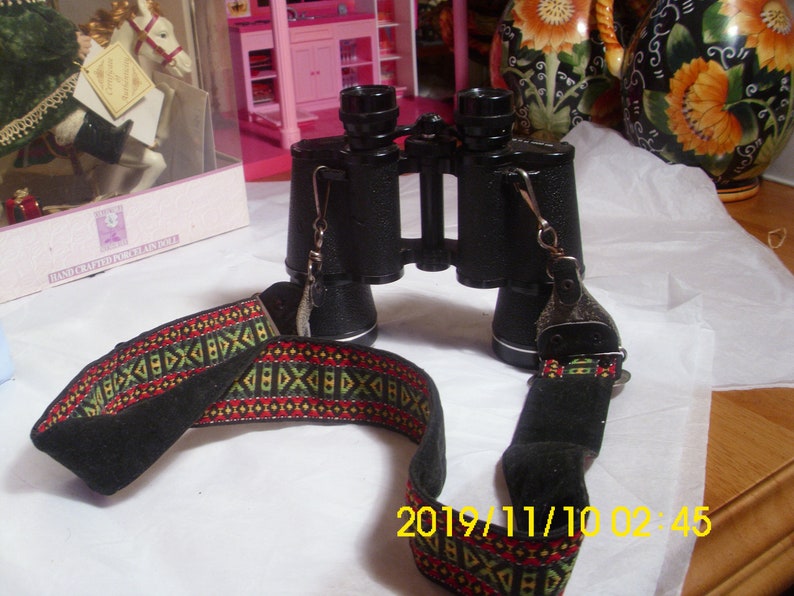
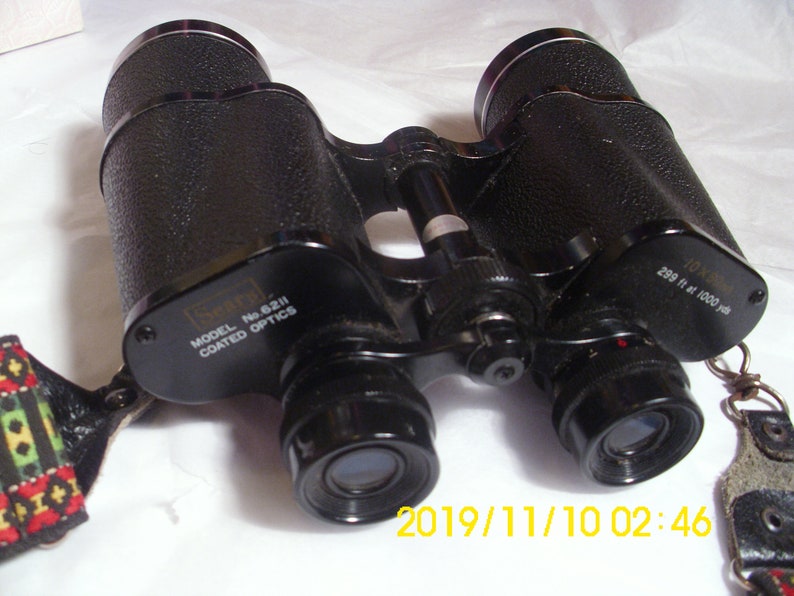
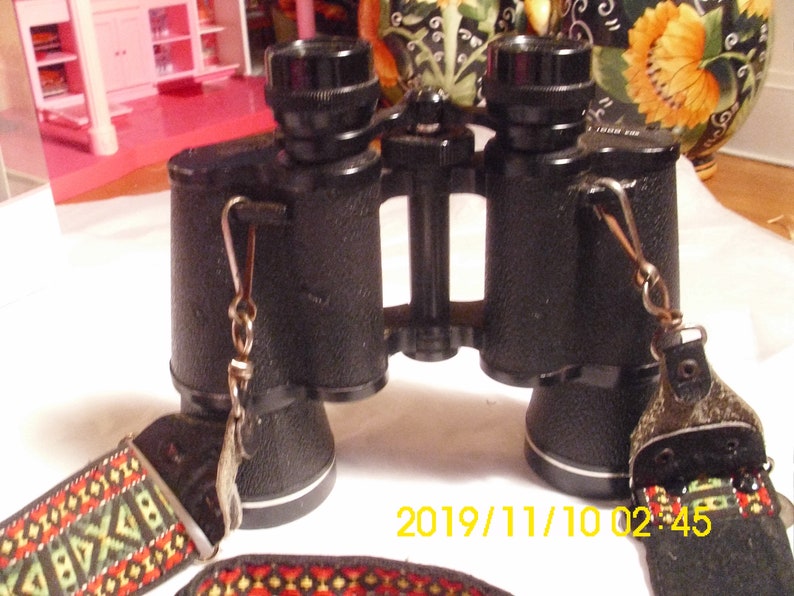
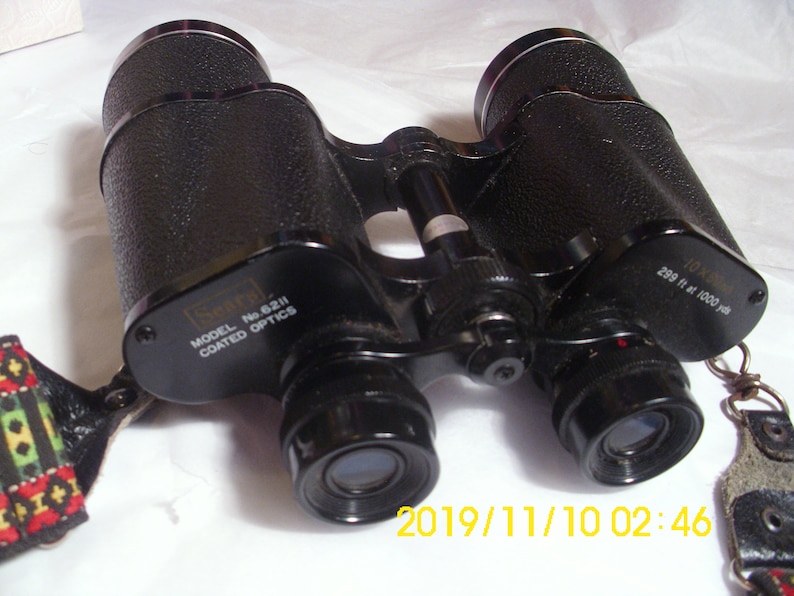
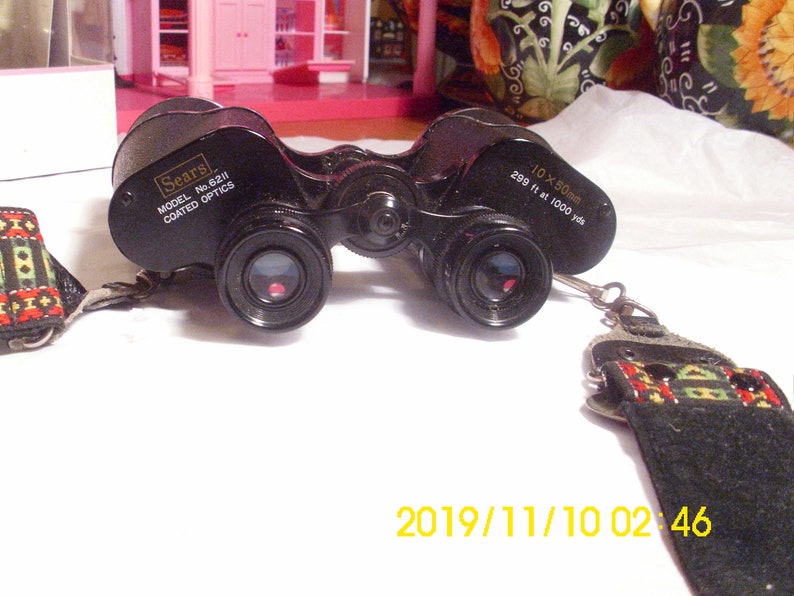
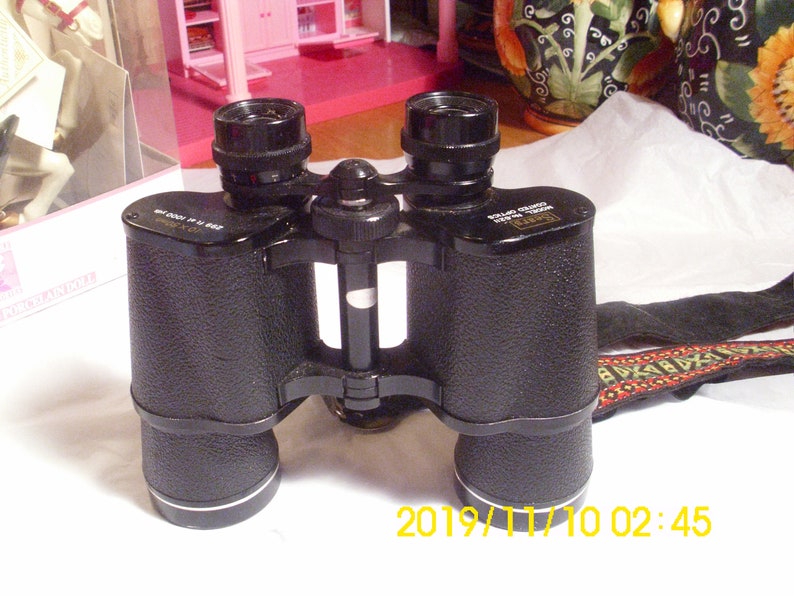
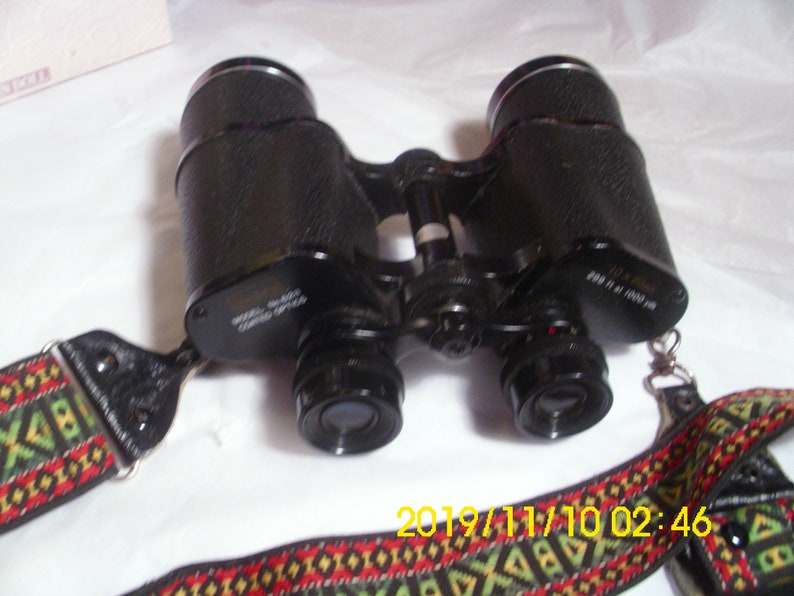
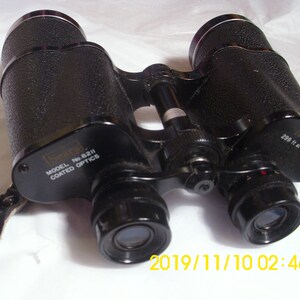
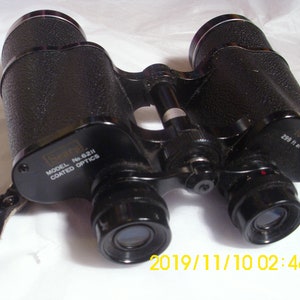
Vintage Binoculars
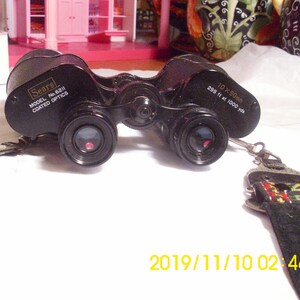
Sears
Coated Optics
10 x 50mm
10x magnification
50mm lenses
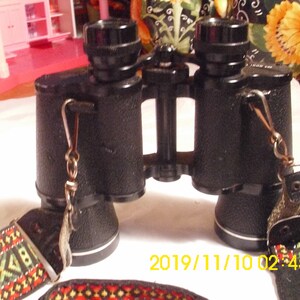
Colorful Strap
299 Ft. at 1000 yards
Japan
KY CG07142
What do you know about Binoculars ?
Eyepiece The eyepiece is the part you look through.
Eye relief: The eye relief is the distance between the eyepiece and the user’s eyes. Eyeglass wearers should choose a long eye relief, at least 13 mm. Some binoculars have an adjustable eye relief for multiple users, using methods such as rubber eye cups which fold back.
Inter-pupil distance: This is the distance, in millimeters, between the two eyepieces. The distance between the average person’s pupils is between 60 mm and 72 mm. Make sure you choose binoculars that will adjust to your size. You can have someone measure the distance by looking straight forward and using a metric ruler.
Exit pupils: The beams of light that exit the eyepieces and hit your pupils are called exit pupils; these help determine brightness: Larger exit pupils let in more light. Divide the diameter of the objective lens by the magnification to find the size. For nighttime use, you will want a larger exit pupil, around 7 mm.
Focusing methods: Many binoculars focus with a central knob to adjust both sides at one time; however, some binoculars have a fixed focus, also known as “focus free,” so they will not have a focusing knob. Others will have a diopter on one barrel of the binoculars, so you can customize the view through each eye.
Binoculars contain prisms that flip objects over to the way you would expect to see them down here on Earth, “right-side up.” There are two types of prisms, roof and porro, and each type affects the size and shape of the binoculars.
Three unique versions: 8×32 (compact), 10×42 (mid size) and 20×50 (full size).
What Do the Numbers Mean?
If you’ve been shopping around for binoculars you’ve probably noticed that every model name is always followed by two numbers. The first number is their magnification (or zoom/power) and the second number is the diameter of their lenses. For example, 10×42 binoculars will have 10x magnification and 42 mm lenses.
What is the Ideal Magnification?
Every slight shake of your hands is also magnified as much as the image is.
To prevent image shakiness, it is recommended to use binoculars with either 8x or 10x magnification. You will then be able to enjoy a crisp, stable image and see your subjects in excellent detail from both near and far.
What is the Best Lens Size?
Binoculars with larger lenses (42mm) can gather more light and therefore produce brighter images. They work better in low light settings such as dawn, dusk, fog, rain etc. Compact binoculars (32mm) have smaller lenses which gather less light. They are much lighter and portable and therefore suitable for hiking, mobile use or when you need to travel light.
Rare find
Price:$101.00
You can only make an offer when buying a single item
-
Get it byNov 13-23
Your order should arrive by this date if you buy today. To calculate an estimated delivery date you can count on, we look at things like the carrier's latest transit times, the seller's processing time and shipping history, and where the order is shipping to and from.
-
Cost to ship$13.26 to United States, 43215.
Seller's description
Specifications
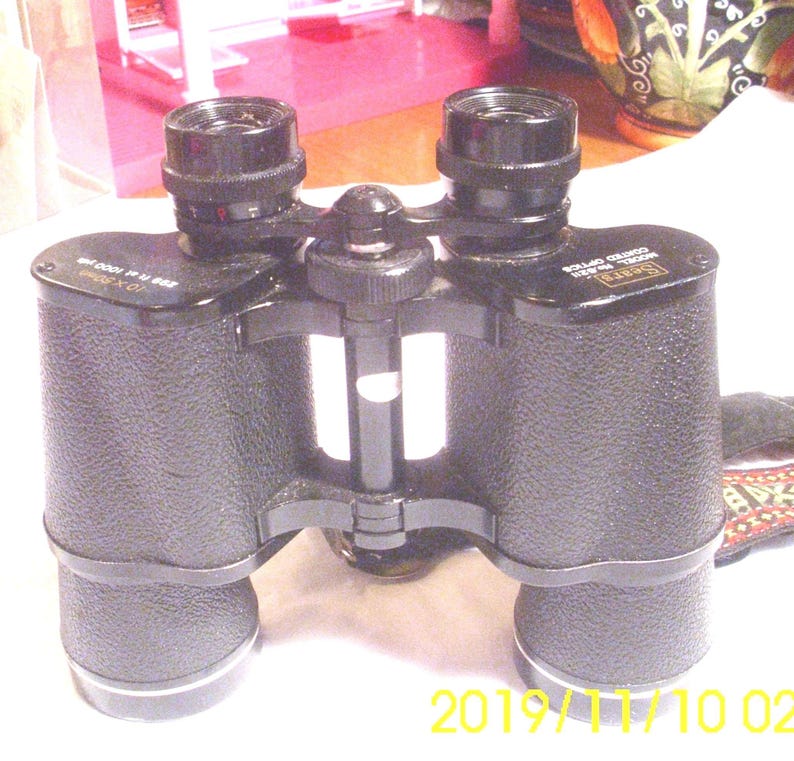
Vintage Binoculars
Sears
Coated Optics
10 x 50mm
10x magnification
50mm lenses
Colorful Strap
299 Ft. at 1000 yards
Japan
KY CG07142
What do you know about Binoculars ?
Eyepiece The eyepiece is the part you look through.
Eye relief: The eye relief is the distance between the eyepiece and the user’s eyes. Eyeglass wearers should choose a long eye relief, at least 13 mm. Some binoculars have an adjustable eye relief for multiple users, using methods such as rubber eye cups which fold back.
Inter-pupil distance: This is the distance, in millimeters, between the two eyepieces. The distance between the average person’s pupils is between 60 mm and 72 mm. Make sure you choose binoculars that will adjust to your size. You can have someone measure the distance by looking straight forward and using a metric ruler.
Exit pupils: The beams of light that exit the eyepieces and hit your pupils are called exit pupils; these help determine brightness: Larger exit pupils let in more light. Divide the diameter of the objective lens by the magnification to find the size. For nighttime use, you will want a larger exit pupil, around 7 mm.
Focusing methods: Many binoculars focus with a central knob to adjust both sides at one time; however, some binoculars have a fixed focus, also known as “focus free,” so they will not have a focusing knob. Others will have a diopter on one barrel of the binoculars, so you can customize the view through each eye.
Binoculars contain prisms that flip objects over to the way you would expect to see them down here on Earth, “right-side up.” There are two types of prisms, roof and porro, and each type affects the size and shape of the binoculars.
Three unique versions: 8×32 (compact), 10×42 (mid size) and 20×50 (full size).
What Do the Numbers Mean?
If you’ve been shopping around for binoculars you’ve probably noticed that every model name is always followed by two numbers. The first number is their magnification (or zoom/power) and the second number is the diameter of their lenses. For example, 10×42 binoculars will have 10x magnification and 42 mm lenses.
What is the Ideal Magnification?
Every slight shake of your hands is also magnified as much as the image is.
To prevent image shakiness, it is recommended to use binoculars with either 8x or 10x magnification. You will then be able to enjoy a crisp, stable image and see your subjects in excellent detail from both near and far.
What is the Best Lens Size?
Binoculars with larger lenses (42mm) can gather more light and therefore produce brighter images. They work better in low light settings such as dawn, dusk, fog, rain etc. Compact binoculars (32mm) have smaller lenses which gather less light. They are much lighter and portable and therefore suitable for hiking, mobile use or when you need to travel light.
-
Handpicked by
-
EraVintage from the 1970s
-
Materialsmetal, CLOTH, glass, Steel
Delivery details and policies
-
Get it byNov 13-23
Your order should arrive by this date if you buy today. To calculate an estimated delivery date you can count on, we look at things like the carrier's latest transit times, the seller's processing time and shipping history, and where the order is shipping to and from.
-
Returns and exchangesNot accepted.
-
Ships fromGreensboro, NC
-
Cost to ship$13.26 to United States, 43215
There was a problem calculating your shipping. Please try again.
If something goes wrong with an order, we've got your back on all eligible purchases. View program terms
Etsy supports climate solutions, from electric delivery trucks to carbon offsets for every delivery. View how
Meet your seller

Usually responds in a few hours
More from this shop
-
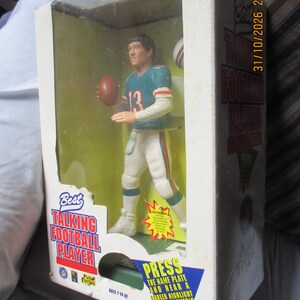
BEST Talking Football Player Dan Marino # 13 Miami Dolphins
$124.00
-
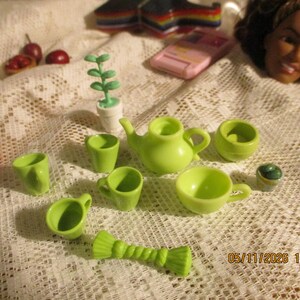
Doll Tea Cups and Pitcher Other Green Items Flower in Pot
$5.00
-
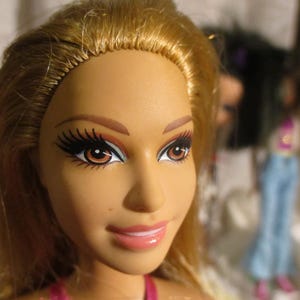
Barbie Doll Scenic Dress with Multi-colors Shoes
$34.00
-
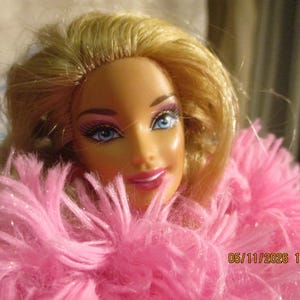
Barbie Doll in High Fashion Outfit Pink Coat Dress Shoes
$34.00
-
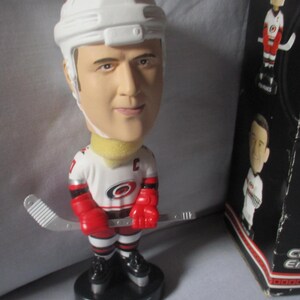
2002-2003 Collectors Series Bobblehead Hockey Player Ron Francis #10
$34.00
-
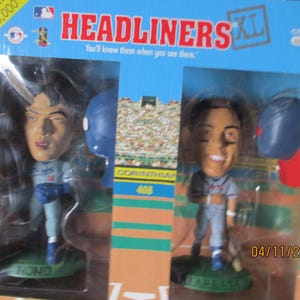
Headliners Hideo Nomo LA Dodgers Andres Galarraga Atlanta Braves
$129.00


Looking for more? Find it on Etsy