3d Printed Planter

5,000+ items
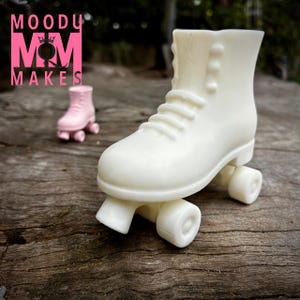

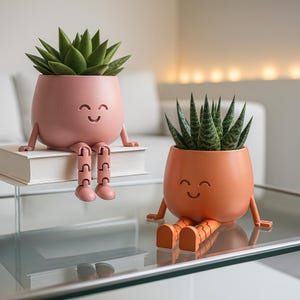
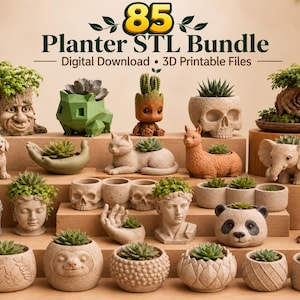
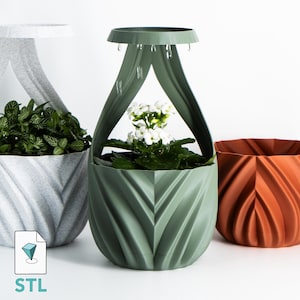
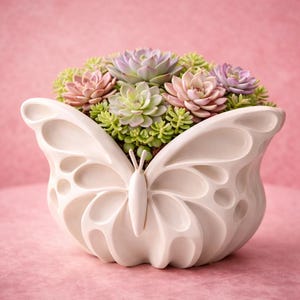
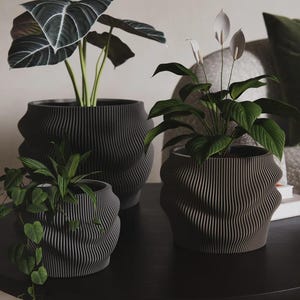
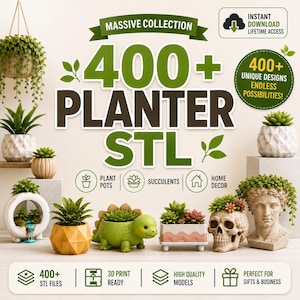
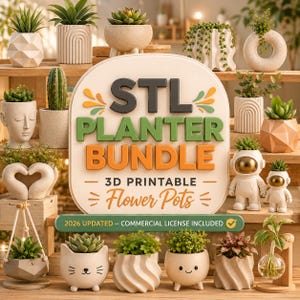
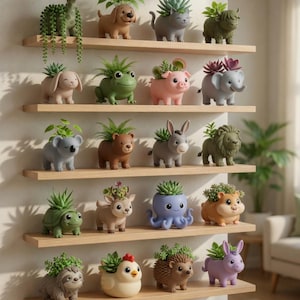
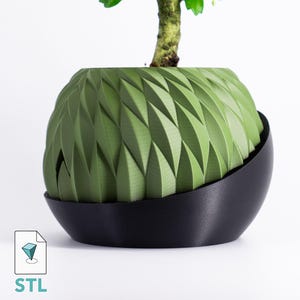
Discover unique 3D printed planters, perfect for plant lovers and home decor enthusiasts. Explore modern geometric designs, whimsical character pots, and practical organizers, all crafted with creativity and care.

Summarized based on similar shopper trends using AI

Browse finds from United States

  • Loading...

  • Loading...

  • Loading...

  • Loading...

  • Loading...

  • Loading...

Review spotlight

Common Questions

Answers based on page-topic info using AI

Many 3D printed planters are made from PLA filament, which is popular for its crisp detail and smooth finishes. You’ll also see PETG on a number of items, since it typically handles moisture and warmer windowsills better than PLA. Some planters use ABS, ASA, or flexible blends for specific looks, but those are less widely available.
No, 3D printed planters don’t always come with built-in drainage holes. Plenty of 3D printed planter styles are made as cachepots meant to hold a nursery pot, which keeps water contained. Several items do offer drainage, sometimes with a matching saucer, a removable plug, or an inner insert to separate soil from runoff.
Yes, many 3D printed planters can be customized with a name or short text, especially styles with a smooth band, label area, or raised lettering. Options vary by item: some sellers offer engraved text, embossed letters, or removable nameplates, while others only sell fixed designs. Check the item details for character limits and font choices.
3D printed planters come in a wide range of sizes, from tiny pots for succulents and propagation cuttings to larger planters meant for small houseplants. You’ll find mini desk-friendly styles, standard nursery-pot replacements, and oversized statement planters. Many designs specify an inner pot size or include a matching drip tray to help you choose.
For a sturdy 3D printed planter, look for items described with thicker walls and multiple perimeters rather than high infill alone. Several planters note 3–5 wall lines (about 1.2–2.0 mm) with 4–6 top and bottom layers for rigidity and better water containment. Infill around 15–30% is typically plenty for non-structural pots.