

Rare find
Price:$288.88
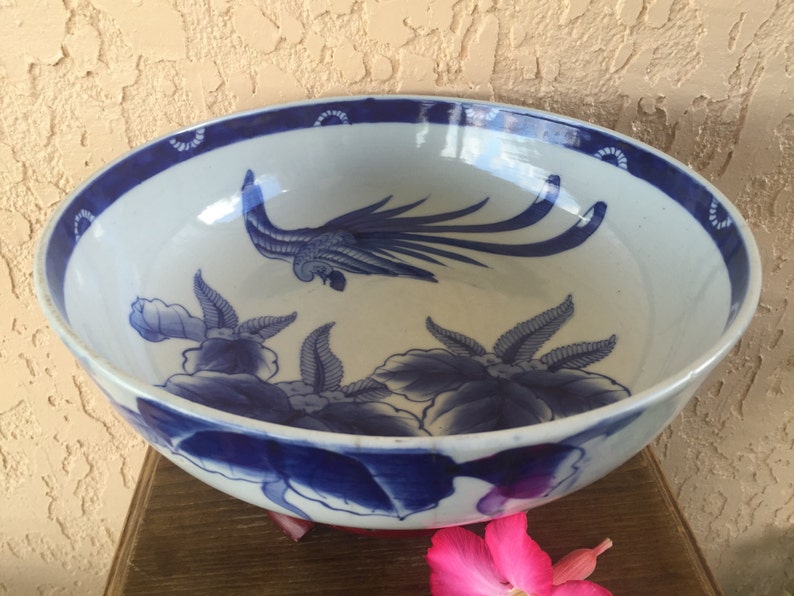
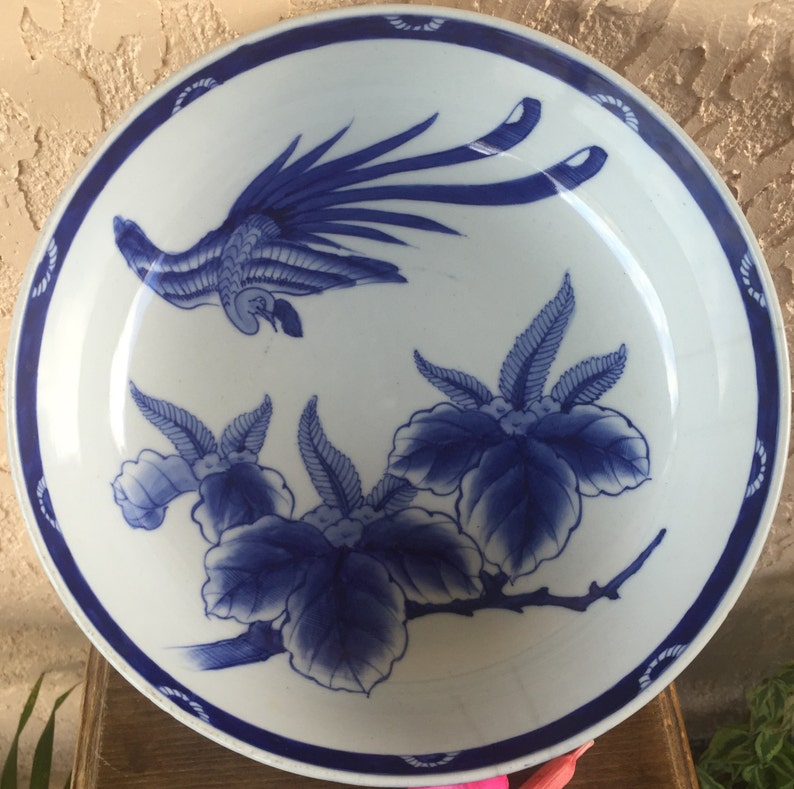
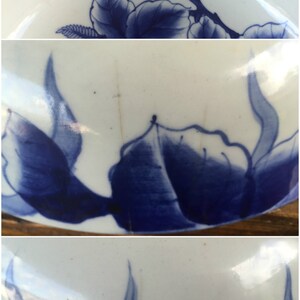
Ko-Imari Punch Bowl Large Sometsuke 鳳凰 Phoenix Bird & 桐 Kiri Paulownia Princess Tree Blossoms Porcelain Dish Edo Meiji Arita Japan *Free SH
You can only make an offer when buying a single item
Highlights
Huge old antique KO-IMARI SOMETSUKE PUNCHBOWL from ARITA, JAPAN!
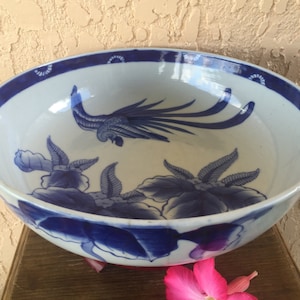
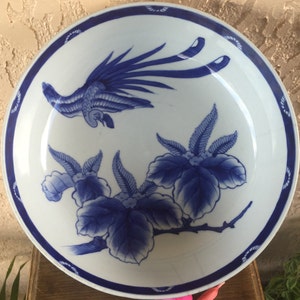
Sometsuke with eye-appealing dark and blue contrasts! The scene depicts a large Phoenix Bird in flight with her long tail feather streaming gracefully behind her. She seems to eyeing the blossoms below for either insects or nectar.
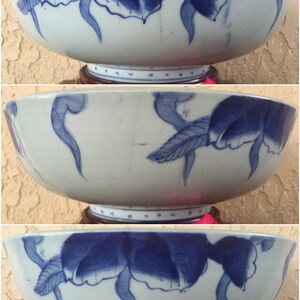
The blossoms, leaves and branches below are I believe to be of the Paulownia/Princess Tree. Also known as the Empress Tree, came by way of the Dutch. The Czarist Princess Anna Pavlovna married the future William II of the Netherlands, then Prince of Orange. Her Dutch version of her name became Paulownia, which she didn't care for at all, nor the casual relationship her Dutch subjects espoused accustomed as she was to the formal court in Russia. Though haughty, she won the love her new subjects with her work during a disaster when the dikes failed. A Dutch biologist named the tree in her honor. The Paulownia tree became a tradition in Japan that when a daughter was born, a Paulownia Tree would be planted. When she was to be married, the tree was cut down and made into a hope chest as part of her dowry. Japanese artisans, farmers and anyone who used sharp tools favor the wood for boxes to store the sharp metal tools. This wood doesn't release a gas that other woods do that dull sharp metal tools!
Not only a display piece of history dating back a couple hundred years, but it's meant to be used! It's strong porcelain and in fine condition! Because of the hairlines, I would use "gently" and if serving something hot, I would "heap" the noodles and such, so it would mound and not touch the sides. I've used as a serving bowl for rice, pasta, salad and also as a punch bowl. Could be used as a Kashiki or Kashibachi. (more detail on condition below)
PHOENIX (t: 鳳凰, s: 凤凰; fènghuánɡ) - virtue, duty, correct behaviour, humanity, reliability (the Five Human Qualities), strength, resilience, good fortune, opportunity, luck, considered to be the most important of the winged animals, yin energy of yin - yang
KIRI 桐 - Royal Paulownia Tree - Princess Tree - Empress Tree > named after Anna Pavlovna Grand Duchess of Russia and by marriage, became Queen Consort of Holland.
KO-IMARI - "early/old" imari
SOMETSUKE 染付 - blue under glaze high fired porcelain
KASHIKI - cake box
KASHIBACHI - dessert bowl
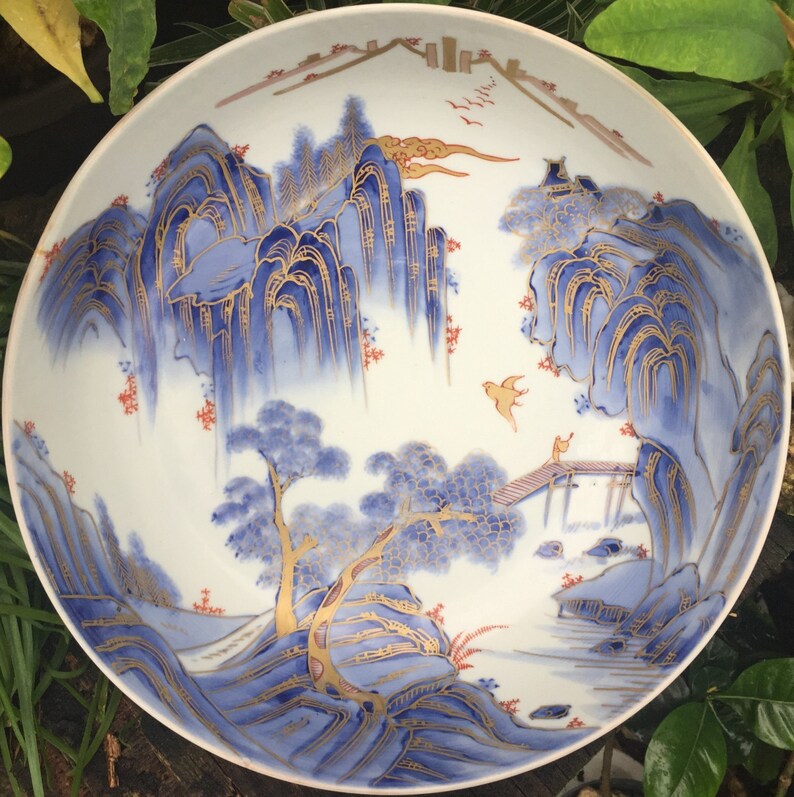
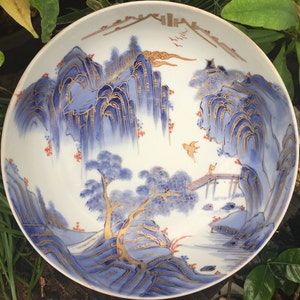
PIC 5 - is another HUGE SOMETSUKE SANSUI PUNCH BOWL >
https://www.etsy.com/listing/465034781/ko-imari-gu-zi-qi-kashiki-dish-1-large
https://www.etsy.com/listing/229503517/reserved-1700s-qian-kenryu-nen-sei
Searching for that PERFECT DISPLAY BOWL? Have quite a few huge to regular sized bowls from Old Delft, Chinois, Faience to Antique Japanese Porcelain, have a look see >
https://www.etsy.com/shop/GuamAntiquesNstuff?section_id=17107846
This would be great housewarming or birthday gift or a fine addition to your collection!
* FREE SHIPPING MOST COUNTRIES
* Guahan local pu only
- Please click & review SHIPPING & POLICIES TAB above (just below pics)
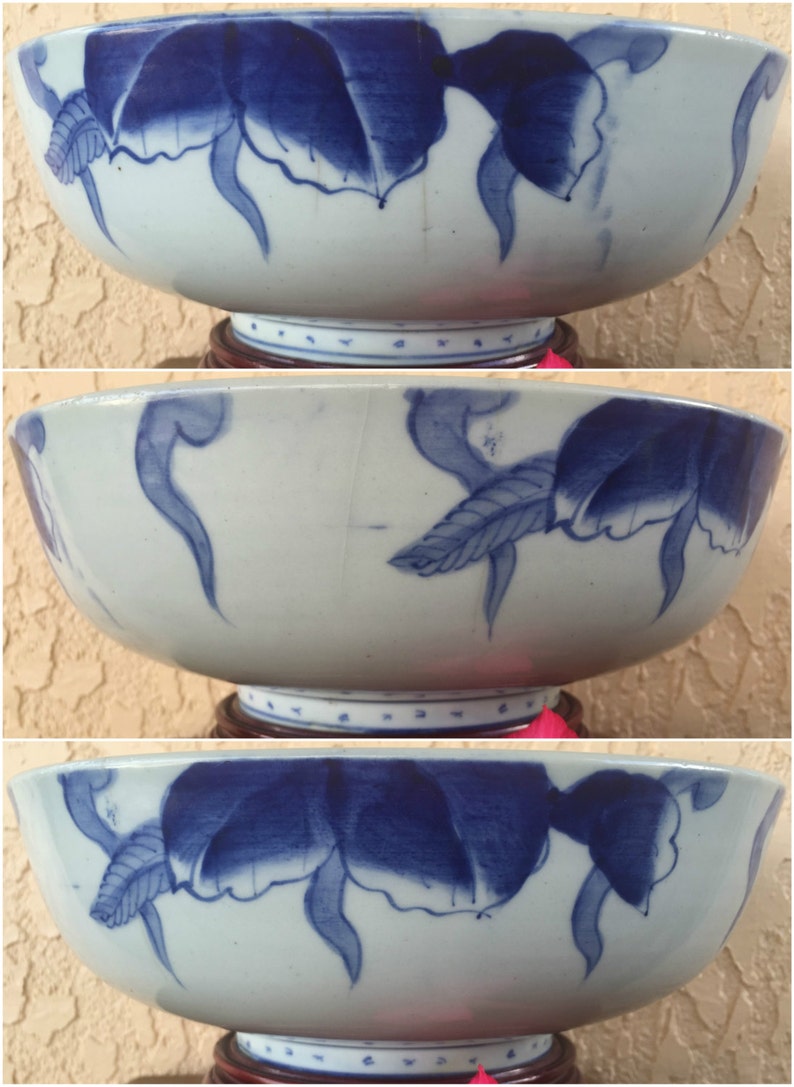
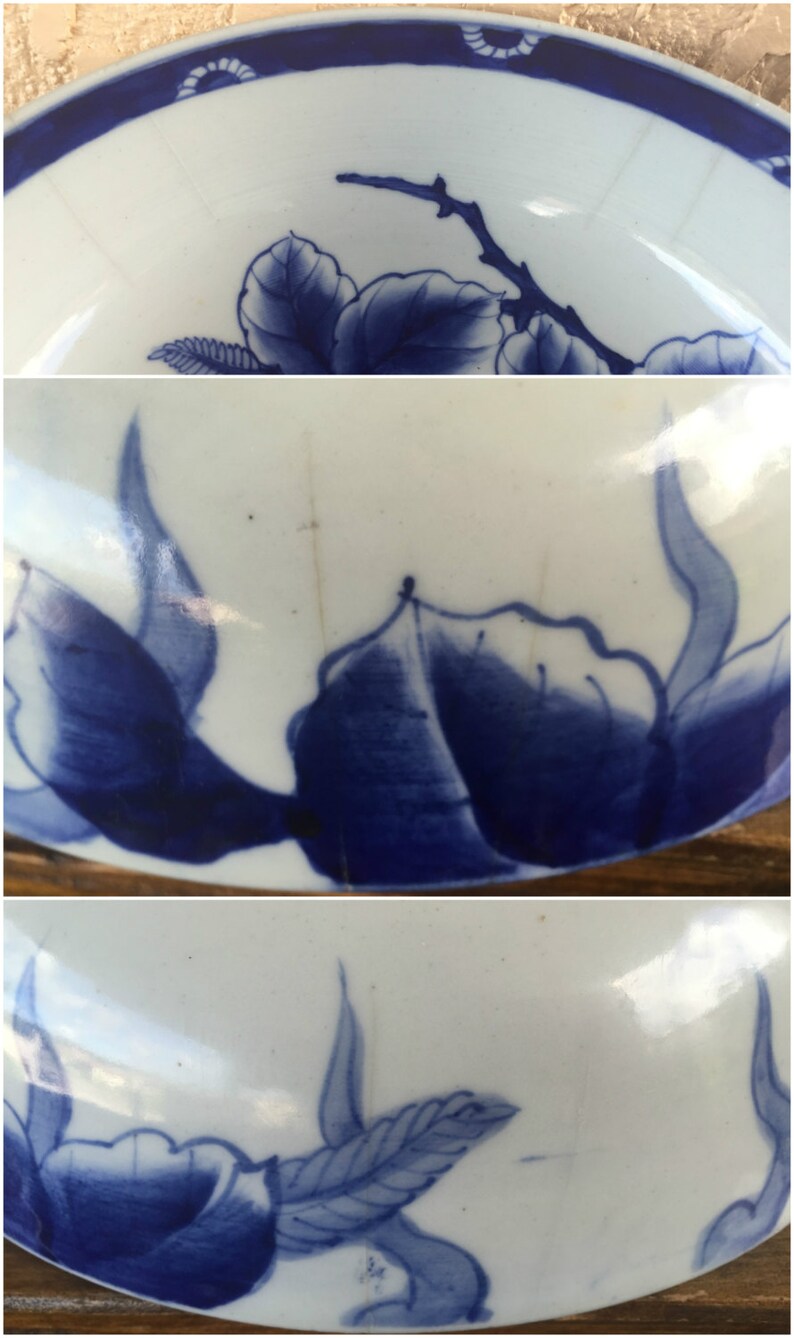
PHOTOS - integral to description, please use zoom feature for detailed views.
MARK - none
SPECS - about 11.1875"D x 4.0625"H
CONDITION - EXCELLENT!
- no chips, flakes or crazing
- 3 o'clock > two 2.5" tight hairlines
- 6 o'clock > two 2.5" tight hairlines
--- I have filled with water to the rim for 24 hours and no leakage
--- I have used "carefully" to serve "heaped" hot foods in the center so as not to stress the hairlines
--- Was used one NYE to serve a champagne-based punch that had no colored dyed liquid to stain the hairlines
--- I would not recommend using to serve hot foods such as rice and such so as not to stress the hairlines
- fritting to rim edge
- abrasions to glaze on interior bowl bottom
- to be expected kiln flaws of thin glaze here and there and glaze pops & carbon spots
MY SUBJECTIVE GRADING GUIDE >
Outstanding - pristine, like new
Excellent - excellent considering it's an antique (minor issues)
Good - moderate issues
Fair - more than moderate issues, okay for display, but not a prized piece
Poor - major issues = a bargain deserving of continued existence
🌴 🌴 🌴 🌴 🌴 🌴 🌴 WHERE AMERICA'S DAY BEGINS! 🌴 🌴 🌴 🌴 🌴 🌴 🌴
🌺 HÅFA ADAI from the tropical island paradise of GUAHAN (Guam/USA) 🌺
"Porcelain production began in Japan in the early seventeenth century, several hundred years after it had first been made in China during the Tang dynasty (618–906). This refined white ceramic requires more advanced technology than other ceramic types. The vessels are fired at very high temperatures so that they are strong and vitrified, as opposed to low-fired earthenware, which is porous and easily breakable. Unlike stoneware, which is high-fired but can be made from many different types of clay, porcelain is made from a specific clay mixture that includes a soft, white variety called kaolin. The smooth, semi-translucent surface of porcelain is ideal for painting delicate designs, and has been prized in both the East and West.
The Japanese porcelain industry was actually pioneered by Korean potters living in Japan. Many of them came to Japan during two invasions of Korea led by Toyotomi Hideyoshi in the 1590s. An appreciation of Korean ceramics had recently developed in Japan, and many of the feudal lords who accompanied Hideyoshi brought back Korean potters to build up the ceramic industry in their territories. The Nabeshima lord took Korean potters back to his province of Hizen on Kyushu, the southernmost of Japan's main islands. These potters would eventually become the first producers of porcelain in Japan, but they started out by reviving the production of a type of stoneware called Karatsu ware. This type of ceramic is usually simple, inexpensive, and made rapidly but skillfully on the potter's wheel. The potters also introduced a new type of kiln to Japan, the noborigama, or climbing kiln, which allows for greater precision during firing. Therefore, when in the early seventeenth century the Korean potters living in the Arita district of Hizen found suitable clay for the manufacture of porcelain, the infrastructure for its production was already in place. The Hizen region thus became the major center of porcelain production in Japan.
The first porcelain made in Japan by these Korean potters is known as early Imari. "Imari" refers to a port near the Arita kilns, from which these wares were shipped to the rest of the country. Since these porcelains were primarily for domestic consumption, the term "early" is added to distinguish them from later wares also classified as "Imari" which were typically for export. Most early Imari pieces feature designs painted in cobalt blue on a white ground, then coated in a transparent glaze, in the style known as underglaze blue. The porcelain has a coarse, grainy texture and the designs are generally carried out by a free, fluid hand. The technique of painting pictorial designs under a clear glaze was sometimes employed on Karatsu ware, so early Imari may have in part stemmed from this earlier tradition."
🌸 🎏 家族 🎏 家族 🎏 家族 🎏 家族 🎏 家族 🎏 家族 🎏 家族 🎏 家族 🎏 🌸
I'm not an expert on Porcelain. The information above is based on my research as a collector. It's time to downsize and find an appreciative home for this exquisite piece!
Feel free to contact me if you have questions or need additional photos.
#Arita
-
Order today to get by May 11
Your order should arrive by this date if you buy today. To calculate an estimated delivery date you can count on, we look at things like the carrier's latest transit times, the seller's processing time and shipping history, and where the order is shipping to and from.
-
Returns & exchanges not accepted
But please contact me if you have problems with your order
-
Free shipping
-
Ships from: Guam
There was a problem calculating your shipping. Please try again.
Etsy Purchase Protection
Shop confidently on Etsy knowing if something goes wrong with an order, we've got your back for all eligible purchases —
see program terms

Be the first to review this item


More from this shop
Visit shop-
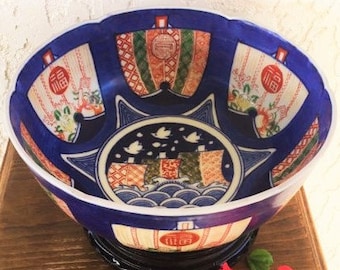
Rare Mark Fukagawa Large 染錦 Somenishiki Imari Kashibachi Bowl 福 Fuku 壽 Kotobuki Fukagawa Blue Cobalt Red Porcelain Arita Japan Free SH
$488.88
-
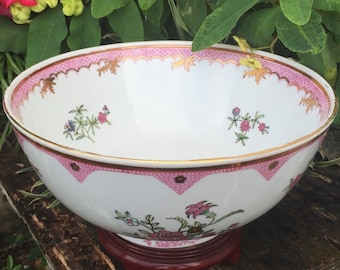
HUGE! Hua Ping Tang Zhi Famille Rose Punch Bowl Lowestoft Pattern Chinese Export Porcelain Large Pink Old Chinois Centerpiece China
$777.77
-
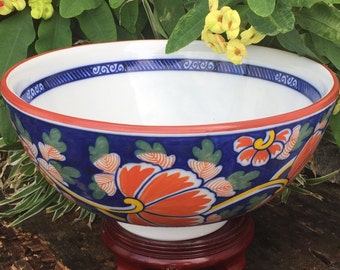
HUGE! Delft Punchbowl Delfts Polychroom 花王 Kaou 牡丹 Botan Pioen Peony Blossom Winterthur Museum Collection Lambeth Large Fruit Bowl *Free SH
$1,234.56
-
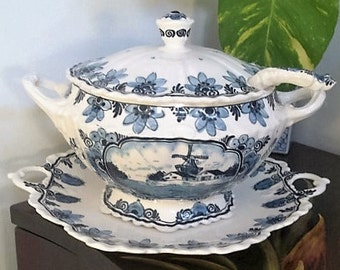
HUGE! Delft Tureen & Under Plate Set Large Delfts Blauw Soepterrine Molen Windmill Tulip Finial Ladle Set Soupiere de Klomp Holland Michigan
$488.88
-
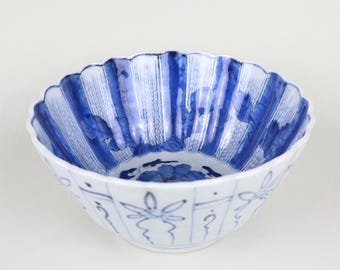
Arita underglaze antique Japanese porcelain bowl 19th century period, 9.25 inches dia.
$495.00
-
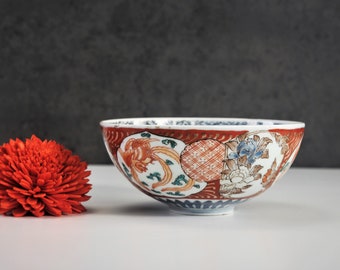
Meiji Imari Porcelain Bowl Antique Japanese Arita
$162.00
-
Antique Japanese Ko-Imari Lidded Bowl | Blue and White Edo Period Porcelain | Bird, Flower & Insect Motif | 18th–19th Century
Sale Price $318.75
Original Price $425.00
-
Vintage Japanese Imari Porcelain Bowl, Arita Octagonal Floral Red Blue Gilt 4.5"
$19.50
-
Antique Japanese Imari Bowl – Meiji Period, Arita Ware
$174.99
-
Antique JAPANESE IMARI Charger NABESHIMA Peony Powder Blue Hichozan Artia Meiji
$150.00
-
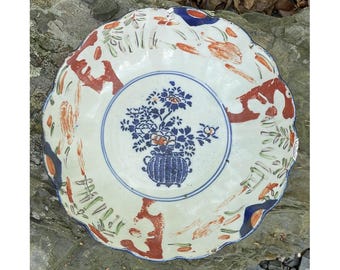
9.75" Antique Japanese Arita Imari Meiji Era Porcelain 19th C. Hand Painted Bowl
$105.00
-
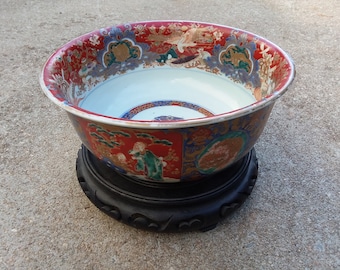
Antique Japanese Imari Arita Painted Porcelain Punch Bowl Imperial Figures Old Rare
$800.00
-
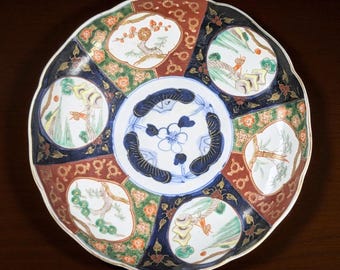
Edo Japanese Imari Bowl: 19th Century Hand-Painted Arita Porcelain, “Three Friends of Winter” Design
$159.00
-
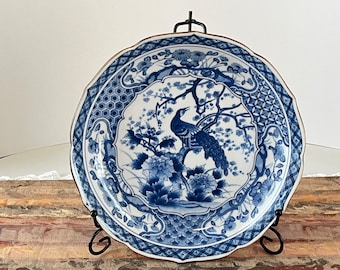
Japan TOYO Blue and White Porcelain Bowl w Peacock 10" Signed | Flowers Art Deco Pattern
Sale Price $63.36
Original Price $72.00
-
Edo Era Imari Bowl, Large Size, Double Bottom Rim, Underglaze Blue with Iron Red, Green, Yellow Enamel, Gilding
$225.00
-
Antique JAPANESE IMARI Bowl 13" HICHOZAN Artia Porcelain Meiji Dragon Phoenix Fukagawa
$595.00


