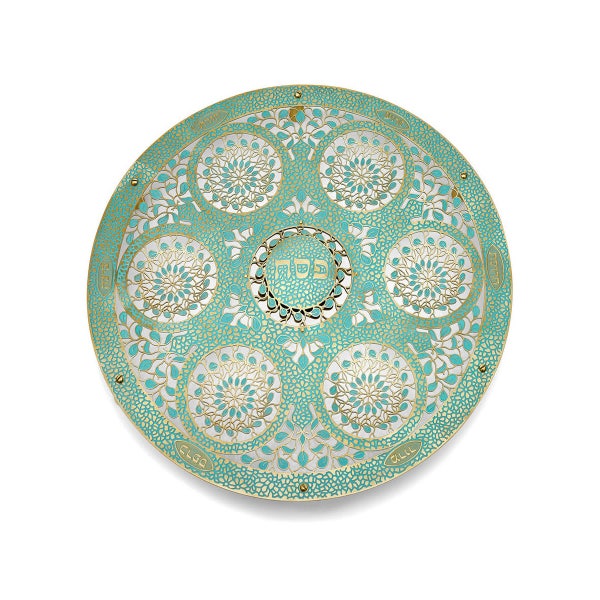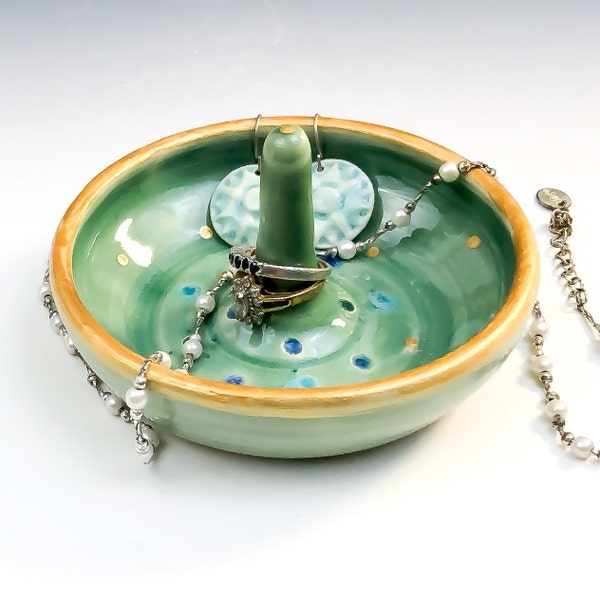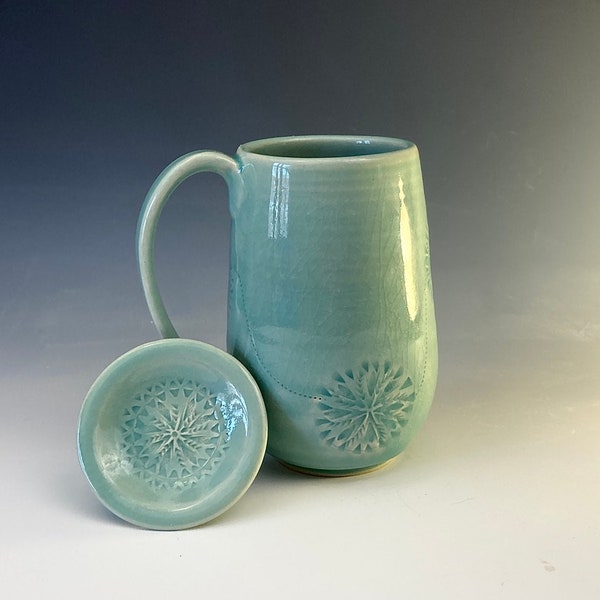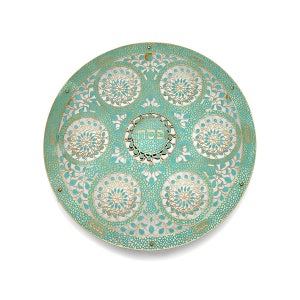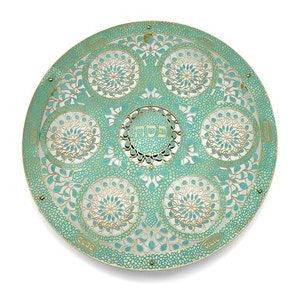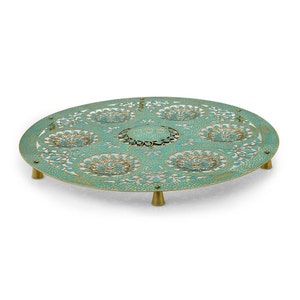
My father was born in Morocco, and we visited my grandparents in Casablanca many times when I was a child. Some of my earliest memories are of being captivated by the play of water and light over brightly colored Zalij fountains. Years later, returning as a young man in art school, I felt a strong pull towards traditional designs and the mystery and contemplation of the infinite they inspire. In Marrakesh in 1991, while winding my way through a labyrinthine souk, I came across a man making brass platters in a tiny little shop. I was fascinated by his designs and asked him how he made them. He was kind enough to give me a demonstration. Taking a flat sheet of metal he first drew a single circle, and then divided it into six equal sections simply by setting his compass to the radius of the circle and then marking the divisions around the circumference. From there he drew lines between some of the points, and then again crossing into the center. In no time at all a complex interwoven pattern began to appear. He told me that all of his patterns were stored in his head. Many of them he had learned from his father, others sprang out as he played with the lines. I watched him in awe, but also had an inkling that this was something that perhaps I too could learn to do.
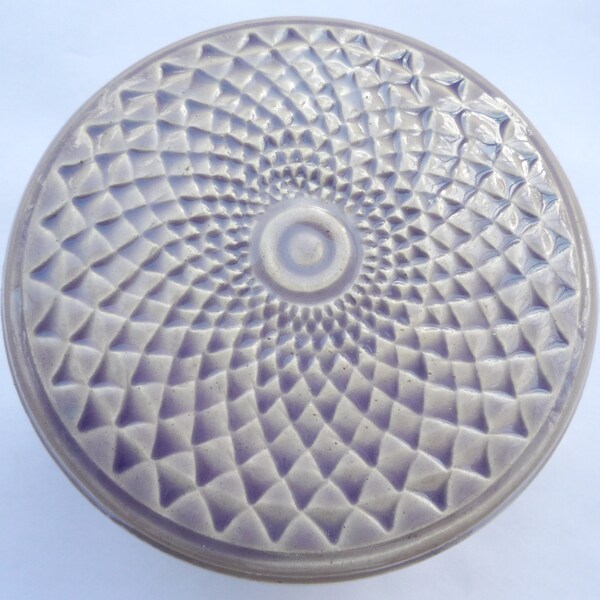
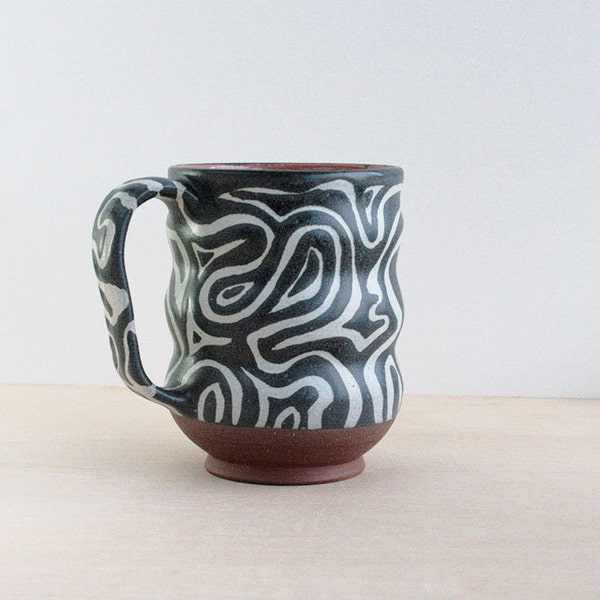
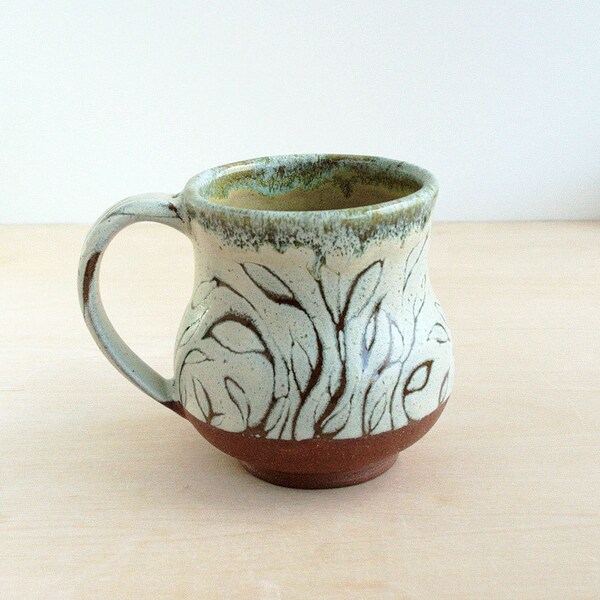
I bought some paper and crayons at a small stationeer, and everywhere I went I took rubbings of the tiles. Some of my favorite patterns were found in local bars and one was even found in the men's room of the Alcazar in Sevilla. When I came back to the states, I carved some of the tracings in clay and began putting them on vases. Seeking to unravel the magic of the circle, I found books on Islamic art and began to study sacred geometry. I went back to my tracings and analyzed the lines, taking measurements with the compass and discovering how the patterns had been created. I also started studying the work of the Maallems (Arabic for Master Craftsman) and began to design my own patterns.
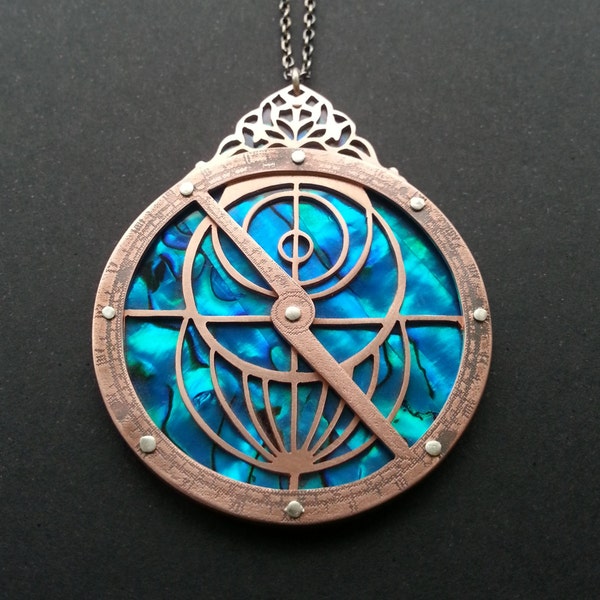
Since then, I have traveled the world, researching pattern and line designs in India, Turkey, Spain, Peru, and China. I also began to use the computer as a tool for making designs, integrating my skills in geometric patterning with the modern capacities of the digital age. The computer provides a powerful new way of seeing lines and their possibilities, but in the end it is the eye of the artist that must be the final arbiter. Working from within a 1,300 year old tradition of geometric design, I hope my original patterns pay homage to their sources while imbuing them with a modern sensibility. You can see more of my work, and learn more about me, on my website: http://barchilonceramics.com
Some of the technologies we use are necessary for critical functions like security and site
integrity, account authentication, security and privacy preferences, internal site usage and
maintenance data, and to make the site work correctly for browsing and transactions.
Always on
Personalized Advertising
To enable personalized advertising (like interest-based ads), we may share your data with our marketing and advertising partners using cookies and other technologies. Those partners may have their own information they’ve collected about you. Turning off the personalized advertising setting won’t stop you from seeing Etsy ads, but it may make the ads you see less relevant or more repetitive.
Personalized advertising may be considered a “sale” or “sharing” of information under California and other state privacy laws, and you may have a right to opt out. Turning off personalized advertising allows you to exercise your right to opt out. Learn more in our Privacy Policy., Help Center, and Cookies & Similar Technologies Policy.