

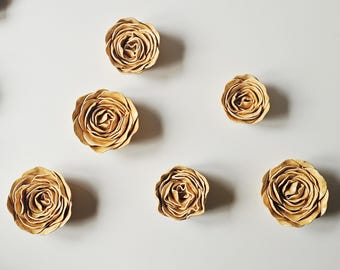
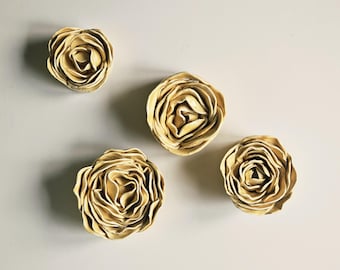
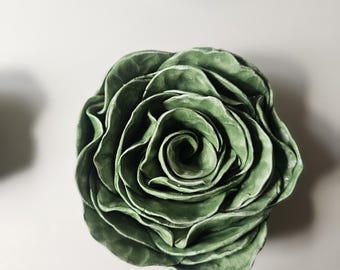
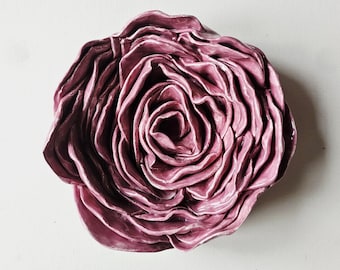




Down to Earth. Rooted in Stillness. Crafted by Hand.
There is a quiet language within pattern.
Before thought divides the world into names and forms, there is rhythm: the turning of leaves toward light, the movement of water around stone, the spiral of unfolding petals and galaxies. Forms recur across scale and distance, as though the fabric of existence itself is woven through symmetry, proportion, and return.
Within the contemplative tradition of Islamic art, geometry is understood not as ornament alone, but as a field of remembrance. Repeating forms without centre or end do not seek to contain infinity, but to point beyond themselves — toward that which cannot be circumscribed by form. Each line depends upon another. Each shape arises through relation. Nothing stands alone; all things are held in interdependence.
In this way, pattern becomes a kind of unveiling through concealment. What is visible is precise, ordered, and finite — yet it gestures toward what is beyond measure. The eye follows repetition until it is no longer absorbed in the parts, but drawn toward the unity that underlies them. Multiplicity dissolves not into absence, but into coherence.
Forms in the natural world reflect the same principle. Spirals in shells, branching in trees, the quiet mathematics of growth and decay — all appear as variations of a single unfolding order. In Islamic reflection, such forms are often read as signs: not as ends in themselves, but as indications of a deeper source, where separation is only apparent and return is continual.
To dwell with pattern is, then, to practice attention. To move through repetition without being confined by it. To see form fully, and yet to be reminded that form is not final.
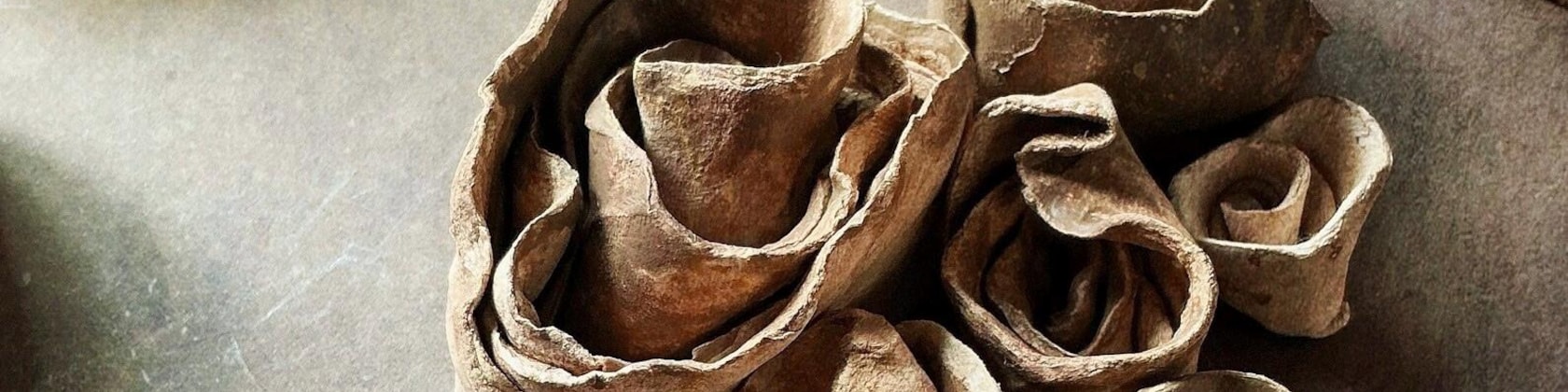
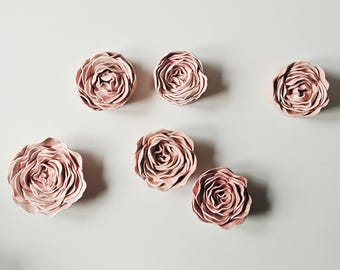
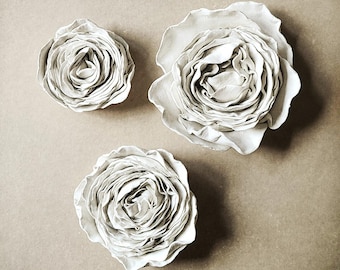
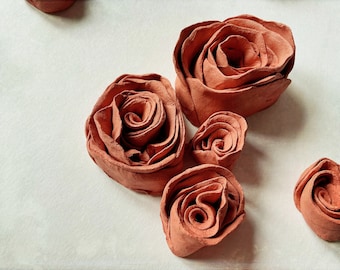
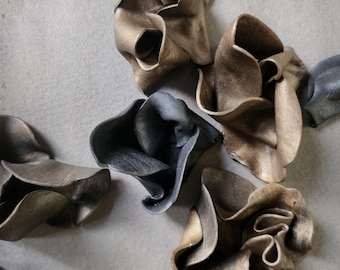
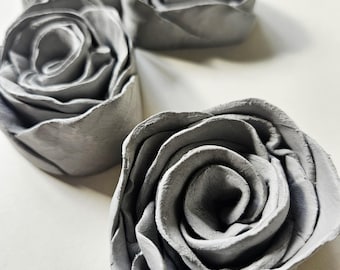
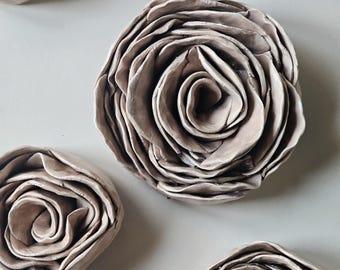
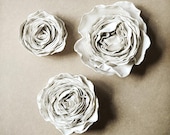
These handmade works arise from that same field of contemplation — shaped slowly, marked by repetition, and held in the quiet irregularities of hand-making — so that what is seen may quietly point beyond itself, and the cosmos may be received as a woven tapestry that is not itself the Weaver.
