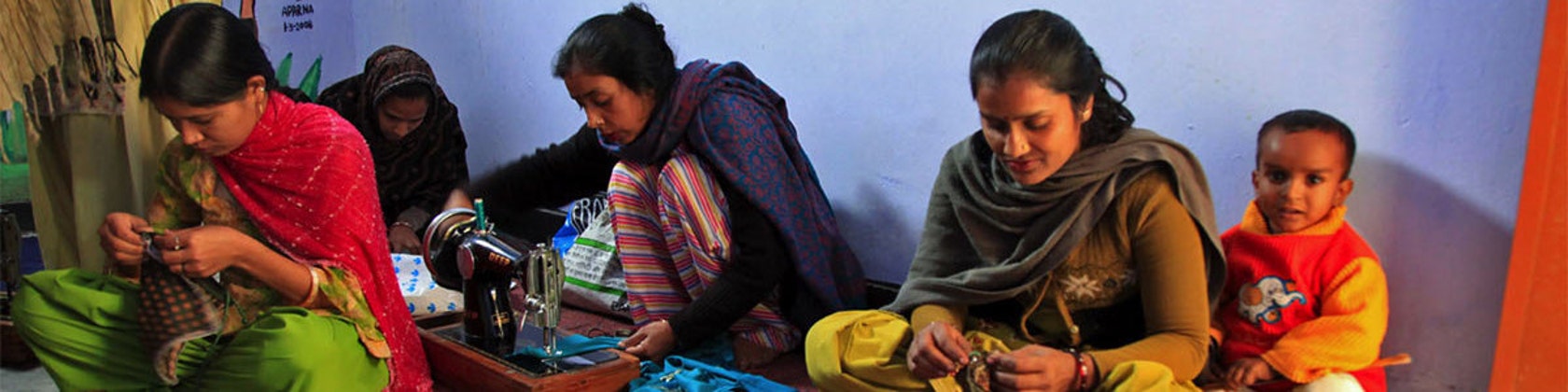



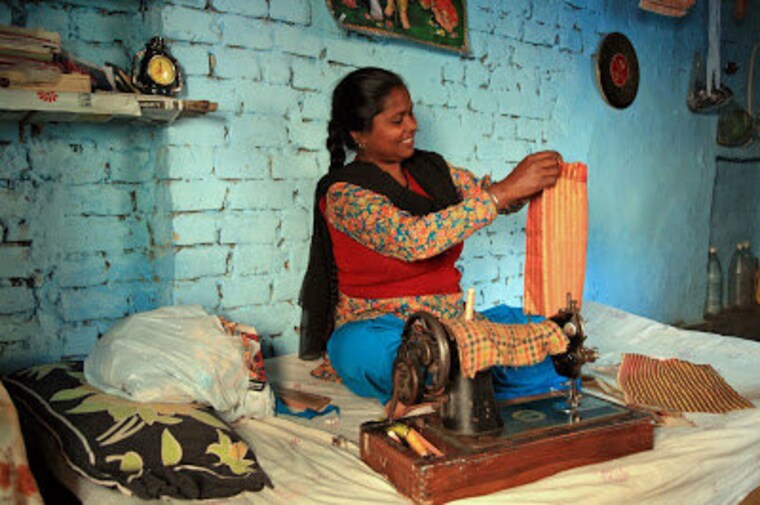
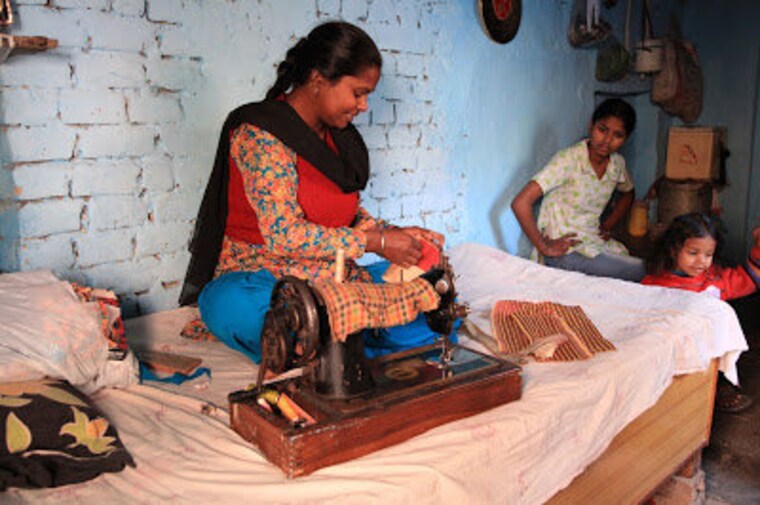
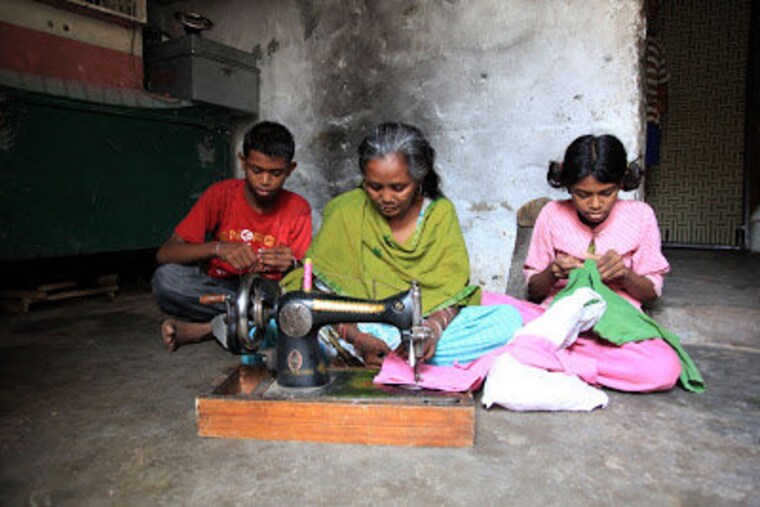
Learning new skills allows women in Janta Colony to earn an income while providing care for their children.
Working with residents in economically poor communities, the 501(c)(3) non-profit organization DIR builds knowledge and skills to help all citizens achieve a level of health that empowers them to participate fully in social and economic development.
Despite being a bustling town of some 16,000 residents, Janta Colony offers few opportunities to earn a living – particularly for women. After working in the community for a short time, DIR became aware that many women leave before dawn to work as house cleaners or street vendors in Chandigarh. Often, they don’t return until late in the evening. In the meantime, they leave their eldest child to care for younger siblings.
The impact of quickly became clear: very little weight gain among children in households where mothers were absent most of the day. To address the issue, DIR sought to create cottage industries that would allow basti women to make a fair wage while working flexible hours at home. This would allow them to spend more time with their families and better benefit from DIR’s services, such as cooking classes.
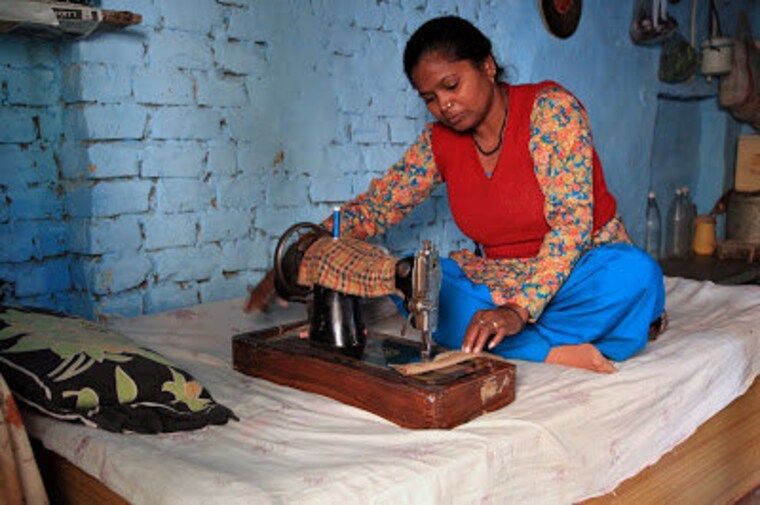
With donated sewing machines and samples supplied by fabric and upholstery stores, DIR launched stitching classes. Those who complete the course have the option to take a sewing machine home and work independently. They are paid cash upon delivery of each item.
DIR statistics show that when women begin to earn an income, it elevates their status and decision-making authority in the family and in the community. It is also clear that women direct the majority of their income to better nourishment and education for their children.
Enabling these “work at home” schemes was a game-changer for many families: children who had previously been chronically malnourished began to gain weight more quickly and were less burdened with caring for their siblings.