

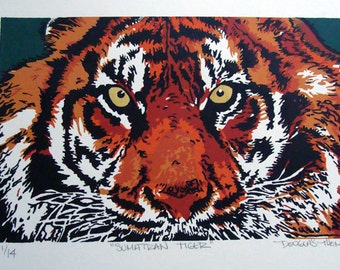
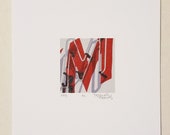
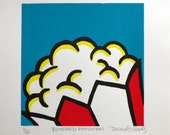
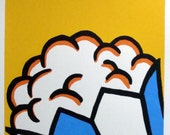
Original handgefertigte Lino und Siebdrucke!
Original handmade Lino and Screenprints!
Hallo!
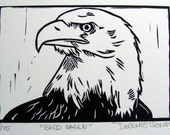
Ich kreiere handgefertigte einfarbige Linol-, Reduktions-Lino- und Siebdrucke bei mir zu Hause und im PIttsburgh Center for the Arts.
Ich habe 3 Abschlüsse in Kunst..... Kommerzielle Kunst und Design, Animation und Kunsterziehung. Ich habe freiberuflich als Animator gearbeitet und auch als Ersatzlehrer unterrichtet. Ich habe mich in letzter Zeit für verschiedene Formen der Druckgrafik interessiert und bin sowohl in den Siebdruck als auch in den Reliefdruck eingetaucht. Ich habe eine Blick 906 Radierpresse in meinem Heimstudio gekauft und benutze sie, um kleinere Linoleumblockreliefdrucke zu machen.
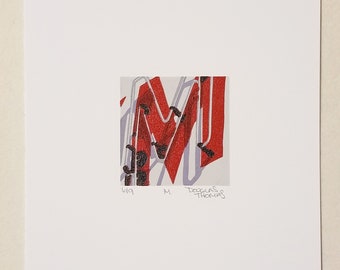
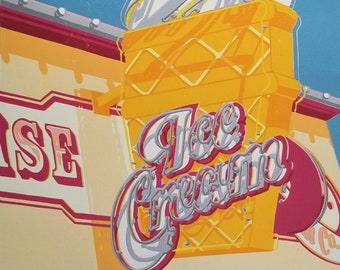
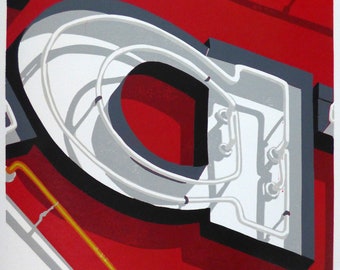
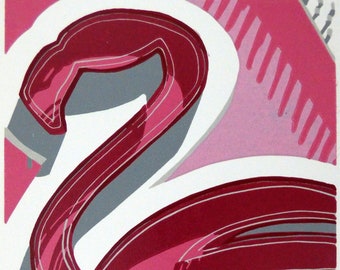
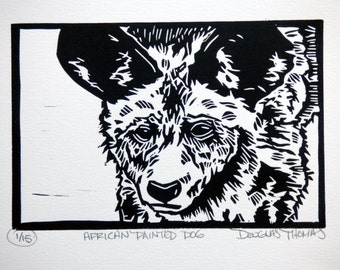
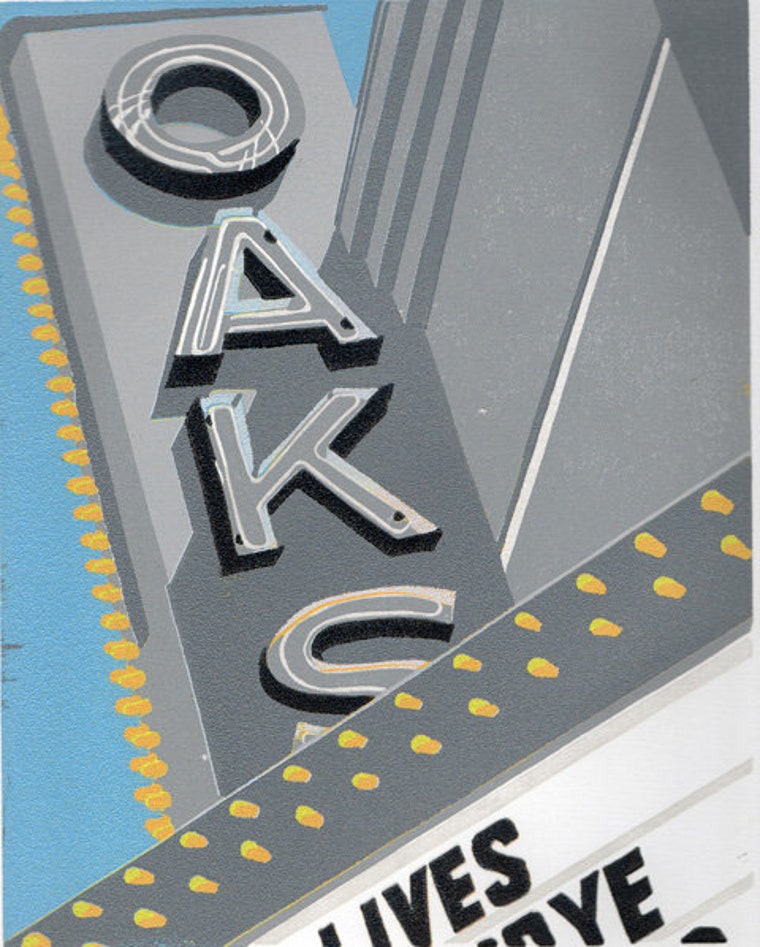
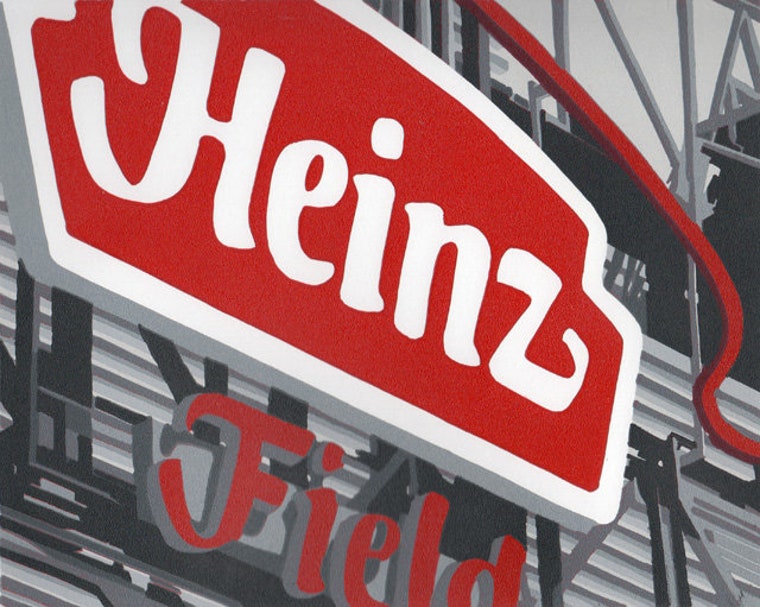
Ich bin von vielen verschiedenen Künstlern und Themen beeinflusst. Meine Kunstwerke drehen sich nicht um ein einzelnes Thema, sondern bewegen sich von gefährdeten Wildtieren über Siebdrucke im Pop-Art-Stil bis hin zu alten, Vintage-Leuchtreklamen.
Ich bin inspiriert von Künstlern wie Wayne Thiebaud, Ed Hopper, Andy Warhol, Walt Disney, Burton Morris und dem Comiczeichner Jim Lee.
Ich halte einen aktuellen Blog meiner aktuellen Projekte unter: www.dougthomas.blogspot.com
Aufgrund der Zeit, die einige dieser Projekte in Anspruch nehmen, versuche ich, mehrere Projekte gleichzeitig am Laufen zu halten und versuche jeden Tag an mindestens einem von ihnen zu arbeiten, bevor ich zu meinem eigentlichen Job gehe.
Zum Glück ist mir meine Frau Jennifer sehr ähnlich. Sie ist eine talentierte Keramikkünstlerin und hat viele andere Projekte auf ihrem Teller, darunter Nähen, Häkeln und Blockdruck.
Obwohl ich eine sehr abgerundete Kunstausbildung hatte, hatte ich nie wirklich Erfahrung in der Druckgrafik. Ich hatte das Gefühl, dass ich, um ein besserer Lehrer und Künstler zu sein, Fähigkeiten in verschiedenen Formen der Druckgrafik erlernen musste. Seitdem habe ich 3 Kurse im Siebdruck, zweimal eine Einführung in die Druckgrafik und einen Printmaking Studio-Kurs am PIttsburgh Center for the Arts besucht.
----------------------------------------------------------------------------------------------
-Siebdruck-
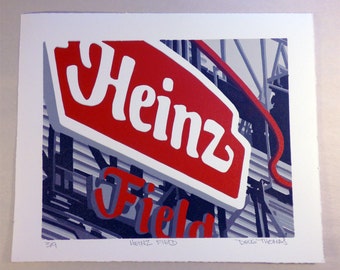
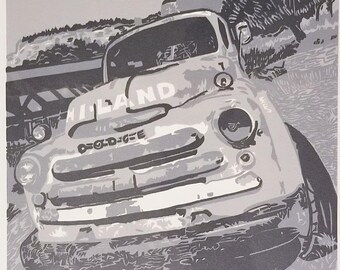
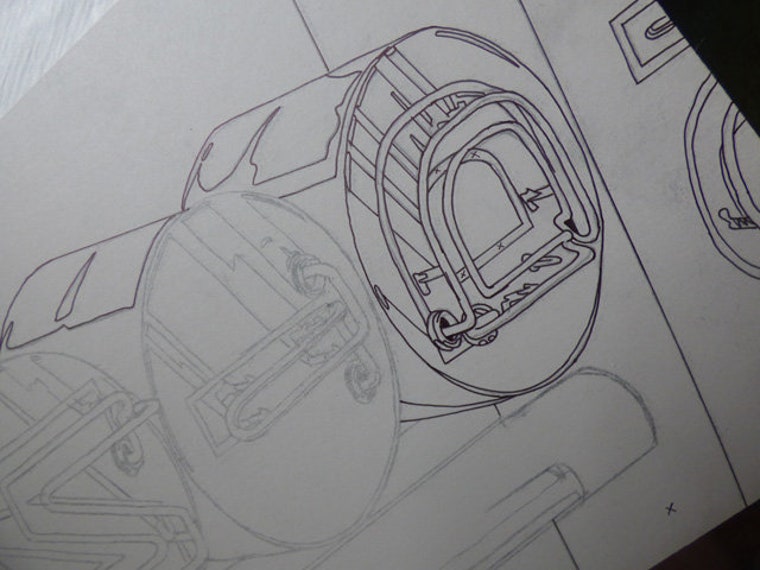
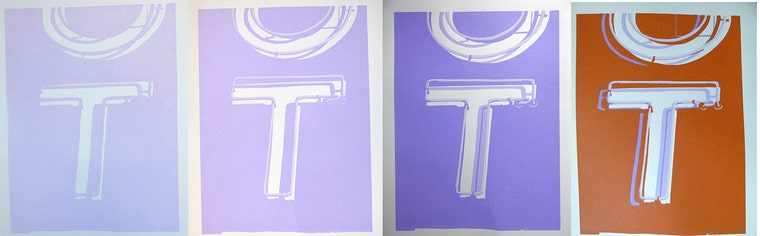
Ich entdeckte schnell, dass ich es wirklich liebte und tauchte kopfüber in den Siebdruck ein. Alle Drucke, die ich derzeit mache, sind alle komplett handgefertigt. Ich mache ein Foto oder eine Zeichnung und zeichne es auf verschiedenen Blättern Transparentpapier nach. Die Tracings werden verwendet, um zu identifizieren, wo sich verschiedene Farben im Bild befinden, und sie helfen, das Bild für mich zu vereinfachen. Als nächstes lege ich einen Siebdruck über die Zeichnungen und verwende Zeichenflüssigkeit, um das Design auf den Bildschirm zu übertragen. Sobald ich das erledigt habe, fülle ich den Bildschirm mit Siebfüller und wasche die Zeichnungsflüssigkeit aus. Nachdem der Bildschirm getrocknet ist, klebe ich Bereiche ab, die ich nicht drucken möchte, schnappe mir etwas Tinte und mache mich an die Arbeit.
-----------------------------------------------------------------------------------------------
-Reduktiver Linocut-
Während meines ersten Einführungskurses in die Druckgrafik wurde ich in den reduktiven Linolschnittprozess eingeführt. Wie beim Siebdruck habe ich mich verliebt.... so sehr, dass ich mir eine kleine Radierpresse gekauft habe, damit ich zu Hause Drucke erstellen konnte.
Wie bei meinen Siebdrucken sind alle meine Linolschnitte komplett handgefertigt und werden in der Regel aus Bildern erstellt, die ich mit meiner Kamera aufnehme. Obwohl ich es vorziehe, in einem 18x24-Format zu arbeiten, habe ich mich entschieden, auch an kleineren Stücken zu arbeiten. Der Reduktionsprozess ist ziemlich aufwendig und erfordert ein gutes Maß an Vorplanung, bevor der Druck erfolgen kann. Sobald das Schnitzen beginnt, kann ich nicht zurückgehen und einen Bereich neu drucken, daher ist die Planung sehr wichtig.
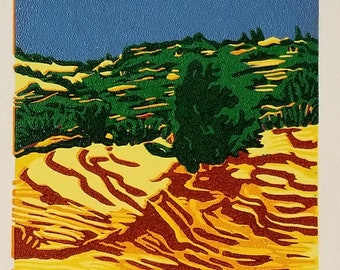
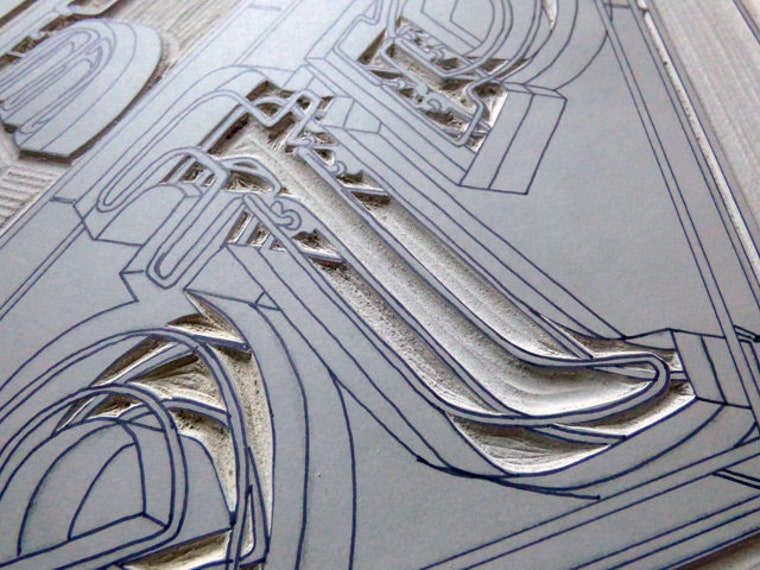
Ich zeichne mein gesamtes Bild auf Transparentpapier und wenn ich fertig bin, lege ich die Zeichnung mit der Vorderseite nach unten auf die Oberfläche des Linoleumblocks und lasse sie durch die Ätzpresse laufen. Der Druck bewirkt, dass das Bild auf den Block übertragen wird. Als nächstes spüre ich es in einem wasserdichten Permanentmarker nach und markiere Bereiche mit dem ersten Buchstaben der Farbe, die dorthin gehört (fast ähnlich wie eine Farbe nach Zahl, aber in meinem Fall... B. Tinte für Buchstabe). Nachdem alles doppelt überprüft wurde, schnitze ich alle Bereiche weg, die Papierfarbe haben werden (helles Weiß ist normalerweise meine Papierfarbe der Wahl) und ich drucke die erste hellste Farbe, ich schnitze dann Bereiche weg, die mit dieser ersten Farbe verbunden waren, drucke die nächste dunkelste Farbe, schnitze, drucke, schnitze .... Am Ende des Prozesses gibt es nur noch sehr wenig Oberfläche für meinen Block.
Hello!
I create handmade single color lino, reduction lino and silkscreen prints at my home and at PIttsburgh Center for the Arts.
I have 3 degrees in art.....Commercial Art and Design, Animation and Art Education. I have worked freelance as an animator and substitute teach as well. I recently became interested in various forms of printmaking and have immersed myself in both screenprinting and relief printing. I bought and use a Blick 906 Etching press at my home studio and I use it to make smaller linoleum block relief prints.
I'm influenced by many different artists and subject matters. My artwork doesn't revolve around a single subject, but moves from endangered wildlife to Pop Art styled screenprints to old, vintage neon signs.
I'm inspired by artists such as Wayne Thiebaud, Ed Hopper, Andy Warhol, Walt Disney, Burton Morris and the comic book artist Jim Lee.
I keep an up-to-date blog of my current projects at: www.dougthomas.blogspot.com
Due to the amount of time some of these projects take I try to keep multiple projects running at once and try to work on at least one of them every day before heading off to my real job.
Luckily my wife Jennifer is very similar to me. She is a talented ceramics artist and has many other projects also on her plate which include sewing, crocheting and block printing.
Even though I have had a very well rounded art education I had never really had any experience in printmaking. I felt that in order to be a better teacher and artist that I needed to learn skills in various forms of printmaking. I've since taken 3 classes in screen printing, an Intro to Printmaking class twice and a Printmaking Studio course at PIttsburgh Center for the Arts.
----------------------------------------------------------------------------------------------
-Screen Printing-
I quickly discovered that I really loved and dove head first into screen printing. All of the prints that I currently make are all completely handmade. I take a photo or drawing and trace it on different sheets of tracing paper. The tracings are used to identify where different colors are located in the image and they help to simplify the image for me. Next, I place a silkscreen over the tracings and use drawing fluid to transfer the design onto the screen. Once I've completed that, I fill the screen with screen filler and wash out the drawing fluid. After the screen dries I tape off areas that I don't want to print, grab some ink and get to work.
-----------------------------------------------------------------------------------------------
-Reductive Linocut-
During my first Intro to Printmaking class I got introduced to the reductive linocut process. As with screen printing, I fell in love....so much that I bought myself a small etching press so that I could create prints at home.
As with my screen prints, all my linocuts are completely handmade and are generally created off of images that I take with my camera. Though I prefer working in an 18x24 format, I've decided to work on smaller pieces as well. The reduction process is rather involved and takes a good bit of pre-planning before printing can occur. Once carving begins I cannot go back and reprint an area, so planning is very important.
I trace my entire image onto tracing paper and when I'm finished I lay the drawing face down on the surface of the linoleum block and run it through the etching press. The pressure causes the image to transfer onto the block. Next I trace it in a waterproof permanent marker and mark areas with the first letter of the color that belongs there (almost similar to a paint by number, but in my case...ink by letter). After everything is double checked I carve away any areas that will be paper color (bright white is usually my paper color of choice) and I print the first lightest color, I then carve away areas that were associated with that first color, print the next darkest color, carve, print, carve....by the end of the process there is very little surface left to my block.