Art has been part of my life for as long as I can remember. One of my earliest defining experiences was a childhood visit to New York City’s Museum of Modern Art. Seeing those works in person changed the way I understood art — not simply as representation, but as emotion, atmosphere, and a way of communicating ideas that words often cannot reach. That experience stayed with me and quietly shaped the course of my life.
From an early age, I was drawn to both art and engineering, fascinated equally by imagination and structure. Like Leonardo da Vinci, whose work continues to inspire me, I never saw creativity and technical thinking as opposites. I pursued a formal education in Fine Arts, studying painting, etching, lithography, and sculpture, while also building a professional career in engineering that would span more than forty years.
Although engineering became my profession, art never disappeared from my life. The disciplines informed one another in unexpected ways. Engineering taught me precision, structure, problem-solving, and a deeper understanding of form and materials. Art remained the place where emotion, symbolism, intuition, and personal exploration could exist freely. Now retired from engineering, I’ve returned fully to painting and visual storytelling, dedicating my time and energy to creating work that brings those lifelong influences together.
My artistic influences are wide-ranging. I have always admired the Old Masters and their extraordinary understanding of light and shadow — the ability to use illumination not only to describe a figure, but to reveal emotion, tension, and psychological depth. I’m equally drawn to the Surrealists and their exploration of dreams, symbolism, and the subconscious mind. Alongside those classical and surreal influences is the darker visual language of punk and goth culture, which shaped my aesthetic sensibilities over the years: themes of mortality, alienation, beauty within darkness, and existential questioning.
What interests me most is the tension between darkness and hope. My work often carries a melancholic or mythic atmosphere, but it is never entirely nihilistic. Even in moments of isolation or grief, I’m searching for resilience, transcendence, and transformation. That emotional balance has become central to my paintings.
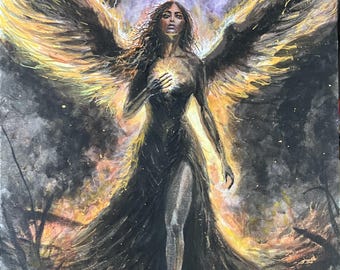
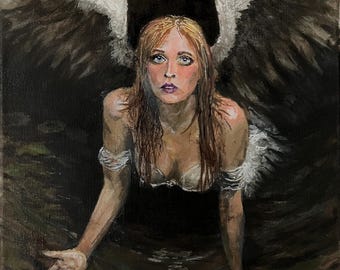
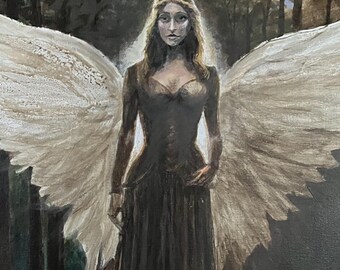
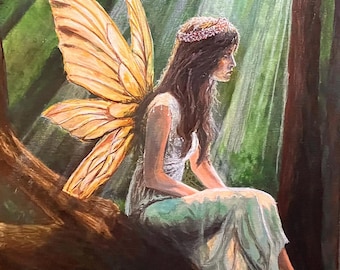
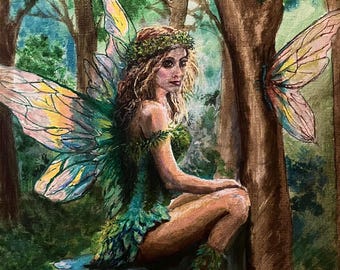
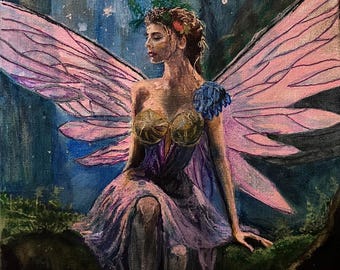
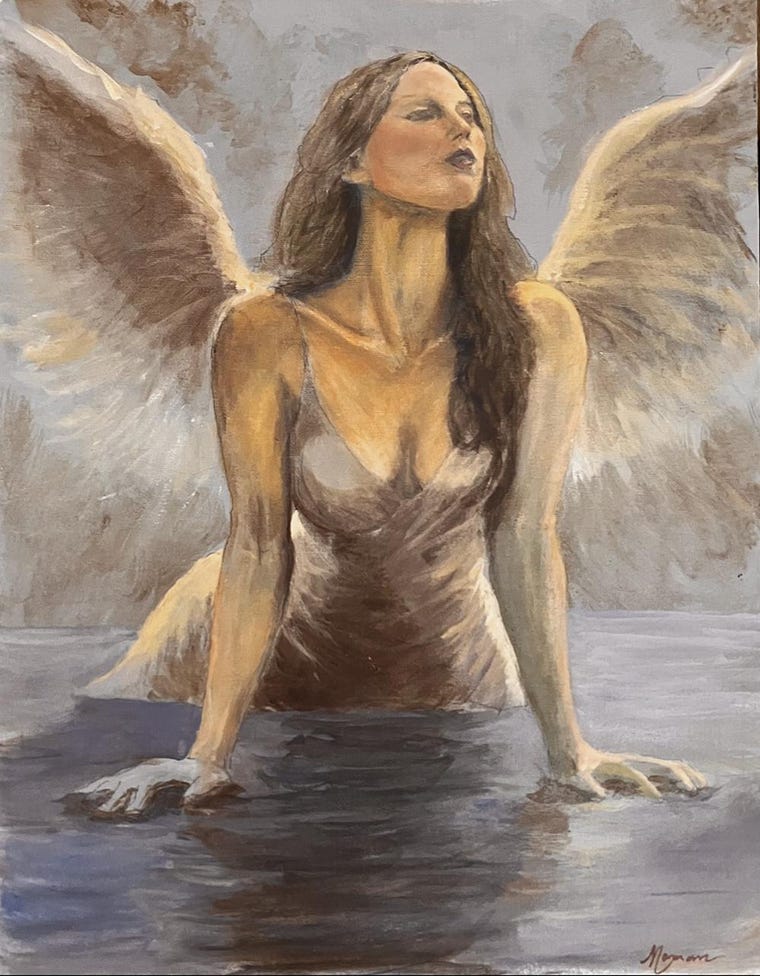
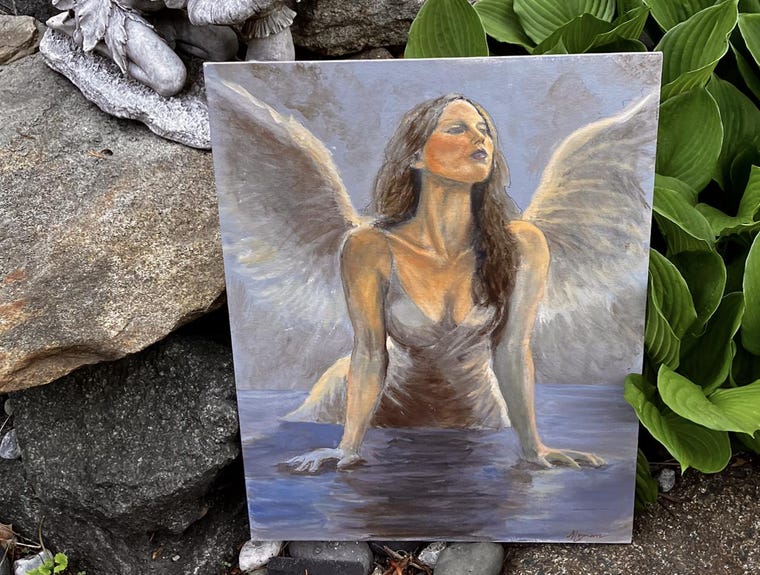
Much of my current work explores themes connected to the Sacred Feminine through elemental imagery such as fire, water, forest, shadow, and light. The figures I paint are often suspended between vulnerability and power, human and symbolic, intimate and archetypal. I’m interested in creating images that feel emotionally inhabited — works that function less as simple portraits and more as emotional states made visible.
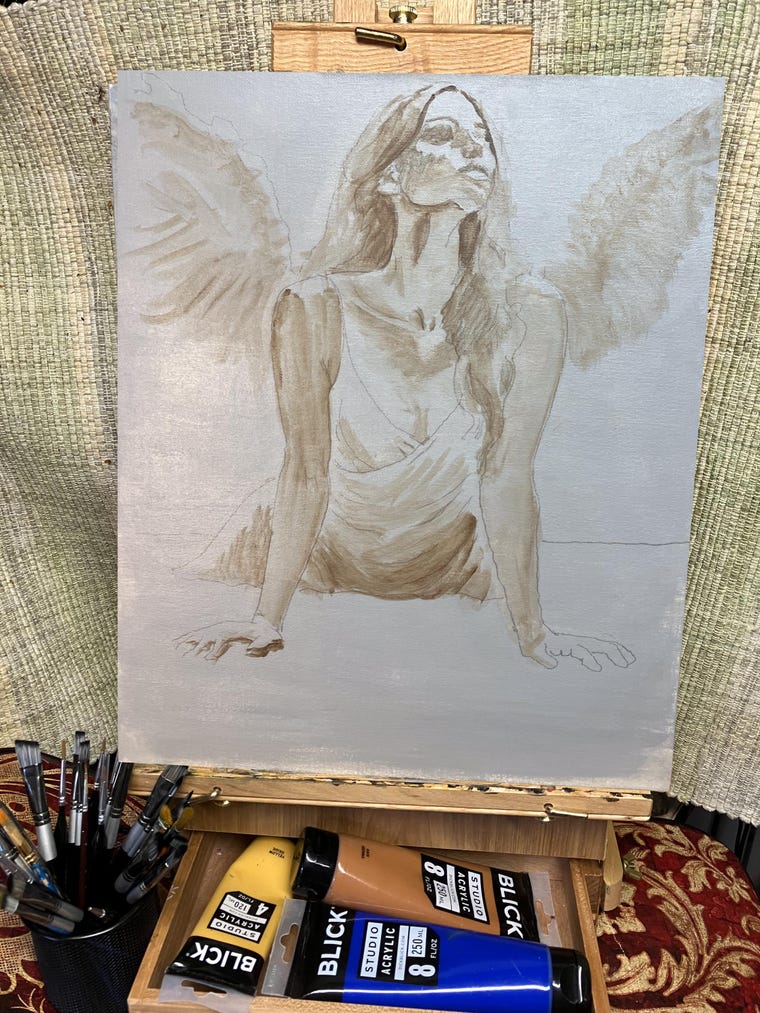
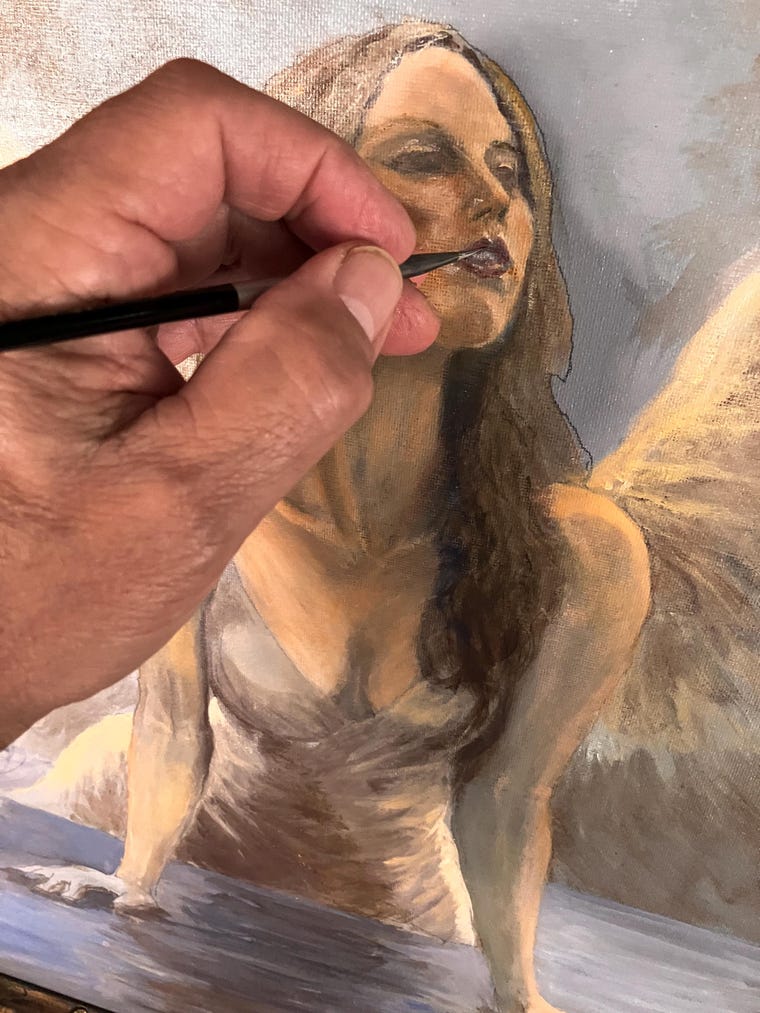
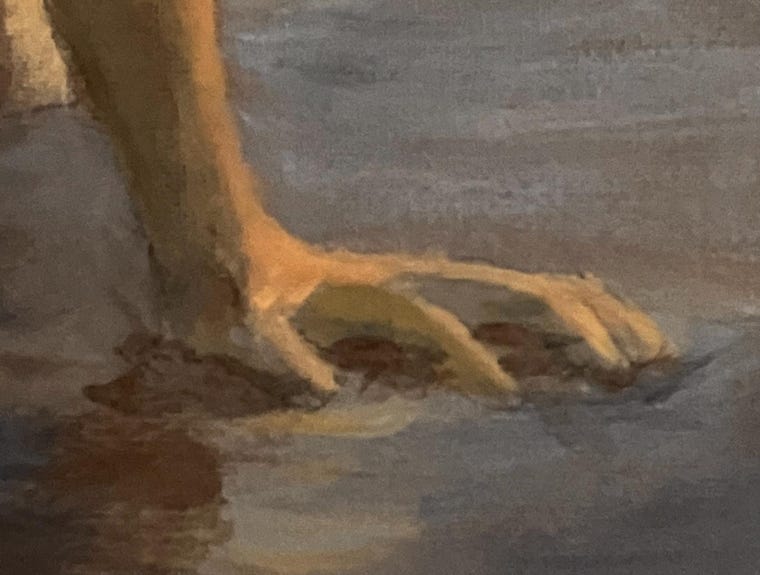
My background in both fine art and engineering continues to shape how I work. Composition, structure, anatomy, and value are carefully considered, but I also allow space for intuition and atmosphere to guide the final image. I work primarily in acrylic on canvas, building layered surfaces that combine realism with painterly softness and symbolic abstraction. Light plays a central role in nearly every piece, acting almost as its own character within the work.
Ultimately, I create because painting allows me to explore what it means to endure, transform, and remain human in a complicated world. My hope is that viewers connect with the work on a personal level — not only by seeing the image itself, but by feeling something reflected back at them. I want the paintings to hold emotional presence within a space, inviting contemplation, recognition, and connection.
For me, art is not about escaping darkness. It is about finding meaning, beauty, and possibility within it.