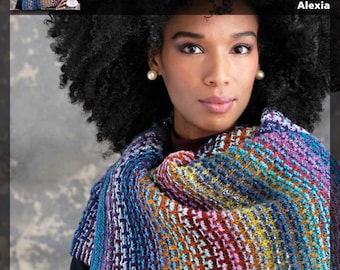
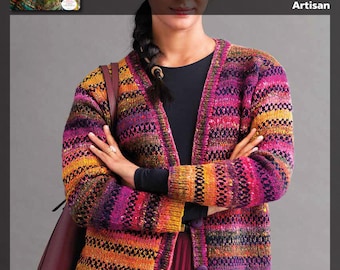
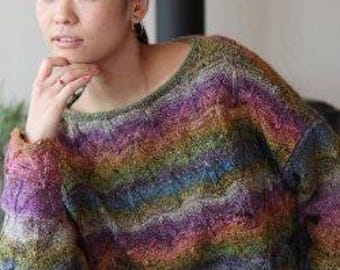
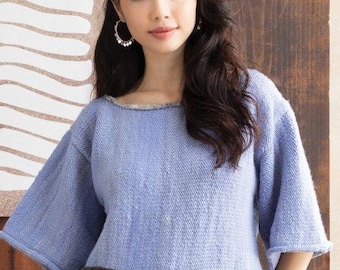
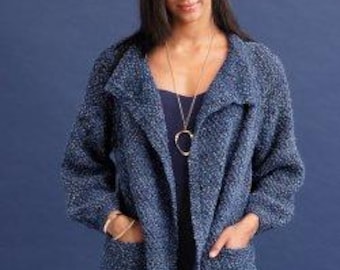
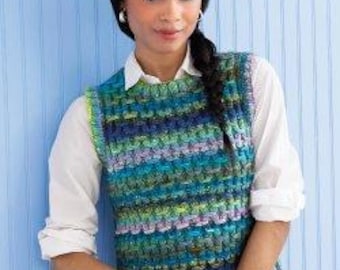
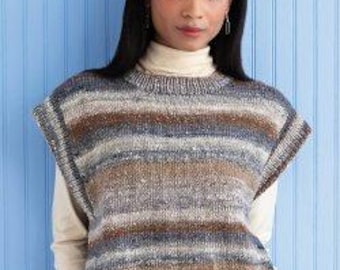
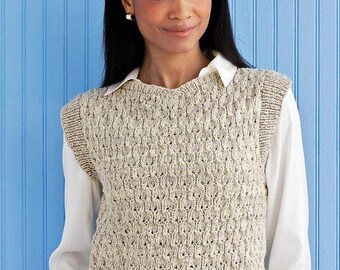
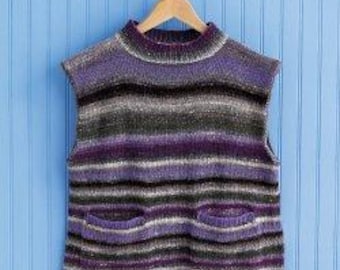

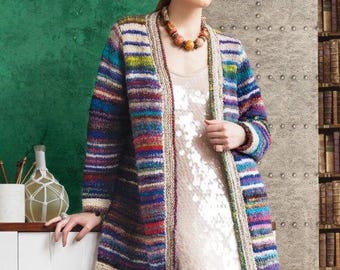
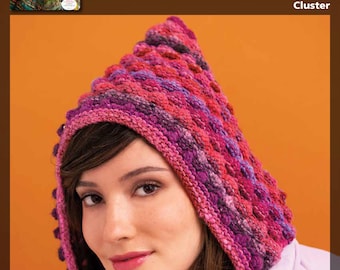
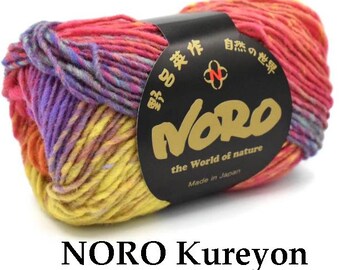
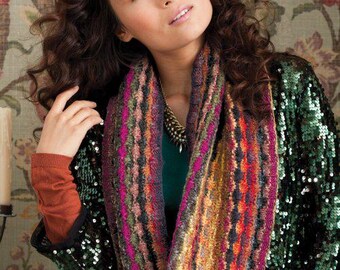
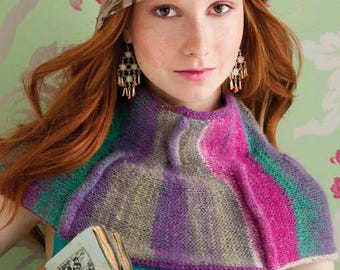
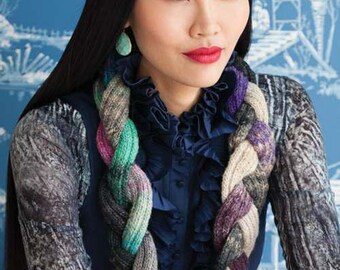
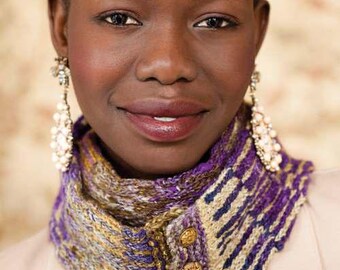
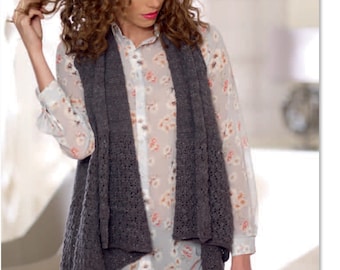
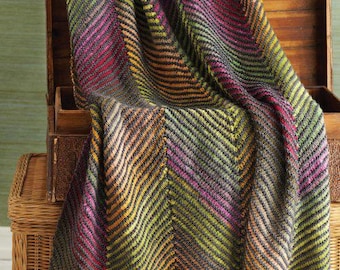
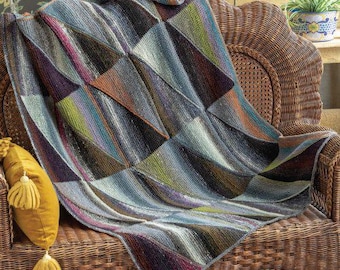
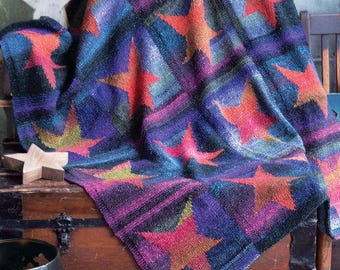
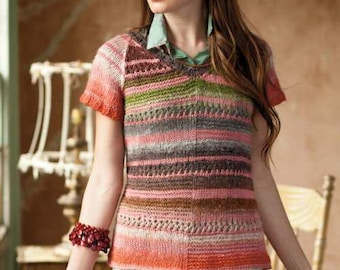
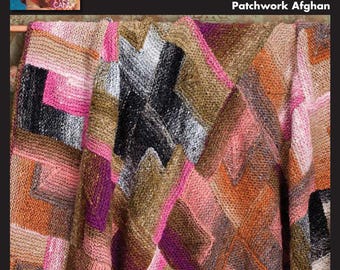
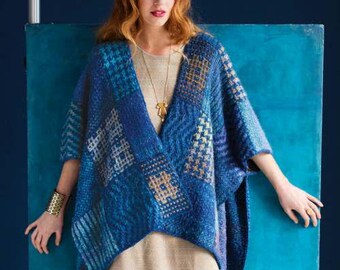
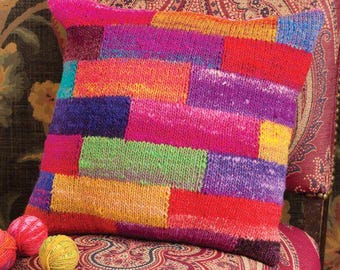


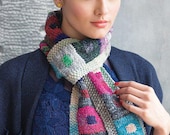




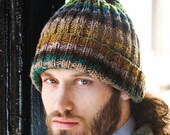



Alaska-based textile artist Susanne di Francia publishes InterLace Patterns and Kits featuring Noro yarn.
Creating one-of-a-kind fiber art wearables which reflect Suzanne's appreciation of beautiful textiles with great color, texture and fine-detailing is her passion and art. When designing with luxurious yarns which have been Artisan dyed and spun such as Noro yarn, how can what you make be anything but beautiful?
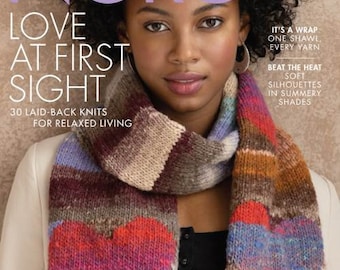
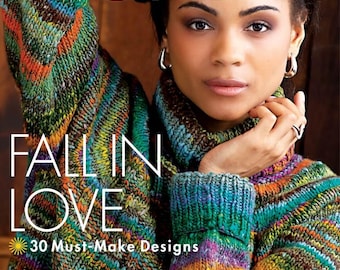
Suzanne di Francia -Seeing Noro in a New Way - as published in Noro Magazine Spring/Summer 2015 Issue 6
From the knitting and macramé she explored as a child to the paintingand pottery she did in her 20s, making things has always been at the center of fiber artist Suzanne di Francia’s universe. It runs in the family. Her mother taught her to knit at a young age, and a trip to Italy when she just 9 years old opened her eyes to the “beautiful way Italians create life,” something that inspires her to this day. “My Aunt Franca, who lives on the Isle of Capri, designed and made couture clothing for French haute houses,” di Francia explains, “and my mother’s knitwear designs were an inspiration to me from early childhood.” No creative slouch herself, di Francia was sewing her own clothes in sixth grade; by the time she was 15, she had a business designing and selling custom T-shirts. Explorations in paint and clay followed. “I tried all sorts of mediums,” she says. Marketing jobs paid the bills until 1987, when she settled down in San Francisco and began designing a bridal accessories line. She soon had a long list of clients, including an up-and-coming lingerie chain called Victoria’s Secret. She spent the next fourteen years designing a private-label line for the chain, first working on her tabletop sewing machine and gradually expanding to a fullon manufacturing business. “It was an amazing experience,” di Francia says.
The work for Victoria’s Secret was lucrative but stressful. As the years rolled along, it became difficult to compete with offshore suppliers, and di Francia found herself “working harder for less.” And it wasn’t just a shrinking profit margin that was causing the stress. “I felt as though I was losing touch with the process,” she says. “When you are
mass-producing something, the natural flow of creativity becomes less flexible.”
Recognizing that she was close to creative burnout, di Francia did what she calls a “complete 180” and turned her attention back to smaller accounts, smaller collections and private clients. “It was freeing, she says. “I was back to getting to know my customers and creating on a more intimate level.”
She also started playing with new techniques that incorporated the scraps of lace and silk that ended up on the production floor when she was turning out her line for Victoria’s Secret. “I couldn’t throw anything away,” she says. So she started dying the pieces and turning them into collages, using them to create wearable ornaments. Taken with felting, she went to the School of Hatmaking in Zurich, learning the old-world techniques of hand-blocking felt hats.
She returned to Alaska, her home since 1989—she’d accompanied a friend on back-country ski trip, and by the end of the weekend had signed a lease on an apartment in Anchorage—and began designing exquisite millinery pieces, trimming them with handmade silk tulle flowers. She sold the pieces at artisan markets and craft fairs throughout the state, reveling in the opportunity to once again explore different art mediums and techniques. The small market there meant she had to constantly develop new pieces and diversify her collections. Gloves, brooches, scarves and hair accessories were added to the mix, and di Francia soon found herself experimenting with embroidery, hand weaving, beading and different fibers. It all evolved organically. “I just found my creative flow,” she says. “And it kept growing.”
In 2012 di Francia was surfing the web in search of fibers for her dyeing experiments when came across the Noro yarn collection. “I immediately felt an affinity with it,” she says. “The colors were just so incredible. So I ordered a few skeins.” When they arrived,
di Francia was overwhelmed. “ I got this instinctive energy flow from the yarn,” she says. “It was like falling in love.” She spent several days just looking at the yarn, afraid to touch it. “I kept thinking, ‘It’s just so nice. What if I ruin it?’ I finally gave myself permission to ‘destroy’ just one skein.”
She didn’t ruin it. Instead she came up with a novel way to use the fibers. Di Francia doesn’t knit with Noro. Instead, she creates gorgeous fabrics with it using a technique she calls InterLace. She lays the yarns out on self-adhesive, water-soluble stabilizer. She then interweaves yarn strands under and over each other, creating intricate patterns. The yarns are stitched in place and the stabilizer is washed away.
To read more.....please see complete article at link on home page www.diFranciaFiberArt.com
