





Minibeast Ethics & Policies
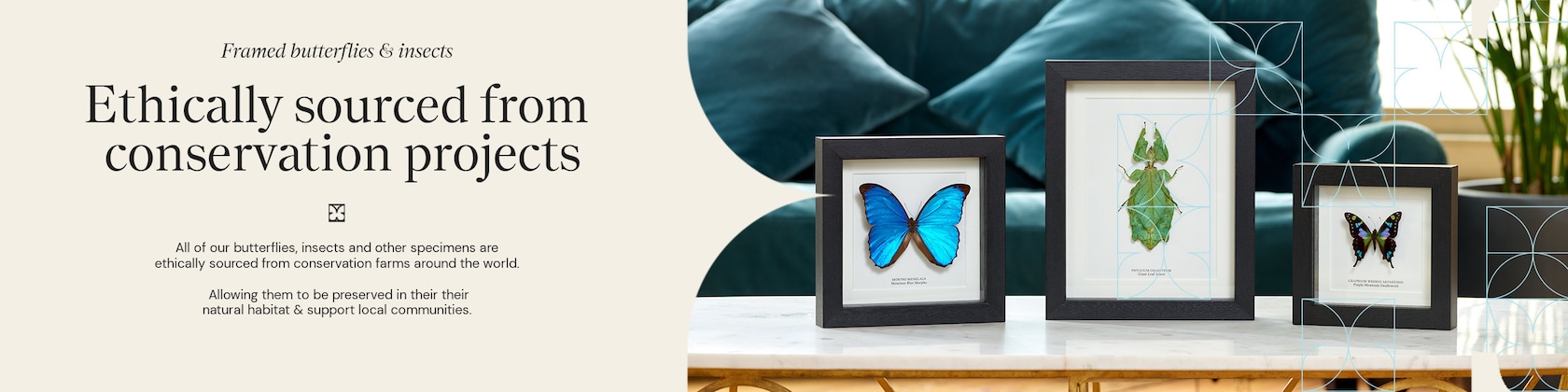
All of the specimens we work with are raised on butterfly farms which help to preserve the valuable rainforest habitat by providing villagers an ethical income other than clearing virgin tropical rainforest. Raising insects to sell is sometimes the only incentive some indigenous people have to save the environment they live in.
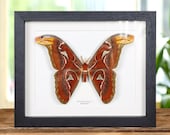
Butterflies that we use are raised on the farms expressly for lifetime preservation and have lived their entire lifespan of about a month. The specimens are from butterfly and insect farms in Australia, Asia, North, Central and Southern America rainforest areas which breed for insect collectors around the world.
Butterflies live their entire life span on these rainforest farms, and produce eggs for the next generation. In the wild, less than 7% of butterfly eggs will survive to adulthood. In contrast, captive breeding programs on butterfly farms achieve 70%-90% survival rates. The farms also release up to 20% of all the generation back into the wild helping to preserve the insects in their natural habitat.
We strive to source our animal pieces with as much background knowledge as possible. We only work with suppliers who collect animals that have died naturally in the wild. Many of our skulls and skeletons are found in the countryside and have died from such natural causes as; being killed by a predator, illness, old age, still born or birth complications.
We also often obtain animals killed on the roads. Some bones from animals like chickens, ducks, alligators, and rabbits and even snakes are a byproduct of the farming industry in many parts of the world.
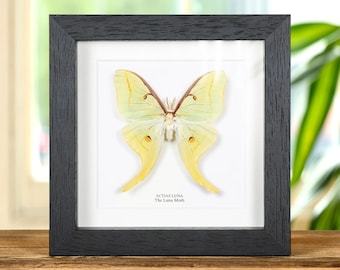
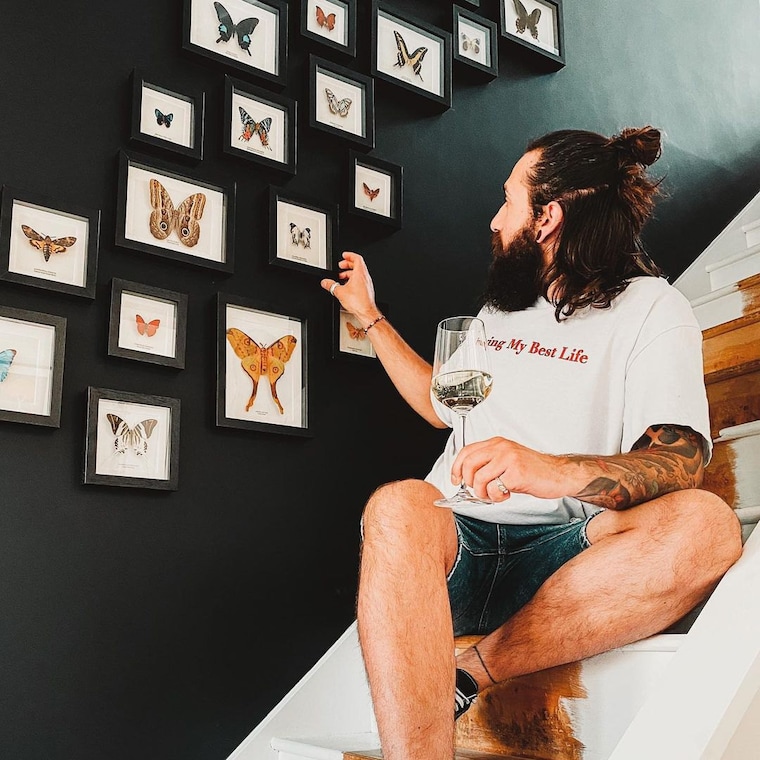
Hopefully our work will introduce some wonderful species to brighten peoples homes who otherwise would have never experienced one in the wild. These real butterfly displays are great for environmentally friendly gifts, artistic displays, teachers, scientists and private collectors.
We work with many projects and farms around the globe.
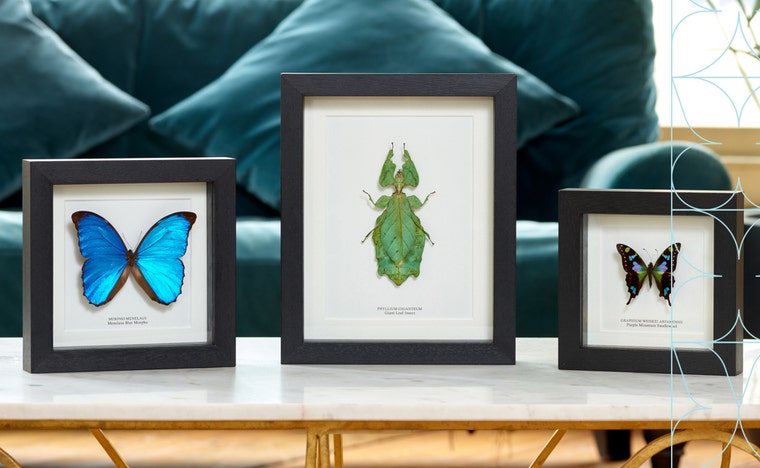
Like everything in nature from time to time things are not quite perfect. All our hand made frames will advise the condition of the specimen mounted inside.
A1 As perfect as all reasonable expectations dictate. Many are ex-pupae bred.
A1/A1- Virtually perfect and fresh. Will have minor flaws. Sometimes only antennae damage. Excellent quality at significant savings.
A1- Flaws, but generally respectable.
A2 Definite second quality. Usually a good representative specimen but far from perfect.
Morphos
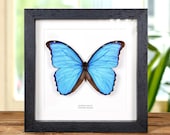
Most species of Morphos have the abdomens removed from them in the field by the collectors. The reason for this is that many Morphos store fats from their larval days in their bodies. The grease stored in the abdomens tends to leach out and discolour the wings making them a black, greasy mess. While this can generally be removed by immersing the insect in fresh, clean acetone for an hour or two, this problem is prevented by removing the abdomens. Many times the abdomens are not sent with the specimens from the source. So if you wonder why some Morphos have no abdomens with them this is the reason. This problem does not seem to be prevalent in the females.
